
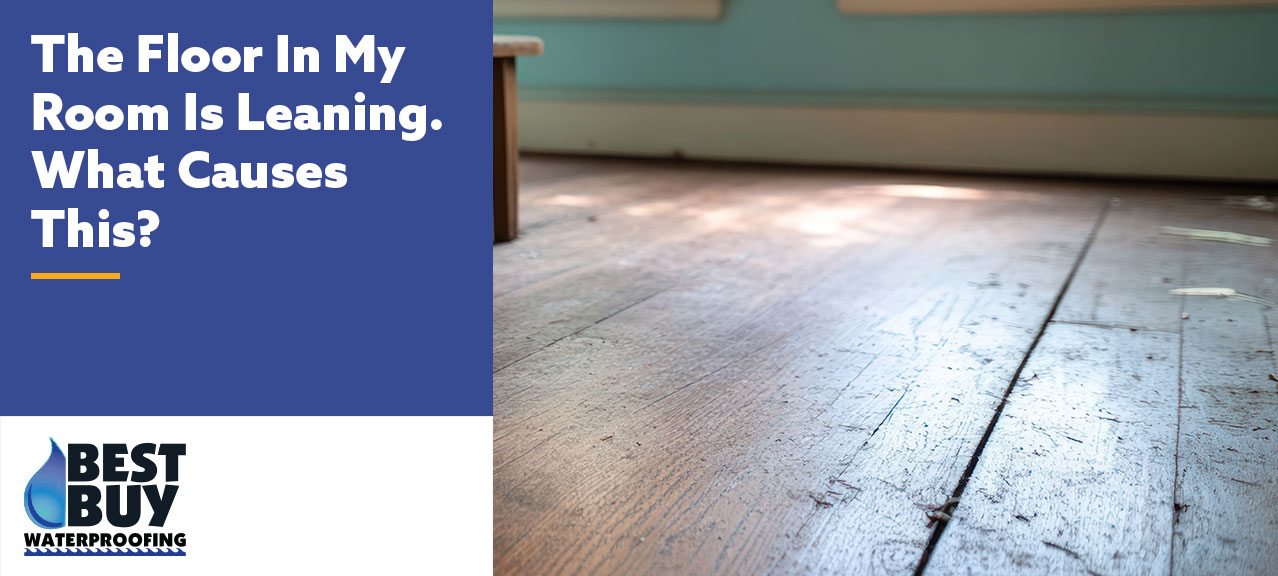
At Best Buy Waterproofing, we often see homeowners in the Mid-Atlantic region concerned about sloping floors. When you notice your floor leaning, it’s more than just an annoyance—it’s your home signaling potential foundation issues that need immediate attention. What starts as a slight tilt can develop into serious structural problems affecting your entire house’s integrity.
Level floors are crucial for your family’s safety. Ignoring early warning signs like sloping floors can lead to: •
- Spreading wall cracks
- Doors that won’t close properly
- Extensive structural damage
- Costly future repairs
Let’s explore the main causes of leaning floors and how to identify if the issue stems from your foundation or floor structure.
What Makes Your Floor Start Leaning?
Several key issues can cause floor sloping:
Foundation settlement or sinking
When soil beneath your home weakens, sections begin sinking unevenly. Watch for gaps between floors and baseboards—this indicates foundation movement.
Floor joists that can’t do their job
These horizontal support beams must be properly sized and spaced. Signs of failing joists include:
- Soft spots when pressed
- Visible warping
- Noticeable sagging
Moisture damage in your crawl space
Water is destructive to wooden supports. High humidity, standing water, or leaks gradually compromise your floor’s structural integrity.
Soil that won’t stay put
Clay soil under your foundation expands with moisture and contracts when dry. This cycle stresses your foundation, potentially causing uneven settling. When soil shifts or compacts, parts of your home lose crucial support, misaligning your floor structure.
Construction shortcuts or old materials
At Best Buy Waterproofing, we’ve seen many Mid-Atlantic homes built with substandard methods that create weak spots. Issues include:
- Use of inferior lumber
- Skipped construction steps
Poor building practices Pre-1970s homes often lack modern protections like pressure-treated wood, making them vulnerable to moisture damage.
Termites and other wood-eating pests
Termites create internal tunnels through wooden floor supports, severely compromising structural integrity. These pests work from inside out, often undetected until floors start sloping.
Warning Signs Your Leaning Floor Means Foundation Trouble
Best Buy Waterproofing helps homeowners identify serious foundation issues. Watch for:
Cracks appearing in walls or around doorways
Look for diagonal cracks from door corners—classic signs of foundation movement. While hairline cracks are common, those wider than 1/8 inch need professional attention.
Doors and windows suddenly won’t work right
Foundation shifts throw frames out of square, causing:
- Sticking doors
- Uneven gaps
- Self-opening doors
- Latching problems
Growing gaps between your floor and walls
Monitor spaces between baseboards and floors—larger gaps often indicate foundation issues rather than normal settling.
Best Buy Waterproofing recommends checking your foundation walls for signs of trouble. Look for:
- Stair-step cracks in brick
- Horizontal cracks in concrete wider than 1/4 inch
- Water seepage through cracks
Furniture and objects won’t stay put
When items drift to one corner or pictures won’t hang straight, your floors likely aren’t level. This early warning sign often appears before other problems become visible.
When Your Leaning Floor Points to Foundation Settlement
At Best Buy Waterproofing, we help Mid-Atlantic homeowners distinguish between minor settling and serious foundation issues.
The slope keeps getting worse over time
Monitor floor changes monthly. While slight unevenness is common in older homes, rapidly worsening slopes indicate active settlement. Professional measurements showing more than 1/2 inch drop across 10 feet need attention.
Your whole house tilts in one direction
Test with a marble—consistent rolling toward one side suggests uneven foundation settling. Watch for:
- Furniture sliding to low spots
- Appliances shifting position
Multiple rooms show the same pattern
When several rooms slope identically, foundation settlement is likely. Check your crawl space or basement for:
- Cracked foundation walls
- Disconnected support beams
- Sunken support posts
Outside your home tells the same story
Step outside for the full picture. Best Buy Waterproofing experts look for:
Stair-step cracks in brick/block walls
Gaps between chimneys and siding
Foundation shifting from structures
Where Moisture Attacks Your Floor Structure
In the Mid-Atlantic region, Best Buy Waterproofing has helped thousands identify where moisture compromises structural integrity. Here’s where water typically infiltrates:
Crawl Spaces Turn Into Moisture Traps
Dirt floors constantly release moisture, creating 100% humidity that soaks joists and promotes fungal growth.
Basement Water Problems Spread Upward
Ground pressure forces water through wall-floor joints, while hidden plumbing leaks compound damage over months.
Cold Pipes and Ducts Create Condensation
HVAC condensation slowly deteriorates ceiling beams and floor supports.
Rim Joists Need Protection
Without proper insulation, these critical components attract damaging condensation.
Wet Rooms Affect Adjacent Spaces
Steam from bathrooms and kitchens seeps through walls, compromising nearby joists.
Poor Ventilation Traps Trouble
Inadequate airflow in older homes leads to:
- Trapped moisture
- Humid conditions
- Progressive settling
- Structural weakening
Water and Humidity Attack Your Floors From Every Direction
Water doesn’t just damage floors—it undermines their entire support structure. Best Buy Waterproofing has witnessed this repeatedly across the Mid-Atlantic region, where moisture compromises floor integrity in unexpected ways.
Wood rot eats away at your floor joists
When moisture penetrates wood, decay fungi rapidly invade. At 20% moisture levels, these organisms break down wood’s core strength, turning solid joists soft and unstable.
Humidity makes wood swell and warp
Floor joists absorb ambient moisture, especially in damp crawl spaces. Seasonal expansion and contraction leads to progressive cupping and warping, causing uneven floors above.
Moisture attracts termites and weakens wood
Damp wood draws termites that can consume 15 pounds weekly, creating internal tunnels. Additionally, moisture directly compromises wood’s structural integrity, causing gradual compression and sloping.
Foundation and mold issues
- Rainwater erodes supporting soil, creating voids beneath foundations
- Settling foundations pull connected floor structures downward
- Mold enzymes digest wooden supports from within
How Do You Know if It’s Your Foundation or Your Floor Structure?
Best Buy Waterproofing helps Mid-Atlantic homeowners identify the source of sloping floors:
Look at slope patterns
- Center dips indicate joist problems
- Consistent wall slopes suggest foundation issues
- Check for diagonal cracks from door corners
- Look for horizontal wall cracks
- Quarter-inch+ cracks often mean foundation problems
Get precise measurements with a level.
A professional laser level reveals exact floor slope measurements and locations. At Best Buy Waterproofing, our foundation repair experts use these precision tools to map floor deviations across Mid-Atlantic homes. Industry standards consider slopes exceeding half an inch over ten feet problematic.
Check what’s happening below
Inspect your crawl space or basement for:
- Water stains or standing water
- Damaged or sagging support beams
- Foundation wall cracks
- Gaps between structural components
Track seasonal changes
Monitor if slopes worsen during:
- Heavy rain periods
- High humidity months
These patterns typically indicate moisture affecting either soil or wooden components.
Test for structural movement
Surface-level problems only affect visible flooring. For structural issues:
- Roll a marble across rooms
- Note consistent rolling directions
- Document problem areas
Don’t Wait—Your Home Is Telling You Something Important
These warning signs demand attention. Left unchecked, minor issues become major structural problems requiring expensive repairs. Call Best Buy Waterproofing for your free inspection. We’ll protect your home’s integrity and your family’s safety.
Don’t believe us? Just look at the verified reviews from all of our satisfied customers!