Home » Residential Services » Foundation Repair
Foundation Repair
- Licensed & Insured
- 5-Star Rated
- Local Business
- Transferable Warranty
Foundation Repair That Starts With Why Your Home Is Moving
A foundation carries the weight of everything above it, so when it moves, the whole house tells you. A wall starts to bow inward, a crack grows a little wider each season, or a door that used to close easily now sticks. Foundation repair stops that movement and supports the structure so the problem does not keep spreading. Best Buy Waterproofing has helped homeowners across the Mid-Atlantic protect their foundations since 2017, with one in-house team that inspects, recommends and installs every repair.
Foundation problems usually come from the soil around and under the house. Across Maryland, Virginia, DC, Pennsylvania, Delaware and West Virginia, many homes sit on dense clay and silt that swell when wet and shrink when dry. That cycle pushes sideways on basement walls and can leave footings without steady support. Freeze-thaw winters, heavy summer storms and poor drainage add more stress, and older block, stone and brick foundations often feel it first.
Because every home moves for its own reasons, every project starts with a free inspection. We measure walls, check floors, look at cracks and walk the outside of the foundation, then explain what we found in plain language. From there, your foundation repair plan might include carbon fiber straps or steel I-beam wall braces for bowing basement walls, a wall rebuild for block that is past saving, push piers or helical piers for a settling foundation, or crack repair to seal openings. You get a clear recommendation, a firm price and a transferable warranty.
Our Foundation Repair Solutions
Our own crews install each of these repairs. Many homes need more than one, and your inspection shows which combination fits.
Wall Stabilization
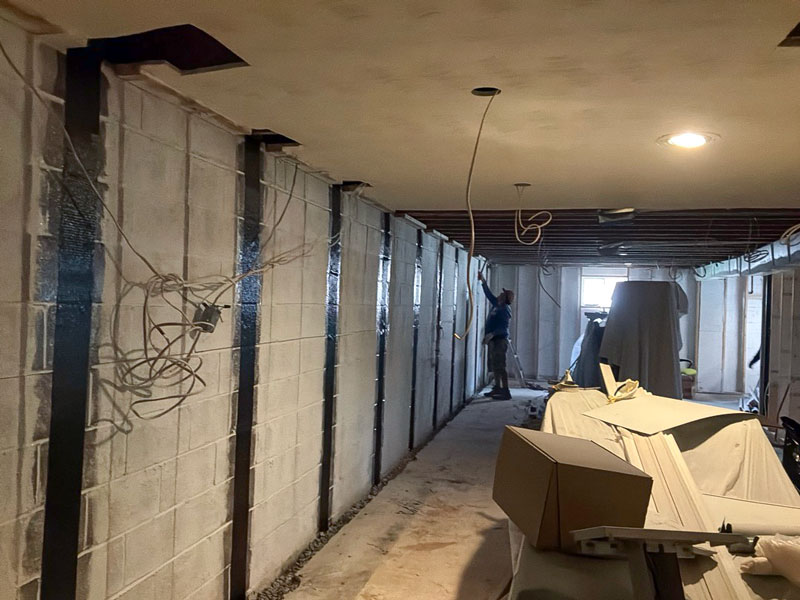
Wall stabilization is our basement wall repair for bowing, leaning and shifting walls. For walls with early, limited bowing, we bond carbon fiber straps to the inside face of the wall. For walls that have moved further, we install heavy-duty steel I-beam wall braces that apply continuous resistance to the soil pushing in and can help straighten the wall over time. Crack sealing is included where cracks let water in behind the wall.
- Carbon fiber straps for early bowing
- Steel I-beam wall braces for larger movement
- Crack sealing to help keep water out
Wall Rebuild
Some walls have moved too far or are too badly broken to reinforce. When a cinder block wall reaches that point, stabilizing it may not be enough, and rebuilding the damaged section is the right repair. We rebuild cinder block walls in basements and crawl spaces, and we only recommend a rebuild when the inspection shows the wall cannot be reliably stabilized. We explain why before any work is planned.
- Cinder block walls in basements
- Crawl space foundation walls
- Recommended only when stabilization will not hold
Foundation Settlement Repair
When soil under the footings compresses or washes out, part of the house can sink. Foundation settlement repair transfers the weight of your home down to stable, load-bearing soil with steel piers. Push piers are driven down beside the footing using the weight of the structure, while helical piers are turned into the ground like a large screw. Steel brackets tie the piers to the foundation, and once they are set, the settled section can often be lifted back toward level.
- Push piers driven to stable soil
- Helical piers for lighter loads
- Controlled lift toward level where possible
Foundation Crack Repair
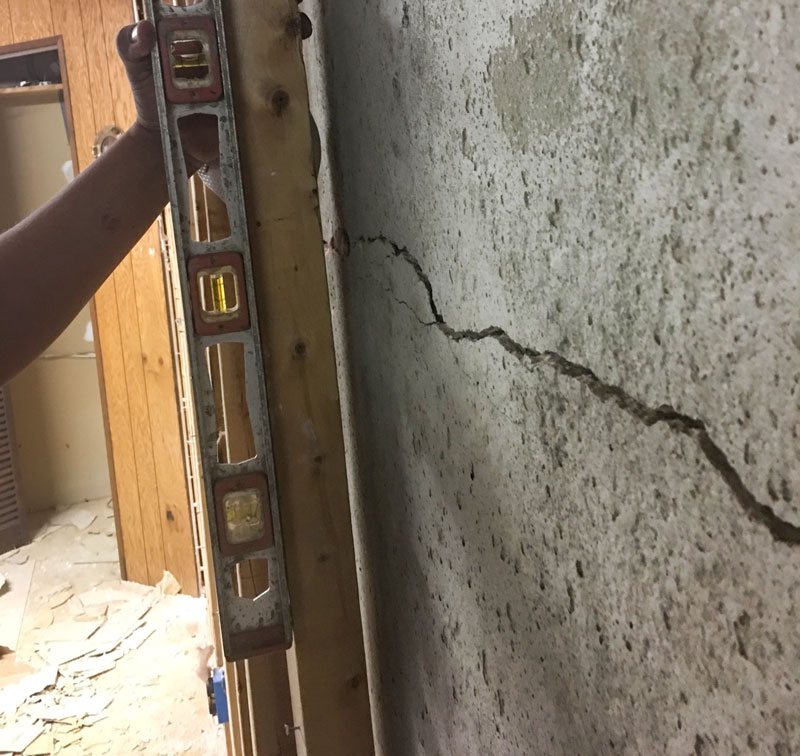
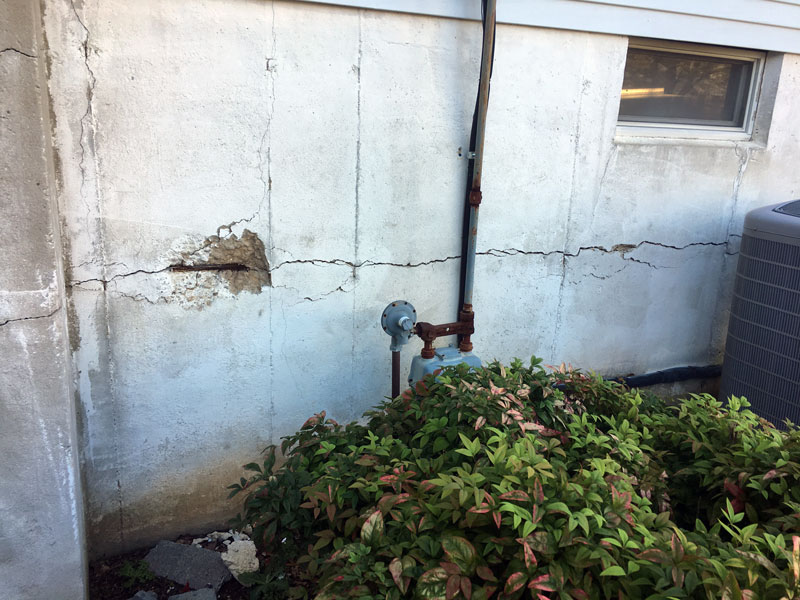
Not every crack is a structural emergency, but cracks in basement walls and floors deserve a closer look, especially horizontal or stair-step cracks and any that keep growing or let water in. Our foundation crack repair seals leaking cracks in poured concrete walls, block walls and floor slabs. If a crack comes from ongoing movement, we pair the seal with wall stabilization or piers so the repair holds.
- Wall and floor crack sealing
- Poured concrete and block foundations
- Paired with structural repair when needed
Signs You Need Foundation Repair
Foundation problems tend to start small and grow. These are the signs that usually mean a wall or footing is moving.
Horizontal or Stair-Step Cracks
Long horizontal cracks or stair-step cracks in block walls point to soil pressure or settlement.
Bowing Basement Walls
A wall that bulges inward in the middle is losing its fight against soil pressure.
Leaning or Shifting Walls
A wall tipping in at the top or sliding inward at the base needs attention.
Sticking Doors and Windows
Doors and windows that stick or look out of square can follow foundation movement.
Sloping or Uneven Floors
Floors that slope or feel uneven can mean part of the foundation has settled.
Chimney or Brick Separation
A chimney pulling away or gaps opening in brick mortar joints signal settlement.
What Causes Foundation Problems
Most foundation damage starts in the soil and water around the house. Knowing which force is at work is the first step toward a repair that lasts.
Expansive Clay and Silt Soils
Much of the region sits on clay and silt soils that absorb water and expand, then shrink as they dry out. When saturated soil swells against a basement wall, it creates steady sideways pressure that can push block or poured concrete inward. When the same soil dries and pulls away, it can leave gaps under footings. Repeated year after year, that movement wears on even well-built foundations.
Water and Hydrostatic Pressure
Water is behind many foundation problems. Clogged gutters, short downspouts and a yard that slopes toward the house all let rain collect against the foundation. Saturated soil weighs more and presses harder on walls, while seepage slowly weakens mortar joints and block. That is why foundation repair and drainage often go together, and why we look at gutters and grading during every inspection.
Freeze-Thaw Cycles
Winters across the Mid-Atlantic bring repeated freezing and thawing. Water trapped in soil and in small cracks expands as it freezes, adding pressure on walls and widening openings that were once hairline. Over many seasons, those cycles can turn a minor crack into a leak or a point where a wall starts to move.
Settling Under the Footings
Footings need firm, stable soil beneath them. Loosely compacted fill, soil that washes out from poor drainage and clay that shrinks during dry spells can all let part of a foundation drop. Settlement is rarely even, so one corner or side of the house sinks more than the rest. That uneven movement shows up as stair-step cracks, sloping floors and doors or windows out of square.
Wall Stabilization vs. Foundation Settlement Repair
Both are foundation repair, but they fix different kinds of movement. One deals with walls being pushed inward, the other with the foundation sinking.
Wall Stabilization
- Fixes walls bowing, leaning or shifting inward
- Caused mainly by sideways soil and water pressure
- Uses carbon fiber straps or steel I-beam wall braces
- Installed from inside the basement
Foundation Settlement Repair
- Fixes a foundation that is sinking or dropping
- Caused by soil under the footings losing support
- Uses push piers or helical piers driven to stable soil
- Usually installed along the outside of the foundation
Some homes show both kinds of movement at once. Your free inspection tells us which forces are at work, and we build one foundation repair plan that addresses each of them.
Our Foundation Repair Process
Free Inspection
A specialist measures walls, checks floors and cracks, and walks the outside of the foundation.
Your Recommendation
We walk you through what we found and what we recommend, with a firm price.
Professional Installation
Our in-house crew installs your repair and cleans up afterward.
Warranty Protection
Your foundation repair is backed by a transferable warranty that stays with the home.
Why Homeowners Choose Best Buy Waterproofing
Choosing a foundation repair contractor means trusting someone with the structure of your home. We keep the process clear and honest, from inspection to cleanup.
- Serving homeowners since 2017: Our team has handled foundation repair and waterproofing across the Mid-Atlantic since 2017.
- Licensed and insured: We are licensed in Maryland, Virginia, Washington DC, Pennsylvania, Delaware and West Virginia, and fully insured.
- One in-house team: Foundation repair, waterproofing, crawl space repair and mold remediation, handled by one team.
- Free inspection and financing: Inspections and estimates are free, and financing options are available for qualified homeowners.
- Transferable warranty, 24/7 availability: Your warranty transfers with the home, and we are available around the clock.
What Affects the Cost of Foundation Repair?
We do not quote foundation repair from a price list, because every home moves differently. After your free inspection, you get a firm price based on what your foundation actually needs.
Extent of Movement
How far a wall has bowed or a footing has dropped shapes the repair method.
Type of Repair
Carbon fiber straps, wall braces, piers and wall rebuilds each involve different work.
Foundation Material
Block, poured concrete, stone and brick foundations respond differently to repair.
Soil Conditions
The depth to stable soil affects how piers are installed and how many are needed.
Water Problems
Active seepage or poor drainage may call for waterproofing alongside the structural repair.
Access and Finishes
Finished walls, landscaping, decks or tight access can change how the work is done.
Foundation Repair FAQs
How do I know if a foundation crack is serious?
Hairline cracks in drywall are usually cosmetic. Horizontal cracks, stair-step cracks in block walls, cracks wider at one end and cracks that keep growing or leak water point to movement that needs attention. If doors also stick or floors slope, the crack is likely part of a larger problem. A free inspection will tell you which you have.
Are bowing basement walls dangerous?
A bowing wall means the soil outside is pushing harder than the wall can resist. Slight bowing is not an emergency, but that pressure usually keeps building, and the wall can keep moving inward until it cracks or shears at the base. Having it inspected early tells you how far it has moved and gives you more repair options.
Can a leaning basement wall be straightened?
The first goal is to stop the wall from moving. Steel I-beam wall braces apply continuous resistance and can often help gradually straighten bowed or leaning walls over time. Carbon fiber straps hold a wall where it is. How much correction is possible depends on the wall, and we tell you what to expect before work begins.
What is the difference between push piers and helical piers?
Both are steel piers that carry your home’s weight down to stable, load-bearing soil. Push piers are driven into the ground beside the footing using the weight of the structure. Helical piers have screw-like plates and are turned into the soil, which suits lighter structures. We recommend one after looking at your home’s weight, the soil and access.
When does a wall need to be rebuilt?
When a cinder block wall has moved too far or is too badly broken to reinforce, stabilizing it may not be enough. In those cases we may recommend rebuilding the damaged section. We only suggest a wall rebuild when the inspection shows that carbon fiber straps or wall braces will not do the job.
Do I need waterproofing along with foundation repair?
Not always, but water is behind many foundation problems. Saturated soil adds pressure against walls, and seepage weakens block and mortar. If we find active water during the inspection, we explain how waterproofing could protect the repair. Because one in-house team handles both, the work can be planned and scheduled together.
Is foundation repair a DIY project?
No. Foundation repair involves structural loads, specialized equipment and careful installation, and a wall or footing repaired the wrong way can keep moving. Our crew handles the work from inspection through installation, so the repair is matched to the cause and backed by a transferable warranty.
Do you offer financing for foundation repair?
Yes. We offer financing so you can take care of structural problems now instead of waiting while the damage grows. We go over the available plans after your free inspection, once you know what your home needs and what the repair involves.
Foundation Repair Across the Mid-Atlantic
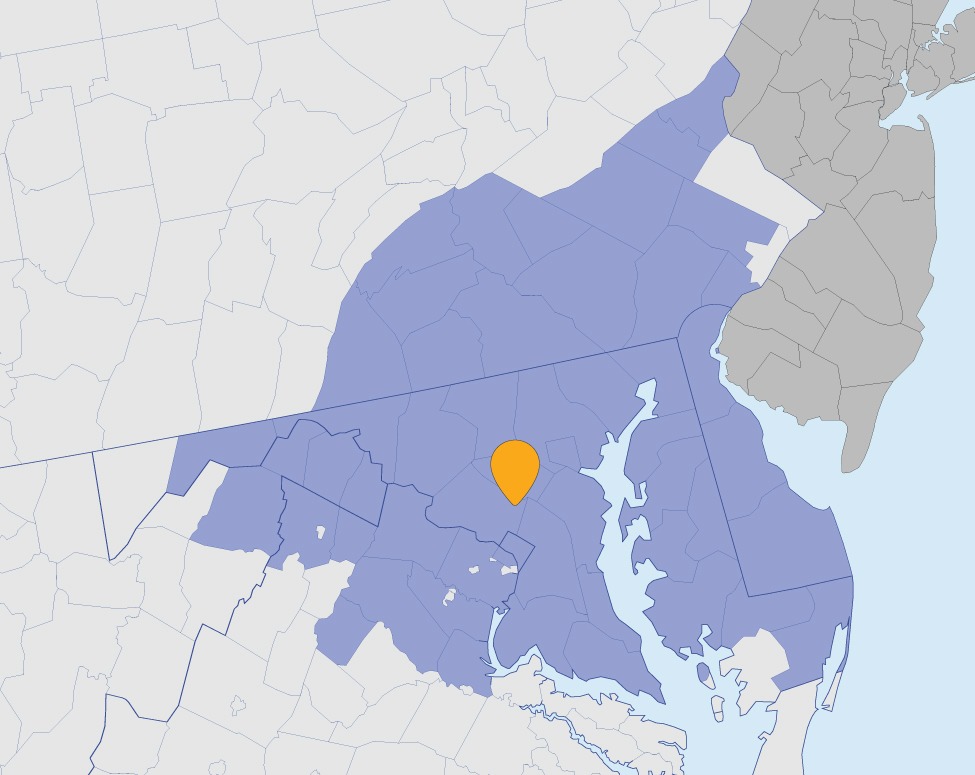
Best Buy Waterproofing serves homeowners throughout Maryland, Virginia, Washington, DC, Pennsylvania, Delaware and West Virginia. From our office in Columbia, Maryland, our crews work on older block, stone and brick foundations as well as newer poured concrete homes across the region.
Foundation Repair in popular areas
Related Services
Schedule Your Free Foundation Inspection
Find out why your walls or floors are moving and what it will take to stop it. Book a free inspection for a clear recommendation and firm price, with financing available.