Home » Residential Services » Foundation Repair » Basement Wall Rebuild
Basement Wall Rebuild
- Licensed & Insured
- 5-Star Rated
- Local Business
- Transferable Warranty
Cinder Block Wall Repair When Stabilizing Is Not Enough
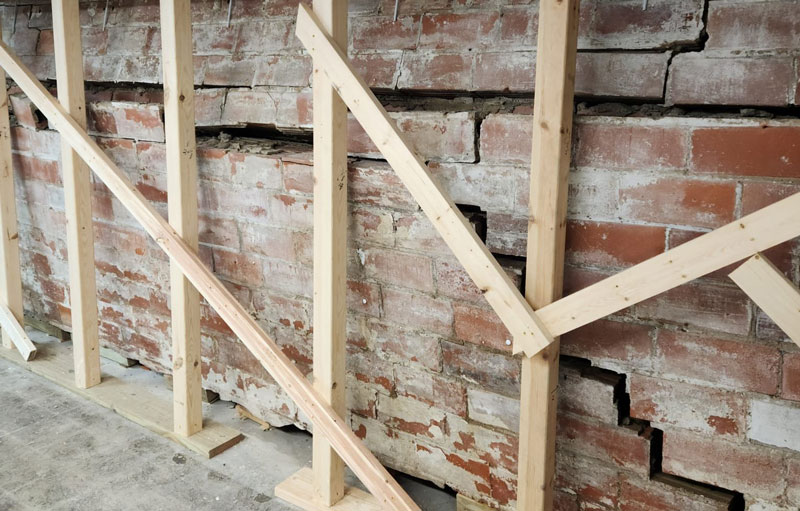
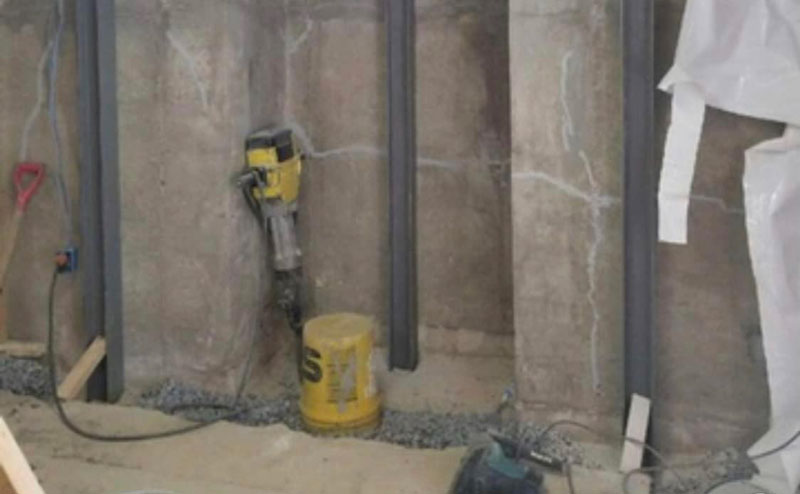
Most moving basement walls, including a cracked block foundation wall, can be held in place with carbon fiber straps or steel I-beam wall braces. Some cannot. When a block wall has bowed too far, sheared at the base or broken apart into loose, crumbling block and mortar, reinforcing it may not be enough to keep it standing straight. In those cases, a basement wall rebuild removes the damaged section and replaces it with new block. Best Buy Waterproofing has handled foundation work for homeowners across the Mid-Atlantic since 2017, with one in-house team from inspection to cleanup.
Cinder block wall repair is common in this region because so many homes were built on block foundations, and the soil around them is hard on masonry. Clay and silt soils swell when wet and shrink when dry, freeze-thaw winters work into mortar joints, and years of seepage weaken block from the inside. We rebuild cinder block walls in both basements and crawl spaces, and we only recommend a basement wall replacement when the inspection shows the wall cannot be reliably stabilized.
Signs a Block Wall May Need a Rebuild
These signs do not always mean a rebuild, but they tell us a wall may be past the point where reinforcement alone will hold it.
Severe Bowing
The wall has bulged far inward, well beyond early bowing that straps can hold.
Sheared Wall Base
The lower courses have slid inward and no longer line up with the wall above.
Displaced or Broken Block
Individual blocks have shifted out of line, cracked through or broken apart.
Crumbling Mortar Joints
Mortar has washed out or turned to powder, leaving block loose in the wall.
Wide Horizontal Cracks
Long, wide cracks with block faces offset on either side of the crack.
Long-Term Water Damage
Years of seepage have softened block and left it damp, stained or spalling.
How We Handle a Basement Wall Rebuild
Inspection: Rebuild or Stabilize?
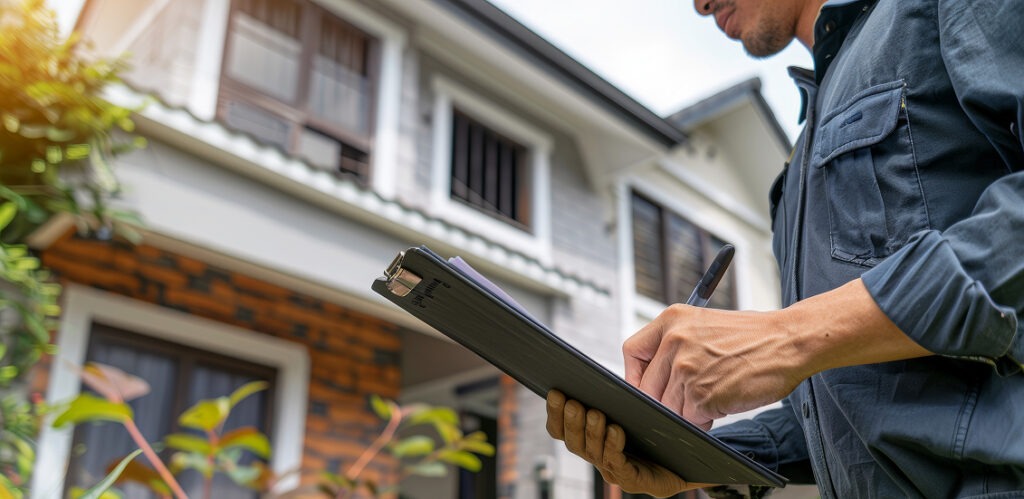
Every basement wall rebuild starts with an honest look at whether the wall can be saved. During a free inspection, we measure how far the wall has bowed, leaned or shifted, check the condition of the block and mortar, and look for broken or displaced sections. We also check the footing and the floor framing that the wall supports, because a rebuild has to tie back into both.
If straps or braces will hold the wall, we recommend them instead, since stabilization is less disruptive. We recommend a rebuild only when the wall has moved too far or is too badly broken to reinforce, and we show you exactly why.
Rebuilding Basement Block Walls
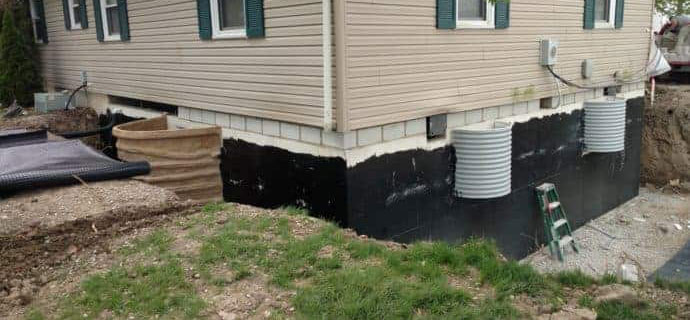
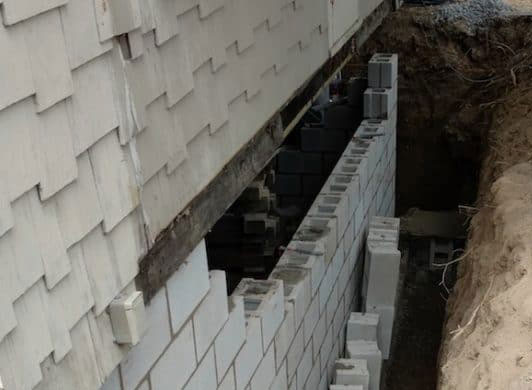
In a basement, cinder block wall repair through a rebuild means temporarily supporting the house, removing the damaged block down to sound material and laying new block back up to the floor framing. The new section is tied into the existing wall and the structure above so it carries the load the way the original wall was meant to.
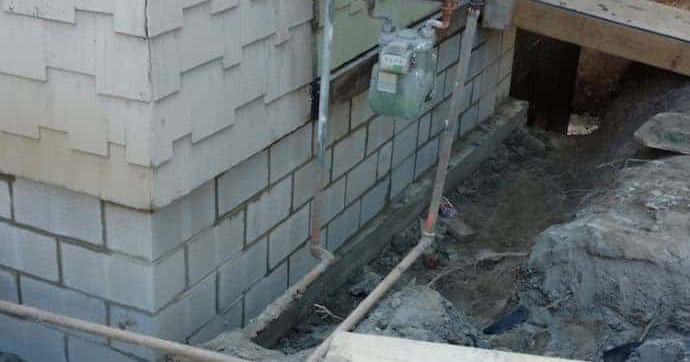
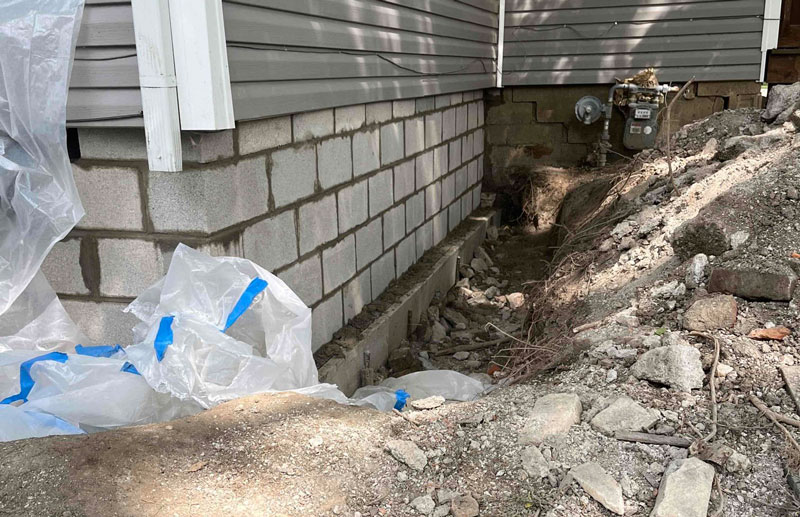
Before the new wall goes up, we deal with the soil and water pressure that damaged the old one. That can include excavating the damaged section, relieving pressure behind it and backfilling with material that drains better than the original clay. Our crew explains each step and the expected timeline before the basement wall replacement begins.
Rebuilding Crawl Space Walls
Crawl space foundations take the same soil pressure as basement walls, often with less room to work and more moisture. A crawl space wall that has bowed, cracked through or lost its mortar can let the floor above sag and let water and pests into the space underneath the house.
We rebuild cinder block walls in crawl spaces as well as basements. Because our team also handles crawl space repair, we can address sagging floor joists, standing water and humidity in the same plan, so the rebuilt wall is protected by a drier, more stable crawl space.
Waterproofing and Drainage Around the New Wall
Water is behind most block wall failures. Saturated soil pushes on the wall, and seepage weakens block and mortar from the inside. A rebuilt wall will face the same conditions, so we look at drainage as part of every basement wall rebuild.
Depending on what we find, that may mean exterior waterproofing while the wall is open, an interior drain with a sump pump, or simpler fixes such as extending downspouts and correcting grading. We recommend what fits your home and explain how it protects the new wall.
When Stabilization Is the Better Fit
Many homeowners call us expecting a full basement wall replacement and learn the wall can be held with carbon fiber straps or steel I-beam wall braces. Bowing basement walls with early or moderate movement and block that is still sound often fall into this group. Stabilization is installed from inside, takes less time and causes less disruption.
We recommend one approach based on what we find, not a package, and we tell you plainly if a rebuild is not needed.
Our Basement Wall Rebuild Process
Free Inspection
A specialist checks the wall, block, mortar, footing and drainage to see if it can be saved.
Your Recommendation
We walk you through what we found and what we recommend, with a firm price.
Wall Rebuild
Our in-house crew supports the house, rebuilds the damaged section and cleans up.
Warranty Protection
Your rebuilt wall is backed by a transferable warranty that stays with the home.
Why Homeowners Choose Best Buy Waterproofing
A basement wall rebuild is a significant project, and you should only do it when it is truly needed. We give you a straight answer about your wall and handle the work with our own crew.
- Serving homeowners since 2017: Our team has handled foundation repair and waterproofing across the Mid-Atlantic since 2017.
- Licensed and insured: We are licensed in Maryland, Virginia, Washington DC, Pennsylvania, Delaware and West Virginia, and insured.
- One in-house team: Wall rebuilds, stabilization, waterproofing and crawl space repair, handled by one crew.
- Free inspection and financing: Inspections and estimates are free, and financing options are available for qualified homeowners.
- Transferable warranty: Your warranty transfers with the home if you sell.
What Affects the Cost of a Basement Wall Rebuild?
We do not quote a basement wall rebuild from a price list, because every wall and every home is different. After your free inspection, you get a firm price based on what your wall actually needs.
Length of Wall
How much of the wall must come down and be rebuilt shapes the scope of work.
Wall Height
Full-height basement walls and shorter crawl space walls involve different work.
Condition of Block
How much block and mortar can stay affects how far the rebuild extends.
Excavation Needs
Some rebuilds require digging outside to relieve pressure and replace backfill.
Drainage and Waterproofing
Waterproofing added while the wall is open protects the new section.
Access and Finishes
Finished rooms, landscaping, decks or tight crawl spaces can change how work is done.
Basement Wall Rebuild FAQs
How do I know if my wall needs a rebuild or just stabilization?
It comes down to how far the wall has moved and whether the block is still sound. Walls with early or moderate bowing and solid block can usually be held with carbon fiber straps or steel I-beam wall braces. Walls that have sheared, have broken or displaced block, or have bowed severely may need a basement wall rebuild. The inspection tells us which.
Do you rebuild walls in crawl spaces too?
Yes. We rebuild cinder block walls in crawl spaces as well as basements. Crawl space walls face the same soil pressure, often with more moisture. Because we also handle crawl space repair, we can address sagging floor joists, standing water and humidity in the same plan.
Do you rebuild the whole wall or just part of it?
Usually just the damaged section. We remove block down to sound material and rebuild from there, tying the new section into the existing wall and the framing above. If damage runs the full length of the wall, the rebuild covers more, and we explain the scope before work begins.
Will my house be safe while the wall is being rebuilt?
Yes. Before removing damaged block, our crew temporarily supports the floor framing so the house is held up while the wall is open. The new wall is then built back up and tied into the structure before the temporary support comes out.
Why did my block wall fail in the first place?
Most block walls fail from long-term soil and water pressure. Clay soils swell when wet, freeze-thaw cycles work into mortar joints, and seepage weakens block over many years. Clogged gutters and poor grading make it worse. That is why we look at drainage as part of every rebuild.
Should I add waterproofing when the wall is rebuilt?
Often it makes sense. A rebuilt wall faces the same soil and water as the old one, and an open wall can be a good time to address drainage. Depending on your home, that might be exterior waterproofing, an interior drain and sump pump, or simpler fixes to gutters and grading.
Can I finish my basement after a wall rebuild?
Yes. Once the wall is rebuilt and water is under control, the basement can be finished. Our team also offers basement finishing, so we can plan the rebuild with your future walls, outlets and flooring in mind.
Related Services
Popular service areas: Baltimore · Washington, DC · Arlington · Alexandria · Columbia · Frederick · Silver Spring · Wilmington · All service areas
Find Out If Your Wall Can Be Saved
Get a straight answer about whether your block wall needs stabilization or a rebuild. Book a free inspection for a clear recommendation and firm price, with financing available.