
Home » Residential Services » Spray Foam Insulation
Spray Foam Insulation
- Licensed & Insured
- 5-Star Rated
- Local Business
- Transferable Warranty
Spray Foam Insulation Built for Basements and Crawl Spaces
The lowest level of your home is where cold air, damp air and outside air find their easiest way in. Bare foundation walls, open rim joists and vented crawl spaces let heat escape in winter and invite humid air in summer. Spray foam insulation seals and insulates those below-grade surfaces in one step. Best Buy Waterproofing has helped homeowners across the Mid-Atlantic since 2017, and our in-house team applies spray foam insulation in basements and crawl spaces, the areas we already know best from years of waterproofing and foundation work.
Below-grade spaces are not like attics or upstairs walls. They sit against cool soil, they deal with moisture and they often share air with the rest of the house. Fiberglass batts can absorb moisture in these areas and sag or hold dampness against wood. Closed-cell spray foam bonds directly to concrete, block and framing, fills gaps and cracks, and resists moisture, so it keeps working in the conditions that make other insulation struggle.
Every project starts with a free inspection. We check for water entry, humidity, air leaks and existing insulation, then explain what we found in plain language. If water is getting in, we deal with that first, because insulation should go over a dry foundation. Then we recommend crawl space insulation, basement insulation, rim joist insulation and air sealing as your home needs them, with a firm price and a transferable warranty.
Our Spray Foam Insulation Services
We apply spray foam insulation only in basements and crawl spaces, where moisture resistance matters most. Your inspection shows which of these services fit your home.
Crawl Space Insulation
Crawl space insulation with closed-cell spray foam depends on how your crawl space is built. In a vented crawl space, we insulate the underside of the floor between the joists and seal gaps into the living space. In an unvented or sealed crawl space, we insulate the foundation walls and seal the vents, bringing the crawl space inside the home's envelope. It pairs well with a vapor barrier or full encapsulation.
- Joist insulation for vented crawl spaces
- Wall insulation and vent sealing for sealed crawl spaces
- Works alongside vapor barriers and encapsulation
Basement Insulation
Basement insulation with closed-cell spray foam goes directly onto concrete or block walls, air sealing and insulating them in one application. It helps reduce condensation, humidity and the musty smell that comes with cold, damp walls. Because the foam resists moisture, it is a sound choice for basements you use every day and for basements you plan to finish, where it can sit behind new framing and drywall.
- Applied directly to basement walls
- Reduces condensation and musty odors
- Prepares the space for basement finishing
Rim Joist & Air Sealing
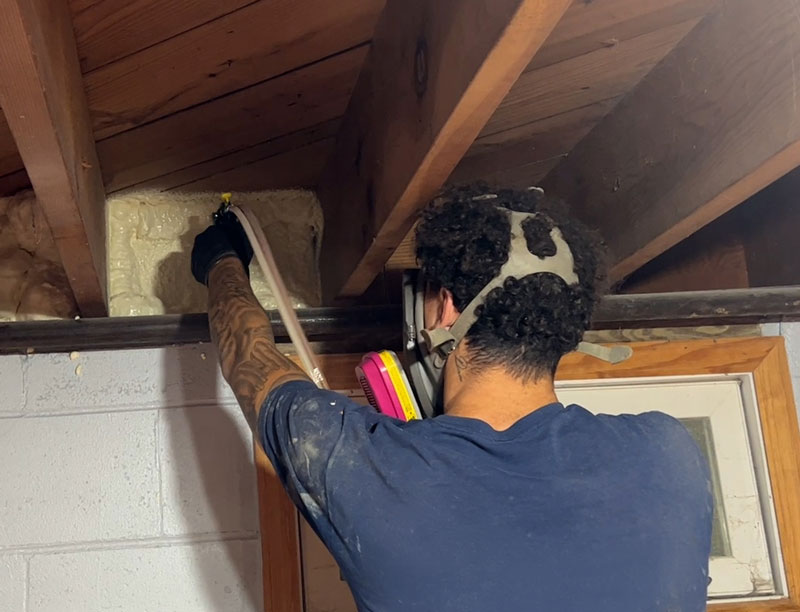
The rim joist is one of the leakiest spots in most homes, and it is easy to reach from the basement or crawl space. Rim joist insulation with closed-cell spray foam fills the gaps where framing meets the foundation, stops drafts and keeps the wood from becoming a cold, damp surface. We also seal plumbing, wiring and duct penetrations so outside air has fewer ways in.
- Seals gaps where framing meets masonry
- Reduces condensation on cold wood
- Air sealing at pipe, wire and duct openings
Signs You Need Spray Foam Insulation
These signs usually point to air leaks or missing insulation in your basement or crawl space, even if the problem feels like it is upstairs.
Cold Floors Upstairs
Floors above the basement or crawl space feel cold in winter, even with the heat running.
Drafts Near the Foundation
You feel moving air along basement walls, at the rim joist or around crawl space vents.
Condensation on Surfaces
Sweating walls, pipes, ductwork or joists signal humid air meeting cold surfaces below grade.
Sagging or Damp Batts
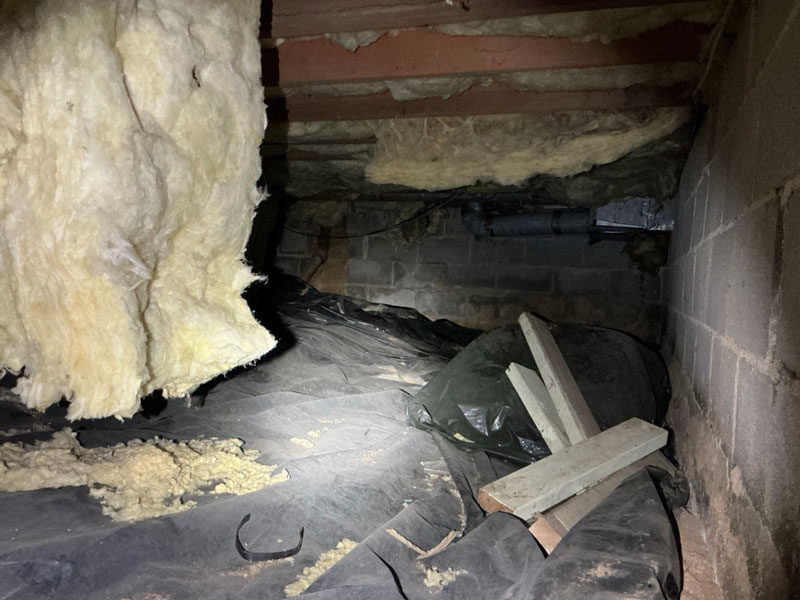
Fiberglass insulation in the crawl space is falling down, damp, stained or missing.
Uneven Room Temperatures
Some rooms stay too cold in winter or too warm and sticky in summer.
Musty Air Indoors
Stale, earthy odors drift up from the basement or crawl space into living areas.
Why Basements and Crawl Spaces Waste Energy
Most of the discomfort people feel upstairs, from cold floors to drafts and musty air, starts at the foundation. These are the main reasons below-grade spaces lose heat and collect moisture.
Air Leaks at the Rim Joist
The rim joist is the band of framing that sits on top of the foundation wall. Where wood meets masonry, small gaps let outside air pour in, and the cold wood surface can collect condensation in winter. Many older homes in the region have little or no insulation here. Sealing and insulating the rim joist is often one of the most noticeable improvements a homeowner can make.
Uninsulated Foundation Walls
Concrete and block walls feel solid, but they pass heat to the cool soil outside. In a basement with bare walls, that heat loss is steady all winter. Older block, stone and brick foundations, common across many Mid-Atlantic communities, also let air and moisture move through mortar joints and hollow cores, making the space colder and damper than it needs to be.
Vented Crawl Spaces
Vented crawl spaces were meant to dry out, but in humid Mid-Atlantic summers the vents often bring in warm, wet air that condenses on cool joists, ductwork and pipes. In winter, the same vents let cold air chill the floor above. Without a sealed, insulated envelope, the crawl space works against the comfort and air quality of the whole house.
Moisture-Sensitive Insulation
Fiberglass batts are common in crawl space ceilings and basement walls, but they do not hold up well below grade. They can absorb moisture, sag, fall down and trap dampness against wood framing, which supports mold and rot. Once wet, they lose much of their insulating ability, so the space slowly returns to being cold, drafty and musty.
Closed-Cell vs. Open-Cell Spray Foam
There are two main types of spray foam insulation. Both air seal well, but they handle moisture very differently, which is why the choice matters below grade.
Closed-Cell Spray Foam
- Dense, rigid foam with cells that stay sealed
- Acts as a vapor barrier and resists water absorption
- Higher insulating value per inch where space is tight
- Adds rigidity to the surfaces it bonds to
Open-Cell Spray Foam
- Soft, lightweight foam with open, spongy cells
- Lets moisture and vapor pass through
- Lower insulating value per inch
- Better suited to dry, above-grade spaces
Basements and crawl spaces sit against damp soil, so closed-cell spray foam is the below-grade choice and the type we use for these spaces. Open-cell foam can absorb moisture and is a poor fit for areas that are hard to keep dry.
Our Spray Foam Insulation Process
Free Inspection
A specialist checks moisture, air leaks, existing insulation and how your basement or crawl space is built.
Your Recommendation
We walk you through what we found and what we recommend, with a firm price.
Prep and Application
Our crew protects surrounding surfaces, applies closed-cell foam, then checks coverage and cleans up after curing.
Warranty Protection
Your spray foam insulation is backed by a transferable warranty that stays with the home.
Why Homeowners Choose Best Buy Waterproofing
A spray foam insulation contractor working below grade needs to understand moisture, not just insulation. Our team handles waterproofing, crawl space repair and insulation, so every part of your foundation fits together.
- Serving homeowners since 2017: Our team has worked in Mid-Atlantic basements and crawl spaces since 2017.
- Licensed and insured: We are licensed in Maryland, Virginia, Washington DC, Pennsylvania, Delaware and West Virginia, and fully insured.
- One in-house team: Waterproofing, crawl space repair, spray foam and basement finishing, handled by one team.
- Free inspection and financing: Inspections and estimates are free, and financing options are available for qualified homeowners.
- Transferable warranty: Your warranty transfers with the home if you sell, which adds peace of mind for buyers.
What Affects the Cost of Spray Foam Insulation?
We do not quote spray foam insulation from a price list, because every basement and crawl space is different. After your free inspection, you get a firm price based on what your home actually needs.
Square Footage
Larger wall, floor or rim joist areas need more foam and more time to cover.
Foam Thickness
The thickness applied depends on the surface and your insulation goals for the space.
Vented or Sealed
Vented crawl spaces get joist insulation, while sealed crawl spaces get insulated walls.
Old Insulation Removal
Wet or sagging batts may need to come out before new foam goes in.
Moisture Problems
Active leaks or high humidity should be fixed first so foam goes on a dry surface.
Access and Clearance
Tight crawl spaces, stored items or finished walls can affect how the work is done.
Spray Foam Insulation FAQs
Where do you install spray foam insulation?
We install spray foam insulation in basements and crawl spaces. That includes basement walls, crawl space walls, the underside of crawl space floors and rim joists, along with air sealing at gaps and penetrations. We focus on below-grade spaces because they are where moisture control and insulation overlap, and where our waterproofing and crawl space experience counts.
Why closed-cell instead of open-cell foam?
Closed-cell spray foam is dense and its cells stay sealed, so it resists water and acts as a vapor barrier. Open-cell foam is soft and lets moisture pass through, which makes it a poor fit for damp, below-grade spaces. Closed-cell also insulates more per inch, which helps in tight crawl spaces and along rim joists.
Should I insulate my crawl space walls or the floor above?
It depends on whether your crawl space is vented or sealed. In a vented crawl space, we insulate between the floor joists so the living space is separated from outside air. In a sealed or encapsulated crawl space, we insulate the foundation walls and seal the vents. Your inspection tells us which approach fits your home.
Can spray foam fix a wet basement?
No. Spray foam insulation helps control condensation and air leaks, but it does not stop groundwater. If water is coming through walls, cracks or the floor, it needs a waterproofing solution first. Because our team handles basement waterproofing and crawl space repair, we can address the water and the insulation in one plan.
What is the rim joist, and why insulate it?
The rim joist is the framing that sits on top of the foundation wall and wraps the edge of the floor. Gaps where wood meets masonry let outside air in, and the cold surface can collect condensation. Rim joist insulation with closed-cell foam seals those gaps and protects the wood in a single step.
Do I need to remove my old insulation first?
Often, yes. Fiberglass batts that are wet, sagging, moldy or falling down should come out before new foam goes in, because they can hold moisture against framing. If existing insulation is in good condition and in the right place, we will tell you. Removal is part of the plan we walk you through.
How long before I can use the space again?
After application, the foam needs time to cure, and we ask that people stay out of the area during that period. Our crew checks coverage and cleans up before we leave. We will give you clear timing for your project along with your recommendation.
Will spray foam help with a musty smell?
It can help. Musty odors usually come from moisture, and closed-cell foam reduces condensation on cold walls and joists. Air sealing also limits how much crawl space air moves into the house. For persistent odors, we may pair insulation with a dehumidifier, vapor barrier or mold remediation.
Spray Foam Insulation Across the Mid-Atlantic
Best Buy Waterproofing serves homeowners throughout Maryland, Virginia, Washington, DC, Pennsylvania, Delaware and West Virginia. From our office in Columbia, Maryland, our crews insulate basements and crawl spaces in older block and stone foundations and newer poured concrete homes alike.
Spray Foam Insulation in popular areas
Related Services
Schedule Your Free Insulation Inspection
Find out where your basement or crawl space is losing heat and letting in moisture. Book a free inspection for a clear recommendation and firm price, with financing available.