
Home » Service Areas » Washington, DC » Washington, DC Spray Foam Insulation
Washington, DC Spray Foam Insulation
- Licensed & Insured
- 5-Star Rated
- Local Business
- Transferable Warranty
Spray Foam Insulation Contractors in Washington, DC
Best Buy Waterproofing installs spray foam insulation in Washington, DC for basements and crawl spaces, the parts of a home where moisture and air leaks usually begin. Spray foam goes on as a liquid, expands into gaps and uneven masonry, and cures into a continuous layer that insulates and air seals at the same time. That makes it a strong fit for spots where fiberglass batts struggle, like cold brick and block basement walls, drafty rim joists and damp crawl spaces. We focus only on below-grade spaces, and we help you choose the right foam for each one.
DC homes put real demands on basement and crawl space insulation. Many are older rowhouses and semi-detached houses with brick, stone or block foundations, humid summers push moisture against cool walls, and freeze-thaw winters pull heat out through every gap. Because our in-house team also handles waterproofing, crawl space repair and mold remediation, we treat insulation as part of the whole moisture picture. Every project starts with a free inspection.
Signs You Need Spray Foam Insulation in Washington
Below-grade insulation problems usually show up as comfort or moisture issues long before anyone looks closely at the basement. If you notice any of these in your DC home, it is worth an inspection.
Cold floors upstairs
Floors over an uninsulated basement or crawl space stay cold through the winter.
Drafts at the foundation
You feel cold air near the top of basement walls or around the sill plate.
Rising energy bills
Your heating and cooling system runs longer than it should to keep up.
Sweating walls
Condensation on masonry or damp rim joists shows humid air meeting cold surfaces.
Musty basement odors
Damp air below grade often carries a musty smell up into the house.
Sagging or wet batts
Fiberglass that droops, falls down or holds moisture is no longer doing its job.
Spray Foam Insulation Solutions for Washington, DC Homes
Basement Wall Insulation
Brick, stone and block basement walls stay cool most of the year, and in a humid DC summer that cool surface is where condensation forms. For basement insulation, closed-cell spray foam goes directly onto the masonry, bonds to it and fills uneven joints. Because it resists water and acts as a vapor barrier, it keeps damp indoor air from reaching the cold wall, which helps cut down on sweating, musty odors and the conditions that lead to mold.
It is a sound choice for English basements and lower-level units you plan to finish, where it can sit behind new framing and drywall. We check the walls for leaks first, since spray foam is not a substitute for waterproofing.
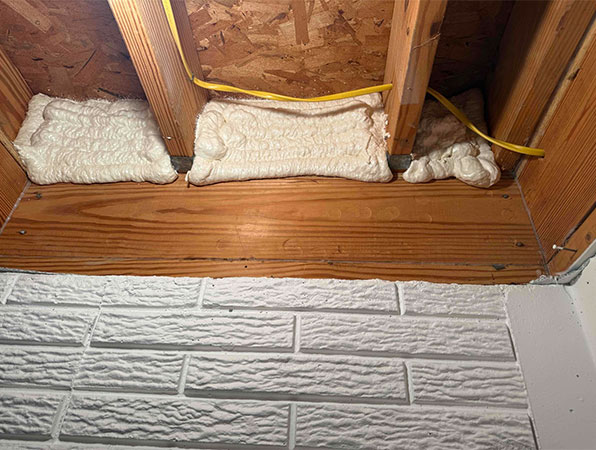
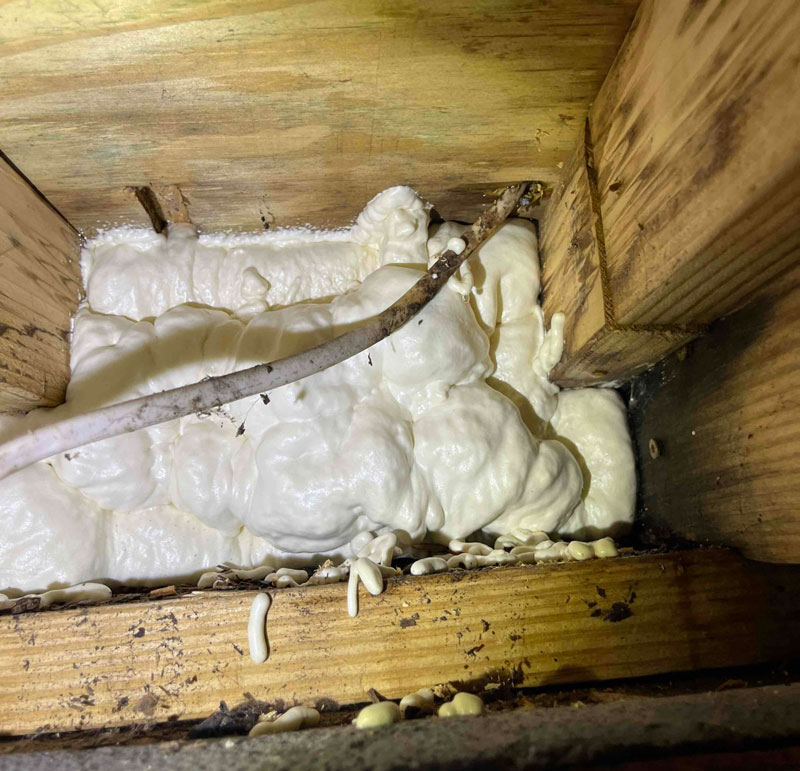
Rim Joist Insulation
The rim joist is the band of framing that sits on top of your foundation wall, and in many older Washington homes it is one of the leakiest spots in the house. It is often covered with a loose fiberglass batt, or nothing at all, so outside air slips in around the sill plate and through gaps in the framing. Rim joist insulation with closed-cell spray foam fills every irregular pocket between the joists and covers the wood in one step.
Sealing the rim joist reduces drafts, keeps the floors above warmer and limits the condensation that can lead to wood rot along the sill.
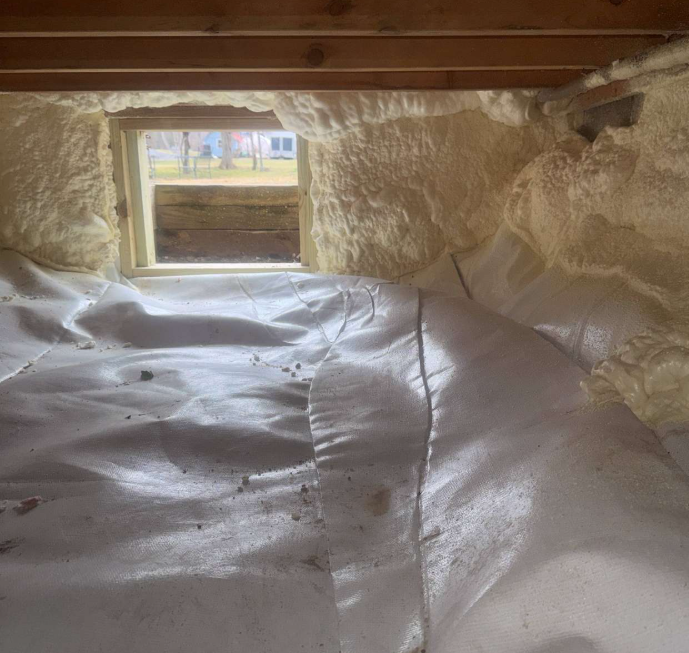
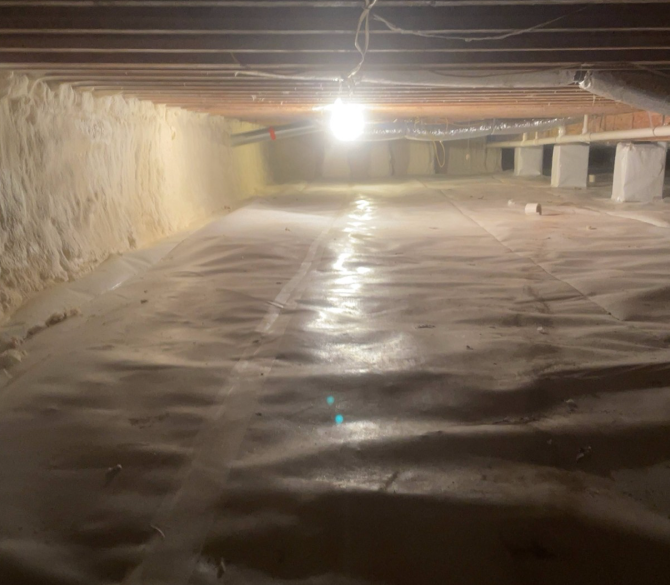
Crawl Space Insulation
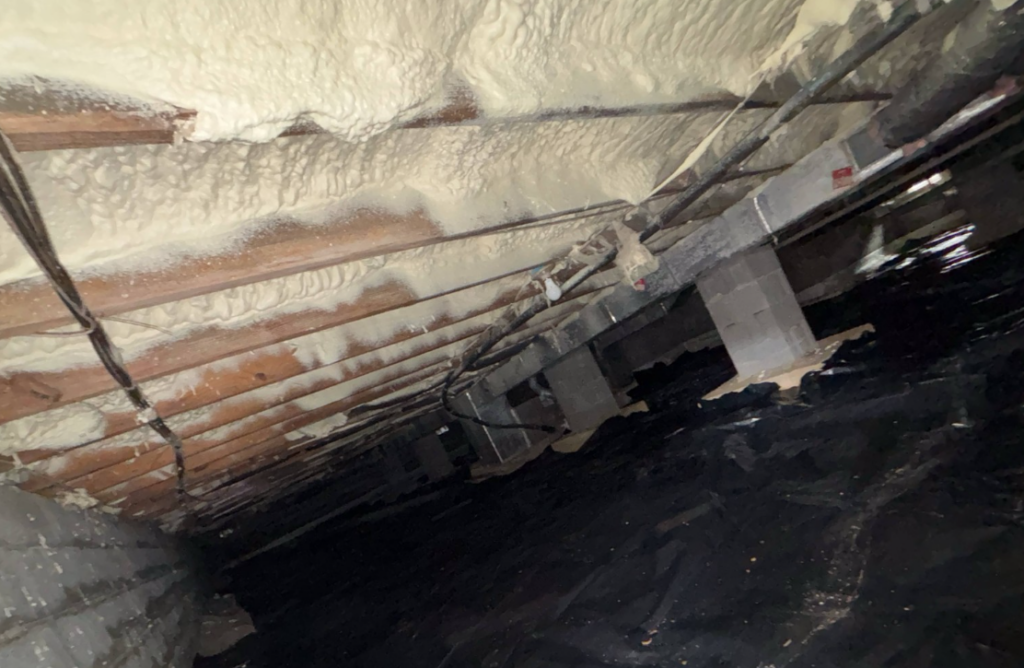
Crawl spaces under DC houses, additions and enclosed porches deal with the same clay-heavy soil and humid air that affect basements, and standard fiberglass often absorbs that moisture and fails. Our crawl space insulation approach depends on how the space is built. In a vented crawl space, we insulate the underside of the floor between the joists. In a sealed crawl space, we insulate the foundation walls and seal the vents, bringing the space inside the home’s envelope.
Insulation works best in a crawl space that is already dry, so we can pair it with a vapor barrier or encapsulation as one plan.
Air Sealing
Insulation only performs well when air is not leaking around it. As part of every basement or crawl space job, we handle air sealing at the gaps and penetrations where outside air gets in: the sill plate, plumbing and wiring openings, duct penetrations and crawl space access doors. Spray foam expands into those irregular openings and seals them in a way batts and caulk often cannot.
Less air moving through the foundation means fewer drafts, warmer floors and less work for your heating and cooling system. It also closes common entry points for insects and rodents.
Closed-Cell vs. Open-Cell Spray Foam
We offer both foam types, but they behave very differently below grade. Closed-cell spray foam is dense and rigid, with cells that stay sealed. It resists water, works as a vapor barrier and delivers more insulating value per inch, which matters in tight crawl spaces and shallow rim joist bays. That is why we recommend it for basement walls, rim joists and crawl spaces.
Open-cell spray foam is lighter and softer. Its cells are open, so it lets moisture pass through rather than blocking it, which makes it a poor match for damp, below-grade spaces. We explain which foam fits each area of your home and why.
Our Spray Foam Insulation Process
Free Inspection
We assess moisture, air leaks and existing insulation in your basement or crawl space at no cost.
Your Recommendation
We walk you through what we found and what we recommend, including which foam fits where.
Professional Application
We prepare surfaces, remove failed insulation, apply the foam, then check coverage and clean up.
Warranty Protection
You receive documentation and our transferable warranty for added peace of mind.
Why Washington, DC Homeowners Choose Best Buy Waterproofing
We bring a waterproofing contractor’s understanding of moisture to every spray foam insulation project in Washington. We insulate only basements and crawl spaces, and we plan the work around keeping those spaces dry.
- Licensed and insured: Licensed in DC, Maryland, Virginia, Pennsylvania, Delaware and West Virginia, and fully insured.
- One in-house team: Insulation, waterproofing, crawl space repair and mold remediation handled by the same crew.
- Serving since 2017: We have helped homeowners across the DC area with below-grade problems since 2017.
- Transferable warranty: Our transferable warranty can pass to the next owner if you sell your home.
- Free inspections, financing: Free inspections and flexible financing options to help you plan the work.
What Affects the Cost of Spray Foam Insulation in Washington?
We don’t quote spray foam insulation from a price list, because every DC basement and crawl space is built a little differently. After a free inspection, you get a firm price based on what your home actually needs.
Area to insulate
The size of the basement walls, rim joists or crawl space being insulated.
Foam type
Closed-cell and open-cell foam differ in density, materials and application thickness.
Depth needed
The insulating depth each area needs to meet its comfort and moisture goals.
Access to space
Tight crawl spaces, narrow rowhouse stairs and cluttered basements take more prep time.
Existing moisture issues
Leaks, wet wood or mold may need attention before any foam goes on.
Old insulation removal
Wet, sagging or damaged insulation may need to come out first.
Spray Foam Insulation FAQs
Where do you install spray foam insulation?
We install spray foam insulation in basements and crawl spaces only. That includes basement walls, crawl space walls, the underside of crawl space floors and rim joists, along with air sealing at gaps and penetrations. We focus on below-grade spaces because that is where moisture control and insulation overlap, and where our waterproofing and crawl space work counts most.
Should I choose closed-cell or open-cell spray foam?
For basements and crawl spaces, closed-cell spray foam is usually the right choice. It resists water and acts as a vapor barrier, so it holds up against the humidity and condensation common below grade in DC. Open-cell foam lets moisture pass through, which makes it a poor fit for damp areas. We explain our recommendation during the inspection.
Will spray foam insulation lower my energy bills?
Spray foam seals the air leaks along your foundation and rim joists that make your heating and cooling system work harder, so many homeowners notice warmer floors and lower energy bills. Results depend on your home’s size, age and existing insulation. We point out the biggest leaks we find during your free inspection.
Can spray foam fix a wet basement?
No. Spray foam controls condensation and air movement, but it is not waterproofing. If water is seeping through your walls or floor, that needs to be fixed first or the foam may hide an ongoing problem. Our team also handles basement waterproofing, so we can address both in the right order.
Is spray foam a good fit for older DC rowhouses?
Often, yes. Older Washington rowhouses and semi-detached homes tend to have uneven brick or stone walls, open rim joists and gaps that batts cannot seal. Because foam expands into irregular spaces, it seals areas fiberglass misses. We inspect the masonry and framing first so the foam goes onto a sound, dry surface.
How long before we can use the space again?
We ask homeowners to stay out of the treated area for about 24 hours while the foam cures. Afterward, we check coverage and adhesion, clean up and walk you through the finished work.
More Services in Washington, DC
Spray foam insulation near Washington, DC: Arlington, VA · Alexandria, VA · Bethesda, MD · Silver Spring, MD · Rockville, MD · Falls Church, VA
Get a Free Spray Foam Inspection
Ready for a warmer, drier basement or crawl space? Schedule a free inspection and we will show you where your Washington, DC home is losing air below grade and which foam makes sense. Call (844) 980-3707 today.