
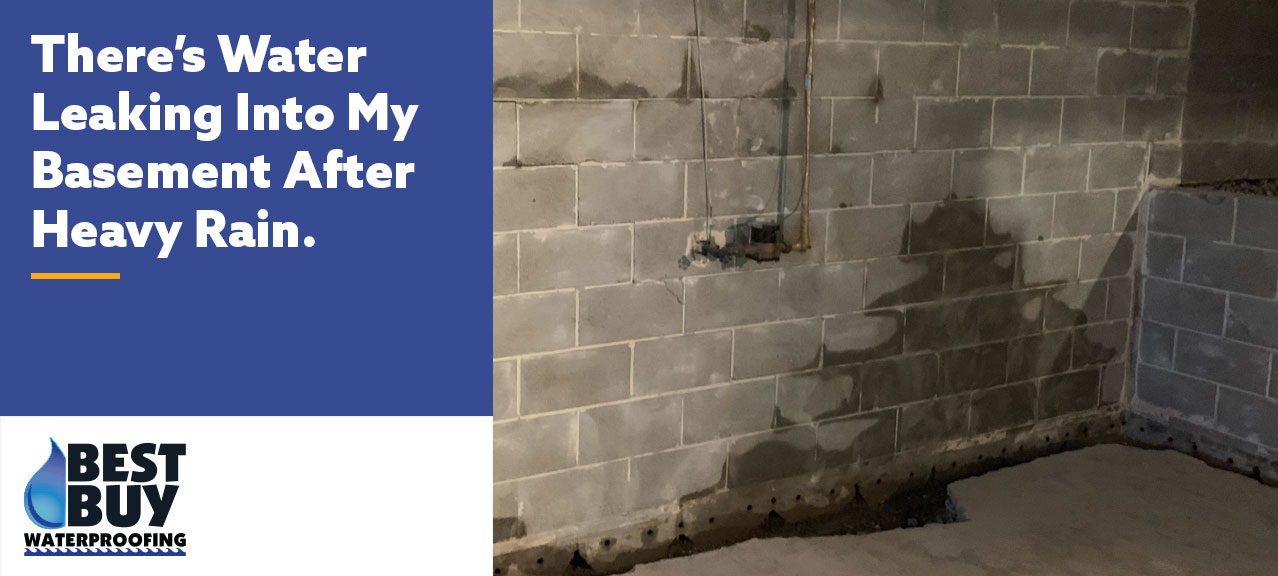
Discovering water in your basement after a heavy rainstorm can be alarming. According to FEMA, 98% of basements experience water issues at some point, so you’re not alone. These issues can lead to:
- Mold growth
- Property damage
- Structural concerns
When water appears in your basement after rainfall, it’s signaling an underlying issue. The primary cause is water pressure building in the surrounding soil, particularly problematic in clay-rich areas like Ohio, where soil composition makes homes more vulnerable.
What Causes Water to Enter a Basement During Heavy Rain?
Understanding the common entry points helps identify and address problems early:
Water pressure from saturated soil
When rain saturates the ground, it creates pressure against basement walls. Water seeks the path of least resistance through:
- Tiny cracks
- Joints
- Porous concrete areas
Clay soil intensifies this issue by retaining moisture longer than other soil types.
Poor drainage around your home
Proper water management is crucial. Problems arise from:
- Yards sloping toward the house
- Clogged gutters
- Poorly positioned downspouts
Your ground should slope away from the foundation at 1 inch per foot for 10 feet.
Cracks in your foundation
Concrete’s natural porosity, combined with normal settling, soil pressure and freeze-thaw cycles creates vulnerabilities in your foundation’s defense against water.
These openings become water pathways during storms. Horizontal cracks pose greater risks than vertical ones, often indicating structural concerns.
Window wells that overflow
Window wells can quickly flood during heavy rain. While most have drains connecting to foundation drainage, these often clog with leaves, dirt and debris
Once blocked, water seeps through window seams into basements, especially after fall leaf accumulation.
Failing waterproofing systems
Even quality waterproofing deteriorates. Building codes require multiple protective systems, but watch for early warning signs:
- Musty odors
- Damp wall spots
- White chalky deposits
Sump pump problems
Your sump pump provides crucial flood protection but can fail when needed most during storms due to:
- Power outages affecting non-backup systems
- Overwhelming water volume
- Regular pre-storm maintenance is essential
When Does a Wet Basement Signal a Bigger Foundation Issue?
Not every leak indicates foundation failure, but watch for these warning signs:
- Persistent wet spots: Same-area dampness after storms indicates foundation weakness
- Growing water stains: Expanding marks with white residue suggest ongoing infiltration
- Bowed walls: Inward-curving walls signal structural damage, potentially reducing property value 10-20%
- Expanding floor cracks: Gaps over 1/8 inch, especially post-storm, indicate soil movement
- Sticking doors/windows: Often signals foundation shifts
Here’s something that surprises homeowners: foundation problems often appear upstairs first. If doors or windows suddenly become hard to open after storms, your foundation might be shifting. This isn’t temporary humidity sticking—it affects multiple doors and persists after weather clears.
Mud coming through cracks
When dirt pushes through foundation cracks, it signals water forcing its way in under pressure. This intrusion typically worsens over time.
Worried about these signs? Let’s investigate.
Where Do Cracks Commonly Form That Allow Water Intrusion?
Understanding typical crack locations helps spot issues early. Each crack type reveals different foundation concerns.
Vertical and diagonal cracks from settling
Most vertical and diagonal foundation cracks result from normal house settling. Look for:
- 45-degree diagonal cracks
- Cracks starting in upper wall corners
While less serious than horizontal ones, these still let water enter, especially if exterior waterproofing can’t bridge gaps.
Horizontal cracks from soil pressure
These serious cracks indicate excessive outside soil pressure. Key characteristics:
- Appear midway up basement walls
- Show wall bowing inward
- Create major water entry points during rain
- Worsen progressively
Cold joints between wall and floor
These occur where concrete pours didn’t bond properly. In clay soil areas:
- Joints shift seasonally
- Clay expands when wet
- Creates storm water entry points
Flat grading near window wells compounds problems by creating water reservoirs against foundation walls.
Why Does Water Only Show Up in My Basement After Heavy Rain?
When your typically dry basement suddenly has puddles after a major storm, there’s a clear explanation for this common homeowner frustration.
Heavy rain creates massive pressure underground
Saturated soil acts like a soaked sponge pressing against basement walls, creating up to 5,000 pounds of pressure per square foot—enough to force water through tiny foundation gaps.
Clay soil expands and squeezes your foundation
Ohio’s clay soil swells during storms, pressing against foundation walls. Minor cracks expand under this pressure, allowing water entry.
Your drainage gets overwhelmed
Even well-maintained systems have limits. When heavy rain overwhelms gutters and drains, excess water often finds its way into basements.
Tiny cracks activate during storms
Seemingly harmless hairline cracks become active water channels under storm pressure.
Water flows toward your house
Even slight yard slopes create a funnel effect, directing rainwater toward foundation weak points.
Spring and wet seasons increase risks
When soil stays saturated after thaws or during wet periods, even moderate rainfall can trigger leaks since there’s no absorption capacity left.
Don’t Wait—Take Action Before the Next Storm
Ignoring basement water leads to:
- Mold growth within 24-48 hours
- Property damage
- Expanding cracks
- Deteriorating waterproofing
After rainfall, check:
- Gutter drainage distance
- Yard grading
- Basement wall conditions
While proper exterior drainage prevents many basement water issues, some problems require expert intervention.
For recurring leaks, expanding cracks, or persistent water spots, trust Best Buy Waterproofing’s 70+ years of combined experience. Our basement waterproofing specialist identify and permanently fix root causes.
Ready for a dry basement? Call us to schedule your FREE inspection. Don’t let storms catch you unprepared—we’re here 24/7