
A wet basement isn’t just an inconvenience. Left unaddressed, moisture intrusion leads to mold growth, foundation deterioration, and structural issues that put your home—and your family—at risk.
Arlington County homeowners deal with a very specific set of challenges. Heavy clay soil, a high water table, and decades-old foundations create the kind of hydrostatic pressure that forces water right through your basement walls. This isn’t a problem you can ignore, and it rarely fixes itself.
Best Buy Waterproofing specializes in basement waterproofing Arlington Virginia homeowners trust. From interior French drain systems to battery backup sump pumps, we’ve seen every type of leak this area throws at homeowners—and we know exactly what works.
Keep reading. We’ll walk you through the real reasons your basement is leaking, the permanent fixes that actually solve the problem, and how to claim your free basement waterproofing estimate Arlington VA.
The Local Profile: Soil, Aging Homes, and Northern Virginia Rainfall
Arlington County sits on some of the most problematic soil conditions in the entire Mid-Atlantic region. With around 40 inches of annual rainfall, moisture has no shortage of opportunity to find its way into your foundation. What makes Arlington different isn’t just how much it rains—it’s what that water runs into when it hits the ground.
Heavy Marine Clay and Soil Saturation
Northern Virginia has approximately 108 different soil types, but one creates more basement headaches than all the others combined. Marine clay dominates the areas east of I-95—Arlington, Alexandria, Fairfax, and Prince William counties included. Formed from Potomac River sediment, this soil contains montmorillonite clay, a mineral that swells when wet and contracts when dry.
Sandy soils let water pass through quickly. Clay doesn’t work that way. It absorbs moisture and holds it—creating a dense, impermeable barrier that wraps tightly around your foundation. When it expands, the force is enough to crack foundation walls. When it dries out and shrinks, it pulls support away from footings and allows uneven settling. Your foundation is caught in the middle of that cycle, season after season.
Hydrostatic Pressure Foundation Seepage Arlington
Water weighs around 60 pounds per cubic foot. Now picture that weight, multiplied, pressing against your basement walls from every direction. That’s hydrostatic pressure—and it only gets stronger the deeper your foundation goes.
Here’s something most homeowners don’t realize. The soil contractors backfilled around your foundation during construction isn’t the same as the hard-packed earth beyond your property. Excavation loosens and breaks up soil, making it far more permeable and water-absorbent than undisturbed ground. After every rainstorm, water collects in that backfilled zone—what professionals call the clay bowl effect. Your basement walls were designed to bear vertical loads from above, not thousands of pounds of lateral pressure from saturated clay pushing in from the sides.
Arlington’s Historic Housing Stock and Aging Foundations
Many Arlington homes predate modern waterproofing standards by decades—some by more than a century. Stone foundations from the 18th and 19th centuries allow seepage once mortar degrades or stones begin to shift. Early 20th-century concrete block foundations develop moisture weeping as they age and deteriorate.
White, chalky deposits on basement walls—called efflorescence—are a telltale sign that water is passing through porous cinderblock or brick on a regular basis. Older Arlington homes are particularly vulnerable, especially when contractors originally used excavated marine clay as backfill material. That clay traps water directly against basement walls, creating exactly the kind of pressure those original foundations were never built to handle.
The Primary Culprits Behind Arlington Basement Leaks
Most basement leaks in Arlington aren’t random. Water follows the same predictable paths—and once you know where to look, the solution becomes a lot clearer.
Cove Joint Seepage: The Most Common Leak Point
See water pooling along the edges where your basement walls meet the floor? That’s the cove joint—and it’s the most common entry point for water intrusion in homes across Arlington.
Here’s why it happens. Contractors pour basement walls and floors separately during construction, which leaves a natural gap at that junction. When hydrostatic pressure builds in the saturated clay soil surrounding your foundation, water takes the path of least resistance—straight through that gap.
Homeowners often try sealing it from the inside. It seems logical, but it doesn’t work. The cove joint runs the entire perimeter of your basement—it can’t be patched like a crack. The right fix is interior French drain installation, which redirects water before it ever reaches your living space.
Foundation Wall Cracks and Tie-Rod Holes
Poured concrete foundations develop another common leak point: tie-rod holes. These small openings—left behind after steel rods are removed post-construction—show up as dark gray circles on your walls. During heavy rain, they produce water streaks, brown staining, or white mineral deposits.
Patching them with hydraulic cement might seem like a quick fix, but it traps moisture inside the wall and accelerates concrete deterioration. Professional polyurethane injection fills the cavity from the inside out, creating a flexible seal that holds up through Arlington’s freeze-thaw cycles year after year.
Poor Surface Drainage and Clogged Gutters
Not all basement problems start underground. Clogged gutters send water cascading straight off your roofline and into the soil directly around your foundation. Instead of flowing away, that water saturates the backfill zone—adding to the hydrostatic pressure your basement walls are already fighting.
Downspouts should extend at least 5 to 10 feet from your home. Anything shorter puts water right back where you don’t want it.
Sump Pump Failure During DMV Storms
Here’s the scenario nobody wants: a major storm rolls through, your power goes out, and your sump pump goes with it. That’s exactly when your basement is most at risk.
Battery backup sump pumps kick in automatically when electricity fails, keeping water out even when the grid goes down. The average basement flood claim runs between $10,000 and $25,000. A backup system costs a fraction of that—and it works when it matters most.
The Hidden Costs of Ignoring Basement Moisture—And the Solutions That Fix It for Good
We understand this is stressful. Water in your basement feels overwhelming, and it’s tempting to put off the repair. But delaying basement waterproofing Arlington VA creates problems that compound fast—and cost far more to fix later.
Mold Doesn’t Wait
Mold begins growing within 24 to 48 hours after water intrusion. That’s not a lot of time. Once it takes hold, it produces allergens, irritants, and potentially toxic substances called mycotoxins. Exposure causes allergic reactions, respiratory issues, and can trigger asthma attacks in both allergic and non-allergic individuals. Beyond the health risks, mold gradually destroys the building materials it grows on.
The key to mold control is moisture control. Stop the water, and you stop the problem at its source.
What Happens to Your Structure
Excess moisture causes wood to absorb water, swell, warp, and rot. Floor joists lose structural capacity over time—leading to sagging floors, soft spots, and added stress on your foundation. The longer you wait, the worse it gets. Moisture control stops the progression at its current stage and causes active decay fungi to go dormant. Without intervention, damage advances every single month.
What It Means for Your Home’s Value
Wet basements can decrease home value by 10 to 25 percent. That’s a significant hit in Arlington’s competitive real estate market. On the flip side, basement waterproofing can increase home value by 400 percent or more of the installation cost. Buyers notice moisture. They worry about mold, ruined storage, and expensive repairs—and they factor it into their offers.
Protecting your basement is protecting your investment.
The Solutions That Actually Work
Here’s how we fix it:
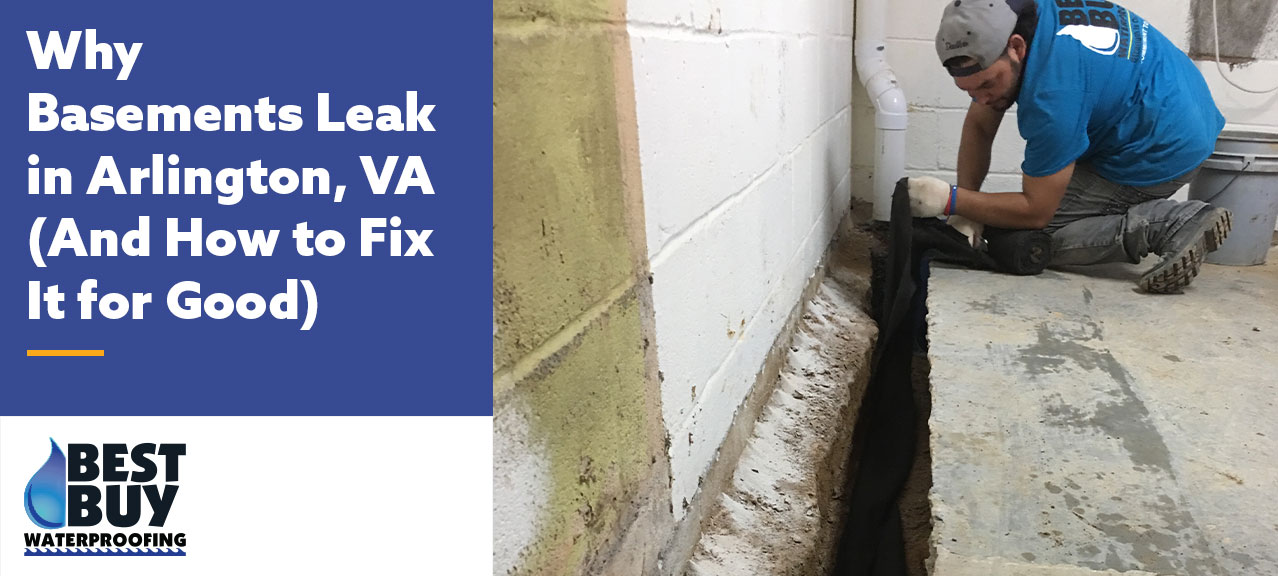
Interior French Drain Installation Interior French drains install under your basement concrete and connect directly to your sump pump. They capture water after it enters through walls or travels under the slab, then route it safely out of your home. No more pooling. No more damage.
Dual and Triple Sump Pump Systems with Battery Backup Our TripleSafe system combines a primary pump, a secondary pump, and a battery backup—all in one unit. If one pump fails, the others take over without missing a beat. And when the power goes out during a DMV storm? The battery backup sump pump keeps everything running.
Wall Vapor Barriers and Basement Encapsulation Vapor barriers stop moisture from migrating through concrete walls and exposed soil. Basement encapsulation typically runs $4,000 to $8,000, though costs can range from $2,000 to $15,000 depending on the size of the space. Best Buy Waterproofing installs professional-grade systems built to handle the hydrostatic pressure and clay soil conditions Arlington homeowners face every season.
We’ll work with you to find a solution—and a payment plan—that fits your budget and gets your home protected quickly.
5 Warning Signs Your Arlington Basement Needs Immediate Attention
Catching a moisture problem early makes all the difference. Small warning signs today can turn into costly wet basement repair Arlington Virginia emergencies if they’re left alone. Here’s what to watch for.
Earthy, Musty Odors From Active Mold
That smell isn’t just “old basement.” It’s microbial volatile organic compounds (mVOCs) released by active mold and mildew growth. If you’re noticing basement mustiness, biological growth is already happening somewhere in your basement.
Basement humidity can spike above 70-80% during humid Northern Virginia summers without proper moisture control. The EPA recommends keeping indoor humidity below 60%—and for good reason. The CDC confirms that exposure to dampness and mold causes respiratory symptoms including coughing, wheezing, and shortness of breath. Don’t ignore the smell. It’s your basement telling you something’s wrong.
Efflorescence: White Powder on Concrete Walls
Notice a white, chalky powder forming on your basement walls? That’s efflorescence. It forms when moisture moves through porous foundation materials and evaporates, leaving mineral salt deposits on the surface.
The powder itself won’t hurt you, but what it confirms will. Active moisture is passing through your foundation walls right now.
Water Stains Along Baseboards or Corners
Swollen baseboards, brown staining near the floor, or trim that’s pulling away from the wall—all of these point to water reaching the floor-wall joint. A musty smell near stained trim is another indicator of hidden dampness lurking behind the surface.
These stains don’t appear overnight. They build up over time, and by the time you notice them, moisture has likely been working against your foundation for a while.
Damp or Peeling Paint and Bubbling Drywall
Paint bubbling occurs when moisture gets underneath the paint film and has nowhere to go. Basement humidity above 55% weakens adhesion and accelerates efflorescence formation on walls. Bubbling near the base of walls is a particularly telling sign—it means persistent moisture pressure is building at the floor level.
Puddles or Active Trickles During Heavy Rain
This one’s straightforward. Puddles on your basement floor are proof your basement is leaking. Water that appears only during or after heavy rain points directly to external water pressure—saturated clay soil pushing against your foundation.
Worried about what you’re seeing down there? Best Buy Waterproofing offers free inspections to help you find the cause and stop the damage before it spreads.
Don’t Wait, Contact Best Buy Waterproofing Today!
Basement leaks don’t fix themselves. The longer moisture sits, the more damage it does—to your walls, your floor joists, your air quality, and your home’s value.
Your Arlington home is up against real challenges. Clay soil, aging foundations, and seasonal rainfall create conditions that require more than a quick patch or a coat of paint. What you need are permanent solutions that address the root cause.
That’s exactly what Best Buy Waterproofing delivers. From interior French drain systems to full basement encapsulation, we’ve helped countless Arlington homeowners protect their homes for good.
The first step is simple and free. Schedule your free basement waterproofing estimate Arlington VA today. You’ll meet with a certified basement waterproofing inspector—not a salesperson—who will walk you through exactly what’s happening and what it takes to fix it. No pressure, just answers.