
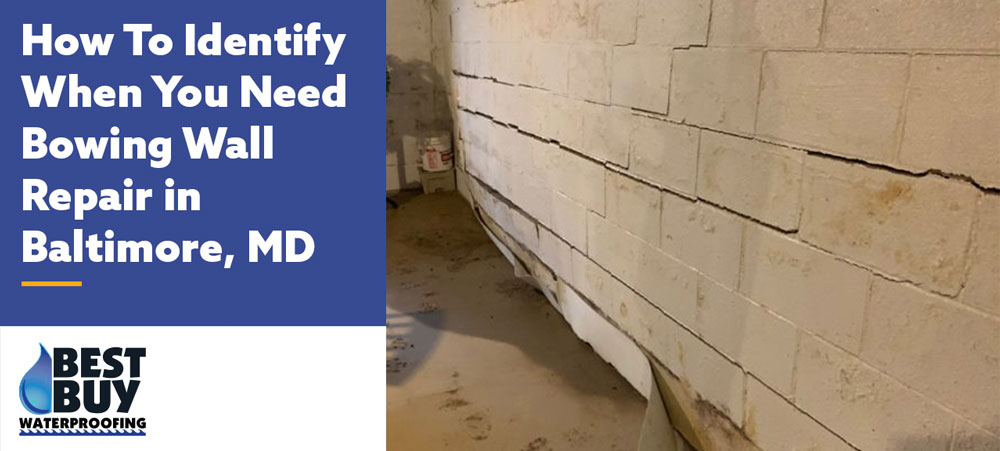
Noticing cracks or inward movement along your basement walls? For Baltimore homeowners, bowing foundation walls are one of the most common — and most serious — structural warning signs. What often starts as a small crack can quickly become a major foundation issue that threatens your home’s safety, value, and livability.
Baltimore’s older homes, block foundations, heavy clay soils, and frequent wet–dry cycles create the perfect conditions for basement walls to bow. Recognizing the signs early can help you avoid emergency repairs and protect your investment.
What Is Bowing Wall Damage?
A bowing wall occurs when pressure from the soil outside your foundation pushes the wall inward. This lateral movement is different from normal settling and almost always signals a structural problem that needs professional attention.
In Baltimore homes, bowing most often affects concrete block basement walls, though poured concrete walls can also show movement when pressure becomes excessive.
Common Signs of Bowing Wall Failure
Your home usually provides warning signs before structural damage becomes severe. Watch for these indicators of bowing wall repair needs:
- Horizontal cracks across basement walls (a major red flag)
- Walls that curve inward or no longer appear straight
- Stair‑step cracks in block or brick foundation walls
- Bulging or shearing blocks near the middle of the wall
- Vertical cracks that widen over time or begin leaking
- Doors or windows sticking near basement level
- Gaps forming at sill plates, beams, or along floor joints
If you can place a level against the wall and see daylight in the middle, inward movement is already underway.
Why Bowing Walls Are Common in Baltimore Homes
Bowing wall issues are especially common in the Baltimore area due to several local factors:
- Expansive Clay Soil- Many Baltimore neighborhoods sit on clay‑heavy soils that expand when wet and shrink when dry. This constant movement creates repeated inward pressure on foundation walls.
- Poor Drainage & Moisture- Clogged gutters, short downspouts, negative grading, and heavy rainfall can keep soil saturated. Saturated soil weighs more and exerts far greater pressure against basement walls.
- Aging Construction- Many Baltimore homes were built decades ago with block foundations that lack modern reinforcement. Over time, these walls struggle to resist increasing lateral loads.
- Freeze‑Thaw Cycles- Seasonal freezing and thawing cause soil expansion that intensifies wall pressure — especially during wet winters and early spring.
Bowing Walls vs. Normal Foundation Cracks
Not every crack means failure, but horizontal cracking and wall curvature are not normal.
- Normal settling: Small hairline vertical cracks that do not change much over time.
- Structural concern: Horizontal cracks, widening cracks, displacement, or visible inward movement.
If cracking is getting worse or appearing alongside bowing, the wall is under active pressure.
Early‑Stage vs. Advanced Bowing Wall Damage
Early warning signs may include:
- Minor horizontal cracking
- Slight inward curvature
- Small water seepage during heavy rain
Advanced damage often involves:
- Cracks wider than ¼ inch
- Walls bowing several inches inward
- Block fracture or wall displacement
- Increased water intrusion
Early detection typically means more repair options and lower overall cost.
Basement & Exterior Signs to Check
Inside the Basement
- White powdery residue (efflorescence)
- Damp patches or water trails along cracks
- Moist or darkened blocks in the middle of the wall
- Cracks that reappear after being patched
Outside the Home
- Cracking or separation in brick or stonework
- Soil pulling away from the foundation during dry periods
- Standing water near foundation walls
- Chimney or exterior wall separation
These exterior conditions often contribute directly to basement bowing.
What Happens If Bowing Walls Are Ignored?
Bowing walls do not fix themselves. Without repair:
- Walls continue moving inward
- Cracks worsen and spread
- Water intrusion increases
- Repair costs rise dramatically
- Structural integrity and resale value decline
In severe cases, wall collapse can become a real risk.
When to Call a Bowing Wall Repair Expert
You should schedule a professional inspection if you notice:
- Horizontal cracks in basement walls
- Any visible inward bowing or bulging
- Rapid crack growth
- Multiple symptoms appearing together
- Repeated water leakage through cracks
Baltimore homeowners benefit most from an evaluation before displacement becomes severe.
Bowing Wall Repair Options from Best Buy Waterproofing
At Best Buy Waterproofing, we match the repair method to the wall type, severity of movement, and exterior conditions around your home.
Wall Anchors
Wall anchors transfer soil pressure away from the wall into stable soil further from the foundation. This solution:
- Stops inward movement
- Can gradually straighten walls
- Works best when yard space allows
Helical Tieback Anchors
Ideal for properties with limited yard access, these anchors screw into stable soil at an angle and provide powerful stabilization without extensive excavation.
Carbon Fiber Reinforcement
For walls bowed less than 2 inches, carbon fiber straps:
- Are stronger than steel
- Require no drilling or excavation
- Prevent further movement discreetly
Steel I‑Beams
For more advanced bowing (up to ~4 inches), steel beams:
- Brace the wall from floor to joist
- Require no exterior digging
- Provide immediate stabilization
Preventing Future Bowing Wall Issues
Permanent repairs work best when paired with prevention:
- Improve grading to slope water away from the foundation
- Extend downspouts 6–10 feet from the home
- Keep gutters clean and clear
- Address basement waterproofing concerns early
Managing water reduces the pressure that causes walls to move in the first place.
Protect Your Baltimore Home Before Damage Worsens
Bowing basement walls are one of the clearest signs your foundation needs attention. Acting early can prevent major structural damage and costly repairs.
Best Buy Waterproofing has helped Baltimore homeowners protect their foundations for decades with proven solutions designed for local soil and climate conditions.
If you’re seeing cracks, curves, or water intrusion, don’t wait.
Schedule your free bowing wall inspection today and get clear answers before minor damage turns into a major structural issue.