
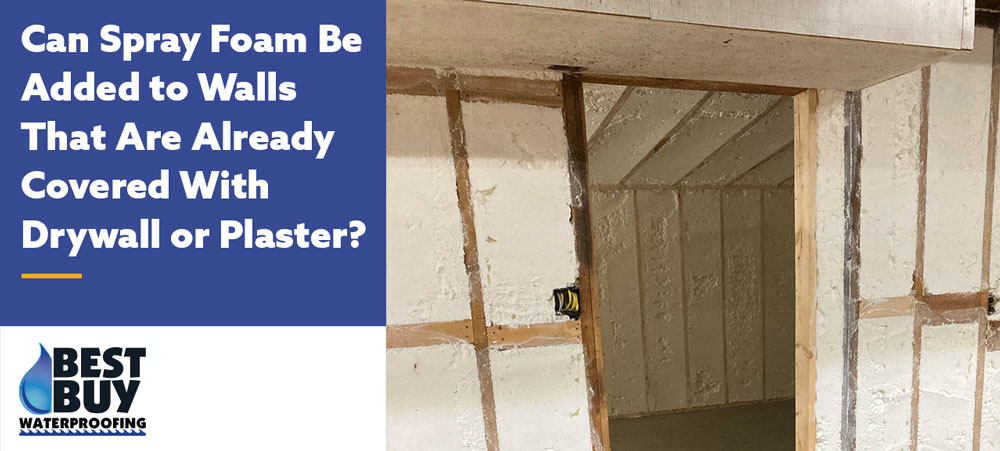
If you have drafty rooms, cold lower levels, or rising utility bills, you have probably wondered: can you spray foam existing walls without tearing open drywall or plaster? For many homeowners, that question is really about comfort, energy savings, and avoiding a messy renovation.
The short answer is yes, but not with standard spray foam insulation. If you are asking can you put foam insulation behind drywall, the safe approach is retrofitting insulation without removing drywall by using a specialty product made for enclosed wall cavities.
Traditional spray foam expands too fast and with too much force for closed walls. That is why retrofit spray foam existing homes projects require a slow-rise material rather than the same foam used in open stud bays during new construction.
The better option is injection foam for finished walls. This specialized material flows into the cavity first, then expands slowly enough to fill gaps without cracking plaster or bowing drywall.
Basements and lower levels need extra caution. Homeowners often ask can you put foam insulation behind drywall in a finished basement, but the answer depends on whether the foundation is already dry and protected from water intrusion.
From Best Buy Waterproofing’s perspective, insulation and moisture control have to work together. Adding insulation to covered walls below grade without solving seepage or humidity problems can trap moisture where homeowners cannot see it, especially when retrofitting insulation in damp basement walls before the basement is properly waterproofed.
We’ve seen this mistake cost homeowners thousands in remediation work. The water damage and mold problems that develop behind finished basement walls often cost more than you’ll ever save on energy bills.
That’s why we always recommend having your foundation checked for moisture issues before any insulation work begins. Fix the water problems first, then insulate safely.
We’ll walk you through exactly how to insulate your finished walls the right way—including when basement walls need waterproofing first.
Can You Spray Foam Existing Walls? Why Standard Spray Foam Fails
The Problem with Explosive Expansion
Standard spray foam expands up to 30-60 times its liquid volume after application. That explosive growth happens within seconds. The chemical reaction between isocyanates and polyol creates an unstoppable expansion force designed for open stud cavities where the foam can expand freely into the air. When you trap that same reaction inside a closed wall cavity, the physics turn destructive.
A 2-pound density foam exerts 2000 pounds of pressure per inch in a constrained cavity. That’s the equivalent of a small car pressing against every square inch of your wall. The foam pushes equally in all directions, searching for the weakest point. Your drywall or plaster becomes the escape route.
What Happens to Your Drywall
Using the wrong product when injecting foam insulation into drywall cavities creates predictable damage. The expansion pressure can pop drywall screws, bow wall panels, and split seams because the foam has nowhere to release that force inside a sealed stud bay.
Professional spray foam contractors report wall damage in 10% to 20% of retrofit attempts using standard products. That failure rate explains why experienced installers won’t touch closed cavity work. One catastrophic blowout where drywall separates from framing has put contractors out of business. The liability simply isn’t worth the risk.
Thinner half-inch panels secured with minimal screws fail first. Even when the drywall doesn’t completely blow out, the compressed foam keeps exerting pressure. That creates permanent warping you’ll see for years.
Insulating Old Lath and Plaster Walls Takes Even More Care
Old lath and plaster walls present even greater challenges. Historic plaster adheres to wooden lath strips through plaster “keys” that squeeze between the gaps. Those keys are brittle. The expansion force from standard foam snaps them instantly, detaching entire wall sections from their backing.
That is why homeowners researching how to insulate plaster walls without tearing them down need a method that minimizes pressure. Slow-expanding foam can move through irregular cavities and around wood lath without snapping brittle plaster keys.
This is exactly why injection foam for finished walls exists. Standard spray foam was engineered for new construction where contractors apply material directly to exposed studs, while finished-wall retrofits require a material that flows gently through irregular cavities instead of forcing its way into place.
Your walls need a gentler approach.
Injection Foam for Finished Walls: How It Works Without Demolition
Now let’s talk about the right way to add insulation to finished walls.
Slow-Rise Foam: The Gentle Solution
The key product is slow-rise polyurethane foam. Unlike standard spray foam, this slow rise spray foam for closed walls stays workable long enough to flow through the cavity before it fully expands and cures.
Because slow-rise polyurethane foam expands gradually, installers can fill the cavity more evenly and reduce the risk of pressure damage. It behaves more like a controlled fill material than an aggressive expanding foam.
The expansion is controlled—only 3 to 6 times its original liquid volume. No destructive pressure buildup. No popped screws. No cracked plaster. The foam achieves over 90% closed-cell content, which means excellent moisture resistance and structural strength once it cures. The material bonds permanently to wood, concrete, drywall, and plaster without shrinking or settling.
Installation That Won’t Wreck Your Home
The installation process protects your finished walls. Technicians access your wall cavities through small holes drilled between each stud bay.
For vinyl or aluminum siding, crews remove one horizontal strip, drill into each cavity, and check for obstructions. The injection starts at the top and fills from bottom to top, ensuring complete coverage.
Brick homes require 5/8-inch holes through the mortar joints, which get properly re-mortared afterward. Wood siding can be temporarily removed or drilled directly, with holes plugged using matching wood plugs. Working from the exterior avoids any interior wall damage.
Real Performance That Beats Traditional Insulation
The R-value per inch for injection foam is one reason this approach performs so well. In a typical retrofit, closed wall cavity insulation can improve thermal performance while also reducing the air movement that makes rooms feel drafty.
The biggest comfort gain often comes from stud cavity air sealing. When the foam bonds to the framing and sheathing, it blocks the little gaps that let outside air move through the wall assembly.
That’s why homeowners see such dramatic energy savings. You’re not just adding insulation—you’re creating a continuous air barrier that fiberglass simply cannot match.
What Type of Walls Are You Working With?
Different wall materials need different approaches. Let’s break down what works best for your specific situation.
Best Practices for Drywall in Retrofit Spray Foam Existing Homes
In retrofit spray foam existing homes with drywall, technicians usually drill small access holes between studs or work from the exterior when siding allows it. The goal is to fill each bay without opening the entire wall.
You might hear about dense-pack cellulose as another option. It works, but requires more holes—one between every single stud. Injection foam flows better, so fewer access points get the job done.
One critical requirement: your wall cavities need to be completely empty. Any existing insulation blocks the new material and hides problems you can’t see—like moisture issues or pest damage behind your walls.
That’s the challenge with finished walls. You can’t see what’s behind them until you open them up. This makes a thorough assessment crucial, especially in older homes where surprises lurk in wall cavities.
How to Insulate Plaster Walls Without Tearing Them Down
When insulating old lath and plaster walls, installers have to account for uneven cavities, aging plaster keys, and the possibility of hidden repairs from past renovations. A slower, lower-pressure fill is essential.
Patching plaster takes more skill and time. The texture and thickness require different materials and finishing techniques to match your original surface. The good news? Lath and plaster construction handles injection foam just fine.
The concern comes with very old plaster where the “keys” holding the material to the wooden lath strips have weakened over time. Professional installers sometimes use a helper holding plywood against the interior wall during installation to prevent any separation.
Before any insulation work begins, contractors should check your plaster condition. Cracked or loose sections need repair first.
The Real Energy Saver: Complete Air Sealing
Here’s where injection foam really shines. Air leakage costs you 25% to 40% of your heating and cooling bills. That’s more than poor insulation alone.
Traditional fiberglass batts can’t stop air movement. Even R-19 fiberglass allows air to flow right through the material. Injection foam fills every gap and sticks to all six surfaces of each stud cavity, creating a complete air barrier.
Professional installers often add extra air sealing steps. They’ll caulk where studs meet sheathing and use special flanged boxes around electrical outlets. Fire-block foam seals any wiring holes through studs and plates. These details turn your leaky walls into a continuous thermal boundary.
The result? Your home stays more comfortable year-round, and your energy bills drop significantly.
Basement Wall Insulation Moisture Problems: Why Lower-Level Walls Are Different
What Makes Basement Walls Special
Your basement walls face challenges that first-floor walls never see. Soil around your foundation stays wet—nearly 100% humidity year-round. That moisture constantly pushes against your foundation, trying to get inside.
Here’s what happens: Water vapor moves from the high-pressure soil environment into your lower-pressure basement. Your concrete or block walls? They’re porous. They let both moisture and temperature pass right through.
Ground temperatures sit around 50°F, much colder than your comfortable 68-72°F indoor temperature. When your warm, humid indoor air hits those cold foundation walls, it condenses into water droplets.
This is where basement wall insulation moisture problems become expensive. If water vapor or seepage is already moving through the foundation, insulation can trap that moisture behind finished materials and create a hidden rot zone.
How Injection Foam Handles Basement Moisture
Closed-cell foam works differently than traditional insulation. Understanding injection foam vapor barrier properties is important in below-grade spaces because the material has very low vapor transmission and can help limit moisture movement when the wall is already dry and properly managed.
Open-cell foam doesn’t offer this protection. You’d need a separate vapor barrier, which creates another potential failure point.
Preventing Mold Behind Finished Basement Walls
Mold needs three things to grow: temperatures between 47-120°F, something organic to eat, and moisture. Your basement has the first two. Control the moisture, and you prevent the mold.
For Best Buy Waterproofing, preventing mold behind finished basement walls starts with keeping basement humidity in a safe range and making sure foundation seepage, cracks, and drainage issues are corrected before insulation is added.
Get the Water Issues Fixed First
Never insulate a basement wall with active moisture problems. We’ve seen too many homeowners create expensive disasters by skipping this step.
Start with these basics:
- Seal any foundation cracks
- Fix drainage problems around your foundation
- Make sure downspouts direct water at least 6 feet away from your home
Want to test for moisture transmission? Tape 12-inch plastic squares to your basement walls for 24 hours. Find condensation under the plastic? You need waterproofing or a drainage system before any insulation work begins.
Water problems don’t go away when you cover them with insulation. They get worse. Fix the moisture first, then insulate safely.
The Bottom Line on Wall Insulation
You can add insulation to your finished walls. The key is using the right material—injection foam designed for closed cavities, not standard spray foam that will damage your walls. When basement conditions are dry and controlled, the result is a safer waterproof wall insulation for basements approach that balances comfort with moisture protection.
For basement walls, remember this: waterproofing comes first, insulation second. Skip this order and you’ll face bigger problems than high energy bills.
Think your basement walls are ready for insulation? Don’t guess. Hidden moisture issues behind finished walls can stay hidden for years—until the damage becomes expensive to fix.
Best Buy Waterproofing can assess your foundation for moisture problems before any insulation work begins. We’ll help you establish proper drainage systems and identify any water issues that need attention first.
Your insulation investment should protect your home, not create new problems. Let’s make sure your walls are ready for the upgrade.
Contact us today to schedule a free foundation inspection. We’ll help you do this project right.