
Noticing a crack in your basement wall is unsettling. We get it. But a crack doesn’t automatically mean your home is in serious danger—and cracked foundation wall repair in Hagerstown, MD looks different depending on what you’re actually dealing with.
Hagerstown’s clay-rich soil is part of the story. It expands when it gets wet and shrinks back during dry spells, putting constant pressure against your foundation walls. Add Maryland’s seasonal freeze-thaw cycles to that equation—where trapped groundwater freezes, expands, and forces existing cracks to widen—and you can see why foundation cracks are so common here.
Here’s the important part: not every crack signals structural failure. Vertical hairline cracks often come from normal concrete settling. Horizontal cracks, on the other hand, point to serious lateral pressure and need attention right away.
Knowing which type of crack you have is the first step toward the right repair. We’re here to help you sort that out—and find a solution that actually works for your home.
Identifying Foundation Cracks: Structural vs. Non-Structural
Knowing the difference between a structural crack and a settling crack can save you thousands of dollars. Here’s the short version: structural cracks mean your foundation is moving, while non-structural cracks happen when concrete shrinks as it cures. Non-structural cracks won’t put your home at risk—but they still need to be addressed, because moisture finds a way in and secondary damage adds up fast.
Vertical Cracks: Minor Settling or Shrinkage
Vertical cracks run straight up and down, or within about 30 degrees of vertical. They’re the most common type of basement wall crack—and the good news is that only about 15% of all foundation cracks point to a serious structural concern. Most vertical cracks come from concrete shrinkage during the curing process, or from minor settling as the soil beneath your foundation compresses over time.
Hairline vertical cracks under 1/8 inch wide usually fall into the monitor-and-seal category rather than an emergency repair situation. That said, pay closer attention if a vertical crack grows past 1/8 inch, shows moisture seeping through, or develops rusty discoloration around the damaged area. A crack that widens at the top or bottom is a sign of differential movement—meaning one section of your foundation is dropping faster than another.
Horizontal Cracks: Serious Lateral Pressure
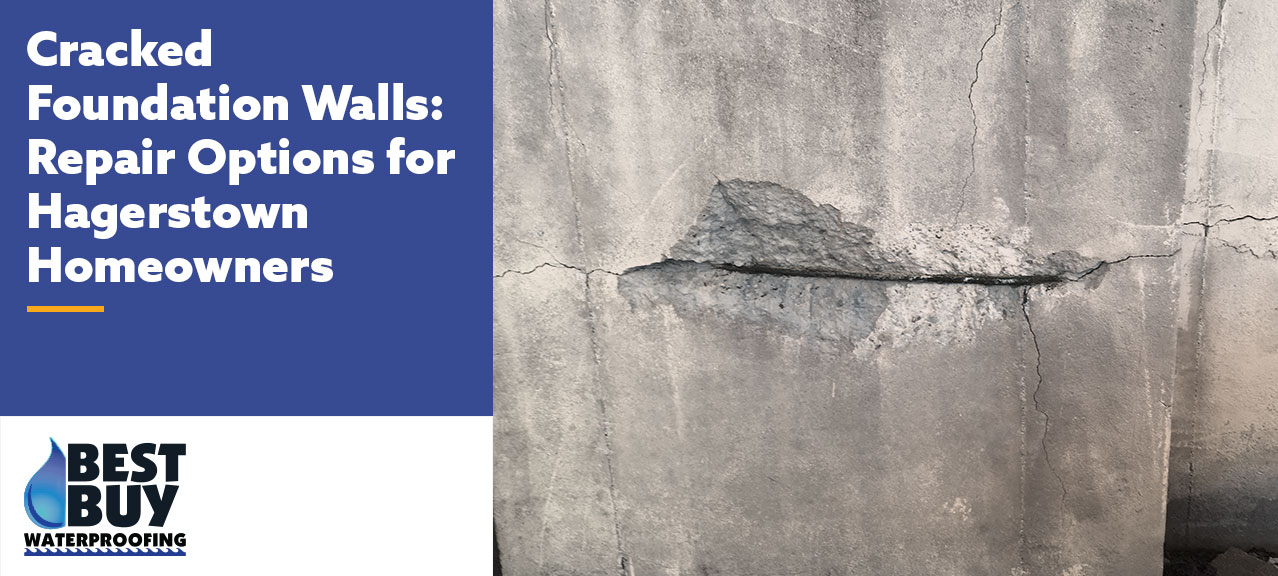
Horizontal cracks are a different story. These run parallel to the floor and are flagged as high-risk in 90% of structural evaluations. They form when unbalanced soil and hydrostatic pressure push harder against your foundation than the wall can handle—causing it to crack and bow inward.
These cracks typically show up in the middle third of the wall, where structural support from the floor systems above and below is at its weakest. Once a horizontal crack forms, the wall above it is no longer anchored to the stable base below—it’s relying on friction and remaining mortar just to stay in place. Washington County’s water-logged clay soil makes this especially problematic during wet seasons, when lateral pressure can spike significantly.
If you’re seeing horizontal cracks, don’t wait on an inspection.
Diagonal and Stair-Step Cracks: Differential Settlement
Diagonal cracks typically run between 30 and 75 degrees and point to differential settlement—where one corner of your foundation sinks while the rest holds steady. They may not be an immediate structural threat at first, but they worsen as soil conditions keep changing.
Stair-step cracks follow the mortar joints in block foundations and are among the more serious patterns you’ll encounter. They develop when foundation settlement combines with moisture infiltration and ongoing soil pressure. A stair-step crack wider than a quarter-inch needs a professional inspection—right away.
Key Warning Signs of Foundation Problems
Some cracks are cosmetic. Others tell you something bigger is happening beneath the surface. Here’s what to look for:
- Cracks wider than 1/4 inch typically need professional repair
- Moisture or musty odors seeping through cracks signal active water infiltration
- Cracks that keep growing point to ongoing foundation movement, not a one-time event
Also look beyond the crack itself. Sticking doors and windows, gaps between cabinets and walls, nail pops in drywall, and uneven floors are all secondary symptoms worth taking seriously. When multiple signs show up together, your foundation is actively shifting—and it needs to be stabilized before things get worse.
Why Hagerstown Homes Develop Foundation Cracks
Washington County sits on some of Maryland’s most challenging soil for foundation stability. The geological conditions here create constant, year-round stress on basement walls—and most homeowners don’t realize it until a crack appears.
Clay Soil Expansion and Contraction
Clay soil has an intense relationship with water. When it gets saturated, it expands. When it dries out, it contracts and cracks. This cycle happens continuously, all year long, creating uneven support under your foundation.
The forces involved are significant. Expansive clay can generate over 5,500 pounds per square foot of pressure as it swells. That’s more than two additional tons of lateral force pushing against your basement walls during wet weather. Clay soils can swell to over twice their original size when fully saturated, then pull back when moisture evaporates. Over time, that constant push and pull weakens concrete and masonry structures.
Seasonal Freeze-Thaw Cycles
Maryland winters don’t stay consistently cold—temperatures can swing above and below freezing within the same week. That’s a problem for your foundation.
Water trapped in soil pores and micro-cracks freezes and expands by roughly 9%. Each freeze-thaw cycle nudges your foundation slightly out of position, then allows it to settle back—rarely in the exact same spot. Concrete is porous, so water works its way in, freezes, and creates internal pressure from the inside out. Repeated exposure to this process is one of the leading causes of concrete deterioration in colder climates.
Poor Drainage and Water Accumulation
Clogged gutters, downspouts that discharge too close to the house, and improper yard grading all send water straight toward your foundation. That standing water soaks into the soil, stays pressed against your basement walls, and builds hydrostatic pressure.
Moving water creates another problem. Erosion washes away the supporting soil beneath your foundation, leaving voids and air pockets. Without solid, consistent support underneath, foundations begin to settle unevenly—producing exactly the kind of diagonal and stair-step cracks we covered in the previous section.
Understanding what’s causing the cracks matters. It shapes every repair decision.
Foundation Wall Repair Options in Hagerstown, MD
Not every crack gets the same fix. The right foundation repair depends on how severe the cracking is, how much the wall has moved, and what’s driving the problem in the first place. Our foundation repair professionals in Hagerstown assess each situation individually—no one-size-fits-all solutions here.
Epoxy and Polyurethane Injection for Minor Cracks
For non-structural vertical cracks, epoxy injection is one of the most effective options available. The resin fills the crack completely, creating a bond that’s actually stronger than the original concrete. That means restored wall integrity and a barrier against water infiltration.
Polyurethane injections work better when there’s an active leak. Their lower viscosity lets them move into tight spaces quickly, and they cure within minutes. They also flex slightly with normal structural movement, so the seal holds even when conditions shift.
Carbon Fiber Wall Reinforcement for Moderate Bowing
Walls bowing inward less than 2 inches are strong candidates for carbon fiber reinforcement. High-strength carbon fiber straps are bonded directly to the wall surface, locking it in place and stopping further movement. No excavation needed—the whole job is typically done in a single day. The straps are stronger than steel under tension and can be painted over once installed.
Wall Anchors and Steel I-Beams for Severe Bowing
When bowing exceeds 2 inches, wall anchors step in. Steel plates inside the basement connect to earth anchors buried in stable soil outside—working together to pull the wall back into position over time. Steel I-beams offer another strong option. Installed vertically every five to six feet and anchored to floor joists and footings, they provide immediate stabilization without any exterior excavation.
Push Piers and Helical Piers for Settlement
A sinking foundation needs more than surface-level repair. Push piers are hydraulically driven down to bedrock using the building’s own weight. Helical piers work like giant screws, threading deep into the soil—ideal for areas where bedrock sits too far down for push piers to reach. Both systems move the structural load off unstable surface soil and onto solid ground below.
Pairing Wall Repair with Interior Waterproofing Solutions
Why Crack Repair Alone Isn’t Enough
Sealing a crack stops water from coming through that specific spot. That’s it. The hydrostatic pressure building up outside your foundation wall? That’s still there.
Groundwater keeps accumulating in the soil around your home, and it will always find the next weak point—a mortar joint, a floor seam, or eventually a brand-new crack somewhere else. Crack injection creates a solid moisture barrier and structural bond, but without addressing what’s causing the pressure, the problem comes back.
This is why professional assessment matters. Soil movement, drainage failures, and structural weaknesses need solutions that go beyond patching what’s visible. Treating just the symptom leaves the source untouched.
Interior Drainage Systems and Sump Pumps
A perimeter interior drainage system is one of the most effective long-term tools for a wet basement. It captures water right at the floor/wall joint—the most common entry point for basement moisture—and intercepts groundwater before it ever reaches your living space. Perforated pipes surrounded by gravel collect the seepage and direct it toward a sump pit.
From there, the sump pump takes over. It removes collected water automatically, keeping your basement dry even during heavy rains. A battery backup keeps everything running when the power goes out.
Paired with proper wall repair, interior drainage gives your home real, lasting protection—against water damage, mold growth, and the kind of structural deterioration that turns a manageable repair into a major expense.
Call The Top-Rated Foundation Repair Contractors in Hagerstown
Foundation cracks don’t get better on their own. The longer they sit, the more pressure builds—and the more expensive the repair gets.
The good news? Catching a crack early means more repair options, lower costs, and a faster fix. Whether you’re dealing with a hairline vertical crack or a bowing basement wall from years of clay soil pressure, there’s a solution that fits your situation.
Best Buy Waterproofing handles both sides of the problem—wall stabilization and waterproofing—so your Hagerstown home stays protected from the inside out. Our specialists will assess your foundation at no charge, identify exactly what’s going on, and walk you through the best path forward. No pressure. Just answers.
Don’t wait for a small crack to become a big repair. Contact Best Buy Waterproofing today to schedule your free foundation inspection.