
Cold floors. Icy drafts creeping up from the basement even with the furnace running at full blast. Sound familiar?
You’re not imagining it. Gaithersburg basements are notorious for letting cold air sneak in through rim joists, sill plates, and foundation penetrations — spots where traditional insulation simply doesn’t get the job done. The result? Wasted energy, higher heating bills, and rooms that never quite feel warm no matter what you do.
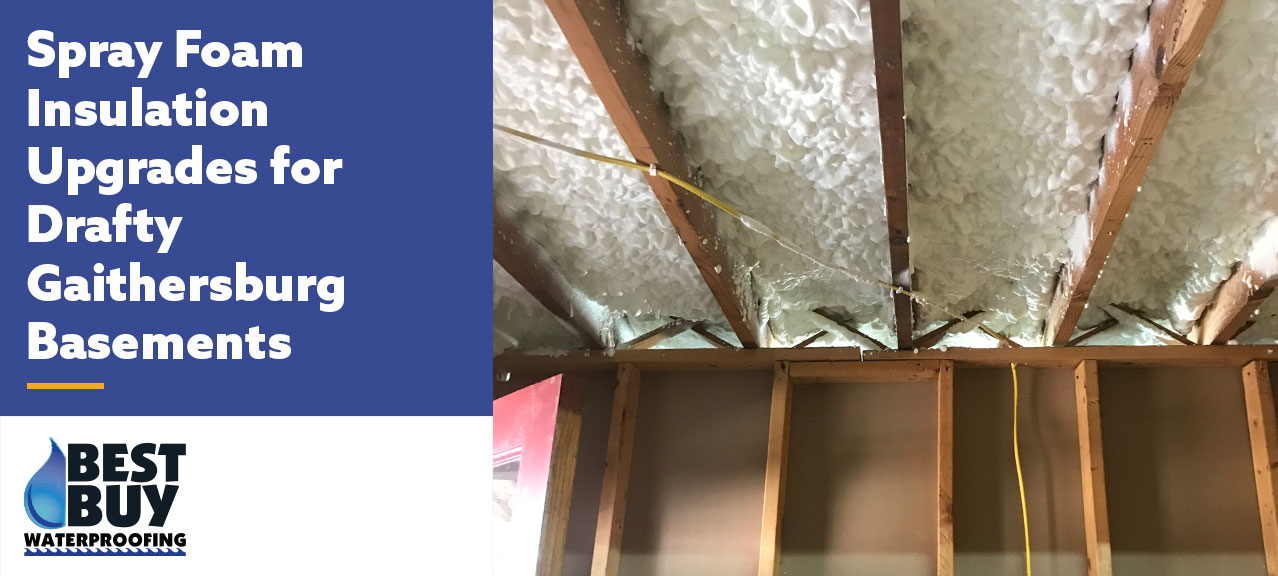
The good news is there’s a real fix for this. Gaithersburg spray foam insulation seals those gaps at the source, creating an airtight barrier that fiberglass batts can’t match. Best Buy Waterproofing specializes in basement air sealing solutions that tackle the root cause of drafts — not just the symptoms.
Here’s what we’ll cover in this post:
- Why Gaithersburg basements develop drafts in the first place
- How spray foam creates an airtight seal where it matters most
- Where it makes the biggest impact, including rim joist insulation upgrades
- What to consider before planning your basement insulation project
We’ll keep things straightforward. No confusing jargon — just clear, honest information to help you make the right call for your home.
Why Gaithersburg Basements Get Drafty and How Spray Foam Solves It
Why basements have more air leakage points than upper floors
Here’s something most homeowners don’t realize. Warm air naturally rises through your home and escapes at the upper levels. When that happens, it creates negative pressure at the foundation line — and cold outside air gets pulled in through any available opening to replace it.
Think of your basement like the bottom of a straw. During Montgomery County winters, heated air exits through the attic and upper floors, and replacement air gets sucked in through the foundation to fill that void. This process is called the stack effect, and it pulls air through slab cracks, block wall joints, and every unsealed penetration at or below grade.
The situation gets worse because of how basements are built. The foundation wall, mudsill, rim joist, and subfloor all converge in one small area. Dissimilar materials meeting at multiple transitions means more gaps — and more gaps means more cold air finding its way in.
Rim joists and sill plates as the primary draft source
The rim joist area is small — typically only 100-200 square feet — but it accounts for 15-25% of total air leakage in your home. Air slips through the crack between the foundation wall and mudsill, between the mudsill and rim joist, and between the rim joist and subfloor.
A typical home with 40 floor joists has 40 individual joist bays at the rim joist, each with its own set of gaps and cracks. Those leak points connect directly to wall cavities above, letting cold air travel upward through your walls all the way to the attic.
Traditional fiberglass insulation doesn’t fix this. The material is air permeable, so warm indoor air still contacts cold rim joists and creates condensation. Over time, that moisture leads to frost buildup and potential wood decay — problems that go far beyond a drafty feeling.
Foundation penetrations that were never fully sealed
Water supply lines, drain pipes, electrical conduit, gas lines, dryer vents, exterior hose connections — they all pass through your foundation. And in most cases, those penetrations were never fully sealed during original construction. Those gaps have been quietly pulling in cold air ever since.
Closed-cell spray foam is built for exactly this problem. It expands into irregular spaces that rigid insulation can’t reach, creating a complete airtight seal. At the same time, it delivers R-6 to R-7 per inch and acts as both an air barrier and a vapor retarder.
Why Montgomery County winter temperatures make basement drafts more noticeable
Ground temperature in this region holds steady around 50-55°F throughout the year. When outdoor temperatures drop to 30°F in winter, the gap between those numbers drives cold air hard against your foundation line. That’s when you feel it most — cold floors in rooms directly above the basement, even with your thermostat set where it always is.
The drafts aren’t random. There’s a clear cause behind them. And understanding that cause is the first step to fixing it for good.
Why Traditional Basement Insulation Doesn’t Stop Drafts
Fiberglass batts slow heat — but they don’t stop air
Here’s something most homeowners don’t realize. Fiberglass batts and spray foam do two completely different jobs.
Fiberglass resists heat moving through walls and ceilings. That’s it. Cold air still passes right through the fibers whenever gaps or cracks exist around the material. Think of it like a sweater on a windy day — it keeps you warm when the air is still, but the moment wind picks up, you feel every bit of that cold.
To actually perform at its labeled R-value, fiberglass needs an air barrier on all six sides of the batt. Basements rarely give you those conditions. Air finds its way through, carries heat away, and your heating system works overtime to compensate.
Irregular framing makes it worse
Basement walls aren’t clean, open cavities. They’re full of wiring, plumbing penetrations, electrical boxes, and uneven concrete surfaces. Every time a batt gets cut around a pipe or junction box, that’s another gap where heat escapes directly through the wall. Older foundations are especially tricky — the depth and thickness vary, making uniform coverage with pre-cut batts nearly impossible.
Over time, it gets worse. Fiberglass shifts, compresses, and gets disturbed every time a contractor accesses mechanical systems. Those gaps can eventually compromise 10-20% of the insulated surface area in a typical basement.
Insulation and air sealing aren’t the same thing
This is worth repeating because it’s a common source of confusion.
R-value measures how well a material resists conductive heat transfer. Air sealing measures how well a space blocks drafts and infiltration, counted in air changes per hour. These are separate problems that need separate solutions. Piling on more insulation without addressing air leaks won’t fix a drafty basement — moving air simply bypasses the thermal barrier entirely.
So which spray foam works best for basements?
Not all spray foam is created equal. Here’s a quick breakdown:
| Factor | Open-Cell | Closed-Cell |
| R-value per inch | 3.5-3.7 | 6.0-7.0 |
| Water absorption | 5-10% by volume | Less than 2% |
| Vapor barrier | No | Yes, at 1.5″ thickness |
| Basement use | Not recommended | Rim joists, foundation walls |
Closed-cell spray foam is the right choice for basements. It blocks humid air infiltration and prevents condensation from forming on cold surfaces — two problems that open-cell foam simply can’t handle.
Where Spray Foam Makes the Biggest Difference in Your Basement
Now that you know why drafts happen and why fiberglass batts fall short, here’s where spray foam actually makes a difference. Some of these spots are obvious. Others get overlooked — even by contractors who should know better.
Rim joists and sill plates
This is the single most important area in your basement. Rim joists sit right at the top of your foundation wall where the framing meets the concrete. Closed-cell spray foam seals the gaps between the sill plate and foundation, the rim joist and subfloor, and every floor joist penetration in between — blocking up to 99% of air infiltration while delivering R-7 per inch.
This is where your money goes furthest.
Foundation wall penetrations around utilities
Water lines, drain pipes, electrical conduit, and gas lines all pass through your foundation wall. Builders rarely seal these gaps completely during original construction. Spray foam expands into those irregular spaces around pipes and ducts, creating airtight seals that rigid board insulation simply can’t replicate.
These penetrations are easy to miss during a walkthrough. But cold air finds them every time.
Band joist areas where additions meet the original foundation
Bay windows, bump-outs, and room additions that hang off the original foundation create complex framing at the transition zones. More framing transitions mean more leak points — and more opportunities for cold air to get in. Spray foam handles these irregular areas far better than any pre-cut insulation product.
Unfinished basement walls being prepared for finishing
If you’re planning to finish your basement, this is the moment to address insulation. Spray foam applied to wall assemblies before drywall goes up creates a complete thermal envelope. Waiting until after the walls are closed in is one of the costliest mistakes homeowners make during basement renovations. Correcting it later means tearing things apart.
Don’t skip this step.
Signs your basement needs a draft-sealing upgrade
Not sure if your basement has an air sealing problem? Here’s what to look for:
- Visible gaps or daylight around rim joists and utility penetrations
- Spider webs that move in drafts near foundation walls
- Cold spots along the lower sections of interior walls
- Floors above the basement that feel noticeably cold in winter
- Temperature imbalances between your basement and the rooms above it
Any one of these points to inadequate sealing. More than one, and it’s time to call us.
Planning Your Basement Spray Foam Upgrade
Seal Drafts Before You Finish — Not After
This is one of the most important things we tell homeowners: address air leakage and moisture before a single sheet of drywall goes up.
Once walls are enclosed, fixing hidden moisture problems becomes far more disruptive — and expensive. Insulating over damp framing traps moisture against wood, creating conditions that damage your walls from the inside out. Mold remediation alone can run into the thousands. Catching these issues early, before finishing, is the smartest move you can make during a basement renovation.
We understand the temptation to move quickly on a project. But getting the air sealing and waterproofing right the first time protects everything that comes after it.
What the Installation Process Actually Looks Like
Professional crews apply spray foam directly to rim joists, foundation walls, and utility penetrations using heated hoses connected to specialized equipment. It’s not a DIY-friendly process — the materials require manufacturer-specific training and calibrated application to perform correctly.
For most basements, the full installation takes four to six hours covering walls, ceiling, and rim joist areas. Contractors will also fur out wall studs slightly — typically a quarter to half-inch — so foam can seal properly behind the framing and eliminate thermal bridging.
You won’t need to clear your schedule for days. Most homeowners are back to normal the same day.
What It Costs and What Drives the Price
Basement spray foam projects typically range from $2,000 to $9,700, depending on the square footage and scope of work. Closed-cell spray foam costs two to three times more per square foot than rigid foam board — but it performs at a level rigid board simply can’t match in basement environments.
A 1,000-square-foot basement insulated with closed-cell spray foam averages around $6,000. Labor accounts for a meaningful portion of that cost, given the equipment and training required.
Think of it as a long-term investment. The energy savings compound over time, and the comfort improvement is something you’ll notice right away.
Spray Foam Works With Waterproofing — It Doesn’t Replace It
This is worth saying clearly: closed-cell spray foam is not a substitute for foundation waterproofing.
Spray foam does help seal minor cracks and limit some water intrusion, but water that gets behind foam leads to hidden damage and mold. If your basement has active water issues, those need to be resolved and verified first — before any insulation goes in.
Best Buy Waterproofing handles both sides of this equation. We can assess your foundation’s waterproofing needs alongside your insulation goals, so nothing gets missed and the work is done in the right order. That’s the difference between a quick fix and a real, lasting solution.
Conclusion
A drafty basement isn’t just uncomfortable — it’s costing you money every single month. Cold floors, high heating bills, and rooms that never quite warm up are all signs that your rim joists and foundation penetrations need attention.
Spray foam insulation solves this at the source. Not a temporary patch, not a workaround — a real, long-term fix that seals air leaks and keeps your Gaithersburg home warm the way it should be.
Best Buy Waterproofing has been helping Montgomery County homeowners tackle exactly these problems. We use closed-cell spray foam built for basement conditions — and we make sure your waterproofing is solid before a single drop of foam goes on the wall.
Ready to stop the drafts for good? Contact Best Buy Waterproofing today for a free inspection. No pressure, no sales pitch — just honest answers about what your basement needs.
Call Us Before the Water Rises®