
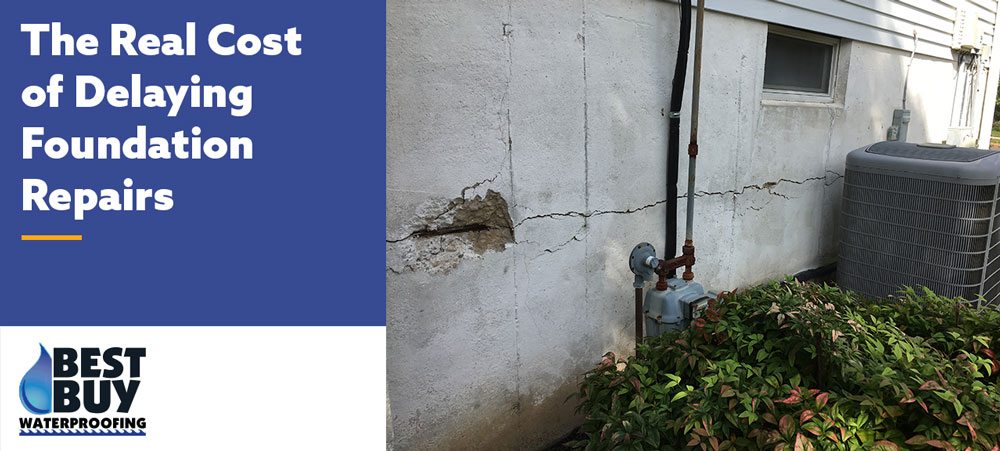
Foundation problems rarely announce themselves with a dramatic collapse. They start quietly—hairline cracks, a door that sticks in humid weather, a faint damp smell in the basement—and they’re easy to dismiss. But in the Mid-Atlantic, where seasonal rainfall, freeze-thaw cycles, and moisture-heavy soils can keep foundations under constant stress, “small” issues don’t tend to stay small for long.
The most expensive foundation decision a homeowner makes is usually not the repair—it’s waiting. Putting off an inspection until “next year” often means paying for a larger scope of work, dealing with more interior damage, and losing leverage to plan the project on your schedule.
At Best Buy Waterproofing, we help homeowners protect their properties with practical, long-term foundation repair services. Partnering early with a trusted foundation repair company can prevent minor movement from becoming major structural damage—and keep costs and disruption under control.
From Hairline Cracks to Structural Failure
A foundation issue typically follows a predictable progression. What begins as minor settlement can evolve into wider stair-step cracking in brick, long diagonal drywall cracks, or more serious signs like horizontal cracks and inward wall bowing. In basements, that pressure can also show up as damp seepage, efflorescence, and widening cracks that become direct pathways for water intrusion.
In the Mid-Atlantic, repeated wet/dry swings and freeze-thaw cycles can accelerate that progression. Saturated soil becomes heavier and increases lateral pressure on foundation walls; then, when conditions dry out, soil can shrink and leave voids that contribute to settlement. Add intense storm events and poor surface drainage, and foundations may experience recurring movement that compounds damage over time.
That’s why an experienced set of eyes matters. Foundation repair experts can determine whether cracking is cosmetic shrinkage in concrete or a symptom of structural movement that requires stabilization. The right diagnosis protects you from overpaying for
The Escalating Price Tag of Procrastination
Waiting changes the scope of the solution. Early on, repairs may be limited to sealing specific cracks, improving drainage, or addressing minor movement before it spreads. But as damage progresses, the fix can shift toward major stabilization methods—such as underpinning, pier systems, or structural wall reinforcement—because the foundation is no longer simply “cracked,” it’s moving.
It’s also important to remember that foundation damage rarely stays contained. As the structure shifts, homeowners often start paying for secondary repairs, including:
- Drywall cracks, nail pops, and uneven floors
- Sticking doors and windows that won’t latch correctly
- Gaps between cabinets/countertops and walls
- Exterior masonry separation or a leaning chimney
- Recurring moisture intrusion that turns into a bigger basement foundation repair project
And there’s another cost many homeowners don’t discover until it’s too late: insurance. Most standard homeowners’ policies exclude foundation damage related to soil movement, settlement, or hydrostatic pressure. That makes proactive foundation repair services—and early documentation of the condition—one of the smartest ways to control risk.
Impact on Home Value and Marketability
Foundation problems don’t just raise repair costs—they can also reduce what your home is worth. Homes with unresolved structural concerns commonly sell for 10–15% less than comparable homes with verified integrity, and buyers may request additional concessions even after the issue is disclosed.
During a home inspection, foundation cracking, bowing walls, persistent moisture, and signs of settlement are immediate red flags. In many cases, the transaction slows down while buyers seek structural opinions—or ends altogether if the buyer can’t obtain financing. Lenders may hesitate to approve mortgages when there’s evidence of structural instability or ongoing water entry.
The good news: resolving the issue the right way can restore confidence. Hiring a qualified foundation repair contractor to diagnose the cause, complete the repair, and provide clear documentation is one of the most effective ways to protect property value and make your home easier to sell.
Finding the Right Help: Foundation Repair Near Me
If you’re searching “foundation repair near me,” focus on more than proximity. The goal is a correct diagnosis and a repair plan that matches the cause of movement—water, soil pressure, settlement, or structural deterioration.
When comparing foundation repair specialists, look for:
- A thorough inspection process (interior, exterior, drainage patterns, and basement conditions)
- Clear explanation of the “why,” not just the “what” (what’s causing movement and moisture)
- Field-tested stabilization and waterproofing approaches appropriate for Mid-Atlantic conditions
- Repair documentation you can keep for your records (and future buyers)
At Best Buy Waterproofing, our team combines practical experience with proven methods to address both structure and water—the two factors that most often drive foundation damage in the Mid-Atlantic. We focus on solutions that stop movement, manage moisture, and hold up long after the job is done.
Contact Best Buy Waterproofing Today
Delaying foundation repairs tends to raise costs in three ways: the structural problem worsens, the damage spreads into finishes and mechanicals, and selling or refinancing becomes harder when inspection issues appear. In short, waiting doesn’t just increase the price of the repair—it increases the total cost of ownership.
Peace of mind comes from knowing your home is stable, dry, and safe. If you’ve noticed cracking, bowing, uneven floors, or persistent basement moisture, it’s worth getting a professional opinion now—before seasonal weather compounds the problem.
Ready to take action? Contact Best Buy Waterproofing to schedule an inspection with our team. We’ll help you understand what’s happening, what it will take to fix it, and what you can do to prevent it from returning. If you need basement foundation repair or structural stabilization anywhere in the Mid-Atlantic, we’re here to help.