
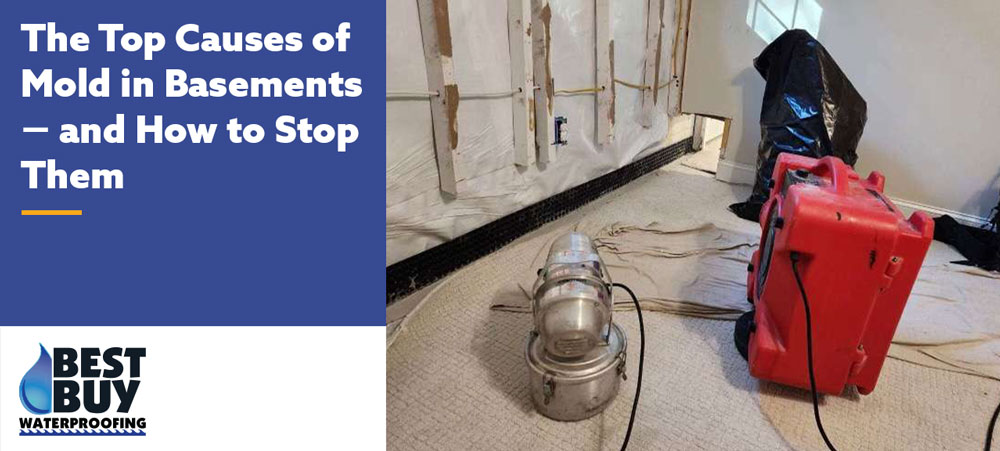
Mold in basements take hold fast—within 24 to 48 hours when moisture stays on surfaces. Your basement faces constant moisture battles, creating perfect conditions for white mold and black mold to thrive.
The reality? This problem affects more homes than most people realize.
Throughout the Mid-Atlantic, mold in basement spaces strike countless homes. Seasonal weather patterns and soil conditions create ongoing moisture challenges that won’t quit. Maybe you’ve noticed musty odors wafting up from below, spotted visible growth on your walls, or experienced worsening health symptoms when you’re home. Understanding what’s causing the problem helps you take the right action. Here’s the truth: success means eliminating moisture where it starts—because once mold gets established, it spreads fast, threatening your family’s health and your home’s structural integrity.
White Mold vs. Black Mold: What You’re Really Dealing With
Different mold types bring different problems to your basement. At Best Buy Waterproofing, we see both white and black mold regularly across our service areas.
White Mold: The Common Basement Invader
White mold shows up as powdery or fluffy growth that homeowners frequently confuse with dust or mineral deposits. The color varies from bright white to grayish-cream tones.
Where white mold loves to grow:
- Concrete walls pulling moisture from the surrounding soil
- Wood framing, rim joists, and exposed beams
- Drywall backing and ceiling tiles
- Insulation materials and vapor barriers
White mold feeds on cellulose found in wood and paper materials, digging deep into porous surfaces.
Black Mold: The Serious Health Threat
Black mold refers specifically to Stachybotrys chartarum, showing up as dark green or black patches with a slimy surface when it’s actively growing.
Black mold needs:
- Continuous moisture for 48 hours minimum
- Humidity levels hitting 70% or higher
- Materials rich in cellulose
- Ceiling tiles and fiberboard
- Paper products, including wallpaper
- Wood paneling and insulation backing
How to Tell Mold Apart
Texture differences:
- White mold: Fuzzy or powdery look
- Black mold: Slimy when wet, grainy when dry
Growth patterns:
- White mold: Spreads as thin dusting or fluffy patches
- Black mold: Forms dense, irregular patches
Surface preferences:
- White mold: Various materials and hard surfaces
- Black mold: High-cellulose materials, penetrating deeply
Environmental needs:
- White mold: Cold, damp basement conditions
- Black mold: Warm, humid environments with persistent moisture
Black mold demands professional removal because it produces mycotoxins and creates serious health risks. White mold needs quick attention and often benefits from professional assessment. For mold growth covering more than 10 square feet, or if you suspect black mold, contact professionals right away. We identify the specific type, address moisture sources, and safely remove contamination.
What Causes Mold in Basement Spaces?
Basements create ideal conditions for mold growth because they face unique moisture challenges.
Humidity Problems and Poor Air Circulation
Your basement needs humidity levels between 30 and 50 percent to stay healthy. Once humidity climbs past 60 percent, moisture by itself creates the perfect feeding ground for mold spores. Daily household activities dump moisture straight into your basement air—humidifiers running overtime, steam radiators heating your home, cooking meals upstairs, and hot showers all generate humidity that naturally settles into your lower level.
Basements face inherent airflow challenges. Without adequate windows and proper ventilation systems, moisture builds up on every surface. Stagnant air creates pockets of trapped moisture around wood framing members, stored cardboard boxes, and fabric items—precisely the conditions mold spores need to flourish.
Water Penetrating Through Foundation Walls
Moisture migrates from exterior soil into your basement through four main pathways: direct water infiltration, capillary action, vapor transmission, and air leakage points.
Capillary action draws water through microscopic concrete pores. When soil becomes saturated, it generates hydrostatic pressure against foundation walls, forcing existing cracks wider and allowing water to seep through to your interior spaces.
Condensation Problems
Warm, moisture-laden air produces condensation the moment it contacts cold basement surfaces. Your concrete walls and floor slabs remain cold year-round from constant ground contact, causing water droplets to form whenever warm indoor air reaches them.
Air conditioning ductwork and plumbing lines develop water droplets that drip onto materials below, saturating drywall panels, insulation batts, and wood framing within 24 to 48 hours.
Drainage System Problems
Inadequate exterior drainage causes more basement moisture issues than any other single factor.
Soil surrounding your foundation must slope away properly—at minimum 2 to 3 inches of drop for every 10 feet of distance. Level grades or inward-sloping terrain channels water directly toward your basement walls.
Gutter system failures create concentrated water flow problems:
- Missing gutters allow water to cascade down exterior walls
- Downspouts lacking extensions concentrate water at specific foundation points
- Clogged gutters overflow and completely saturate foundation soil
Window wells function like collection drains when constructed improperly. Many properties lack adequate subsurface drainage systems. Existing drainage systems fail when pipes collapse from soil pressure or become clogged with debris.
Plumbing Failures and Water Damage
Minor plumbing leaks establish perfect mold growth conditions behind walls and beneath flooring. Common leak sources include:
- Failed toilet wax ring seals
- Washing machine supply hose failures
- Deteriorated bathroom tile grout
- Cracked shower pan waterproof membranes
When water isn’t completely dried within 48 hours, mold colonization begins.
At Best Buy Waterproofing, we tackle these moisture sources at their origin rather than simply addressing surface symptoms.
Top Tips for Mold Removal
There are few sights more universally dreaded by homeowners than spotting a fuzzy patch of black or green mold spreading across a basement wall or crawl space joist. It instantly triggers a wave of stress, followed by a flurry of urgent questions: Is it dangerous? How far has it spread? And how do I get rid of it permanently?
When faced with a mold breakout, the natural instinct is to rush to the store, grab a bottle of bleach, and start scrubbing. But as any experienced homeowner eventually learns, simply wiping away visible mold is like mowing a weed without pulling the roots—it looks fine for a few days, but it always comes back.
True, lasting mold removal isn’t just about cleaning up the mess you can see; it’s about altering the environment so mold can never survive there again. Because mold requires just three things to thrive—organic food (like your home’s wood framing or drywall), oxygen, and moisture—the secret to permanent eradication lies entirely in controlling that third factor.
Below, you’ll find a list of top tips for mold to keep you and your home safe.
Personal Protective Equipment (PPE)
Proper protective gear prevents dangerous mold spore exposure. N95 respirator masks filter 97% of airborne particles. Seal off work areas using heavy plastic sheeting over doorways and ventilation openings.
The 10 Square Foot Rule
The EPA permits homeowner cleanup for contaminated areas under 10 square feet. Larger affected areas require professional mold remediation services. Contact professionals immediately when mold covers more than 10 square feet.
- You suspect black mold (Stachybotrys)
- Growth appears inside HVAC system components
- Mold returns following previous cleanup attempts
Cleaning Hard Surfaces
Clean hard surfaces like tile, glass, and metal using detergent mixed with water. White vinegar or 3% hydrogen peroxide serve as effective alternatives. Apply your chosen cleaner, allow 10 to 15 minutes of contact time, scrub thoroughly, wipe clean, then dry surfaces completely.
Skip bleach—it leaves behind moisture that feeds any remaining mold spores.
Dealing with Porous Materials
Porous materials like ceiling tiles and carpet typically require complete disposal. Cut out and replace any contaminated drywall sections. Remove all affected materials in sealed bags to prevent spore spread.
Critical Drying Requirements
Dry all cleaned areas completely within 24 to 48 hours after cleaning to stop regrowth. Position fans to maximize air circulation and run dehumidifiers to maintain humidity between 30 and 50 percent. Continue ventilation until all materials feel room temperature to the touch. Moisture meters verify proper dryness with readings under 15 percent.
At Best Buy Waterproofing, we handle extensive mold problems safely and effectively, protecting your family’s health while addressing moisture issues at their source.
Stopping Basement Mold Before It Starts
Prevention eliminates mold at its source. After removing existing growth, address the underlying moisture conditions that allowed it to establish in the first place.
Humidity Control: The 30-50% Rule
Keep basement humidity between 30 and 50 percent. Levels above 60 percent create ideal mold conditions. Monitor readings with a hygrometer and adjust your dehumidifier settings whenever readings exceed 50 percent.
Choose the right dehumidifier:
- Size appropriately based on square footage
- Select Energy Star-certified models for efficiency
- Empty collection tanks regularly or connect continuous drain lines
Improve exterior drainage:
- Extend downspouts at least 6 feet from your foundation
- Keep gutters clear and properly pitched for water flow
Ventilation: Fresh Air Prevents Stagnant Conditions
Continuous ventilation removes moisture-laden air before it creates problems. Install exhaust fans, inspect HVAC systems routinely, check drain pans regularly, and replace filters frequently.
These prevention strategies create an environment where mold simply cannot establish itself. Address all four areas—humidity control, structural improvements, drainage, and ventilation—for complete protection.
Recognizing Basement Mold Before It Becomes a Bigger Problem
Your nose frequently detects mold before your eyes spot it. That musty smell drifting from your basement serves as an early warning system you shouldn’t ignore.
What That Musty Smell Really Means
The characteristic basement mold smell comes from microbial volatile organic compounds (MVOCs) that mold releases during active growth.
Nasal stuffiness, throat irritation, persistent coughing, wheezing, eye irritation, and skin irritation all signal potential mold problems. Young children, elderly individuals, and those with compromised immune systems or chronic lung conditions face serious health risks from mold exposure.
When Professional Testing Makes Sense
Call for professional mold testing when you smell strong mold-like odors without visible growth or experience persistent health symptoms exclusively at home.
Best Buy Waterproofing identifies moisture sources and provides solutions addressing mold problems at their root cause.
Professional Mold Solutions for Your Basement
Best Buy Waterproofing specializes in basement waterproofing, moisture control, and mold prevention services throughout the Mid-Atlantic. Contact us today to schedule your estimate.
Call us today.