Home » Service Areas » Baltimore » Baltimore Basement Waterproofing
Baltimore, MD Basement Waterproofing
- Licensed & Insured
- 5-Star Rated
- Local Business
- Transferable Warranty
Basement Waterproofing Contractors in Baltimore, MD
Best Buy Waterproofing provides basement waterproofing in Baltimore for homeowners who are done mopping up after storms, running fans in a damp cellar or living with a smell that never quite goes away. Most of the city’s housing stock is old, and many basements were dug as storage cellars, not living space. Brick and stone walls laid in soft mortar let water wick through, and the dense clay around them holds rain for days. A wet basement here is common, but it is a problem with a clear cause, and it can be fixed.
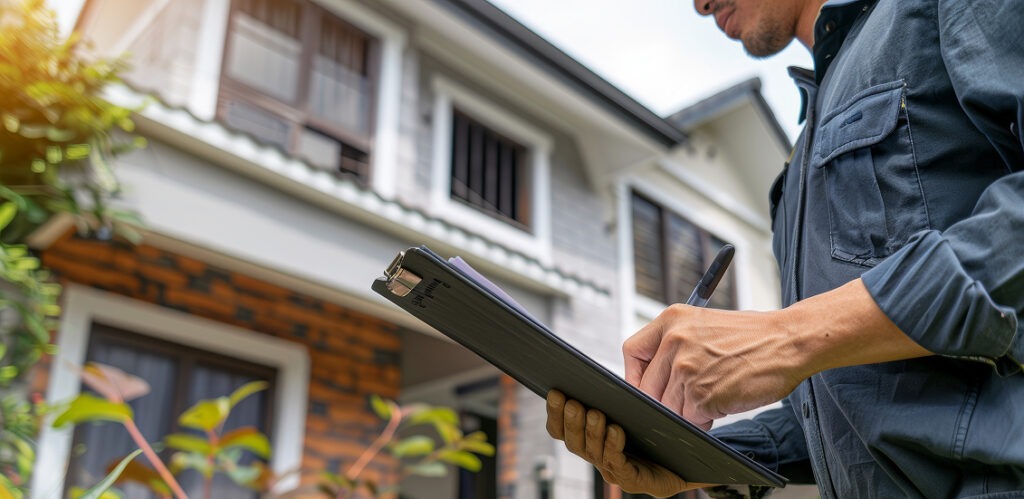
We start by finding the path the water takes, whether it comes through the walls, up the floor joint, through a crack or in at a window well. In a narrow rowhouse in Canton, that often means a drainage system installed from inside. On a detached house in Lauraville with open ground around it, exterior work may be on the table. Our licensed, insured in-house team handles the whole job, and every project begins with a free inspection.
Signs Your Baltimore Basement Needs Waterproofing
Water usually gives a few warnings before it becomes a flood. If you notice any of these in your Baltimore basement, it is time for a closer look.
Puddles After Rain
Standing water on the floor after a storm, snowmelt or a long soaking rain.
Damp Lower Walls
Dark, wet patches near the base of brick, stone or block walls.
Crumbling Mortar or Efflorescence
Sandy mortar joints or white mineral crust left as water moves through masonry.
Leaking Cracks
Cracks in walls or the slab that weep water or keep getting wider.
Musty Smell
A stale, earthy odor that lingers in the basement and drifts upstairs.
Mold or Rust
Mold on stored items, rusting appliance legs or peeling paint along the floor.
Basement Waterproofing Solutions for Baltimore Homes
Interior Perimeter Drainage
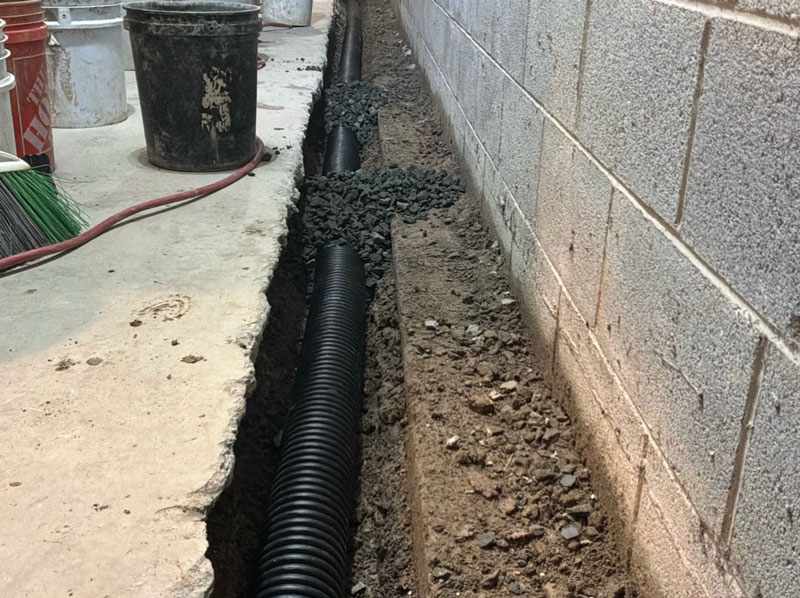
For most Baltimore rowhouses, an interior drainage system is the most reliable way to dry out the basement. We cut a channel along the inside edge of the floor, lay a perforated drain in clean stone and pour new concrete over it. Water that pushes through the walls or rises at the floor joint drops into the drain and flows to a sump pump, which sends it outside.
Because the work is done from inside, there is no digging in a small rear yard or along a shared wall. Where masonry walls sweat or seep, we can add a wall membrane or panels that direct moisture down into the drain so the walls stay dry to the touch.
Sump Pumps With Battery Backup
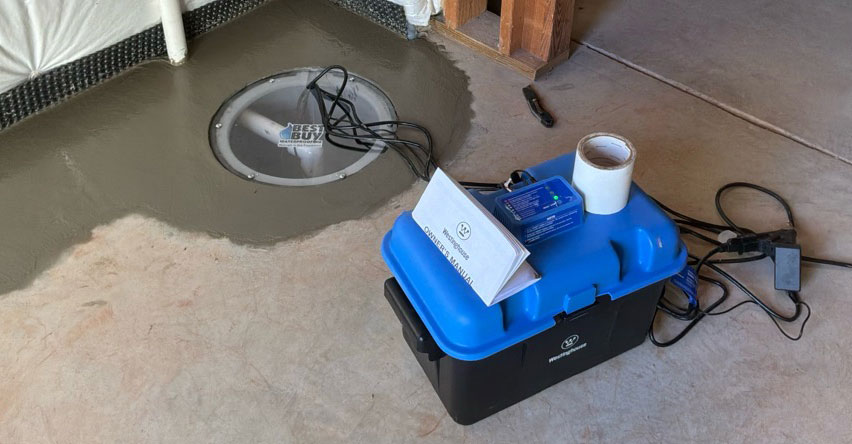
A sump pump does the heavy lifting in most waterproofing systems. We set a pit at a low spot, tie it into the perimeter drain and install a pump sized to the volume your basement sees. Each pit gets a sealed, airtight lid that keeps out debris and basement odors, and a check valve on the discharge line stops water from running back into the pit after the pump shuts off.
The summer storms that dump the most rain on Baltimore can also cut the power. An optional battery backup sits in the same pit and takes over when the main pump loses power or falls behind, and a high-water alarm lets you know something needs attention.
French Drains
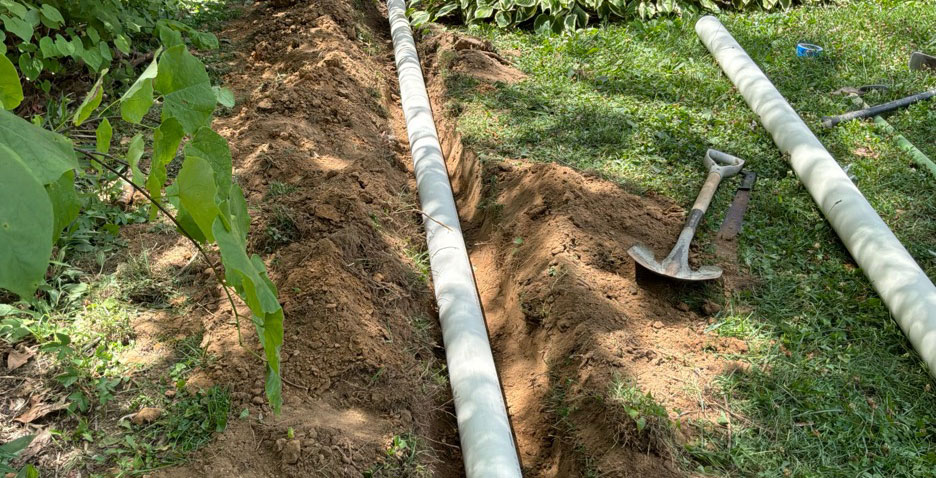
A French drain gives groundwater an easier path than your basement wall. It is a perforated pipe bedded in gravel that collects water and carries it to a sump pump or another safe outlet. Inside, it relieves the pressure that builds under the slab when clay soil fills up after a storm. Outside, a footer drain at the base of the foundation keeps water from sitting against the wall.
Clay soil drains slowly, so we plan each French drain around how your lot sheds water and route the discharge so it does not circle back toward the house.
Basement Crack Repair
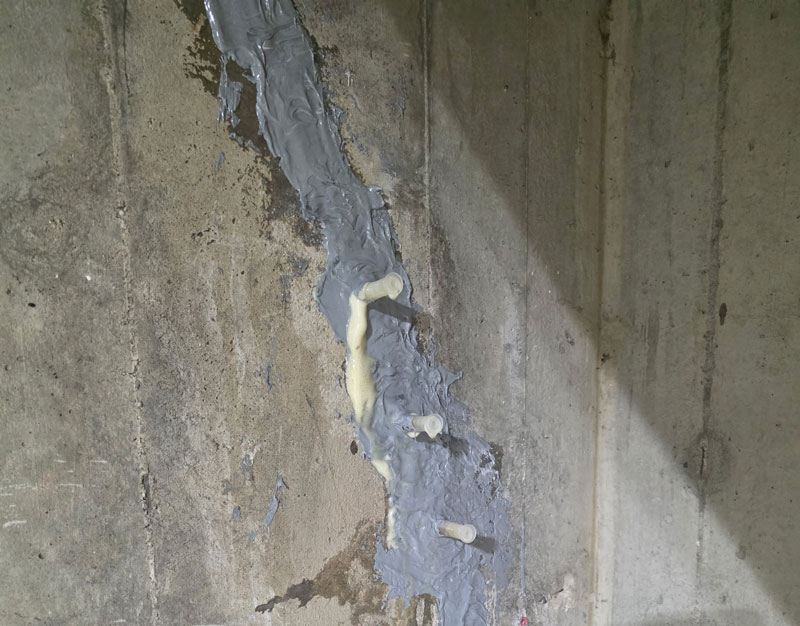
Cracks in foundation walls and floor slabs are a direct route for water, and freeze-thaw cycles tend to make them longer and wider each winter. Our basement crack repair seals leaking cracks in poured concrete, block walls and floors so water stops coming through. In older brick and stone basements, we also look closely at mortar joints that have worn open, since they often leak along a wide area rather than at one spot.
A crack can also point to a wall pushed inward by wet clay or a settled corner. If we see movement, our foundation repair crew can address it in the same plan.
Exterior Waterproofing
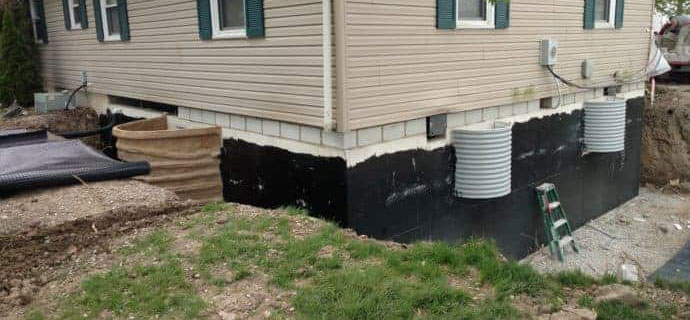
Exterior waterproofing keeps water off the foundation entirely. We dig along the affected walls down to the footing, clean the wall, apply a waterproof membrane and dimple board, and set a footer drain in gravel. Instead of putting the same heavy clay back in the trench, we backfill with washed gravel that lets water drain down to the footer drain rather than sitting against the wall.
This approach needs room to excavate, so it suits detached homes and end-of-group houses more than a mid-block rowhouse with tight alley access. If digging would mean working along a neighbor’s wall, we will tell you plainly that an interior system is the better choice.
Basement Dehumidifiers
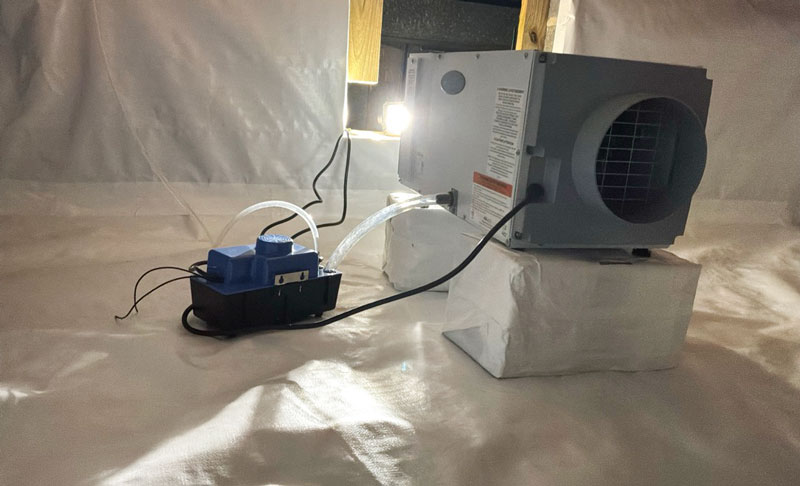
Even after leaks are fixed, humid Baltimore summers can leave a below-grade basement feeling clammy. A commercial-grade basement dehumidifier pulls moisture out of the air, cuts down on musty smells and makes the space less inviting to mold and pests. We size the unit to your basement and set it up to drain automatically, so there is no bucket to empty.
Paired with an interior or exterior system, it also helps protect stored belongings and prepares the space for finishing.
Our Basement Waterproofing Process
Free Inspection
We check walls, floor, cracks, grading and downspouts to trace how water reaches your basement.
Your Recommendation
We walk you through what we found and what we recommend, with a firm price.
System Installation
Our own crew installs the drains, pumps or membrane, handles any required permit and cleans up.
Warranty Protection
Qualifying work is backed by a transferable warranty that stays with the house.
Why Baltimore Homeowners Choose Best Buy Waterproofing
Basement waterproofing is a long-term fix, so Baltimore homeowners want a contractor who explains the cause in plain terms and stands behind the result. Here is what working with us looks like.
- Licensed and insured: Licensed in Maryland, Virginia, Washington DC, Pennsylvania, Delaware and West Virginia, and fully insured.
- Our own crew: One in-house team handles waterproofing, foundation and crawl space work from start to finish.
- Free inspection: We inspect your basement and explain the options at no cost or obligation.
- Transferable warranty: Qualifying work carries a warranty that can pass to the next owner if you sell.
- In business since 2017: Available 24/7, with financing so you can fix the problem without waiting.
What Affects the Cost of Basement Waterproofing in Baltimore?
We don’t price basement waterproofing from a chart, because no two basements leak the same way. After a free inspection, you get a firm price for the work your home actually needs.
Basement Perimeter
How many feet of wall need drainage or sealing sets the scope of the job.
System Type
Interior drainage, exterior excavation or a combination involve different labor and materials.
Wall Material
Stone, brick, block and poured concrete each need their own preparation.
Access
Narrow stairs, alley-only access, small yards and finished rooms change how the work is done.
Pump Setup
A new pit, pump, battery backup or high-water alarm adds to the system.
Repairs Needed
Leaking cracks, worn mortar or wall movement may need fixing alongside waterproofing.
Basement Waterproofing FAQs
Why do older Baltimore basements take on so much water?
Many were built as cellars with brick or stone walls and lime mortar that slowly washes out. The clay soil around them drains poorly, so rain from heavy summer storms lingers against the foundation. Freeze-thaw winters open joints and cracks a little more each year. Together, those conditions give water plenty of ways inside.
Can you waterproof a rowhouse without digging next to my neighbor?
Yes. An interior drainage system is installed entirely from inside your basement, so there is no excavation along shared party walls or in a narrow rear yard. It collects water at every wall, including the ones you share, and sends it to a sump pump. For most rowhouses, it is the practical choice.
Is exterior waterproofing worth it on a detached house?
It can be. If your walls are accessible and the inspection shows water coming through from outside, exterior waterproofing stops it before it reaches the masonry. It is a bigger job because it involves excavation, so we compare it honestly with an interior system and explain which one fits your home and goals.
Do I need a battery backup on my sump pump?
If your basement depends on a sump pump, a backup is a sensible addition. Power outages often happen during the same storms that send the most water toward your foundation. The battery backup takes over automatically when the main pump loses power or cannot keep up, and a high-water alarm warns you of trouble.
Will a dehumidifier fix my wet basement?
Not on its own. A dehumidifier removes moisture from the air, but it cannot stop water coming through walls, cracks or the floor joint. We fix active leaks first. Then a basement dehumidifier handles the humidity that remains during muggy Baltimore summers.
Do you handle permits for waterproofing work?
When a permit is required for your project, we handle it as part of the job, and we will tell you during your recommendation whether your work needs one. Financing is available if you would like to spread out the cost.
More Services in Baltimore
Basement waterproofing near Baltimore, MD: Towson · Dundalk · Catonsville · Parkville · Pikesville · Essex · Glen Burnie
Get a Free Basement Waterproofing Inspection
Every storm gives water another chance to get in. Schedule a free inspection at your Baltimore home, and we will show you where the water is coming from and what it takes to keep your basement dry. Financing is available.