Home » Residential Services » Basement Waterproofing » Interior Waterproofing
Interior Waterproofing
- Licensed & Insured
- 5-Star Rated
- Local Business
- Transferable Warranty
Interior Basement Waterproofing for Mid-Atlantic Homes
Interior basement waterproofing deals with water where it actually shows up: at the base of your walls, through the cove joint and across the floor. Much of the Mid-Atlantic sits on dense clay and silt soils that hold water against the foundation after every storm. That trapped water builds hydrostatic pressure and pushes through any gap it can find. Interior waterproofing does not try to stop every drop at the outside face of the wall. It gives water a planned path, collecting it along the perimeter of the basement and sending it out of the house before it spreads.
Because the work happens inside, there is no digging around your home, no torn-up landscaping and less disruption to your daily routine. Best Buy Waterproofing has installed interior waterproofing systems for homeowners across Maryland, Virginia, Washington DC, Pennsylvania, Delaware and West Virginia since 2017. Every project starts with a free inspection, so we can confirm the right fix for your wet basement before any work is planned.
Signs You Need Interior Waterproofing
Most basements give warning signs well before water covers the floor. If you notice any of these, it is a good time for an inspection.
Water at the Wall Base
Water seeps in where the floor meets the wall after heavy rain or snowmelt.
Damp or Stained Walls
Dark patches, water lines or white, chalky residue appear on block or poured walls.
Leaking Cracks
Cracks in the walls or floor slab seep water during wet weather.
Musty Odors
A damp, musty smell lingers in the basement no matter how often you clean.
Sticky, Humid Air
Condensation on pipes and walls, or peeling paint, during humid summer months.
Struggling Sump Pump
An old pump that runs constantly, fails during outages or has no backup.
What Our Interior Waterproofing System Includes
Interior Perimeter Drain
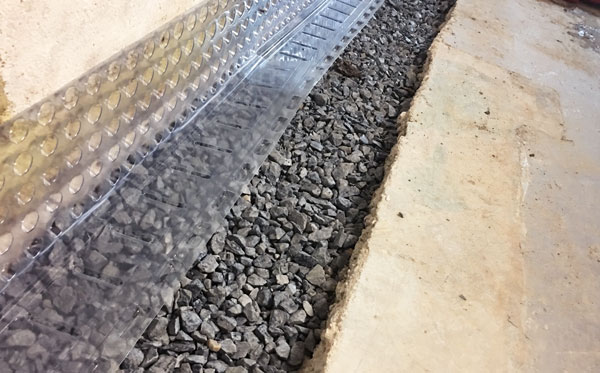
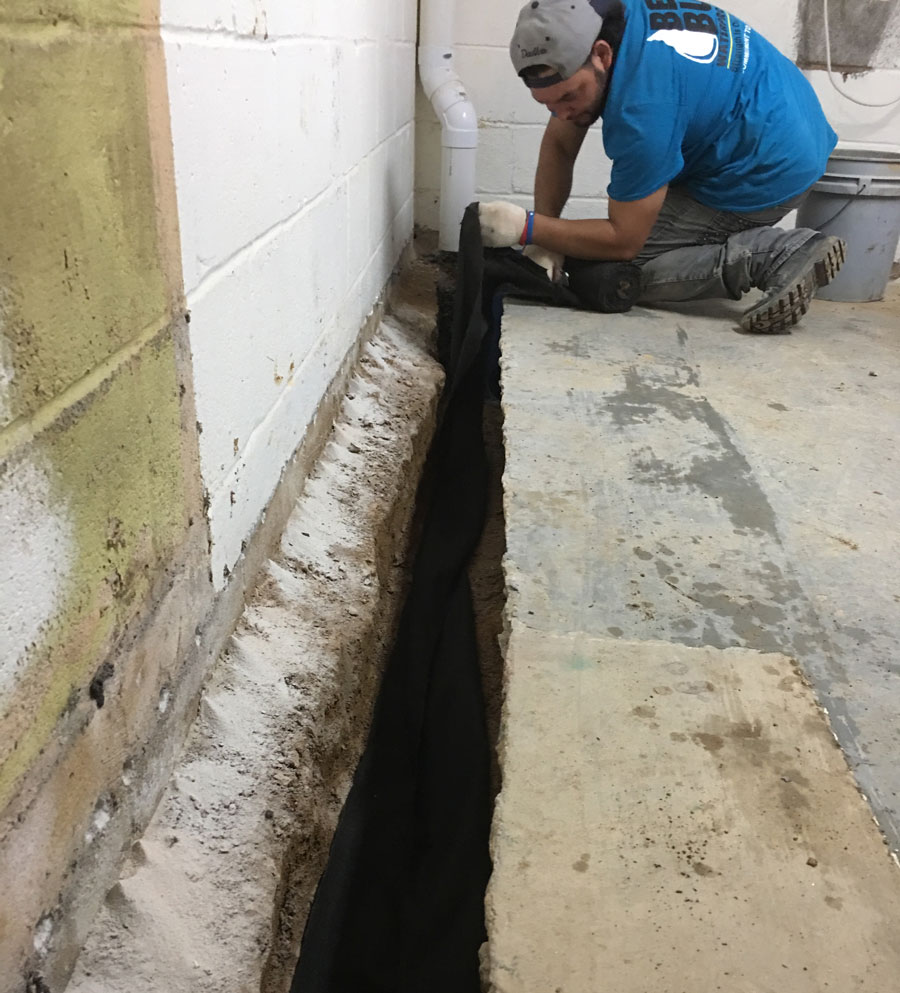
The core of interior waterproofing is a perimeter drain, often called an interior french drain. We open a trench along the inside edge of the basement floor where it meets the foundation walls, set perforated pipe in clean gravel and slope it so water flows by gravity toward a sump pit. Water that pushes up through the cove joint or runs down the walls drops into the drain instead of onto your floor, which relieves the pressure building under the slab.
Once the drain is in place, we restore the concrete floor so the system sits out of sight. The finished floor is ready for storage, flooring or a future basement finishing project.
Sump Pump and Battery Backup
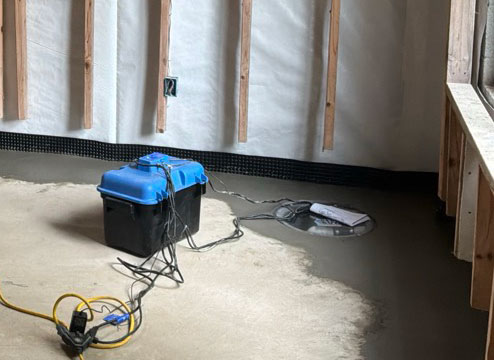
The perimeter drain carries water to a sump pit, and the sump pump moves it out. When the water in the pit reaches a set level, the pump switches on and discharges it away from the foundation. We size the primary pump to the amount of water your basement takes on, so it keeps up during heavy rain without cycling more than it needs to.
Storms that bring the most water often knock out power too. A battery backup keeps the system running during outages, and an alarm warns you about pump or power problems so you can act before water returns.
Basement Wall Sealing
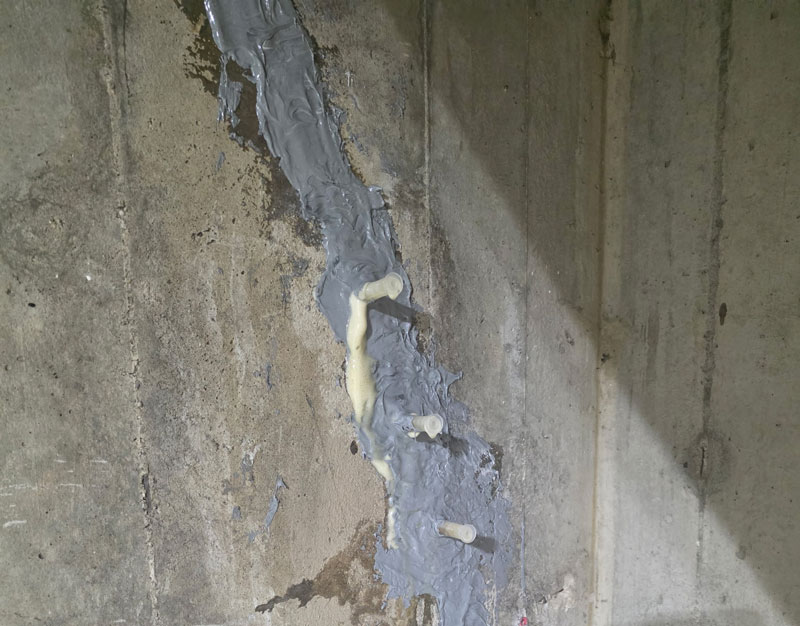
Block and older masonry walls let moisture pass through slowly, even when there is no obvious leak. Basement wall sealing helps limit that dampness at the wall surface. Leaking cracks are sealed as part of the same plan, so water has fewer ways to reach your living space.
Sealing works alongside drainage, not in place of it. A coating alone cannot hold back water pressure, which is why we pair wall sealing with a perimeter drain that actually removes the water.
Basement Wall Systems: Vapor Barrier, Wall Panels and Epoxy
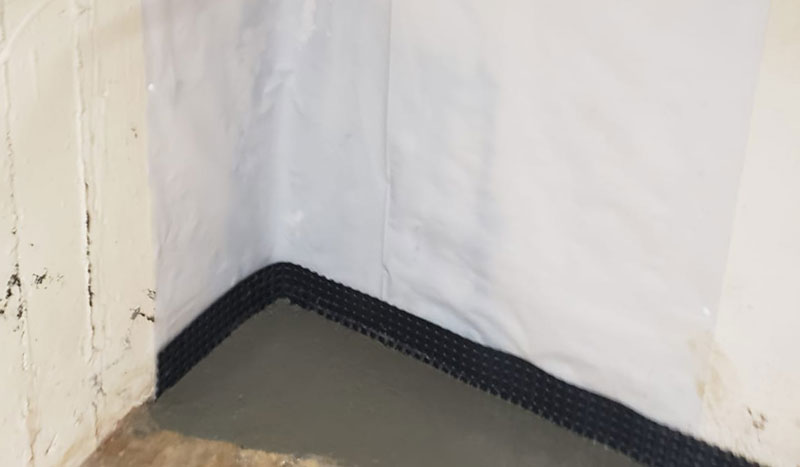
Some walls need more than sealing. A basement vapor barrier fastened to the walls directs moisture and seepage down into the perimeter drain rather than letting it run across the floor. Wall panels give damp, stained walls a clean, durable surface that holds up to moisture better than paint. Epoxy is used where a tougher coating fits the wall and its condition.
We recommend a wall system based on your foundation, how you use the space and whether you plan to finish the basement later. Each option works with the drain below it.
Our Interior Waterproofing Process
Free Inspection
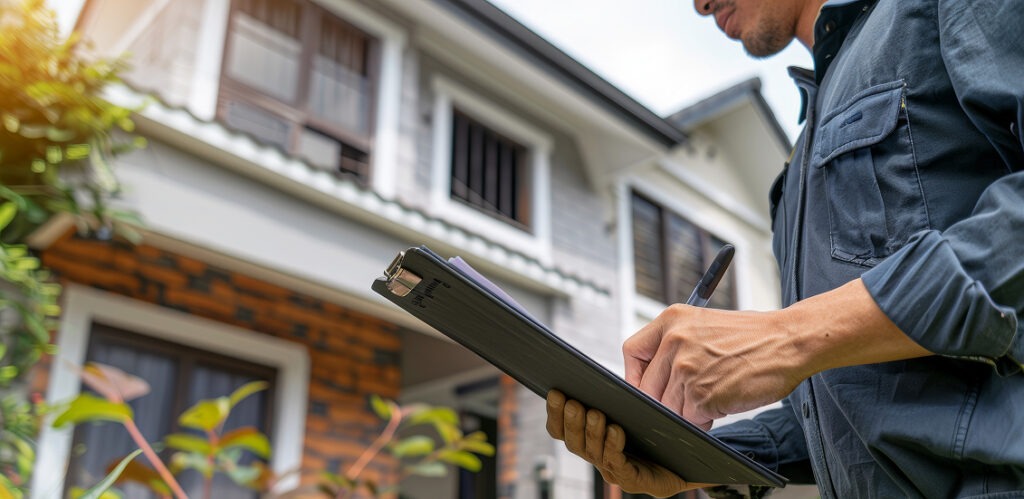
We check walls, floor, cracks, drainage and humidity to find where water enters.
Your Recommendation
We walk you through what we found and what we recommend, with a firm price.
Interior Installation
Our in-house crew installs the drain, sump pump and wall system, then cleans up.
Warranty Protection
Your interior waterproofing system is backed by a transferable warranty.
Why Homeowners Choose Best Buy Waterproofing
Interior waterproofing is only as good as the crew that installs it. We keep the process clear from the first inspection to the final cleanup.
- Serving homeowners since 2017: Our team has kept basements dry across the Mid-Atlantic since 2017.
- Licensed and insured: Licensed in Maryland, Virginia, Washington DC, Pennsylvania, Delaware and West Virginia, and fully insured.
- One in-house team: The same team handles waterproofing, foundation repair and mold remediation.
- Free inspection and financing: Inspections are free, and financing options are available for qualified homeowners.
- Transferable warranty: Your interior waterproofing warranty stays with the home if you sell.
What Affects the Cost of Interior Waterproofing?
We do not price interior waterproofing from a list, because every basement takes on water differently. After your free inspection, you get a firm price based on what your basement actually needs.
Basement Perimeter
Longer walls need more trench, pipe and gravel for the perimeter drain.
Foundation Type
Block, poured concrete and older masonry walls call for different details.
Pump and Backup
Pump size, battery backup and alarm options depend on your water volume.
Wall System Choice
Sealing, vapor barrier, wall panels or epoxy each change the scope.
Cracks and Damage
The number and condition of cracks affects the repair plan.
Finishes and Access
Finished walls, flooring or stored items can affect how work proceeds.
Interior Waterproofing FAQs
How does interior basement waterproofing work?
It collects water at the base of the foundation walls with a perimeter drain set in gravel below the floor. The drain carries water by gravity to a sump pit, and a sump pump discharges it outside, away from the house. Wall systems can direct seepage on the walls down into the same drain.
Is interior waterproofing as good as exterior waterproofing?
They solve the problem in different places. Interior waterproofing manages water after it reaches the foundation and relieves pressure under the slab, without excavation. Exterior waterproofing stops water before it touches the walls but requires digging around the house. Your inspection shows which approach, or combination, fits your home.
Do I need a sump pump with an interior drain?
In most homes, yes. The perimeter drain collects water, and the sump pump is what moves it out of the basement. We add a battery backup so the system keeps working during power outages, and an alarm so you know if the pump or power has a problem.
Can I just paint my basement walls with waterproof coating?
Coatings can reduce minor dampness, but they do not relieve the water pressure behind the wall. When water is pushing through the foundation, it can lift a coating and find another way in. We use basement wall sealing as part of a system that includes drainage to remove the water.
Will interior waterproofing make a mess of my basement?
There is some concrete work along the perimeter, so we protect the area and clear the space we need. Because the work stays inside, your yard and landscaping are untouched. Our crew cleans up when the installation is done, and the restored floor is ready for use.
Can I finish my basement after interior waterproofing?
Yes. Interior waterproofing is a common first step before finishing, because it keeps water away from new walls, flooring and furniture. A vapor barrier or wall panels can also help prepare the walls. Our team handles basement finishing too, so both projects can be planned together.
Related Services
Popular service areas: Baltimore · Washington, DC · Arlington · Alexandria · Columbia · Frederick · Silver Spring · Wilmington · All service areas
Schedule Your Free Basement Inspection
Find out where water is getting into your basement and whether interior waterproofing is the right fix. Book a free inspection for a clear recommendation, a firm price and financing options.