
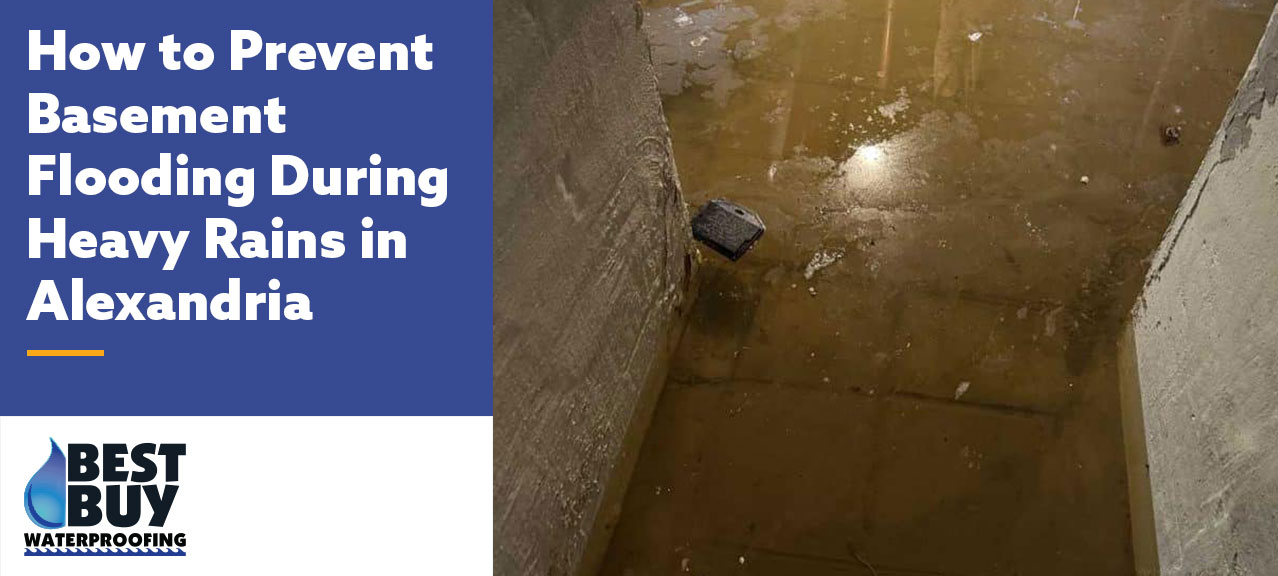
Alexandria summer storms don’t ease in slowly. They can dump over 2 inches of rain in under an hour, leaving thousands of Northern Virginia homeowners staring at wet basement floors before the storm even passes.
The good news? Most of it is preventable.
Knowing how to prevent basement flooding Alexandria VA homeowners face starts with understanding what’s working against you. Your proximity to the Potomac River, the expansive clay soils throughout the region, and an aging storm drainage system all put extra pressure on your basement during heavy downpours.
This guide walks you through the immediate checks to make before the next storm hits—including the sump pump installation Alexandria professionals stand behind—plus the permanent basement waterproofing Alexandria VA solutions built to last. Best Buy Waterproofing has helped Alexandria residents stop basement leaks heavy rain causes for over 30 years, with proven drainage systems and foundation protection that hold up storm after storm.
Your basement doesn’t have to flood. Let’s make sure it doesn’t.
Why Alexandria Basements Flood During Heavy Rain
High Water Tables Near the Potomac River
Living near the Potomac River is one of Alexandria’s best features. For your basement, it’s one of the biggest risks.
The water table—the underground point where soil becomes fully saturated—sits naturally higher here than in inland communities. When groundwater climbs to within 5 feet of your foundation’s base, seepage risk increases significantly. And in lower-lying Alexandria neighborhoods, that happens faster than most homeowners realize. Groundwater seeks the same level as the nearby river, keeping the surrounding soil at higher baseline saturation year-round.
During spring thaw or a prolonged storm, the water table can rise another 2 to 3 feet closer to the surface. That puts water directly against your basement walls and floor—constantly, quietly, and with real force.
Hydrostatic Pressure from Expansive Clay Soil
Northern Virginia’s clay soil absorbs water like a sponge and holds it tight against your foundation. Once saturated, that soil doesn’t just sit there—it pushes. Hard.
This is hydrostatic pressure. Water weighs approximately 60 pounds per cubic foot, and the deeper your foundation sits in saturated conditions, the greater that pressure becomes. Clay soil amplifies the problem, exerting lateral force strong enough to crack foundation walls or push them inward.
Here’s the part that surprises most homeowners: water doesn’t need a visible crack to get in. It finds microscopic channels through concrete and works its way through, creating continuous seepage on the other side. Preventing hydrostatic pressure from failing your basement walls starts with understanding that this force can exceed 60 pounds per square foot in saturated clay—that’s not a slow drip, that’s a real structural threat.
Aging Storm Drainage Infrastructure
Alexandria’s storm drainage system was built for a different era. It was designed to handle a 10-year storm event—about 2.28 inches of rain in 60 minutes, or 4.81 inches over 24 hours. The problem? The region has already blown past that threshold multiple times in recent years.
Alexandria saw three rainstorms in just 14 months that significantly exceeded the system’s design capacity. The worst of them—July 8, 2019—dropped more than 3.3 inches in a single hour, breaking a 148-year rainfall record. On top of that, the Hoofs Run Culvert, built in the 1950s, had accumulated over a foot of mud and debris from years without proper maintenance.
When the municipal system gets overwhelmed, the water has to go somewhere. More often than not, it backs up into residential properties—right into your basement.
Poor Gutter Management and Soil Grading
This is actually the most common issue we see during basement waterproofing assessments in Alexandria VA—and it’s also the most fixable.
Downspouts that discharge just a few inches from the foundation concentrate roof runoff directly against basement walls. They should extend at least 6 to 10 feet away. Soil settlement over time makes things worse, creating low spots beside your foundation that hold water instead of draining it.
Your yard should slope at least 6 inches downward over the first 10 feet from your home. When erosion or settling reverses that grade, rainwater funnels straight toward the cove joint—the vulnerable seam where your basement walls meet the floor slab. That’s where most leaks begin.
What to Check Before the Next Alexandria Storm
A few simple checks before a storm can save you thousands in water damage afterward. Here’s what to go through before the next heavy rain hits.
Test Your Sump Pump System
Don’t wait until water is rising to find out your sump pump isn’t working. Pour five gallons of water into the sump basin and watch the float switch rise. The pump should kick on within seconds, push water out through the discharge pipe, and shut off automatically once the pit clears. Manually lift the float switch to confirm the motor engages.
Then step outside. Make sure water is flowing away from your foundation through the discharge point—not pooling back against it.
Constant running, grinding noises, or no response at all means it’s time to call for sump pump installation Alexandria professionals can handle before the next storm arrives. And if your area loses power during severe weather—which happens often—battery backup sump pump protection keeps things running when your primary unit can’t.
Clear Gutters and Extend Downspouts
Your downspouts need to extend at least 5 to 10 feet from your foundation. Anything less, and you’re concentrating roof runoff directly against your basement walls. Clear out leaves, shingle grit, and any debris sitting in your gutters. Water that dumps just a few feet from your foundation wall doesn’t have far to travel before it shows up in your living space. Also check discharge areas for settled soil that needs to be filled in.
Clean Window Wells and Drain Covers
Leaves and debris clog window well drains faster than most homeowners expect—and a blocked drain means water has nowhere to go but inside. Clear out accumulated material by hand or with a shop vacuum. Gravel depth should be at least 4 to 6 inches to allow proper drainage. Standing water sitting in a window well is a warning sign. Don’t ignore it.
Verify Exterior Grading Around Foundation
Walk your property and pay attention to low spots, mulch beds holding moisture, and areas where the soil has settled near the house. Your yard should drop at least 6 inches over the first 10 feet from your foundation. When that grade runs in reverse—sloping toward your home instead of away from it—rainwater flows directly against your basement walls. Filling in low spots now is a simple fix that prevents a much bigger problem later.
Permanent Basement Waterproofing Solutions Alexandria VA
Catching a problem before the storm is smart. Fixing it permanently is even better. Here are the solutions our team at Best Buy Waterproofing installs most often for Alexandria homeowners—and what makes each one worth considering.
Interior French Drain Systems for Groundwater Control
Water gets into your basement at the floor-wall joint—the seam where your walls meet the floor slab. A professional interior drainage system targets exactly that spot.
Channels are installed along the perimeter of your basement, collecting seepage before it spreads across your floor and routing it directly to a sump pump basin.
What sets interior French drain Alexandria VA systems apart is where they sit—above the footing in a clean water zone. That placement keeps them from clogging the way exterior drains buried in mud often do. No landscape excavation. Most jobs wrap up in one to two days with minimal disruption to your home.
Battery Backup Sump Pump Installation
Here’s something worth knowing: Alexandria storms that push water into your basement are the same storms that knock out your power.
A battery backup sump pump kicks on automatically when your primary pump loses power or fails mechanically. Deep-cycle batteries provide five to seven hours of continuous operation, and with intermittent cycling, protection can extend up to three days. The switch to battery power happens within milliseconds—your basement keeps draining while the lights are out.
This is one of the most important upgrades Alexandria homeowners can make before storm season.
Exterior Waterproofing Membranes
Think of exterior waterproofing like a raincoat for your foundation. A flexible asphalt-modified polyurethane membrane is applied directly to the outside of your foundation walls—blocking water before it ever contacts the concrete.
Installation does require excavating soil around your foundation from footing to grade level, so it’s more involved than interior options. For porous masonry walls or persistent seepage issues, though, it’s one of the most thorough solutions available.
Foundation Crack Sealing and Repair
Cracks in your foundation walls are not just cosmetic. Water finds those gaps and works its way through—especially with the hydrostatic pressure Alexandria’s clay soils create.
Expanding polyurethane injection fills those cracks permanently, expanding up to 35 times its original volume. It works even on actively wet cracks, sealing voids up to 1/2 inch wide and 10 feet long. The result is a flexible, watertight seal that holds up as your foundation naturally shifts over time—without cracking open again.
The Cost of Delaying Basement Flood Prevention
Waiting to address a wet basement doesn’t save money. It costs far more later.
Mold Growth and Health Risks Within 48 Hours
Water damage is in the top 5 for the highest cost repairs homeowners face—and the clock starts fast. Mold colonies begin forming on wet drywall, carpet, and wood within 24 to 48 hours after water exposure. Once that happens, it’s not just a property problem. It becomes a health problem.
Airborne mold spores trigger coughing, wheezing, and difficulty breathing—especially for children, asthma sufferers, and anyone with a compromised immune system. Even otherwise healthy people report stuffy noses, sore throats, eye irritation, and skin rashes after prolonged exposure.
Professional mold remediation runs $500 to $6,000 depending on how far it’s spread. Severe cases require complete removal of contaminated materials before any basement waterproofing Alexandria VA work can even begin. That’s a significant cost—one that starts with a single ignored storm.
Foundation Damage from Prolonged Hydrostatic Pressure
Preventing hydrostatic pressure from cracking your basement walls requires action at the first sign of seepage. Every month you wait, that pressure keeps working.
Structural repairs from sustained water damage range from $2,500 to $25,000. Complete foundation replacement can reach $40,000 or more. Factor in damaged floors, walls, and personal property, and a fully flooded basement repair runs anywhere from $14,000 to $63,000. Foundation repair costs averaged $5,176 nationally in 2026, with most projects falling between $2,225 and $8,135.
These aren’t worst-case numbers. They’re what Alexandria homeowners are paying right now because a problem that started small was left alone too long.
Impact on Home Value and Resale Potential
Water damage history follows a home. Even after repairs, a flooding history reduces property values by 10 to 20 percent. Buyers ask for price reductions. Homes sit on the market longer when disclosures reveal past flooding. In some cases, untreated moisture problems can block conventional mortgage approval entirely.
On the flip side, homes with professionally waterproofed basements command stronger prices and attract confident buyers. It’s one of the few home improvements that protects your investment from the ground up.
The cost of doing nothing is real. The cost of acting now is manageable—and worth every penny.
Don’t Wait, Contact Best Buy Waterproofing Today!
Water doesn’t wait for a convenient time. Neither should you.
The checks and solutions covered here work—but only when you act on them before the next storm rolls in. Whether it’s a simple sump pump test or a permanent drainage system, every step you take now protects your home, your family’s health, and your investment down the road.
Best Buy Waterproofing has served Alexandria homeowners for over 30 years. Proven drainage systems, foundation protection, and lifetime warranties are what we bring to every project. Our mission is simple—quality work, on time and on budget, with 5-star service from start to finish.