Welcome to The Best Buy Waterproofing

Basement Waterproofing

Exterior Waterproofing

Excavation, a waterproof foundation membrane and a footing drain that stop groundwater outside your walls before it reaches the basement.

Exterior Basement Waterproofing That Stops Water at the Source

Exterior basement waterproofing keeps groundwater on the outside of your foundation, where it belongs. Across Maryland, Virginia, Washington DC, Pennsylvania, Delaware and West Virginia, many homes sit in dense clay and silt soils that soak up rain and drain slowly. Over time, the backfill packed against the walls holds water and presses it into cracks, joints and porous block. Exterior waterproofing replaces that problem with a sealed wall surface and a clear path for water to drain away, so it never reaches the inside of the basement.

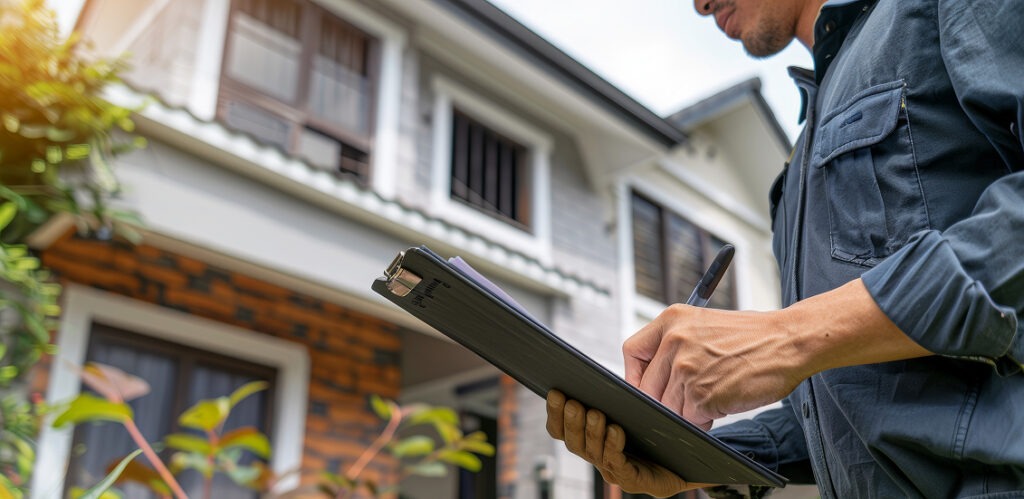
This approach suits poured concrete and block foundations, and it is a strong fit for a finished basement that gets regular use, because the work happens outside your walls and floors. Best Buy Waterproofing has handled exterior waterproofing with its own in-house crews since 2017. Every project begins with a free inspection to confirm that exterior work is the right answer for your home.

Signs You May Need Exterior Waterproofing

These signs often point to water pressing against the outside of the foundation walls.

Leaks Through the Walls

Water seeps through block or poured walls during heavy rain or snowmelt.

White Chalky Residue

Efflorescence on walls shows water is moving through the masonry from outside.

Leaking Wall Cracks

Cracks in foundation walls that weep water after storms or each spring.

Damaged Finished Walls

Stained drywall, swollen trim or musty carpet in a finished basement.

Freeze-Thaw Damage

Spalling or crumbling masonry where wet soil freezes against the wall.

Saturated Soil Outside

Soggy ground or pooling water along the foundation after rain.

How Our Exterior Waterproofing System Works

Excavation Around the Foundation

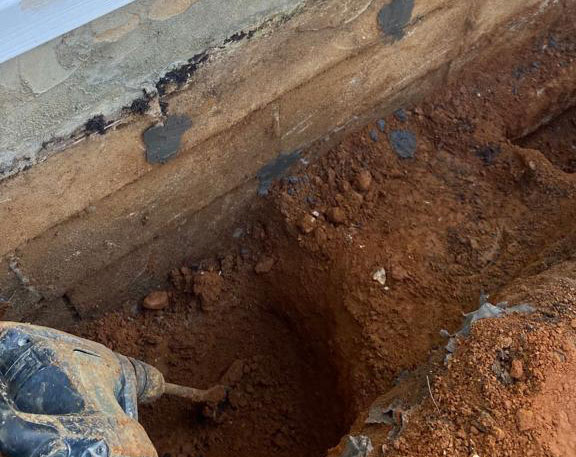
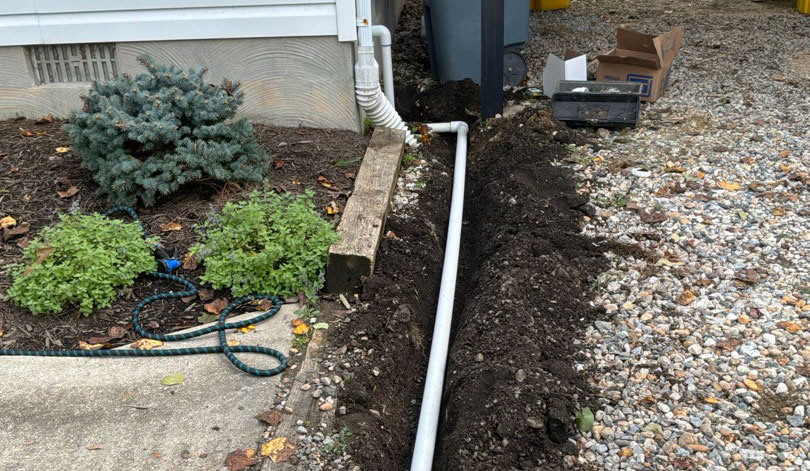
Exterior waterproofing starts with excavation. Our crew digs along the basement walls down to the footing, exposing the outside face of the foundation. That lets us see what is happening to the wall itself, including cracks, failed coatings and areas where water has been getting through. We plan the dig around your landscaping, walkways and utilities and keep the work area organized from start to finish.

Removing the old backfill matters as much as exposing the wall. Dense, water-holding soil packed against the foundation is a major reason the basement leaks in the first place.

Foundation Membrane and Dimple Board

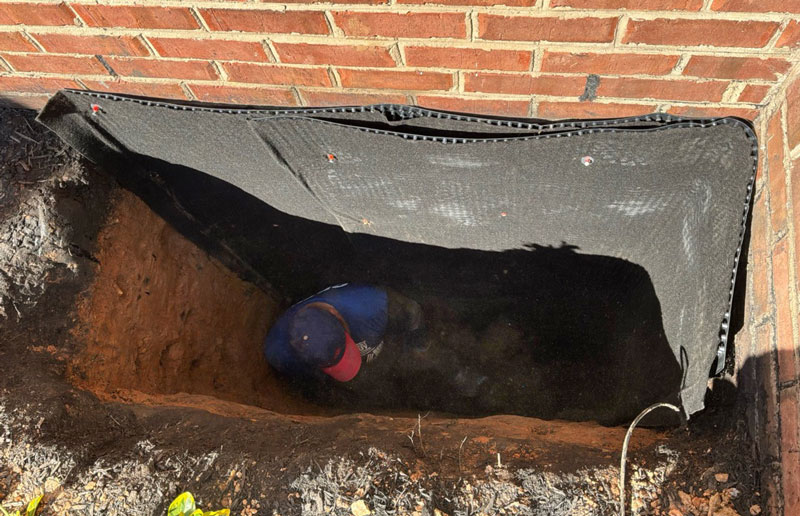
With the wall exposed and cleaned, we apply a waterproof foundation membrane to the outside of the basement walls. The membrane creates a continuous barrier against groundwater and seepage, so water cannot soak into the block or concrete. Cracks are addressed before the membrane goes on.

Dimple board goes over the membrane. Its raised pattern creates an air gap against the wall, protects the membrane during backfilling and directs water straight down to the drain at the footing.

Footing Drain and Washed Gravel

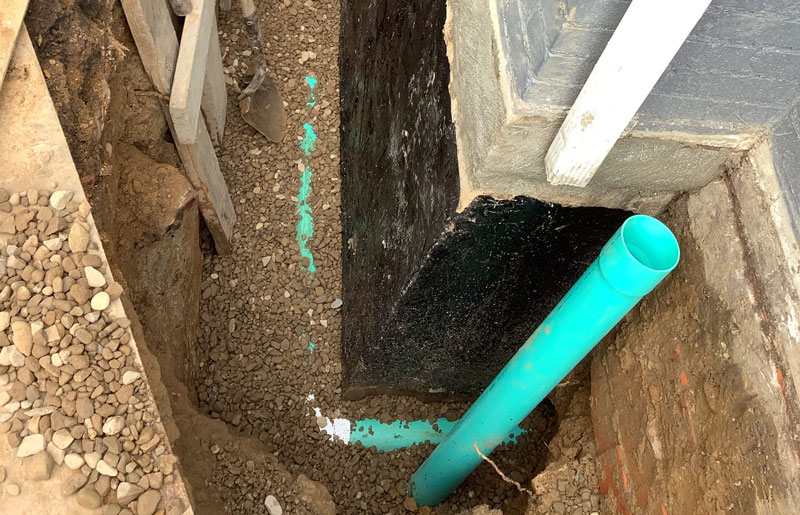
At the base of the wall, we install a footing drain, a perforated pipe set in washed gravel that collects water and carries it away from the house. We then backfill with washed gravel instead of the original clay. Gravel lets water drop quickly to the drain rather than sitting against the wall, which reduces hydrostatic pressure on the foundation.

The drain is routed to a discharge point away from the house, either by gravity where the lot allows or to a sump pump.

Sump Pump or Gravity Discharge

Collected water needs somewhere to go. On lots with enough slope, the footing drain can discharge by gravity. Where it cannot, we install a sump pump to move the water up and away from the foundation. Some homes benefit from a dual-pump setup for extra capacity.

We add a battery backup and alarm where a pump is used, so the system keeps working during storms that cut the power.

Our Exterior Waterproofing Process

1

Free Inspection

We check walls, cracks, grading, gutters and soil to find where water enters.

2

Your Recommendation

We walk you through what we found and what we recommend, with a firm price.

3

Excavate and Seal

Our crew excavates, applies the membrane, installs the drain and backfills with gravel.

4

Warranty Protection

Your exterior waterproofing system is backed by a transferable warranty.

Why Homeowners Choose Best Buy Waterproofing

Exterior waterproofing is a bigger project, and it should be handled by a team that does the whole job. Our own crews excavate, waterproof, drain and backfill.

What Affects the Cost of Exterior Waterproofing?

We do not price exterior waterproofing from a list, because every foundation, lot and soil condition is different. After your free inspection, you get a firm price based on what your home actually needs.

Wall Length

How many walls need waterproofing sets the length of excavation, membrane and drain.

Excavation Depth

Deeper basements mean more digging to reach the footing.

Foundation Condition

Cracks or damaged block may need repair before the membrane goes on.

Access and Obstacles

Decks, patios, porches, driveways and utilities affect how the dig proceeds.

Landscaping

Plantings and hardscape near the walls may need to be moved or protected.

Discharge Method

Gravity discharge or a sump pump with backup changes the scope.

Exterior Waterproofing FAQs

It is a system installed on the outside of your foundation. We excavate along the walls, apply a waterproof membrane and dimple board, set a footing drain in washed gravel and backfill with gravel. Water is stopped before it reaches the wall and is carried away from the house.

It is often the right fit for a finished basement you do not want to tear apart, for walls taking on water through the masonry, and for homes where you want water kept off the foundation entirely. Your inspection shows whether exterior, interior or a combination makes the most sense.

Yes. It suits both poured concrete and block foundations. Block walls are porous and have many joints, so sealing the outside face with a foundation membrane and relieving pressure with gravel and a footing drain helps keep water out of the cores and off the interior.

Some disturbance is part of the process, since we have to dig down to the footing. We plan the excavation around walkways, plantings and utilities, protect what we can and restore the grade when backfilling. You will know what to expect before work begins. Once the gravel backfill settles, the area can be replanted or restored as planned.

Not always. If your lot has enough slope, the footing drain can discharge by gravity. If not, a sump pump moves the water away from the foundation. When we install a pump, we recommend a battery backup and alarm so it keeps working during power outages.

Yes. Some homes take on water both through the walls and up through the floor. Exterior waterproofing protects the walls, while an interior perimeter drain relieves pressure under the slab. We recommend a combination only when the inspection shows both are needed.

Related Services

Interior Waterproofing

French Drain Installation

Foundation Repair

Schedule Your Free Foundation Inspection

Find out whether exterior waterproofing is the right way to keep your basement dry. Book a free inspection for a clear recommendation, a firm price and financing options.

Scroll to Top