Home » Service Areas » Washington, DC » Washington, DC Crawl Space Repair » Washington, DC Crawl Space Encapsulation
Washington, DC Crawl Space Encapsulation
- Licensed & Insured
- 5-Star Rated
- Local Business
- Transferable Warranty
Crawl Space Encapsulation Contractors in Washington, DC
A crawl space may be out of sight, but the air in it rises into the rooms you live in. When that space is damp, the house above often smells musty, floors feel cold and mold has room to grow on the joists. Best Buy Waterproofing provides crawl space encapsulation in Washington, DC, with one in-house team that inspects the space, explains what is going wrong and seals it from the ground up. The goal is a crawl space that stays dry through humid summers and wet storms.
Crawl spaces in DC show up under detached and semi-detached homes, rear additions, sunrooms and porches built over open ground. The clay-heavy soil underneath holds moisture after heavy summer storms, and humid outdoor air pulls even more water in through open vents. Encapsulation closes the space off from both. We lay a sealed vapor barrier, close the vents, air seal gaps and penetrations, insulate the walls and rim joists, and add a dehumidifier so the space stays dry year-round.
Signs You Need Crawl Space Encapsulation in Washington
Most crawl space problems are noticed upstairs first. These signs point to moisture below your floors.
Musty Odors
A damp, earthy smell lingers in rooms above the crawl space.
Mold on Joists
Dark spots or fuzzy growth appear on floor joists, beams or insulation.
Condensation and Damp Soil
Pipes, ducts and wood feel wet, or the dirt floor stays damp.
Cold Floors
Floors above the crawl space feel cold and drafty in winter.
Sagging Insulation
Fiberglass batts are wet, sagging or falling out from between the joists.
Soft or Sagging Floors
Floors feel spongy or uneven as moisture weakens the wood below.
What Crawl Space Encapsulation Includes for Washington, DC Homes
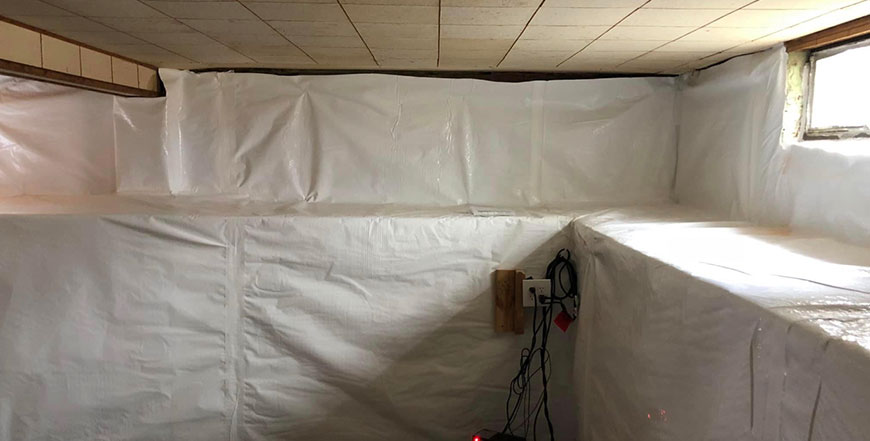
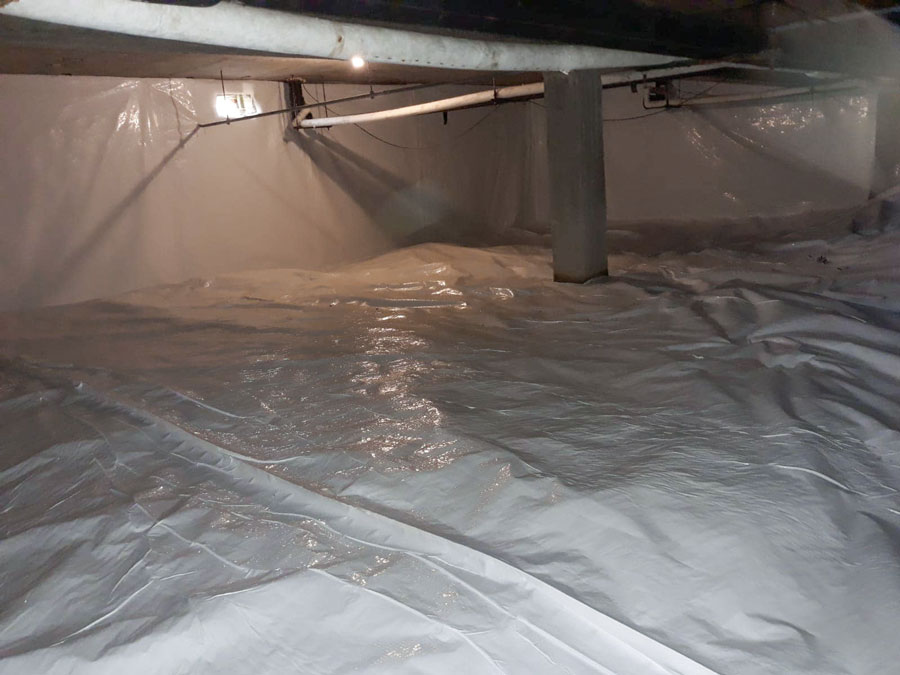
Sealed Vapor Barrier on Floors, Walls and Piers
The vapor barrier is the heart of every crawl space encapsulation. We cover the dirt or gravel floor with a commercial-grade liner, run it up the foundation walls and wrap it around support piers. Seams are overlapped and taped, and the edges are fastened and sealed to the walls, so ground moisture rising from the clay below has no open path into the space.
A full liner also gives plumbers, electricians and HVAC techs a clean, dry surface to work on.
Vent Sealing and Crawl Space Air Sealing
Open foundation vents were once meant to dry a crawl space out. In a humid climate like Washington’s they tend to do the opposite. Warm summer air flows in, cools against the ground and the joists, and condenses into water. We close and seal the vents so outside air, rain and pests stay out.
Then we complete the air sealing around rim joists, sill plates, the access door and every pipe, wire and duct penetration. Air sealing keeps damp air from leaking in and helps stop conditioned air from escaping, which is what turns the crawl space into a controlled part of the home.
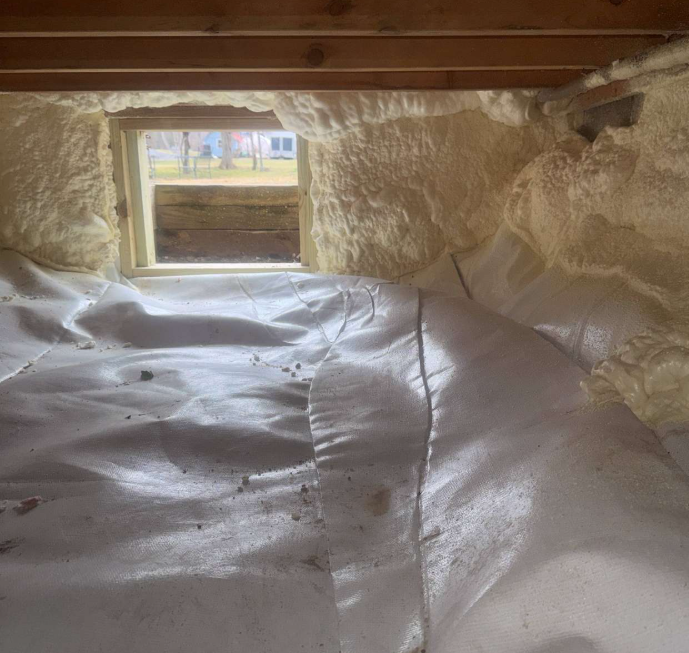
Closed-Cell Spray Foam on Walls and Rim Joists
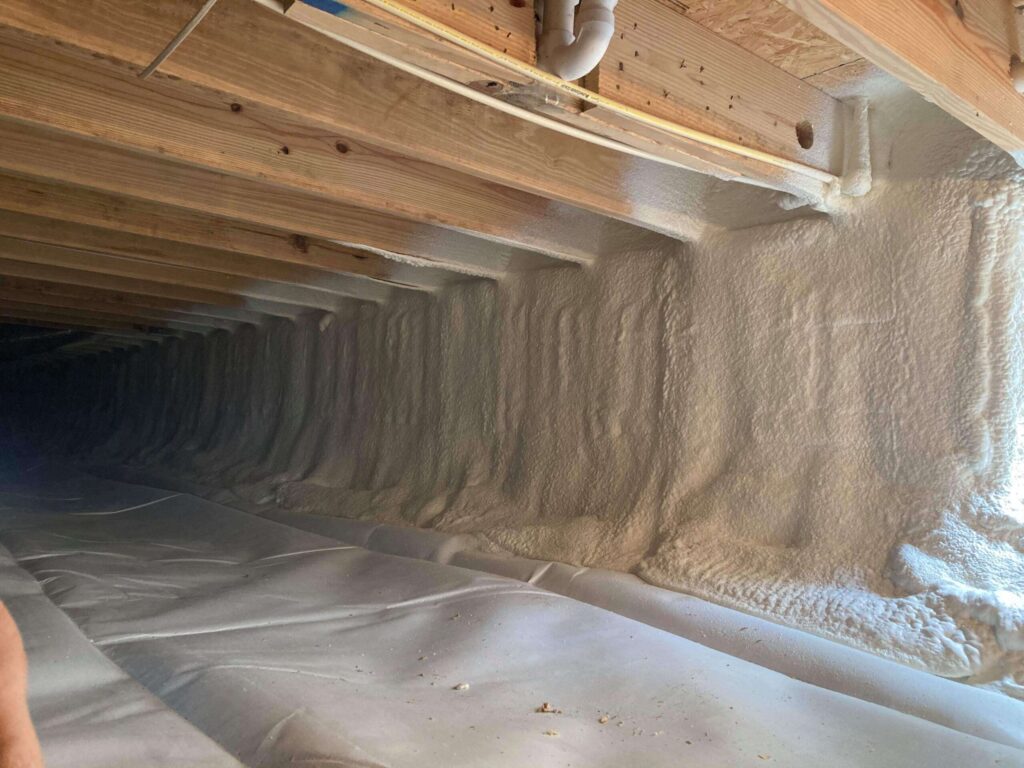
In a sealed crawl space, insulation belongs on the foundation walls and rim joists rather than between the floor joists. We apply closed-cell spray foam to those surfaces. It insulates, adds another layer of air sealing and resists moisture, so it holds up below grade where fiberglass batts tend to soak up water and sag.
Insulating the walls and rim joists keeps the crawl space closer to the temperature of the house, which helps warm the floors above in winter.
Crawl Space Dehumidifier
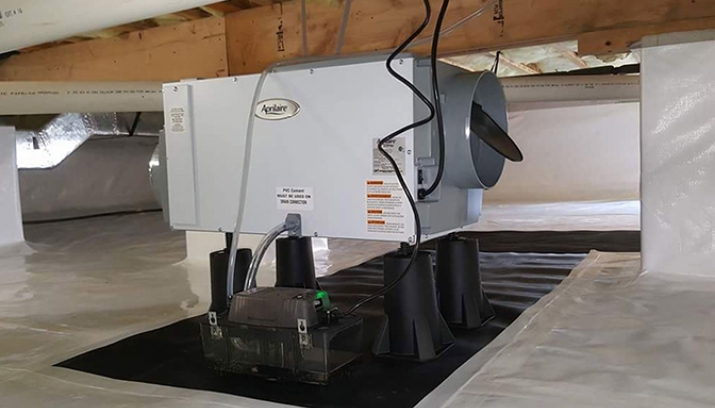
Even a sealed crawl space needs active humidity control. A crawl space dehumidifier sized for the space pulls moisture out of the air and keeps humidity at a level where mold, mildew and wood rot struggle to get started. That matters through long, humid DC summers.
We install units with automatic drainage, so there is no bucket to empty.
Water Control, Mold and Structural Repairs
Crawl space encapsulation controls humidity, but it is not built to handle flowing water. If the inspection finds standing water or seepage through the walls, we address it first with crawl space waterproofing before the liner goes down. Where we find mold on the framing, we treat it so the new system starts clean.
If years of moisture have weakened the wood, we also add support for sagging floors as part of the same project, so the space is dry and solid when we finish.
Our Crawl Space Encapsulation Process
Free Inspection
We check moisture, vents, insulation, framing and any standing water in the crawl space.
Your Recommendation
We explain what we found and which encapsulation components your space needs.
Seal and Install
Our crew installs the liner, seals vents and gaps, insulates and sets the dehumidifier.
Warranty Protection
Your system is backed by a transferable warranty that stays with the home.
Why Washington, DC Homeowners Choose Best Buy Waterproofing
Crawl space encapsulation affects the air, floors and framing of your whole house, so Washington homeowners want it done thoroughly the first time. Here is what you get with our team.
- Licensed and insured: Licensed in DC, Maryland, Virginia, Pennsylvania, Delaware and West Virginia, and fully insured.
- One in-house team: The same company handles encapsulation, waterproofing, spray foam and mold remediation.
- Transferable warranty: Your warranty stays with the house if you sell, which can help at resale.
- Serving homes since 2017: Based in Columbia, MD, and working in homes across Washington, DC.
- Financing available: Ask about financing options, and call anytime at (844) 980-3707.
What Affects the Cost of Crawl Space Encapsulation in Washington?
We do not quote crawl space encapsulation from a price list, because every crawl space is different. You get a firm price after your free inspection, once we know exactly what your space needs.
Crawl Space Size
Floor area and wall height set how much liner and sealing work is needed.
Existing Water Issues
Standing water or seepage must be handled before the space is sealed.
Access and Clearance
Low clearance, tight entry points and alley-access lots affect the work.
Insulation Scope
How much wall and rim joist area needs closed-cell spray foam.
Mold and Debris
Old insulation, debris or mold may need removal before installation.
Structural Repairs
Weakened joists or sagging floors may need support as part of the project.
Crawl Space Encapsulation FAQs
What is the difference between a vapor barrier and full encapsulation?
A basic vapor barrier covers the dirt floor. Full crawl space encapsulation goes further: the liner runs up the walls and around piers with sealed seams, the vents are closed, gaps are air sealed, the walls are insulated and a dehumidifier controls humidity. That combination keeps the whole space dry.
Should crawl space vents be sealed in Washington, DC?
In most cases, yes. DC summers are humid, and open vents let warm, wet air into a cooler crawl space where it condenses on the wood and ground. Sealing the vents as part of encapsulation keeps that moisture out and lets the dehumidifier do its job.
Why does air sealing matter in a crawl space?
Air moves up from the crawl space into the living areas of your home. Air sealing the rim joists, sill plates, access door and penetrations keeps damp outdoor air from leaking in and keeps conditioned air from escaping. It is what makes the sealed space work as part of the house.
Will encapsulation get rid of musty odors?
Musty smells usually come from damp soil, wet wood or mold below the floor. Encapsulation removes the moisture behind them, and where mold is present we treat it before sealing the space. Most homeowners notice fresher air upstairs once the crawl space is dry.
What if my crawl space has standing water?
Encapsulation is not designed to manage flowing or standing water. If we find water during the inspection, we handle it first with crawl space waterproofing. Once the water is under control, we install the liner and the rest of the system.
Does encapsulation help with energy use?
It can. Sealing vents, air sealing gaps and insulating the walls and rim joists keeps the crawl space closer to the temperature of the house. That helps floors feel warmer in winter and can reduce the load on your heating and cooling system.
More Services in Washington, DC
Crawl space encapsulation near Washington, DC: Arlington, VA · Alexandria, VA · Bethesda, MD · Silver Spring, MD · Rockville, MD · Falls Church, VA
Seal Your Crawl Space for Good
If your home smells musty or your floors feel cold and damp, schedule a free inspection with Best Buy Waterproofing. We serve homes across Washington, DC and will show you exactly what your crawl space needs.