Welcome to The Best Buy Waterproofing

Alexandria, VA Wall Stabilization

Carbon fiber straps, steel I-beam braces and block wall rebuilds that stop bowing or leaning basement walls in Alexandria homes from moving further.

Basement Wall Stabilization in Alexandria, VA

A basement wall is built to hold back the soil around it. When that soil gets heavier and pushes harder than the wall was designed for, the wall can crack, bow inward or begin to lean. Best Buy Waterproofing provides wall stabilization in Alexandria with carbon fiber straps, steel I-beam wall braces and, when a wall has moved too far, block wall rebuilds. Our in-house team inspects the wall, explains how far it has moved and installs the repair that matches the damage.

The clay-heavy soils found across Alexandria are a big part of the problem. Clay soaks up water after heavy summer storms and swells, pressing hard against foundation walls, then shrinks as it dries and lets the wall settle back slightly out of place. Freeze-thaw winters add more force near the top of the wall. Over the years that cycle can push block walls in mid-century homes and older masonry alike. We have been repairing foundations since 2017, and every job starts with a free inspection.

Signs You Need Wall Stabilization in Alexandria

Wall movement usually starts small. If you spot any of these in your basement, have it checked before the wall moves further.

Horizontal Cracks

A long crack runs sideways across the wall, often near mid-height.

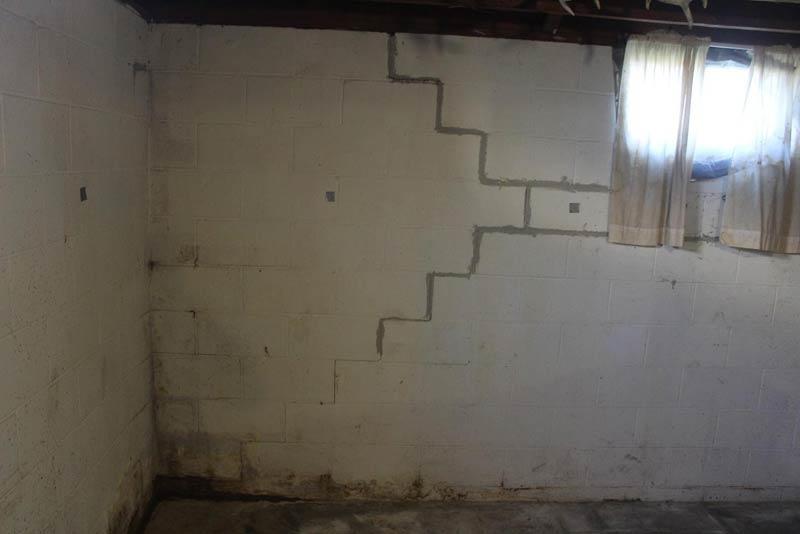
Stair-Step Cracks

Cracks zigzag through the mortar joints of a block wall.

Bowing Walls

The center of the wall curves inward toward the basement.

Leaning Walls

The top of the wall tilts in farther than the bottom.

Sliding at the Base

The bottom of the wall shifts inward past the floor slab.

Leaks Along Cracks

Water seeps through wall cracks after storms or snowmelt.

Wall Stabilization Options for Alexandria Homes

Measuring How Far the Wall Has Moved

Wall stabilization starts with understanding the wall. During the free inspection we measure how far it has bowed or leaned, note the pattern and width of the cracks, and check whether the base has shifted. We also look outside at gutters, downspouts and grading, since water soaking the clay next to the house is often what drives the pressure. That information tells us which repair the wall needs and whether drainage changes should be part of the plan.

We then walk you through what we found and what we recommend.

Carbon Fiber Straps for Early Movement

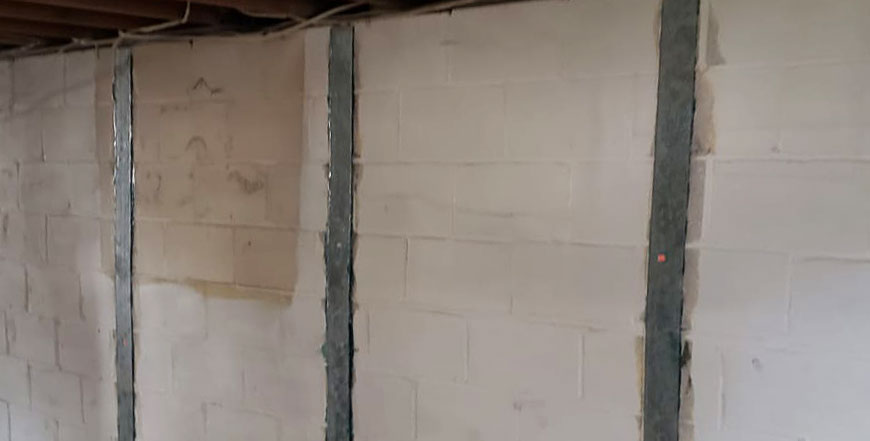
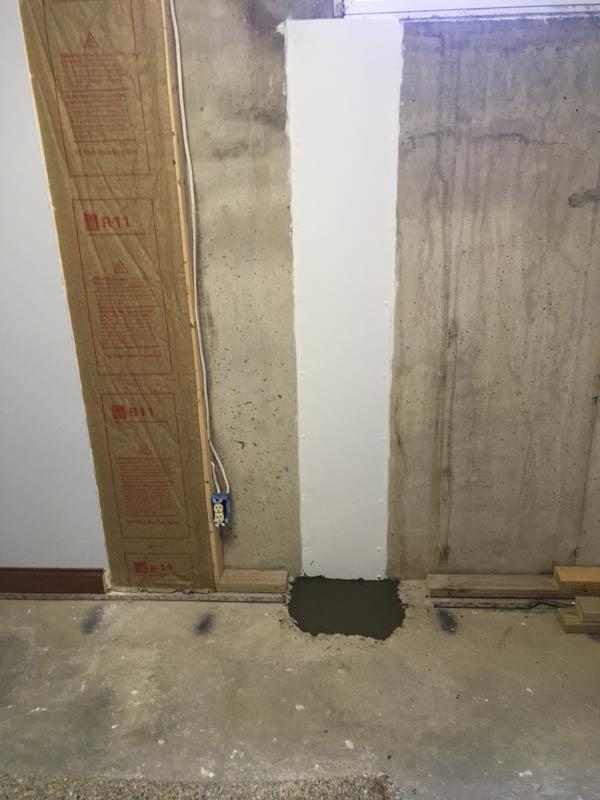
Carbon fiber straps are made for walls that have started to crack or bow but have not moved far. We bond the straps vertically to the wall with structural epoxy at set intervals, and each strap is secured at the top and bottom so the wall cannot keep bending inward. The straps are thin and sit nearly flat against the wall.

That low profile makes carbon fiber straps a good fit for basements you plan to finish, since they take up almost no room.

Steel I-Beam Braces for Greater Movement

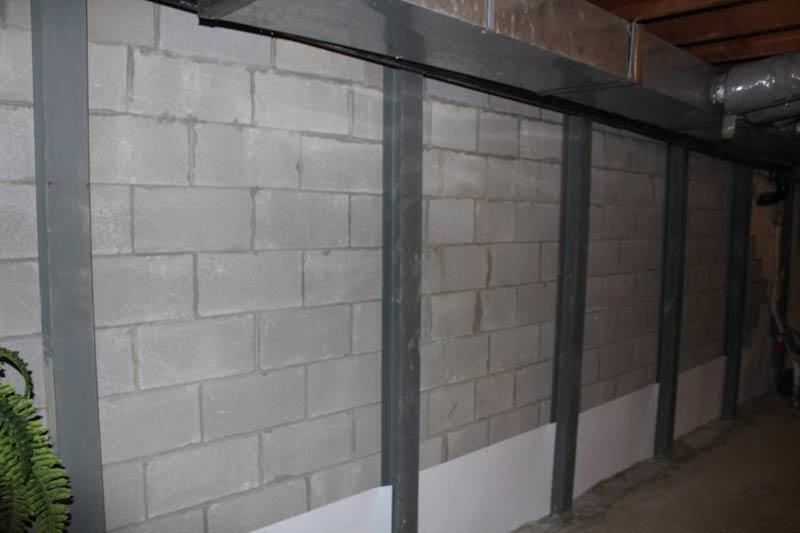
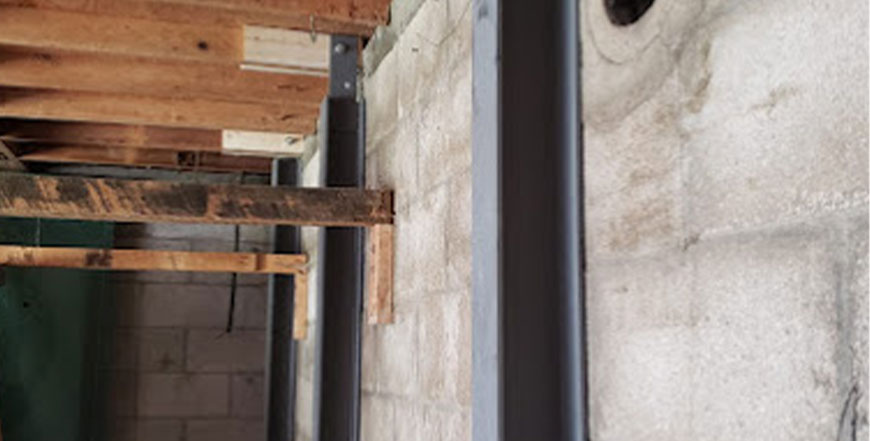
When a wall has bowed or leaned further, steel I-beam braces give it more support. Each brace stands vertically against the wall and is secured to the basement floor at the bottom and to the floor framing above at the top. The braces hold the wall in place and resist the soil pushing in.

Some braces can be adjusted over time to help ease the wall back toward its original position, depending on its condition. We space them along the wall based on what the inspection shows.

Block Wall Rebuilds

Some walls have moved too far or are too badly damaged to brace. In those cases we rebuild the affected section of block wall. We support the house, remove the failing section, and lay new block properly reinforced so the rebuilt wall can handle the soil load around it.

A rebuild is a bigger basement wall repair, so we only recommend it when straps or braces cannot do the job.

Crack Sealing and Water Control

Stabilizing a wall stops it from moving, but cracks can still let water in. We seal leaking cracks as part of the repair, and if the basement shows signs of ongoing seepage we can add interior waterproofing so water no longer builds up behind the wall. Less water in the soil means less pressure on the wall over the long run.

When a permit is required, we handle it.

Our Wall Stabilization Process

1

Free Inspection

We measure wall movement, map cracks and check drainage around the house.

2

Your Recommendation

We walk you through what we found and recommend straps, braces or a rebuild.

3

Wall Repair

Our in-house crew installs the repair and seals cracks, then cleans up.

4

Warranty Protection

Your wall stabilization is backed by our transferable warranty.

Why Alexandria Homeowners Choose Best Buy Waterproofing

A moving basement wall is stressful, and you deserve a straight answer about how serious it is. Alexandria homeowners rely on us for wall stabilization done by one team from inspection to cleanup.

What Affects the Cost of Wall Stabilization in Alexandria?

Wall stabilization is not priced from a list, since no two walls move the same way. Your firm price comes after the free inspection.

Wall Length

Longer walls need more straps or braces spaced along them.

Amount of Movement

How far the wall has bowed or leaned decides the repair type.

Repair Method

Carbon fiber straps, I-beam braces and rebuilds involve different work.

Wall Material

Block, poured and older masonry walls each need suitable details.

Water Issues

Leaking cracks or seepage may call for sealing or drainage too.

Basement Finishes

Drywall, shelving or framing against the wall may need to come down.

Wall Stabilization FAQs

A bowing wall is a structural problem that tends to get worse over time, especially through repeated wet and dry seasons. Catching it early usually means a simpler repair. If you see a horizontal crack or a wall curving inward, schedule an inspection rather than waiting.

Clay soil around many Alexandria homes swells when it gets wet and presses against the foundation. Poor drainage, downspouts that empty next to the house and freeze-thaw winters add to that pressure. Block walls in mid-century neighborhoods like Parkfairfax and Beverley Hills can be especially prone to it.

It depends mostly on how far the wall has moved. Carbon fiber straps suit walls with early cracking and limited bowing. Steel I-beam braces are built for walls that have moved further. We measure the wall during the inspection and recommend the right option.

The main goal is to stop movement. Some braces can be adjusted gradually to help bring a wall back toward its original position, depending on its condition. Walls that have moved too far are better rebuilt, and we explain which applies to yours.

Often it helps. Water in the soil adds pressure on the wall and can leak through cracks. Sealing cracks and, when needed, adding interior waterproofing reduces that water so the repaired wall stays dry and under less strain.

Yes. Carbon fiber straps sit nearly flat and are easy to finish around, and braces can be planned around as well. Once the wall is stable and the basement is dry, our in-house team also offers basement finishing.

More Services in Alexandria

Foundation Repair in Alexandria

Settling Foundation Repair in Alexandria

Basement Waterproofing in Alexandria

Wall stabilization near Alexandria, VA: Arlington · Washington, DC · Falls Church · Annandale · Springfield · Fairfax · Mount Vernon

Stop Your Basement Walls From Moving

If you see horizontal cracks or a wall bowing inward, schedule a free inspection with Best Buy Waterproofing. We will measure the wall in your Alexandria home and recommend the repair it needs.

Scroll to Top