Home » Residential Services » Crawl Space Repair » Crawl Space Waterproofing
Crawl Space Waterproofing
- Licensed & Insured
- 5-Star Rated
- Local Business
- Transferable Warranty
Crawl Space Waterproofing for Wet Crawl Spaces
A wet crawl space does more than make a mess under your home. Standing water and damp soil soften floor joists, feed mold, attract pests and send musty air into the rooms above. Crawl space waterproofing stops that cycle by finding where water gets in, sealing it out and giving any water that still arrives a safe path away from the house. Best Buy Waterproofing has handled this work for homeowners across the Mid-Atlantic since 2017, with one in-house team from inspection to cleanup.
Water reaches crawl spaces in many ways. Dense clay soils common across the region hold rain against foundation walls. Older block, stone and brick foundations let moisture pass through mortar joints and cracks. Poor grading and short downspouts send roof runoff straight toward the house. Our free inspection traces the source, then we recommend the mix of wall sealing, crawl space drainage, sump pumps and humidity control that fits your home.
Signs You Need Crawl Space Waterproofing
Many homeowners only learn about a wet crawl space when the problem shows up upstairs.
Standing Water
Puddles or saturated soil in the crawl space after rain or snowmelt.
Damp or Weeping Walls
Wet patches, water lines or white mineral deposits on foundation walls.
Musty Odors Upstairs
A stale, earthy smell in rooms above the crawl space, especially in summer.
Sagging or Soft Floors
Dips, bounce or creaking that can point to moisture-damaged floor joists.
Wet, Fallen Insulation
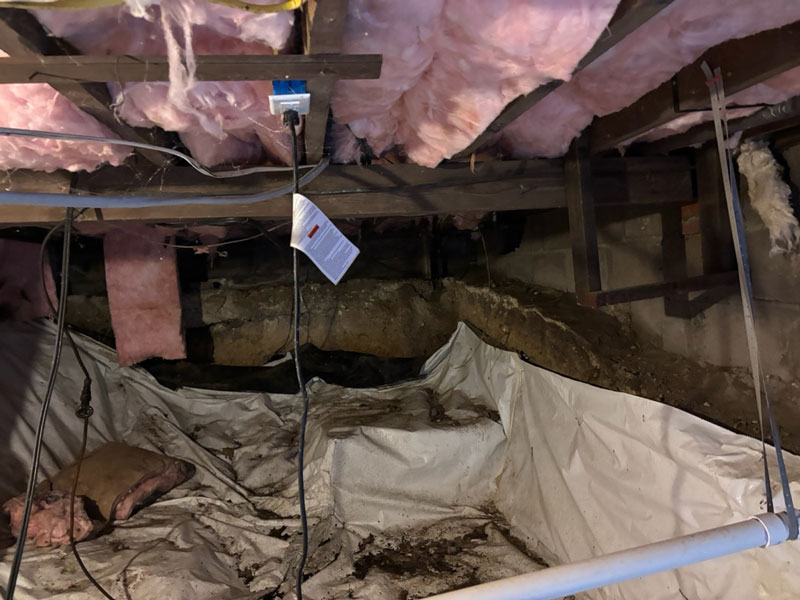
Fiberglass between joists that is soaked, sagging or lying on the ground.
Mold or Wood Rot
Fuzzy growth, dark staining or soft wood on joists, beams and subfloor.
Our Crawl Space Waterproofing Solutions
Inspection and Moisture Source Tracing
Good crawl space waterproofing starts with knowing exactly where the water comes from. During your free inspection, a specialist goes into the crawl space and checks the walls, floor, piers and framing for water lines, cracks, gaps around pipes and signs of past flooding. We also look outside at gutters, downspouts and grading, because many wet crawl space problems begin in the yard.
We measure humidity and check insulation and floor joists so nothing gets missed. Then we explain what we found in plain language and how each part of our recommendation addresses a specific source of water.
Wall Sealing and Crack Repair
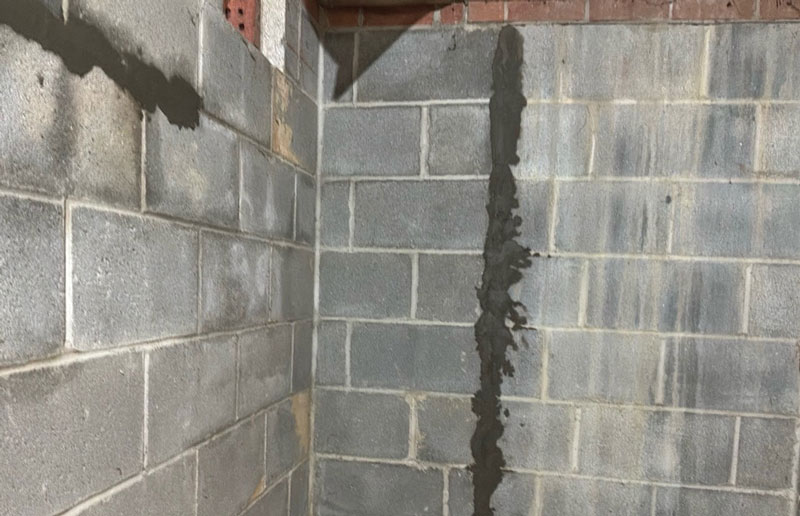
Foundation walls are a common entry point for water in a crawl space. Block walls have hollow cores and mortar joints that pass moisture, and cracks from settling or freeze-thaw cycles open new paths. Our wall sealing work closes cracks, holes and gaps around pipes so water has fewer ways in.
Where a block wall is badly deteriorated or failing, sealing alone is not enough. Our team can rebuild cinder block walls in the crawl space, then seal them as part of the same plan. If a crack points to a structural concern, our foundation repair crew reviews it during the inspection.
Crawl Space Drainage and Sump Pumps
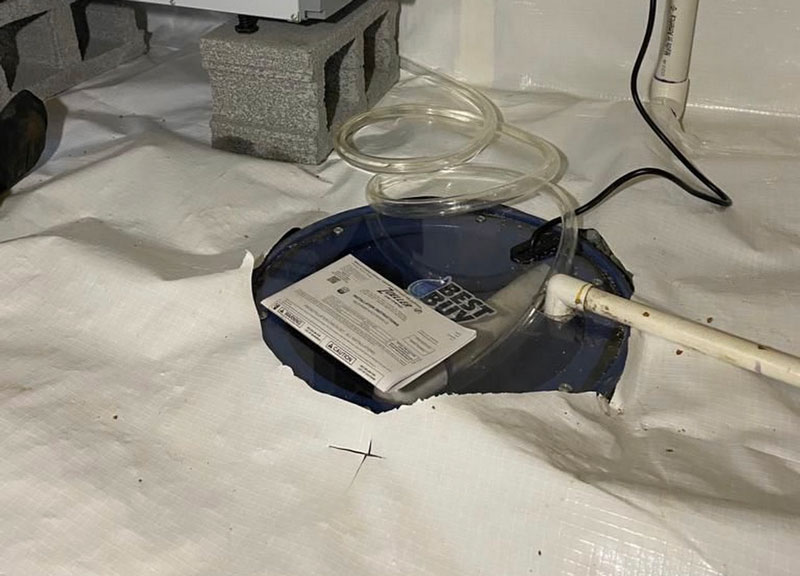
When groundwater collects on the crawl space floor, it needs somewhere to go. Crawl space drainage gives it that path. A perforated drain set in gravel along the perimeter or at low spots collects water and carries it to a sump pit. From there, a crawl space sump pump moves the water out and away from the foundation.
We size the pump to the amount of water your crawl space sees and can add a battery backup that keeps running during power outages, which often arrive with the storms that bring the most water. Drainage is only added where your inspection shows it is needed.
Cleaning and Debris Removal
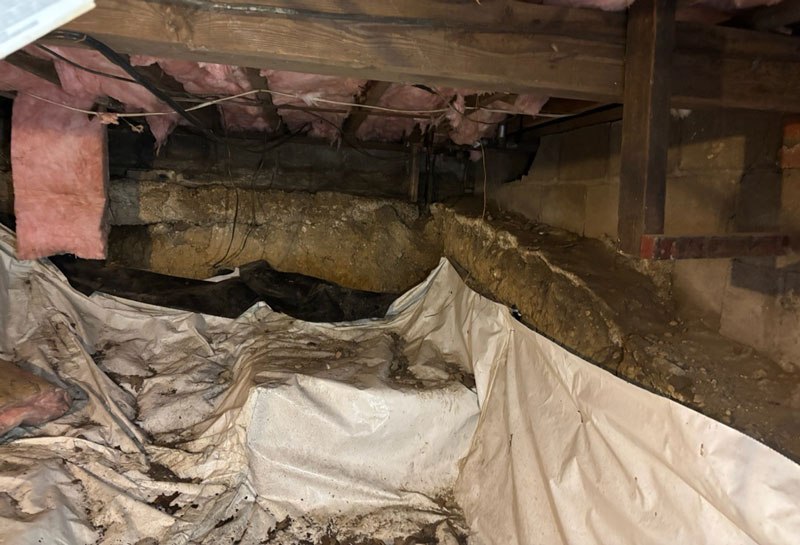
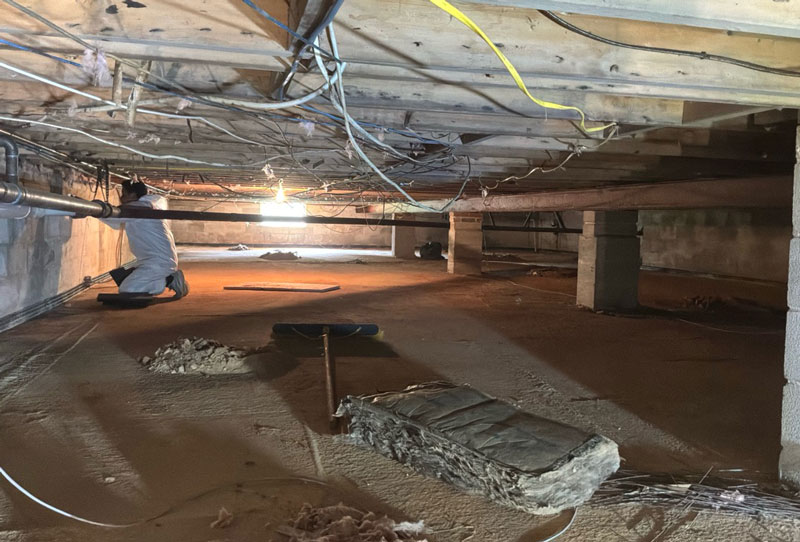
A wet crawl space usually collects more than water. Old insulation, rotted wood, construction scraps and damp debris hold moisture and give mold a place to grow. Before any barrier or drainage goes in, we clean out the space and remove materials that are wet, rotted or moldy.
This gives the crawl space waterproofing system a clean starting point and makes it easier to see the condition of the framing. If we find active mold, our mold remediation team can treat it as part of the same project.
Crawl Space Dehumidifier
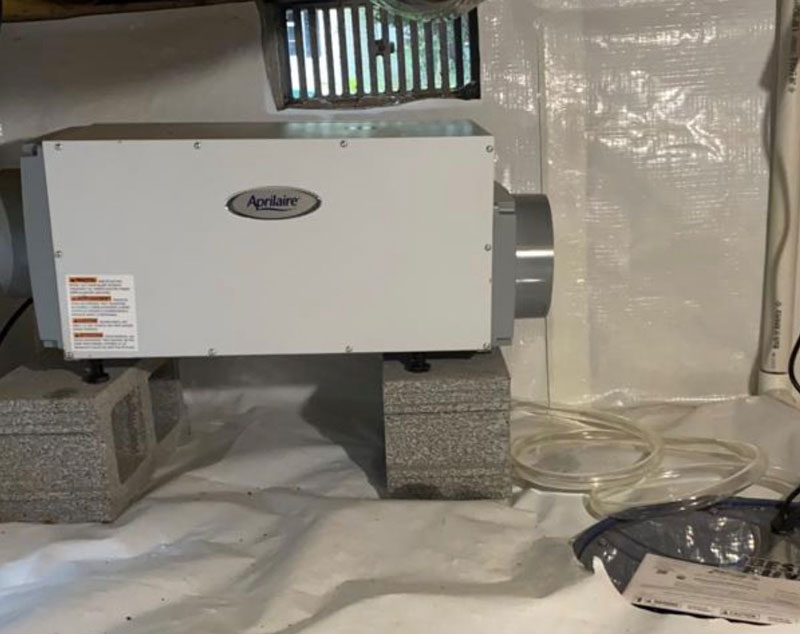
Stopping leaks does not always fix damp air. Humid Mid-Atlantic summers can keep moisture levels high even after the water is gone. A professional-grade crawl space dehumidifier pulls excess moisture out of the air and keeps humidity at a level where mold and wood rot struggle to start.
The units we install drain automatically, so there is no bucket to empty. Because crawl space air rises into the living areas, controlling humidity there also helps the air upstairs.
Vapor Barrier and Encapsulation
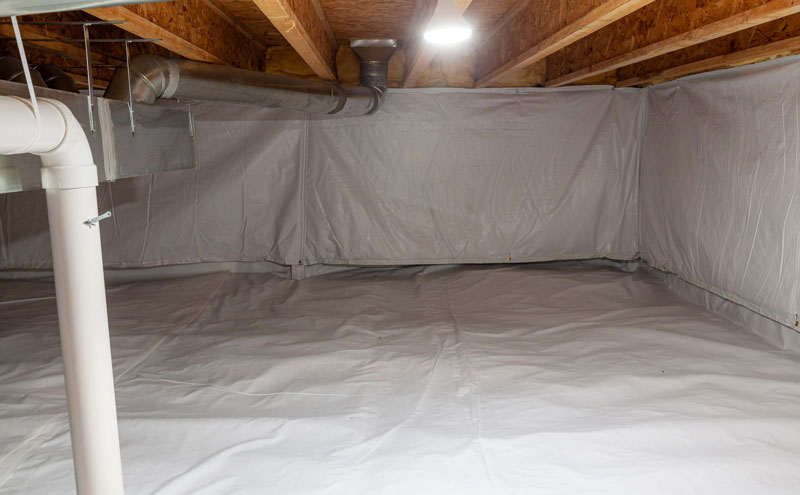
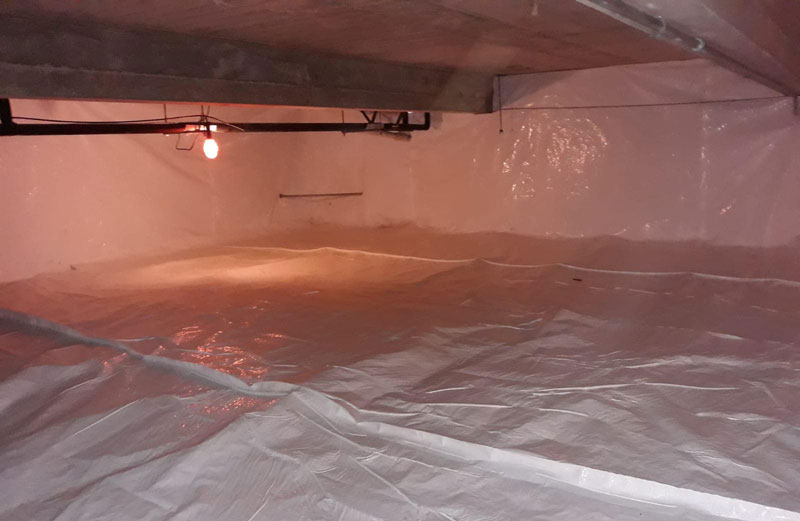
Once water is under control, the next step is keeping ground moisture out for good. A vapor barrier covers the crawl space floor with a sealed liner. Full encapsulation runs the liner up the walls and around piers, seals vents and gaps, and pairs with a dehumidifier.
We never lay a liner over standing water, because that only traps the problem. Crawl space waterproofing comes first, and then we recommend the barrier or encapsulation option that fits your home.
Our Crawl Space Waterproofing Process
Free Inspection
We trace water sources and check walls, floor, framing, insulation and humidity.
Your Recommendation
We walk you through what we found and what we recommend, with a firm price.
Waterproofing Installation
Our in-house crew seals, drains and dries your crawl space, then cleans up.
Warranty Protection
Your crawl space waterproofing is backed by a transferable warranty that stays with the home.
Why Homeowners Choose Best Buy Waterproofing
Crawl space waterproofing works best when one team understands the whole house, from the foundation walls to the floor joists. That is how we approach every wet crawl space.
- Serving homeowners since 2017: Our crews have handled crawl space and waterproofing work across the Mid-Atlantic since 2017.
- Licensed and insured: Licensed in Maryland, Virginia, Washington DC, Pennsylvania, Delaware and West Virginia, and fully insured.
- One in-house team: Waterproofing, structural repair, insulation and mold remediation handled by our own crews.
- Free inspection and financing: Inspections and estimates are free, and financing options are available for qualified homeowners.
- Transferable warranty: Your warranty stays with the home if you ever decide to sell.
What Affects the Cost of Crawl Space Waterproofing?
We do not quote crawl space waterproofing from a price list, because every crawl space takes on water differently. After your free inspection, you get a firm price based on what your home actually needs.
Crawl Space Size
Longer walls and larger floors mean more sealing, drainage and cleanup.
Amount of Water
Occasional dampness needs less work than regular standing water after storms.
Wall Condition
Cracked or failing block walls may need sealing or a full rebuild.
Drainage and Pumps
Perimeter drains, sump pumps and battery backups add protection where needed.
Cleanup Needed
Wet insulation, debris and mold must be removed before new work begins.
Access and Clearance
Low ceilings and tight entry points affect how crews work in the space.
Crawl Space Waterproofing FAQs
What is crawl space waterproofing?
Crawl space waterproofing is the work that keeps water from collecting under your home. It can include wall sealing, crack repair, crawl space drainage, a sump pump, cleanup and a dehumidifier. The goal is to stop water at its source, move any water that does arrive away from the foundation and dry the space so damage stops spreading.
Why is my crawl space wet?
Common causes include rain soaking dense clay soil around the foundation, water seeping through block walls and cracks, poor grading, short downspouts and humid air entering through open vents. Sometimes a plumbing leak is to blame. Our free inspection checks each of these so the repair targets the real source instead of just the symptoms.
Do I need a sump pump in my crawl space?
Not every crawl space needs one. If water regularly pools on the floor after storms, crawl space drainage to a sump pump is usually the most reliable way to move it out. If the space is only damp, wall sealing, a vapor barrier and a dehumidifier may be enough. Your inspection shows which applies.
Is a wet crawl space a problem if I never go down there?
Yes. Air from the crawl space rises into your living areas, carrying moisture and musty odors with it. Over time, a wet crawl space can rot floor joists, damage insulation, attract pests and support mold growth. Early wet crawl space repair usually keeps the job simpler and protects the floors above.
Can you put a vapor barrier over standing water?
We do not recommend it. A liner laid over standing water traps moisture underneath, where it keeps damaging the space. Crawl space waterproofing comes first. Once leaks are sealed and any needed drainage is in place, a vapor barrier or full encapsulation keeps ground moisture out for the long term.
What happens if my crawl space walls are failing?
Cracked, crumbling or leaning block walls can let in water and may point to a structural concern. Our team rebuilds cinder block walls in crawl spaces when sealing alone will not hold. We review wall condition during the inspection and include any rebuild in the same plan as the waterproofing.
How long does crawl space waterproofing take?
It depends on the size of the crawl space and the work involved. Wall sealing and a dehumidifier can be completed quickly, while drainage, a sump pump or a wall rebuild take longer. You get a clear schedule with your recommendation before work begins.
Related Services
Popular service areas: Baltimore · Washington, DC · Arlington · Alexandria · Columbia · Frederick · Silver Spring · Wilmington · All service areas
Get Your Wet Crawl Space Inspected
Find out where the water under your home is coming from and how to stop it. Book a free inspection for a clear crawl space waterproofing plan and a firm price, with financing available.