Home » Service Areas » Baltimore » Baltimore Foundation Repair » Baltimore Wall Stabilization
Baltimore, MD Basement Wall Stabilization
- Licensed & Insured
- 5-Star Rated
- Local Business
- Transferable Warranty
Basement Wall Stabilization Contractors in Baltimore, MD
Best Buy Waterproofing provides wall stabilization in Baltimore, MD for homeowners whose basement walls have started to crack, bow, lean or shift. A moving wall is a structural problem, not a cosmetic one. The soil outside is pushing harder than the wall was built to resist, and that pressure tends to build over time. We find out why your wall is moving, measure how far it has gone, and recommend the wall stabilization method that fits your foundation.
Much of Baltimore sits on dense clay soil that swells when it soaks up water and shrinks back in dry spells. Heavy summer storms saturate that clay fast, and freeze-thaw winters add another push every year. Many Baltimore homes, from rowhomes in Canton to older houses in Hampden, have stone, brick or concrete block foundations that were never designed for that steady sideways pressure. Catching bowing basement walls early usually means a simpler, less disruptive basement wall repair.
Signs You Need Wall Stabilization in Baltimore
Basement walls rarely fail overnight, and the early signs are easy to miss. If you see any of these, schedule an inspection.
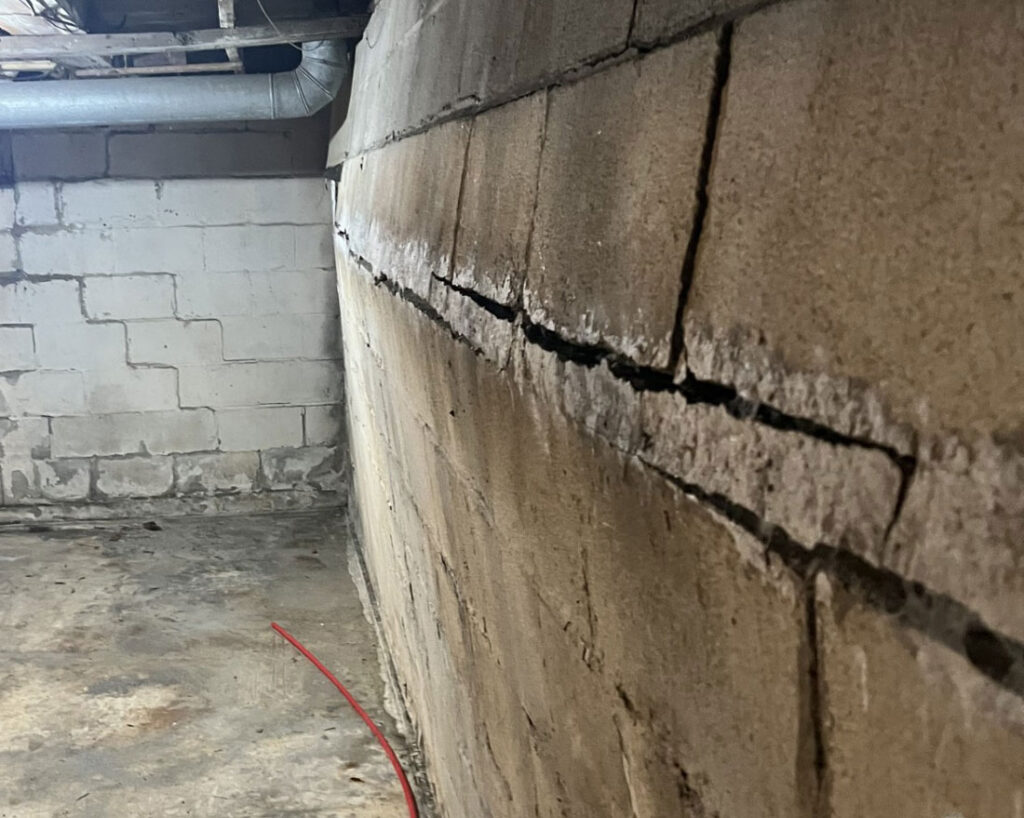
Horizontal cracks
A long crack running sideways along the wall, often near mid-height, is a classic sign of bowing.
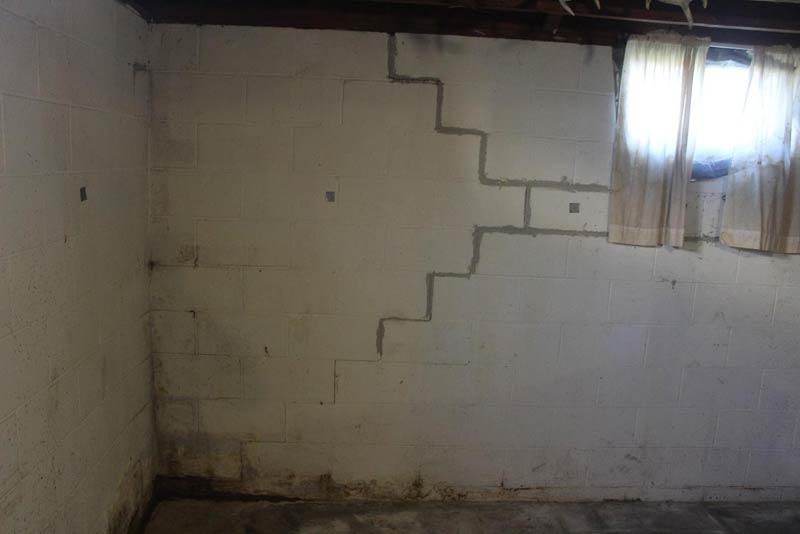
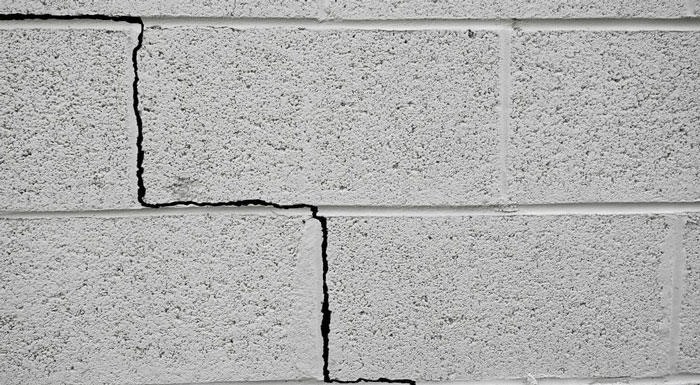
Stair-step cracks
Cracks that zigzag along mortar joints in block or brick walls point to pressure from outside.
Leaning basement wall
The top of the wall tips into the basement instead of standing straight and plumb.
Shifting wall base
The bottom of the wall slides inward past the top, a sign of horizontal shearing.
Bulging wall sections
Part of the wall curves into the room when you sight along it from one corner.
Water at the cracks
Damp streaks or seepage along cracks mean water pressure is working against the wall.
How We Handle Wall Stabilization for Baltimore Homes
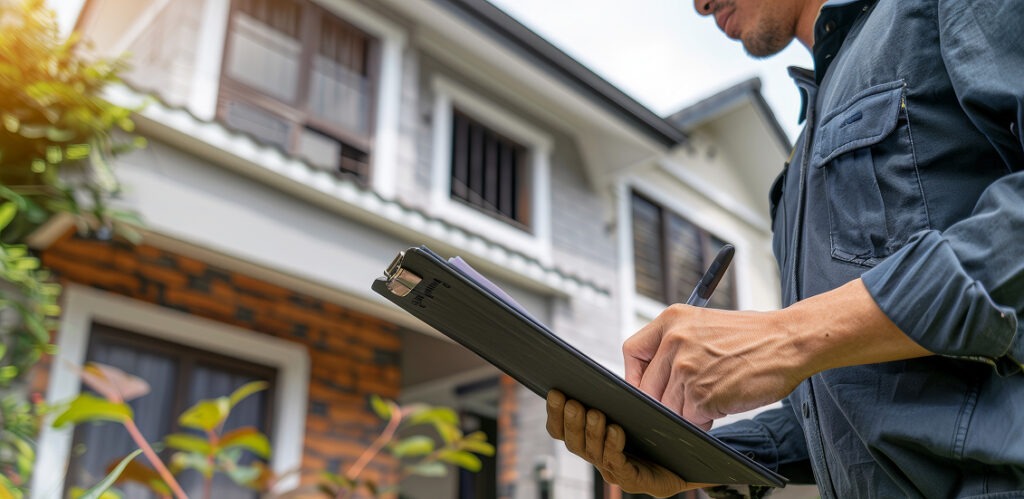
Inspection: Finding Why the Wall Is Moving
Every wall stabilization job starts with understanding why the wall moved. We check for horizontal and stair-step cracks, bowing, leaning and shifting at the base, and we measure how far the wall has moved. We also look at grading, gutters and downspouts, because water collecting against the foundation loads the clay soil and drives the pressure.
The amount of movement, the wall material and the cause decide which repair fits your Baltimore home.
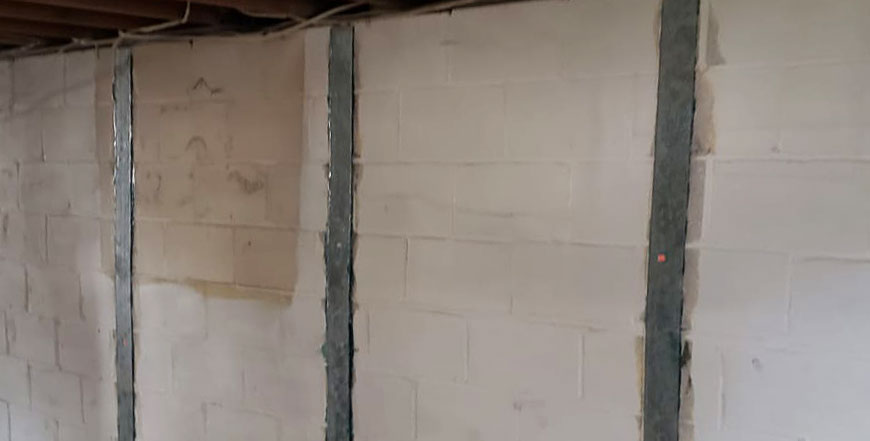
Carbon Fiber Straps
For walls with early, limited bowing, carbon fiber straps are often the least invasive option. The straps are bonded to the inside face of the wall at set intervals. They strengthen the wall and help halt further inward movement, all from inside the basement.
Carbon fiber straps sit flat against the wall, so they take up very little space and work well in basements you may finish later. They suit walls that have not moved too far.
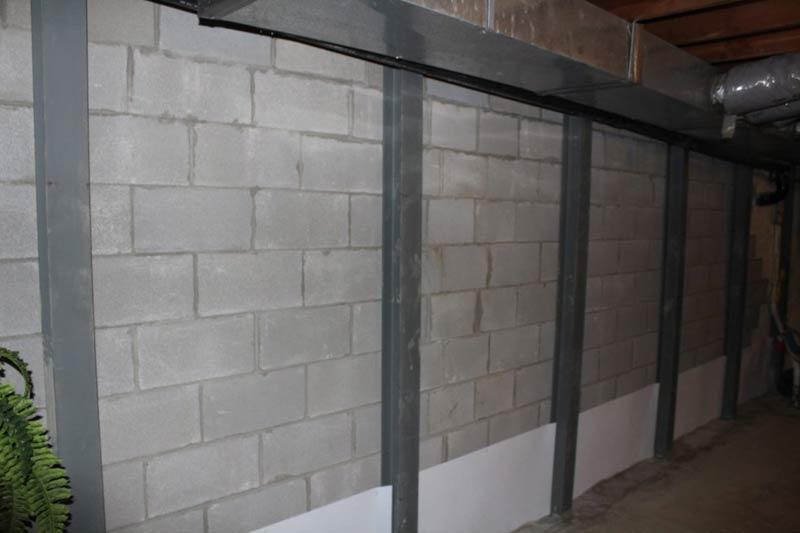
Steel I-Beam Wall Braces
When walls have bowed or leaned further, we install heavy-duty steel I-beam braces against the inside of the wall. The braces apply continuous resistance to the soil pushing in and give the wall permanent stabilization. Like carbon fiber, they are installed entirely from inside, which matters on tight Baltimore rowhome lots.
Over time, steel I-beam braces can help gradually straighten bowed or leaning walls. We will tell you what to expect for your wall before work begins.
Crack Injection and Sealing
Horizontal and stair-step cracks let water into the basement, and water pressure is one of the forces behind wall movement in the first place. As part of wall stabilization, we use crack injection and sealing to close those openings and help keep water out.
Because we handle waterproofing in-house too, we can address drainage and moisture in the same plan, so the cause is dealt with along with the wall.
Wall Rebuilds for Severely Damaged Block Walls
Some walls have moved too far or are too badly broken to reinforce. When a concrete block wall is severely damaged, stabilizing it may not be enough, and a rebuild is the right repair. We rebuild cinder block walls in basements and crawl spaces.
We only recommend a rebuild when the inspection shows the wall cannot be reliably stabilized, and we explain why before any work is planned.
Choosing the Right Basement Wall Repair
There is no single fix for every wall. Carbon fiber straps suit early bowing, steel I-beam braces suit walls that have moved further, and a rebuild is reserved for walls past the point of reinforcement. Crack sealing and water control often go alongside any of them.
We recommend one approach based on what we find, not a package.
Our Wall Stabilization Process
Free Inspection
We measure wall movement, check cracks and look at drainage around your home.
Your Recommendation
We walk you through what we found and what we recommend, in plain language.
Wall Stabilization
Our in-house crew installs carbon fiber straps or steel I-beam braces and seals cracks.
Warranty Protection
Your wall stabilization work is backed by our transferable warranty.
Why Baltimore Homeowners Choose Best Buy Waterproofing
Wall stabilization in Baltimore takes careful diagnosis and solid installation. Here is what you get when you work with our team.
- Licensed and insured: We are licensed in Maryland, Virginia, Washington DC, Pennsylvania, Delaware and West Virginia, and fully insured. We have served homeowners since 2017.
- One in-house team: The same crew handles foundation repair and waterproofing, so nothing falls between contractors.
- Free inspection and estimate: We look at your walls and give you a clear recommendation at no cost.
- Transferable warranty: Our warranty can transfer to the next owner if you sell your home.
- Financing and 24/7 availability: Financing is available, and you can reach us 24/7 at (844) 980-3707.
What Affects the Cost of Wall Stabilization in Baltimore?
We don’t quote wall stabilization from a price list, because every wall is different. You get a firm price after your free inspection.
Amount of movement
Walls with slight bowing often need less work than walls that have moved further.
Wall length
Longer walls need more carbon fiber straps or steel I-beam braces.
Wall material
Stone, brick, block and poured concrete walls can each call for a different approach.
Repair method
Straps, braces and wall rebuilds involve different materials and labor.
Access and finishes
Finished walls, stored items or tight basement access can add time to the job.
Water problems
Crack sealing or drainage work may be needed alongside the wall repair.
Wall Stabilization FAQs
Are bowing basement walls dangerous?
A bowing wall means soil pressure is greater than the wall can resist. Left alone, that pressure usually keeps building and the wall can keep moving inward. Slight bowing is not an emergency, but it should be inspected so you know how far the wall has moved and whether it is still active.
What causes basement walls to move in Baltimore?
The main cause is sideways pressure from the soil outside. Baltimore’s dense clay swells when wet, heavy summer storms saturate it, and freeze-thaw winters add more force. Clogged gutters and short downspouts make it worse by letting water collect against the foundation.
Should I choose carbon fiber straps or a steel I-beam brace?
It depends on how far the wall has moved and what it is made of. Carbon fiber straps often suit early bowing and take up very little space. Steel I-beam braces suit walls that have bowed or leaned further. We recommend one after the inspection.
Can a leaning basement wall be straightened?
The first goal is stopping the wall from moving. Steel I-beam braces can often help gradually straighten bowed or leaning walls over time. How much correction is possible depends on the wall, and we will tell you what to expect.
When does a wall need to be rebuilt instead?
When a block wall has moved too far or is too badly broken to reinforce, stabilizing it may not be enough. In those cases we may recommend rebuilding the wall. We only suggest a rebuild when the inspection shows stabilization will not do the job.
Is wall stabilization a DIY project?
No. Basement wall repair involves structural loads, specialized equipment and careful installation, and a wall reinforced the wrong way can keep moving. Our crew handles the work from inspection through installation, backed by our transferable warranty.
More Services in Baltimore
Wall stabilization near Baltimore: Towson · Dundalk · Catonsville · Parkville · Pikesville · Essex · Glen Burnie
Stop Your Basement Walls From Moving
Moving walls get harder to fix the longer they are left. Schedule a free inspection, and we will recommend the right wall stabilization for your Baltimore home. Call (844) 980-3707 any time.