Home » Service Areas » Centreville, VA » Centreville Foundation Repair
Centreville, VA Foundation Repair
- Licensed & Insured
- 5-Star Rated
- Local Business
- Transferable Warranty
Foundation Repair Contractors Serving Centreville, VA
Best Buy Waterproofing provides foundation repair in Centreville, VA for homeowners who have spotted a crack, a door that suddenly sticks or a basement wall that no longer looks straight. Most homes in Centreville were built from the 1980s through the 2000s on poured concrete or block foundations, with some older houses scattered throughout. Even relatively young foundations can move. The silty and clay soils of the western Fairfax County Piedmont swell when wet and pull back as they dry, and that steady cycle puts pressure on walls and footings.
New construction adds its own risk. The soil pushed back around a foundation when a house is built is loose fill, and it keeps compacting for years. When fill under a footing settles, a corner of the house can drop. When saturated clay pushes sideways, a wall can bow inward. Our in-house team inspects the whole foundation, explains what is moving and why, and recommends a repair that addresses the cause, not just the crack you can see.
Signs You Need Foundation Repair in Centreville
Foundation movement often starts small. These are the warning signs we see most in Centreville homes.
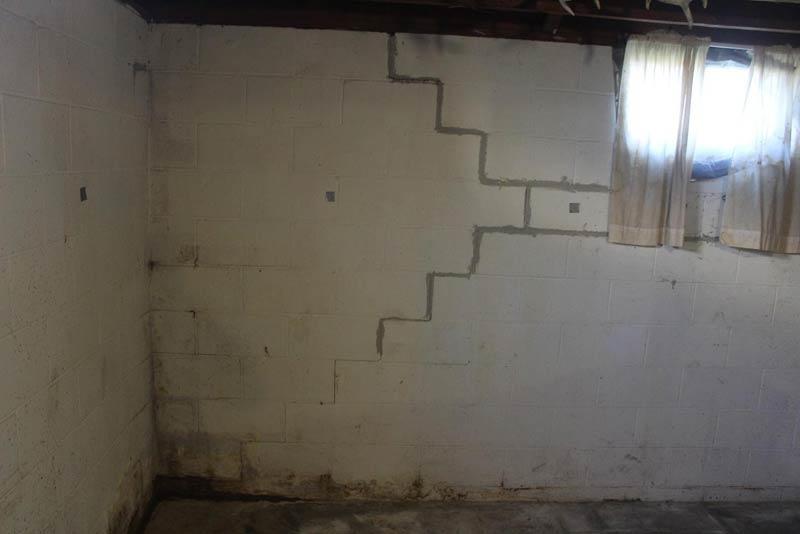
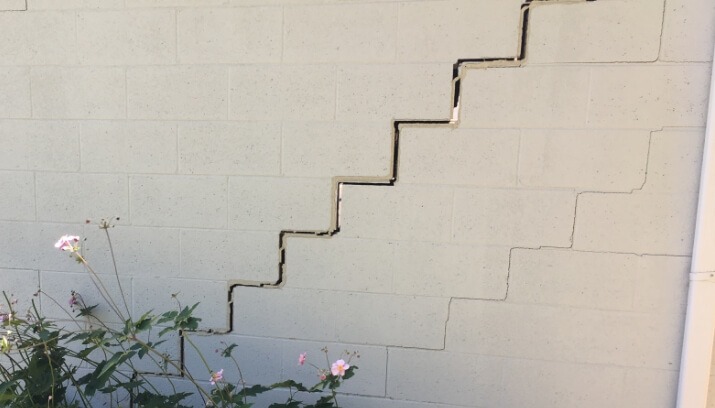
Stair-Step Cracks
Zigzag cracks along mortar joints in block walls or brick veneer.
Horizontal Wall Cracks
A long crack running across a basement wall, often near mid-height.
Bowing Basement Walls
A wall that leans or curves inward when you sight along it.
Sticking Doors, Windows
Doors that bind or windows that suddenly will not open smoothly.
Sloping Floors
Floors that dip toward one corner or feel uneven underfoot.
Drywall Cracks Upstairs
Diagonal cracks spreading from the corners of doors and windows.
Foundation Repair Solutions for Centreville Homes
Carbon Fiber Straps for Bowing Walls
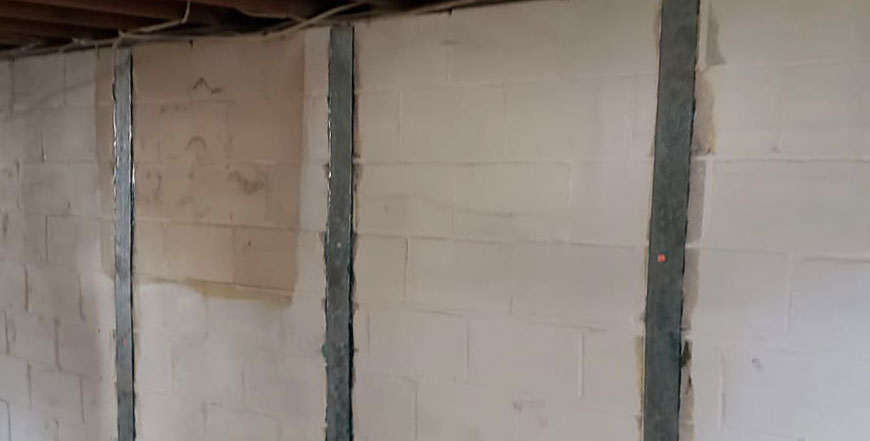
When a basement wall has started to bow but has not moved too far, carbon fiber straps are often the cleanest fix. The straps are bonded to the wall with a high-strength epoxy and secured at the top and bottom, holding the wall in its current position so the clay outside cannot push it further. They sit nearly flat against the concrete, which is helpful in a Centreville basement you plan to finish or have already finished.
Carbon fiber straps work on poured and block walls with limited inward movement. Installation is done from the inside, with no digging, and the straps can be painted or covered by framing later.
Steel I-Beam Wall Braces
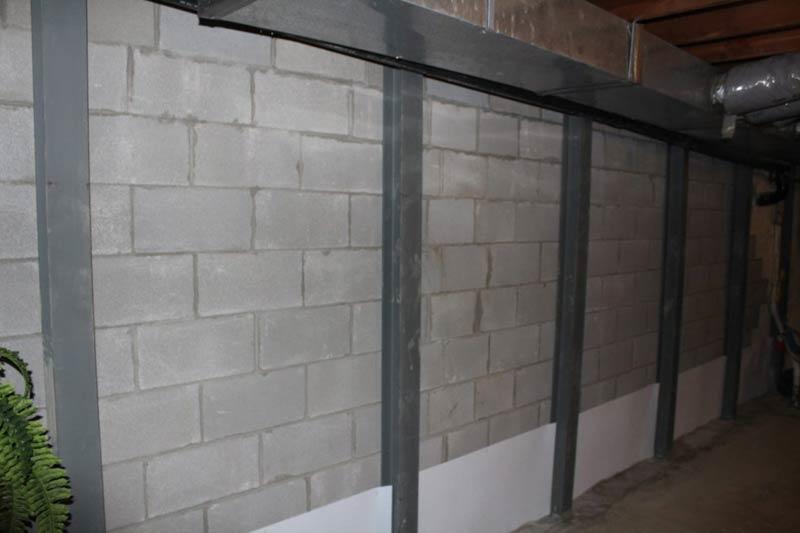
Walls with more movement need more support. Steel I-beam wall braces run from the basement floor to the floor framing above and are secured at both ends, giving a bowing or leaning wall a rigid backbone. They stop the wall from moving further and can be adjusted over time to help ease it back toward plumb where conditions allow.
We recommend wall braces when a wall has bowed beyond what straps can handle, or when you want the option to tighten them later. Our team spaces the braces to suit the length and condition of the wall.
Foundation Wall Rebuilds
Some walls have moved too far to be stabilized in place. Block walls with severe bowing, sheared mortar joints or blocks that have shifted out of line may need to be rebuilt. We excavate outside the damaged section, remove the failing wall, and rebuild it straight and true, then add drainage and waterproofing before backfilling so water does not build up against the new wall.
A wall rebuild is a larger project, so we only recommend it when stabilization will not give a lasting result. If a rebuild is needed, we explain why, step by step.
Push Piers for Settling Foundations
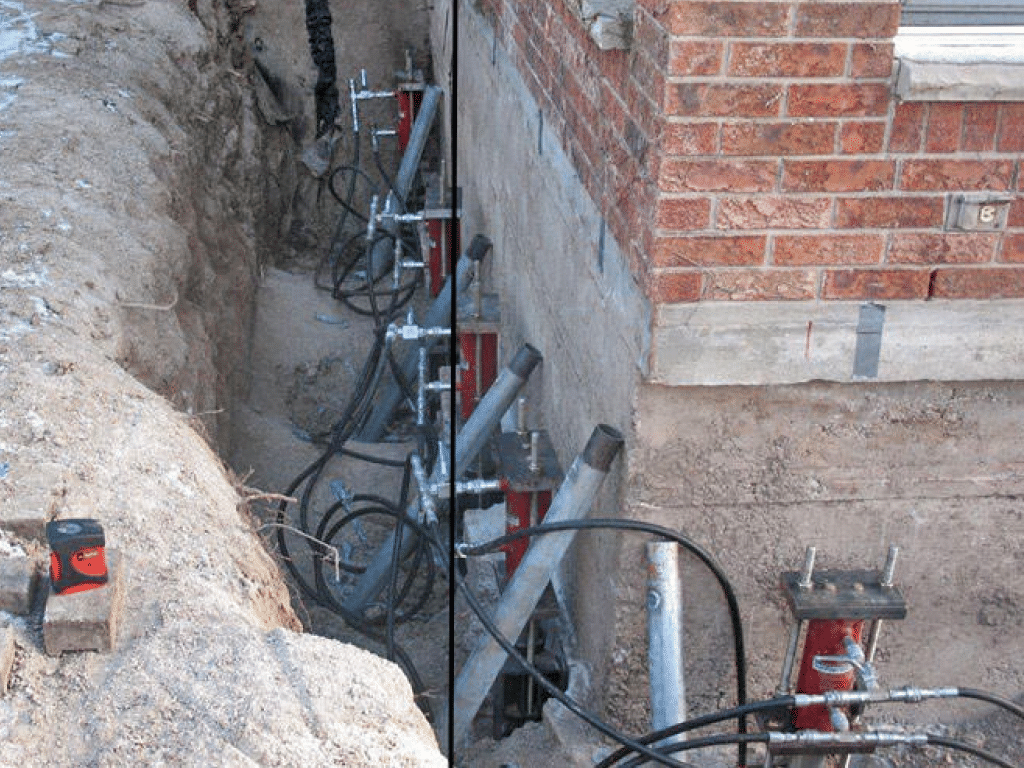
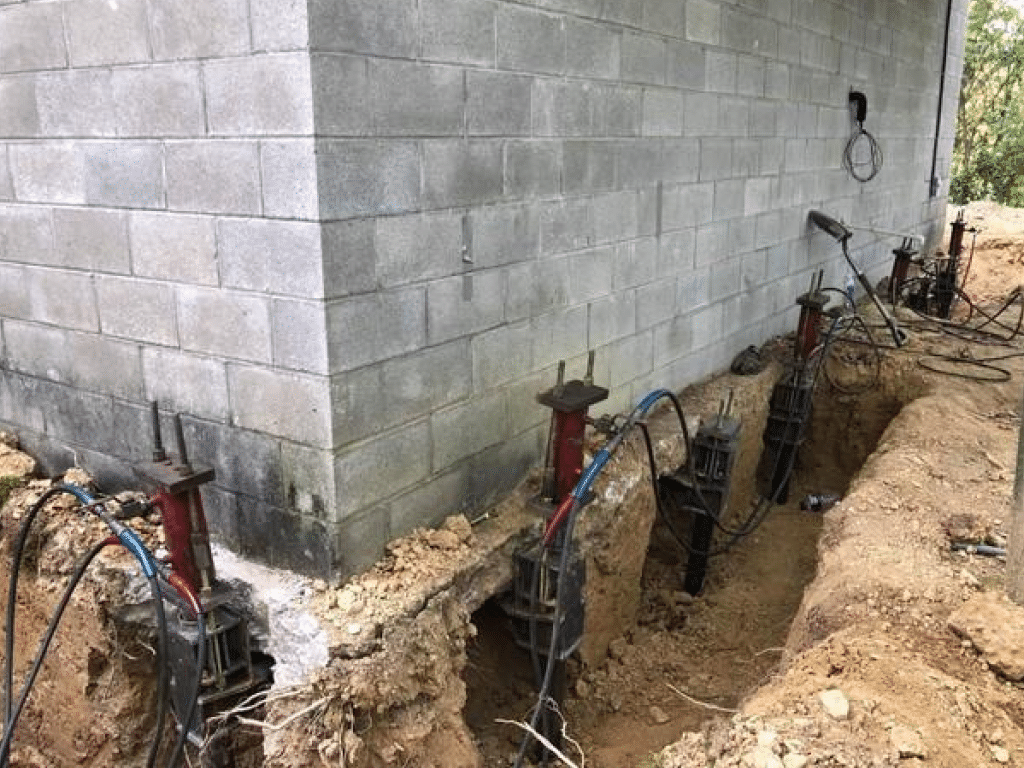
When part of a home is sinking, the problem lies in the soil beneath the footing. Fill that was never fully compacted, or clay that shrinks during a dry summer, can let a corner or wall drop. Push piers are steel piers driven down through that weak soil to firmer ground below, using the weight of the house to set them. A bracket then transfers the load of the foundation onto the piers.
Once installed, push piers stop further settling and can sometimes lift the foundation back toward its original level. They are well suited to the weight of a typical two-story Centreville colonial.
Helical Piers for Lighter Structures
Helical piers are steel shafts with screw-like plates that are turned into the ground until they reach soil that can carry the load. Because they do not rely on the weight of the building to install, they are a good fit for lighter structures such as porches, additions, stoops and sections of a home where push piers would not drive properly.
We use helical piers to stabilize settling areas, and they can often be installed in tighter spaces. Our team chooses push piers or helical piers based on the structure and what the inspection shows.
Crack Assessment and Monitoring
Not every crack needs structural work. Thin vertical cracks in poured walls are common as concrete cures and may only need sealing if they leak. The pattern, direction and width of a crack tell us far more than its length. Horizontal cracks, stair-step cracks and cracks that are wider at one end usually point to soil pressure or settlement.
During your free inspection we look at every crack, check walls for bowing and floors for slope, and tell you honestly whether you need foundation repair, simple crack sealing or nothing at all yet.
Our Foundation Repair Process
Free Inspection
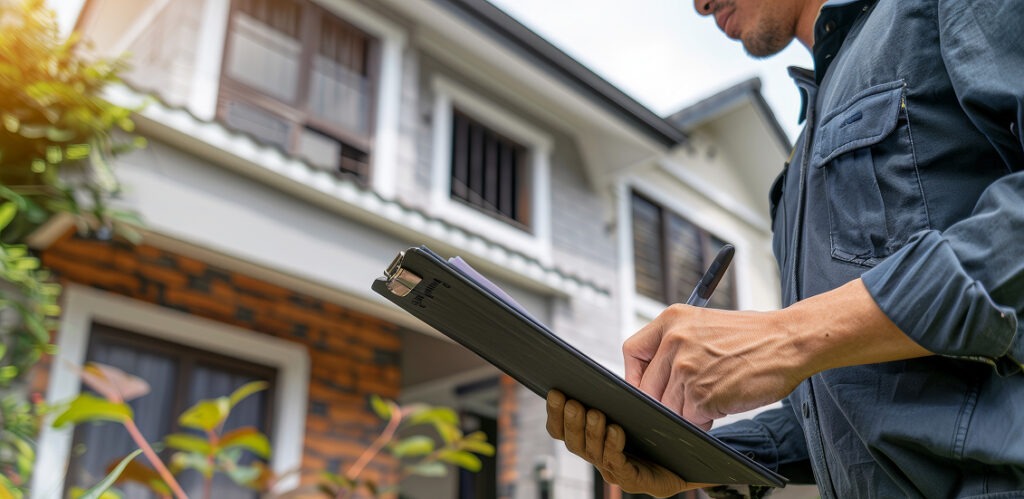
We measure cracks, check walls for bowing and floors for slope inside and out.
Your Recommendation
We walk you through what we found and what we recommend to stabilize it.
Stabilization Work
Our crew installs straps, braces or piers and restores the work area.
Warranty Protection
Your foundation repair is backed by our transferable warranty.
Why Centreville Homeowners Choose Best Buy Waterproofing
Foundation repair in Centreville is a decision about your home’s structure, and homeowners want clear answers before work begins. We explain what is moving, why, and what will stop it.
- Serving since 2017: Based in Columbia, MD, helping homeowners across Northern Virginia and the region.
- Licensed and insured: Licensed in Virginia, Maryland, Washington DC, Pennsylvania, Delaware and West Virginia.
- Water and structure: One in-house team handles foundation repair and the waterproofing that often goes with it.
- Financing available: Flexible financing helps you protect your home without waiting.
- Transferable warranty: Coverage can pass to a buyer if you sell your Centreville home.
What Affects the Cost of Foundation Repair in Centreville?
We don’t quote foundation repair from a price list, because every Centreville foundation moves for its own reasons. After your free inspection, you receive a firm price for the repair your home needs.
Type of Damage
Bowing walls, settlement and cracking each call for different repairs.
Extent of Movement
How far a wall has bowed or a corner has dropped.
Repair Method
Straps, braces, piers or a rebuild each involve different work.
Number of Piers
The length of foundation that needs support beneath it.
Finished Basement
Drywall and flooring that must be opened to reach the wall.
Access Around House
Decks, patios, slopes and tight side yards near the work.
Centreville Foundation Repair FAQs
Why would a Centreville home from the 1990s need foundation repair?
Age is only part of it. Loose backfill and fill soil under footings keep compacting for years, and clay soil in this area swells when wet and shrinks when dry. That movement can crack walls or let a corner settle in a house that is not very old. Our inspection shows what is happening at your home.
Are vertical cracks in my poured basement wall a problem?
Usually not structurally. Thin vertical cracks are common as poured concrete cures. If one leaks, it can be sealed. Horizontal cracks, cracks wider at one end, or cracks that keep growing are different and can point to soil pressure or settlement. We explain which type you have during the free inspection.
What is the difference between straps and wall braces?
Both stabilize bowing walls. Carbon fiber straps bond to the wall and are secured top and bottom, holding walls with limited movement while staying nearly flat. Steel I-beam wall braces are stronger, suit walls that have moved more, and can be adjusted over time. We recommend the option that fits your wall’s condition.
Can you repair my foundation if the basement is finished?
Yes. Many homes in Virginia Run and Centre Ridge have finished lower levels. We open only the sections of wall needed to install straps or braces, and pier work is usually done from outside. We explain what needs to be removed before we start, so there are no surprises.
Will you need a permit?
Some foundation work requires one, depending on the scope. When a permit is required, we handle it as part of the project, so you do not have to manage that process yourself. We let you know during your recommendation whether your repair needs one.
Should I fix drainage along with the foundation?
Often, yes. Water against the walls is a major source of the soil pressure that bows walls, and wet soil under footings can make settlement worse. Because our team also handles basement waterproofing, we can address drainage and structure together so the repair lasts.
More Services in Centreville
Foundation repair near Centreville, VA: Chantilly · Fairfax · Fairfax Station · Manassas · Gainesville · Herndon · Burke
Stabilize Your Centreville Foundation
If you have noticed new cracks, sticking doors or a wall that looks out of line, do not wait for it to get worse. Schedule a free inspection in Centreville, and we will walk you through what we found and what we recommend. Financing is available.