Home » Service Areas » Hagerstown » Hagerstown Foundation Repair
Hagerstown, MD Foundation Repair
- Licensed & Insured
- 5-Star Rated
- Local Business
- Transferable Warranty
Foundation Repair Contractors in Hagerstown, MD
Foundations in the Cumberland Valley carry a heavy load from the ground around them. Clay soil over limestone swells when it soaks up storm water, shrinks again in dry spells and freezes and thaws many times each winter. Over the years that movement shows up as cracked block, bowing basement walls, sticking doors or a porch that has pulled away from the house. Best Buy Waterproofing provides foundation repair in Hagerstown that stabilizes the structure and addresses the water behind the damage.
Hagerstown has a wide range of foundations. Older brick rowhouses and early-1900s homes stand near City Park and through the historic downtown, while the suburbs around the city were built from the 1960s through the 2000s, many on concrete block or poured walls. Each one fails in its own way, so we start every job with a free inspection. Since 2017 our own crews have done this work, and we hold licenses in Maryland, Virginia, Washington DC, Pennsylvania, Delaware and West Virginia, with full insurance.
Signs You Need Foundation Repair in Hagerstown
A foundation rarely fails overnight. Around Hagerstown, the trouble usually announces itself with one or more of these clues.
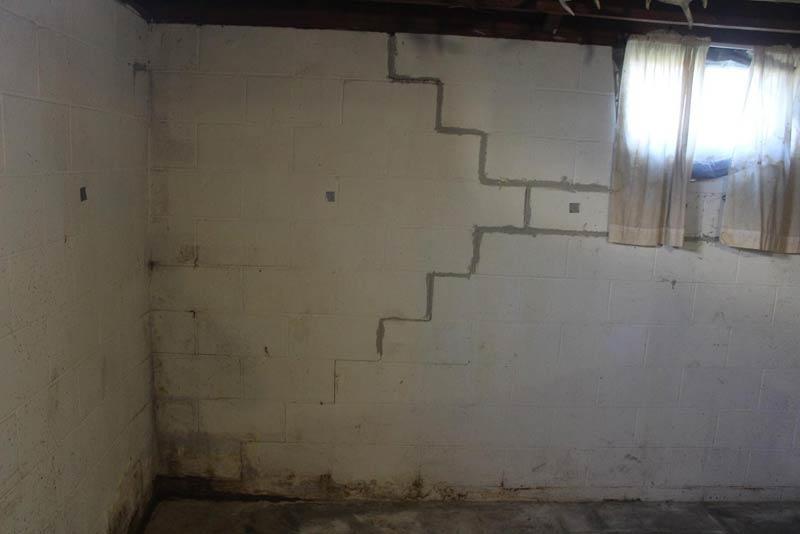
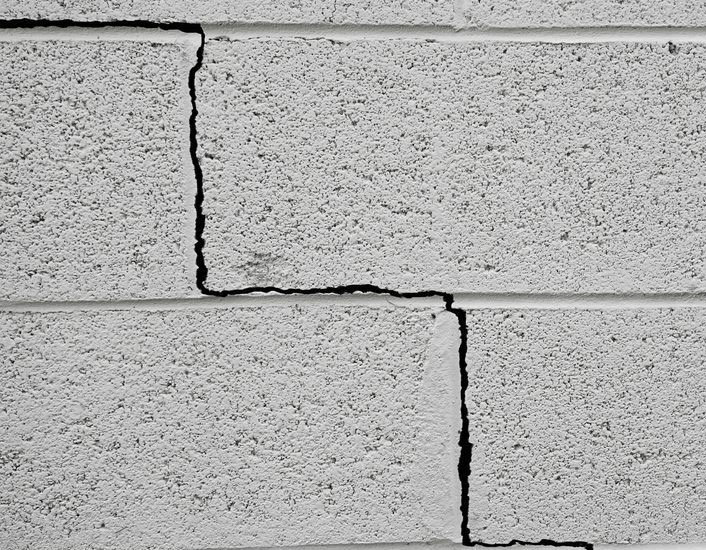
Stair-Step Cracks
Cracks that zigzag through block mortar joints point to soil pressure on the wall.
Horizontal Wall Cracks
A level crack partway up the wall is often the first stage of bowing.
Bowing or Leaning Walls
Walls that bulge inward or tip at the top are under heavy pressure.
Sticking Doors and Windows
Frames that bind or show gaps can mean the house is shifting.
Separating Stoops
Front steps or porches pulling away from the house suggest settling soil.
Uneven Floors
Sloping floors or cracks in drywall above can follow foundation movement.
Foundation Repair Solutions for Hagerstown Homes
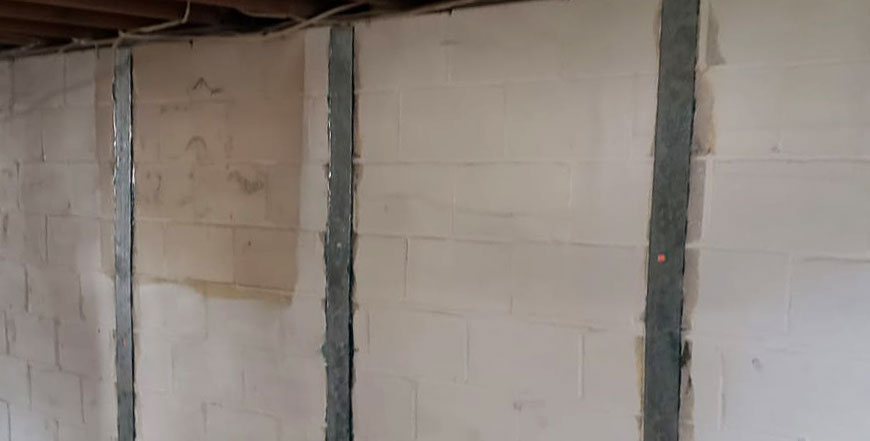
Carbon Fiber Straps
For a wall that has only begun to crack or lean, carbon fiber straps are usually the least intrusive answer. Each strap is bonded to the masonry in a vertical line, spaced along the wall, and secured to the floor framing above and the base below, which stops further inward movement. The straps sit nearly flat against the surface, which keeps the basement usable and leaves room to finish the space later.
Carbon fiber straps are a good match for the poured and block walls under many Hagerstown suburbs built from the 1960s onward. Installation is quick and clean, and we can paint over the straps once they cure.
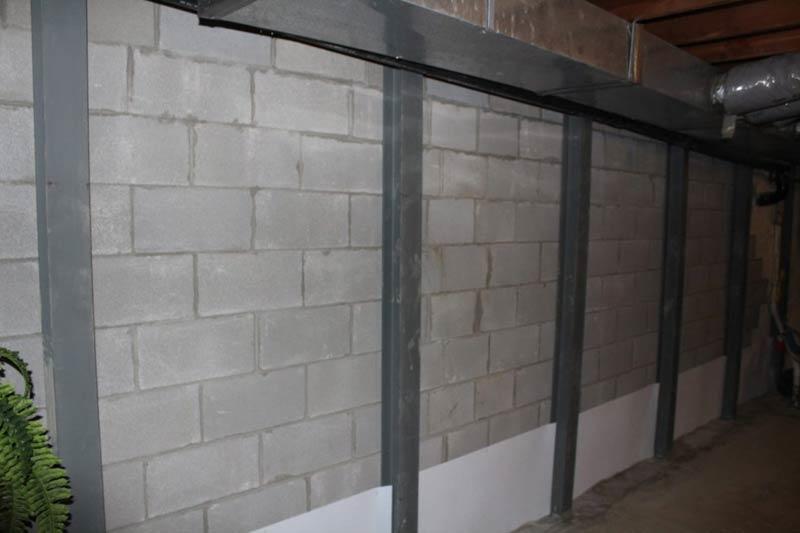
I-Beam Wall Braces
Walls that have bowed further need more support. I-beam wall braces are vertical steel braces secured to the basement floor and to the framing above, holding the wall firmly in place against the pressure of wet clay. They are built for walls with more movement, and some systems can be adjusted over time to help ease a wall back toward its original position.
Wall braces take up a little more room than straps, but they are a dependable answer for bowing basement walls that have moved too far for carbon fiber. We explain the difference clearly so you know why one is recommended over the other.
Block Wall Rebuilds
Some block walls are past the point of stabilizing. If a wall has bowed severely, sheared at the base or broken into loose, crumbling block, reinforcing it will not keep it straight. In those cases we remove the damaged section and rebuild it with new block, then address the drainage that contributed to the failure.
A rebuild is never our first suggestion; we recommend one only when straps or braces could not hold the wall reliably. It is the larger repair, but it gives Hagerstown homeowners a sound wall in place of one that has been failing for years.
Push Piers for Settling Foundations
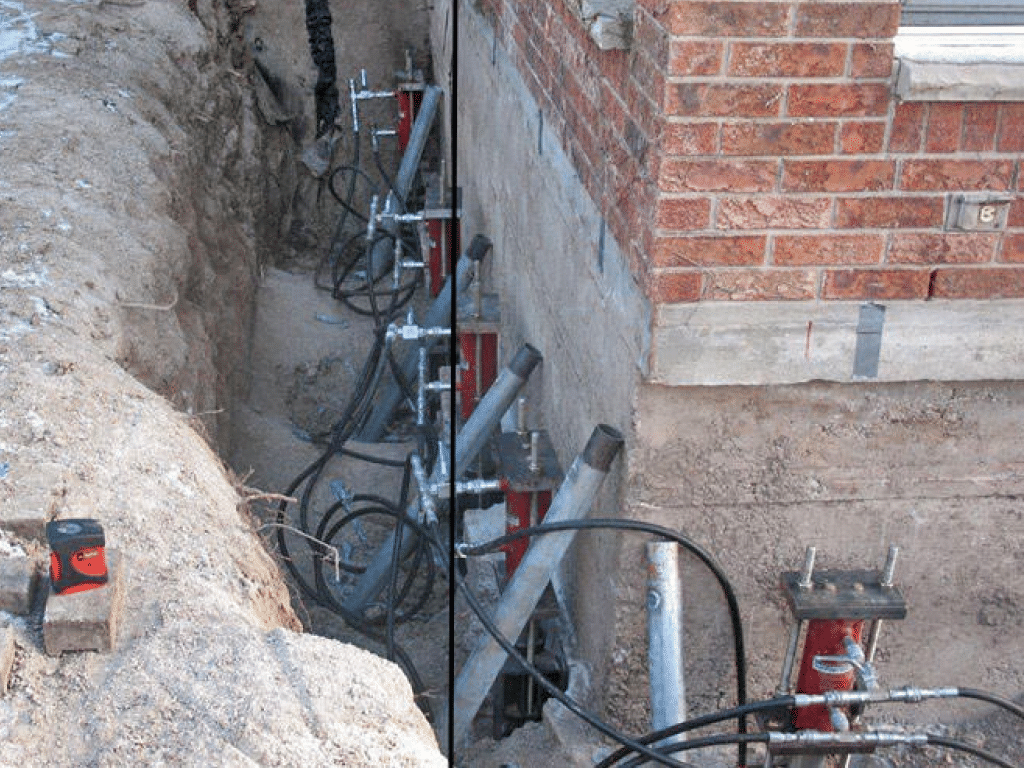
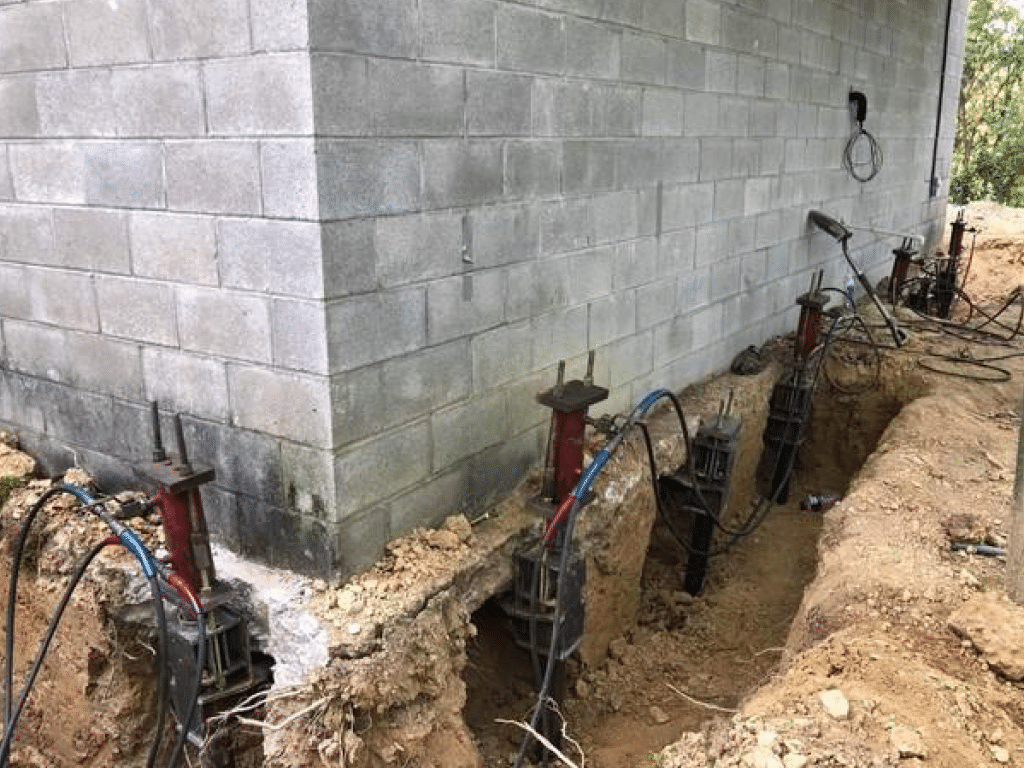
A settling foundation usually means the soil under part of the house has compressed or washed out. With push piers, we fasten brackets to the footing and press steel sections down, one after another, until they bear on solid ground well below the soft layer. Brackets then transfer the weight of the house from the weak soil near the surface to the piers, which stops further sinking and can sometimes lift the foundation back toward level.
Push piers are well suited to heavier structures, like brick homes and two-story houses with masonry exteriors. We place them where the inspection shows the settling is happening, often at a corner or along one wall.
Helical Piers for Lighter Loads
A helical pier looks like a giant steel screw, with round plates welded to the shaft that let it be twisted down into firm soil. Because they do not rely on the weight of the house to install, they suit lighter structures such as porches, stoops, additions and decks attached to the home. They are a common fix for front steps that have dropped or pulled away from the house.
Helical piers are also useful where push piers are not practical. We choose the pier type based on the load, the soil and what the inspection shows about where the movement started.
Sealing Foundation Cracks
Not every crack means the structure is moving. Thin vertical cracks in poured concrete walls are common after the concrete cures, but they can still let in water, especially after freeze-thaw winters widen them. We seal leaking foundation cracks with injection from the inside, filling the crack through to the soil side.
When a crack is part of a larger pattern, we stabilize the wall first and then seal it, so the repair lasts. The inspection tells you which kind of crack you have.
Our Foundation Repair Process
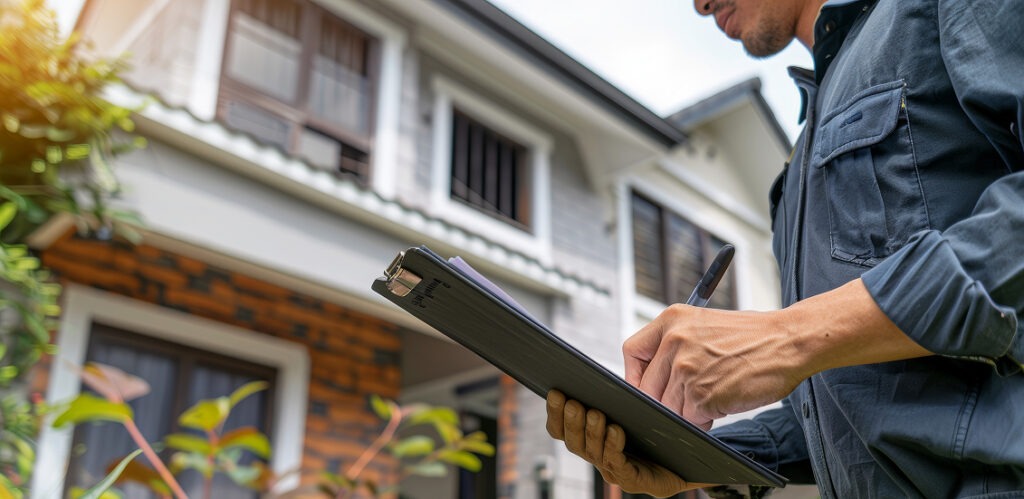
Free Inspection
We measure walls, map cracks and look for signs of settling inside and out.
Your Recommendation
We walk you through what we found and what we recommend for your foundation.
Repair Installation
Our own crew puts in the straps, braces or piers, then leaves the work area clean.
Warranty Protection
Your foundation repair is backed by our transferable warranty.
Why Hagerstown Homeowners Choose Best Buy Waterproofing
Foundation repair lasts longer when the water behind the damage is handled too. Hagerstown homeowners get one team that understands both the structure and the moisture.
- Structure and water together: We stabilize walls and fix drainage so the same pressure does not return.
- Licensed and insured: Licensed in Maryland, Virginia, Washington DC, Pennsylvania, Delaware and West Virginia, and insured.
- In business since 2017: One in-house team has handled foundation work since 2017.
- Transferable warranty: Coverage stays with the house, which helps when you sell.
- Free inspection, financing: No-cost evaluation, financing options and availability 24/7.
What Affects the Cost of Foundation Repair in Hagerstown?
Foundation repair has no menu price with us, since each Hagerstown house shifts for different reasons and by different amounts. Once the free inspection is done, you get a firm number for the work your home needs.
Wall Length
Longer walls need more straps or braces to hold them in place.
Amount of Movement
Walls that have bowed further need stronger systems or a rebuild.
Number of Piers
Settling repairs depend on how many piers the load requires.
Foundation Type
Poured walls, block and older masonry each need different methods.
Finished Basements
Drywall, flooring or built-ins may need to be removed and replaced.
Drainage Needs
Water pressure behind the wall may call for added waterproofing.
Foundation Repair FAQs
What causes foundation problems in Hagerstown?
Most of it comes from the soil. The clay that covers the Cumberland Valley swells when it is wet and shrinks when it dries, and winter freeze-thaw cycles add more pressure. That repeated movement pushes on basement walls and can compress the soil under footings, which leads to cracks, bowing and settling in Hagerstown homes.
Are horizontal cracks serious?
They deserve attention. A horizontal crack in a basement wall usually means soil pressure is pushing the wall inward, and it often comes before visible bowing. Catching it early usually means a simpler repair, such as carbon fiber straps, instead of a rebuild later. A free inspection tells you how far the wall has moved.
Can a bowing wall be straightened?
The first goal is to stop the movement. Carbon fiber straps hold a wall where it is, while some I-beam wall brace systems can be adjusted over time to help ease the wall back. Walls that have moved too far are rebuilt. We explain which option fits your wall and why.
What is the difference between push piers and helical piers?
Push piers are driven down using the weight of the house and suit heavier loads like brick or two-story homes. Helical piers twist into the soil without needing the house as a counterweight, so they fit lighter loads such as porches, stoops and additions. Both reach firm soil and carry the load from there.
Do I need waterproofing along with foundation repair?
Often, yes. Water trapped in clay soil is behind much of the pressure that damages Hagerstown foundations. If we stabilize a wall without relieving that pressure, the same forces keep working on it. We check for water during the inspection and recommend drainage only when your home needs it.
Can I stay in my home during the repair?
In nearly every case, yes. Wall stabilization and pier work happen in the basement or along the outside of the foundation, and our crew keeps the work area contained. We explain the schedule ahead of time and clean up before we leave each day, so normal life can continue.
More Services in Hagerstown
Foundation repair near Hagerstown, MD: Williamsport · Halfway · Funkstown · Smithsburg · Boonsboro · Frederick · Martinsburg
Protect Your Hagerstown Foundation
Cracks and bowing walls tend to get worse with every wet season and every winter. Book a free look at your Hagerstown foundation, and we will walk you through what we found and what we recommend. Financing is available.