Home » Service Areas » Leesburg » Leesburg Foundation Repair
Leesburg, VA Foundation Repair
- Licensed & Insured
- 5-Star Rated
- Local Business
- Transferable Warranty
Foundation Repair Contractors in Leesburg, VA
A foundation in Leesburg works against two forces at once. The red shale and clay soils here swell when they soak up rain and shrink as they dry, so the ground around a basement is always shifting a little. Freeze-thaw winters then add pressure from frost. Best Buy Waterproofing provides foundation repair in Leesburg for homes of every age, from 18th- and 19th-century brick and stone houses downtown to the poured and block foundations under 1980s through 2000s subdivisions and townhomes. We find out why a wall is moving before we decide how to fix it.
Some foundation cracks are cosmetic, and some are early warnings. A horizontal crack in a block wall, a wall that leans into the room or doors that suddenly stick all deserve a closer look. Our one in-house team has handled foundation work since 2017. We are licensed in Virginia, Maryland, Washington DC, Pennsylvania, Delaware and West Virginia, and we are insured. Every repair starts with a free inspection, and financing is available.
Signs You Need Foundation Repair in Leesburg
Foundation trouble tends to show up gradually, often in rooms well above the basement. Watch for these warning signs around your Leesburg home.
Horizontal Wall Cracks
A long crack running sideways across a basement wall often means soil is pushing in.
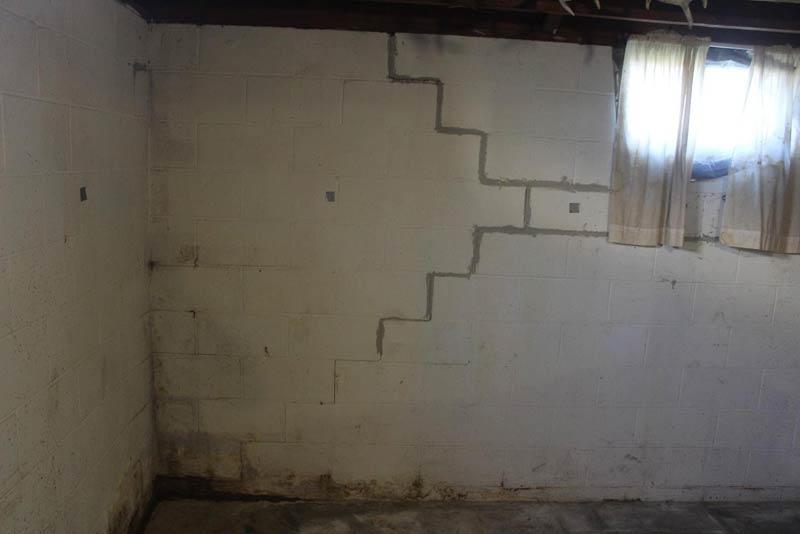
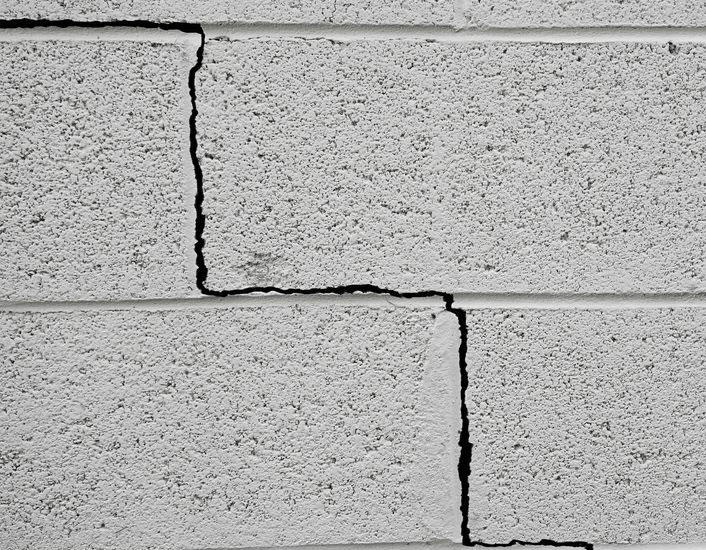
Stair-Step Cracks in Block
Zigzag cracks along mortar joints show block walls are shifting under pressure.
Walls Leaning Inward
A basement wall that bows or tilts into the room needs stabilizing soon.
Sticking Doors and Windows
Frames pulled out of square can point to part of the house settling.
Sloping or Uneven Floors
Floors that dip toward one corner can signal a dropping footing.
Cracks Above Doorways
Diagonal drywall cracks spreading from door and window corners suggest movement below.
Foundation Repair Solutions for Leesburg Homes
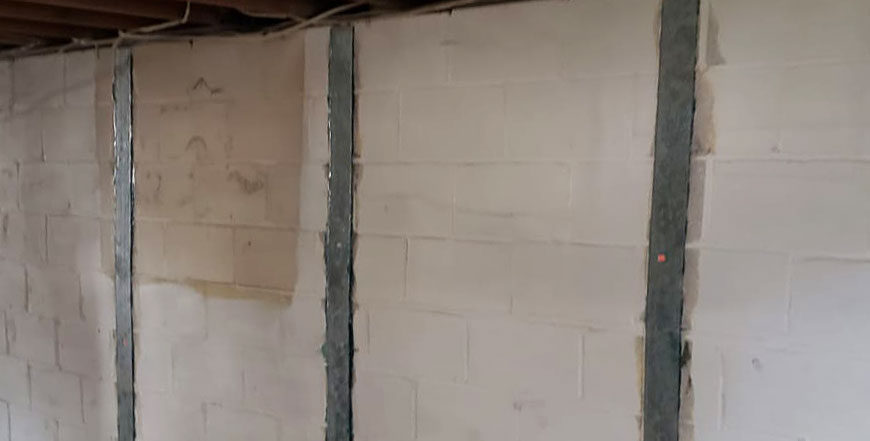
Carbon Fiber Straps for Cracked Walls
When a basement wall has cracked or started to bow but has not moved far, carbon fiber straps are often the cleanest fix. We bond high-strength straps vertically to the wall with structural epoxy at set intervals, and each strap is secured at the top and bottom of the wall. Once cured, the straps resist the inward push of wet clay and keep the wall from moving further.
Carbon fiber straps sit nearly flat against the wall, so they take up almost no floor space and can be painted. That makes them a good choice for Leesburg basements that are finished or that homeowners plan to finish later.
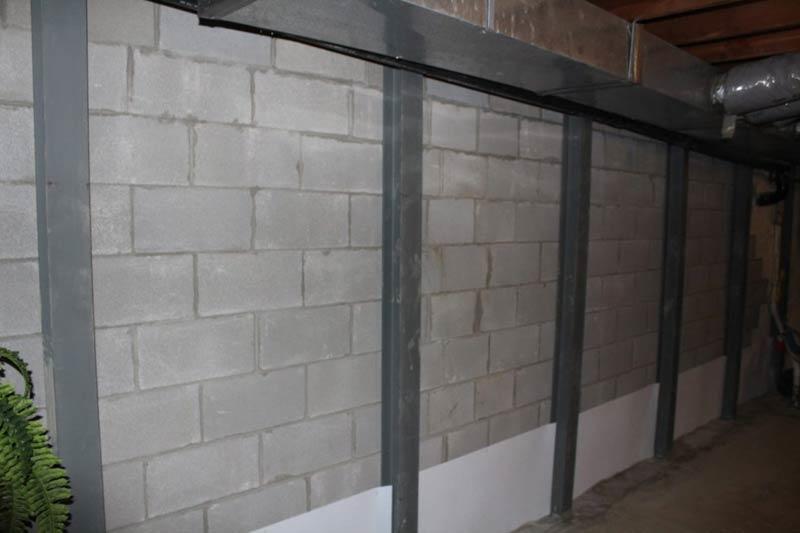
Steel I-Beam Wall Braces
Bowing basement walls with more inward movement need more support. Steel I-beam wall braces run from the basement floor to the floor framing above, secured at both ends, and hold a bowing wall in place against soil pressure. Over time, the braces can be tightened to help ease the wall back toward its original position where conditions allow.
Wall braces are a strong fit for block foundations that have shifted after years of wet clay pushing on them. We check the wall, the framing above and the soil conditions to confirm braces are the right option before recommending them.
Block Wall Rebuilds
Sometimes a section of block wall has bowed, cracked or crumbled too far to stabilize. In that case, we excavate the outside of the affected area, remove the damaged block and rebuild the wall with new block, reinforcement and fresh mortar. Before backfilling, we address drainage so the new wall is not facing the same water pressure that damaged the old one.
A rebuild is a larger project, and we recommend it only when straps or braces cannot do the job. We explain the scope, timeline and what to expect around your yard before any digging starts.
Push Piers for a Settling Foundation
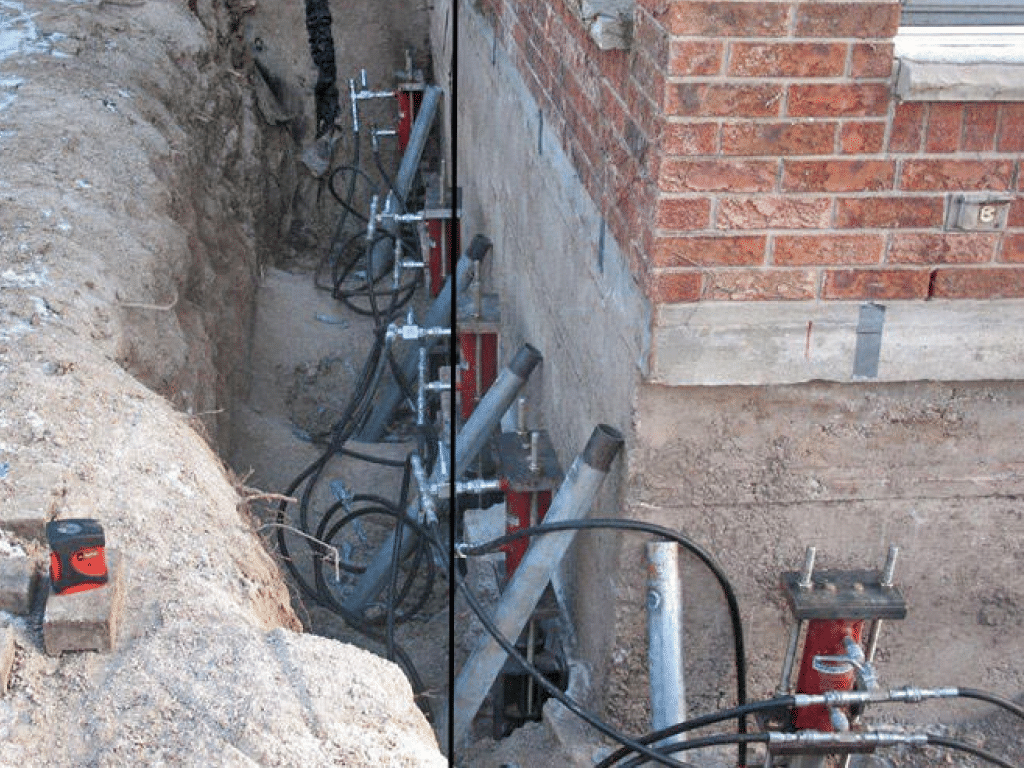
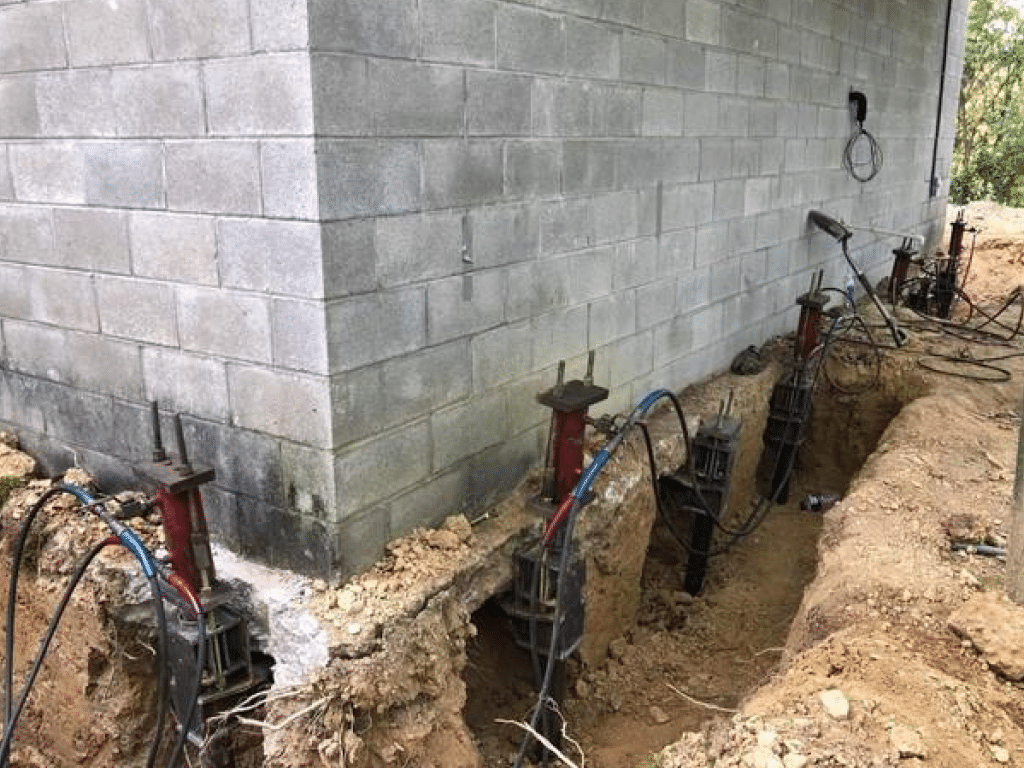
A settling foundation usually means the soil beneath a footing has compressed, dried out or washed away. That is common around Leesburg subdivisions, where soil was graded and filled during construction and then cycles between wet and dry clay. Push piers are steel pier sections driven down beside the footing until they reach firm, load-bearing soil, using the weight of the house for resistance.
Once the piers reach stable ground, the load of that part of the home transfers onto them. Where conditions allow, the foundation can be lifted back toward level, which can help close cracks and free sticking doors.
Helical Piers for Lighter Structures
Helical piers have screw-like plates that are turned into the ground until they reach the depth and resistance the load needs. Because they do not depend on the weight above them, they work well for porches, stoops, additions and other lighter parts of a home. They are also useful where the soil profile calls for steady, measured installation.
On many townhomes in communities like Potomac Station, front stoops and small additions are where settling shows first. Helical piers can support those areas without a major disruption to the rest of the house.
Sealing Foundation Cracks
Not every crack means the wall is moving. Narrow vertical cracks in poured walls often come from normal curing and settling, but they can still leak every time the clay outside is saturated. We seal these foundation cracks from the inside with an injected material that fills the crack through the wall.
In older homes near Historic Downtown Leesburg, stone and brick walls can let water through worn mortar joints instead. We look at the masonry and recommend repair or drainage that fits how the wall was built.
Our Foundation Repair Process
Free Inspection
We measure wall movement, check cracks and floors, and look for the water or soil causing it.
Your Recommendation
We walk you through what we found and what we recommend, with a firm price.
Repair Installation
Our in-house crew installs straps, braces or piers and leaves the work area clean.
Warranty Protection
Your foundation repair is backed by our transferable warranty.
Why Leesburg Homeowners Choose Best Buy Waterproofing
Good foundation repair starts with understanding why the wall or footing moved, not just patching what you can see. Leesburg homeowners get a straight explanation and one team that sees the job through.
- In business since 2017: Foundation, basement and crawl space repair is all we do.
- Licensed and insured: Licensed in Virginia, Maryland, Washington DC, Pennsylvania, Delaware and West Virginia, and insured.
- One in-house team: No hand-offs between companies, from inspection through installation.
- Transferable warranty: Your coverage can transfer to the next owner of your Leesburg home.
- Free inspection, financing: No-cost inspections, financing options and availability 24/7.
What Affects the Cost of Foundation Repair in Leesburg?
We do not quote foundation repair from a price list, because the cause and extent of damage vary from house to house. After a free inspection, you receive a firm price for your Leesburg home.
Length of Affected Wall
More feet of bowing or cracked wall means more straps or braces.
Amount of Movement
Walls that have moved further may need braces or a rebuild instead of straps.
Number of Piers
The size and weight of the settling area set how many piers are needed.
Excavation Needs
Block wall rebuilds require digging, backfill and restoring the area outside.
Finished Basements
Drywall or built-ins along affected walls add removal and protection work.
Drainage Problems
Fixing the water that caused the damage may be part of a lasting repair.
Foundation Repair FAQs
Why do so many Leesburg foundations crack?
Leesburg sits on red shale and clay soils that hold water. When that clay is saturated, it swells and presses against foundation walls, and when it dries it shrinks and pulls away. Add frost in winter, and walls and footings face constant change. Over time, that movement shows up as cracks, bowing or settling.
Which foundation cracks should worry me?
Thin vertical cracks that stay the same width are often minor, though they can still leak. Horizontal cracks, stair-step cracks through block mortar, cracks wider at one end and any crack that keeps growing deserve attention. A wall leaning inward is a clear sign to call. We can tell you which kind you have at a free inspection.
Can a bowing wall be fixed without digging?
Often, yes. Carbon fiber straps and steel I-beam wall braces are installed from inside the basement, so most wall stabilization does not require excavation. Digging is usually needed only when a wall section has moved too far and must be rebuilt. We explain which approach fits your wall after measuring it.
Do newer Leesburg homes need foundation repair?
They can. Many homes built from the 1980s through the 2000s sit on soil that was graded and filled during construction. If that fill compresses or washes out, part of the foundation can settle. Townhomes and single-family houses alike can show sticking doors, drywall cracks or sloping floors as a result.
How long does foundation repair take?
Carbon fiber straps and wall braces are usually installed in a day or two. Pier projects often take a few days depending on how many piers are needed. A block wall rebuild takes longer because of excavation and backfill. We give you a schedule with your recommendation.
Do you handle permits for foundation work?
When a permit is required, we handle it. We let you know during your recommendation whether your foundation repair needs one, so the paperwork is taken care of before the work begins.
More Services in Leesburg
Foundation repair near Leesburg, VA: Ashburn · Sterling · Purcellville · Lovettsville · Brambleton · Lansdowne · Hamilton
Protect Your Leesburg Foundation
If you see cracks spreading, a wall leaning in or doors that no longer close right, do not wait for it to get worse. Schedule a free inspection of your Leesburg home, and we will walk you through what we found and what we recommend. Financing is available.