Home » Service Areas » Potomac, MD » Potomac, MD Foundation Repair
Potomac, MD Foundation Repair
- Licensed & Insured
- 5-Star Rated
- Local Business
- Transferable Warranty
Foundation Repair Contractors in Potomac, MD
Large homes put a lot of weight on their foundations, and Potomac has plenty of them. Many were built from the 1960s through the 2000s on wooded lots that slope toward stream valleys, with deep basements cut into the hillside and long walls holding back silty clay. That soil swells when it soaks up rain and shrinks in dry spells, and the movement adds up over the years. Best Buy Waterproofing provides foundation repair in Potomac, MD, for bowing walls, foundation cracks, settling corners and additions that have started to pull away from the main house.
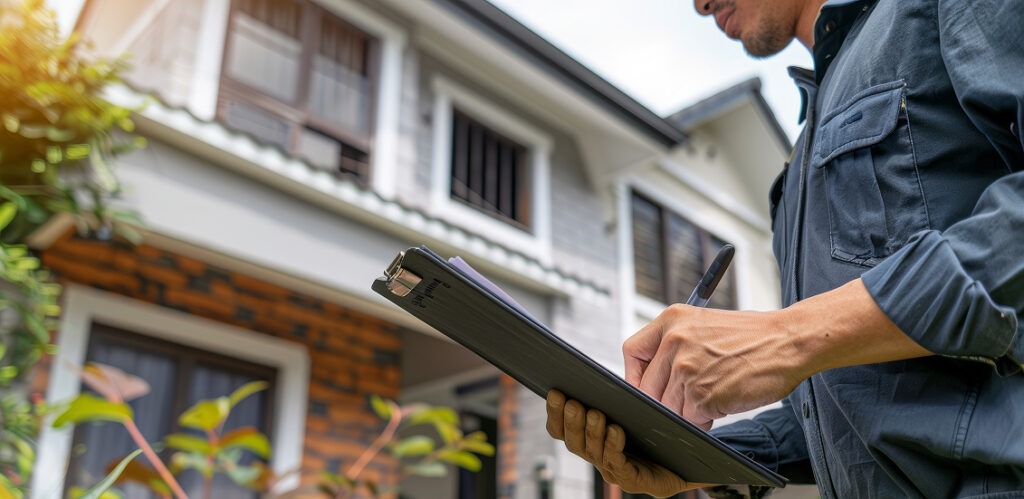
Foundation problems tend to start small. A hairline crack becomes a stair-step pattern in the block, a door that used to close easily begins to stick, or a gap opens above a basement window. Freeze-thaw winters push on the walls from outside, and wet clay on the uphill side of a lot adds sideways pressure. Our in-house team inspects the whole foundation for free, measures any movement and explains what is causing it. Then we walk you through what we recommend for your Potomac home, with financing available if you need it.
Signs You Need Foundation Repair in Potomac
Foundation movement often shows up first in the rooms above it. Watch for these signs inside and outside your Potomac home.
Horizontal Wall Cracks
A long crack running sideways across a basement wall, often near mid-height.
Stair-Step Cracks
Cracks that zigzag along the mortar joints of a block foundation.
Bowing or Leaning Walls
A basement wall that bulges inward or tilts at the top.
Sticking Doors and Windows
Doors and windows that rub, jam or will not latch anymore.
Sloping Floors
Floors that dip toward one corner or an addition.
Gaps at Trim or Chimney
Openings between walls and trim, or a chimney separating from the house.
Foundation Repair Solutions for Potomac Homes
Wall Stabilization for Bowing Walls
Wet clay is heavy, and when it freezes and thaws against a basement wall it pushes even harder. On a Potomac lot that slopes down toward the house, the uphill wall carries the most load. Over time, block walls can develop a horizontal crack and start to bow inward, and poured walls can crack and tilt at the top. Wall stabilization stops that movement before it gets worse and protects the rest of the structure above.
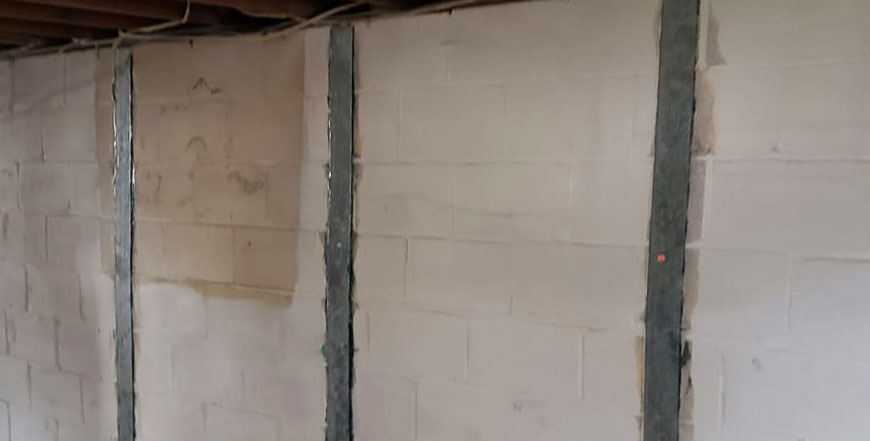
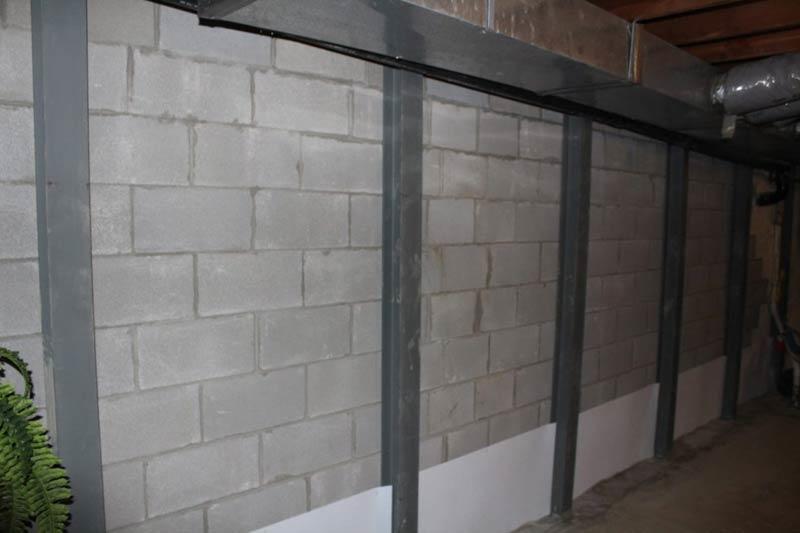
We secure bowing walls with carbon fiber straps or steel I-beam wall braces, depending on how far the wall has moved and how the basement is used. Both are fastened at the top to the framing above.
Carbon Fiber Straps
Carbon fiber straps are a strong, low-profile way to stabilize walls that have cracked or bowed only slightly. Each strap is bonded to the cleaned wall surface with a structural adhesive and secured at the top to the framing, so the wall cannot keep moving inward. The straps sit almost flat against the wall and can be painted or covered later.
That slim profile makes carbon fiber straps a good fit for Potomac basements that are already finished or that will be finished soon, because they take up almost no room.
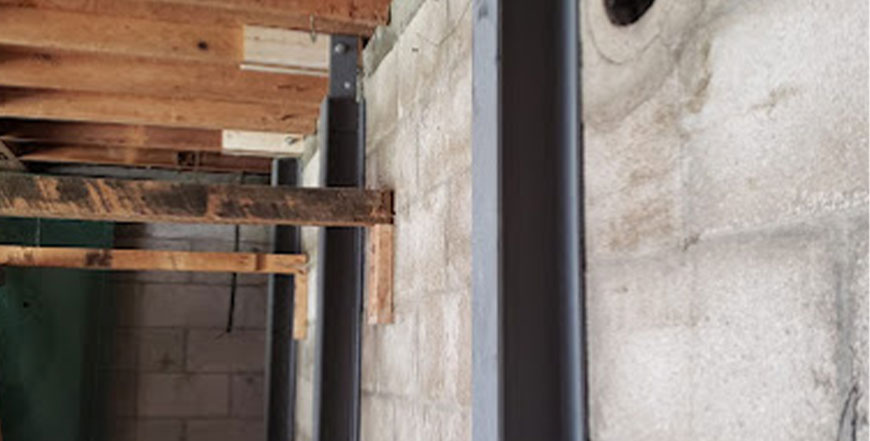
Steel I-Beam Wall Braces and Wall Rebuilds
Walls with more movement need more support. Steel I-beam wall braces stand vertically against the wall, secured to the basement floor and to the framing above. They hold the wall in place and apply continuous resistance that, over time, can help gradually straighten a bowed wall.
When a section of wall has shifted too far to stabilize, we rebuild it. Our crew supports the structure, removes the damaged block or concrete and builds a new section in its place. A wall rebuild is a bigger job, so we explain clearly why we recommend it before any work begins.
Push Piers for Settling Foundations
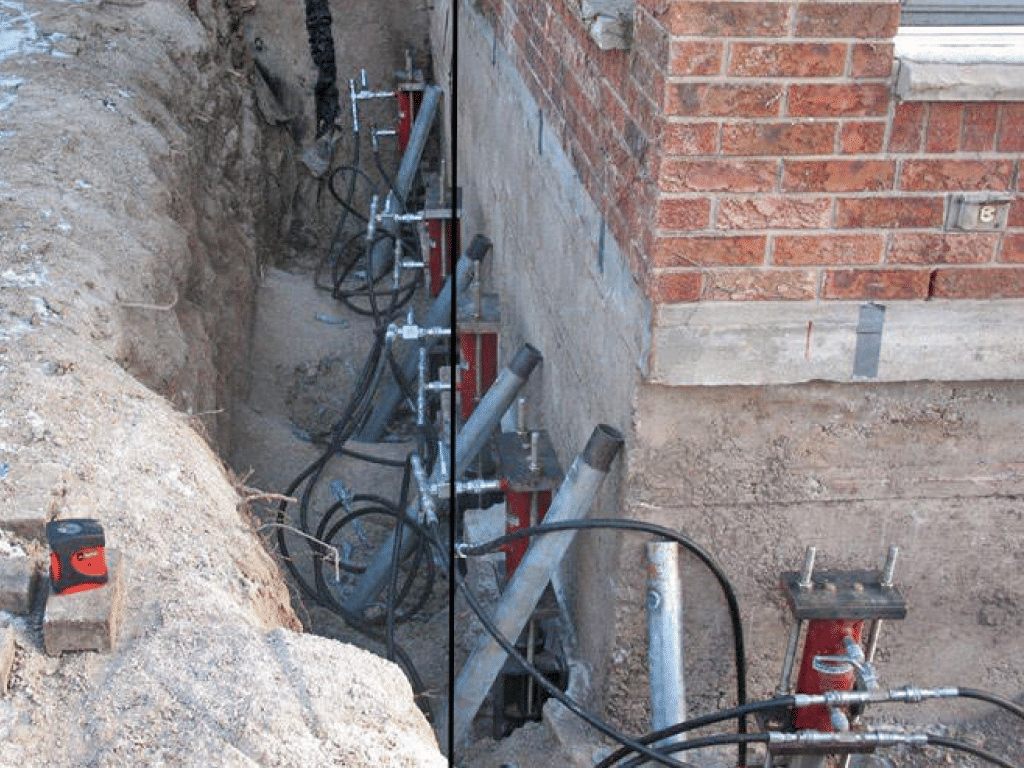
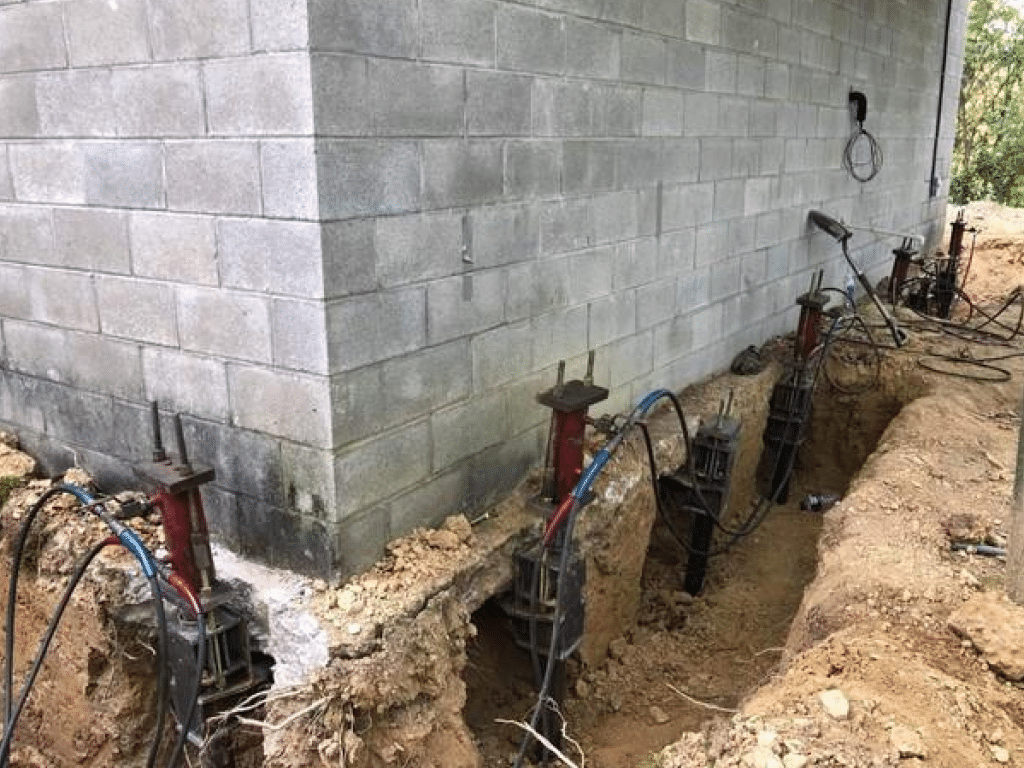
When clay shrinks in a dry stretch or fill soil compresses, part of a footing can lose support and settle. In Potomac, we often see it at corners, garages and additions built after the original house. Push piers are steel pipe sections driven down beneath the footing, using the weight of the house as resistance, until they reach firm, load-bearing soil or rock.
Once the piers are in place, the weight of that part of the home is transferred to them. In many cases, the settled section can be lifted back toward level, closing gaps and helping sticking doors work again.
Helical Piers for Lighter Structures
Helical piers have steel plates shaped like screw threads welded to a central shaft. They are turned into the ground rather than pushed, so they do not depend on the weight of the structure. That makes helical piers a strong choice for lighter loads such as porches, sunrooms and smaller additions.
We bring a settling foundation back into proper support with push piers or helical piers based on the load, the soil and access around your Potomac home, and we explain the choice during your recommendation.
Our Foundation Repair Process
Free Inspection
We measure wall movement, check cracks and look at drainage around the home.
Your Recommendation
We explain the cause and the repair method we recommend.
Repair Installation
Our crew installs straps, braces or piers and cleans the work area.
Warranty Protection
Your foundation repair is backed by our transferable warranty.
Why Potomac Homeowners Choose Best Buy Waterproofing
Foundation repair in Potomac often goes hand in hand with drainage, so it helps to have one team that understands both. Our in-house crews fix the structure and the water that caused the problem.
- In business since 2017: We have served homeowners since 2017 from our Columbia, MD office.
- Licensed and insured: Licensed in Maryland, Virginia, Washington DC, Pennsylvania, Delaware and West Virginia, and insured.
- Structure and water: The same crew handles foundation repair, waterproofing and crawl space repair.
- Transferable warranty: Coverage can transfer to the next owner when you sell.
- Financing available: Financing helps you handle repairs now instead of letting them grow.
What Affects the Cost of Foundation Repair in Potomac?
We don’t quote foundation repair from a price list, because the cause and extent of the damage differ from home to home. You get a firm price after your free inspection.
Extent of Damage
How many walls or corners have moved, and how far.
Repair Method
Carbon fiber straps, I-beam braces, piers or a wall rebuild.
Pier Count and Depth
How many piers are needed and how deep firm soil sits.
Finished Basement
Drywall, flooring or built-ins that must come off to reach walls.
Lot and Access
Slopes, landscaping and hardscape around the foundation.
Drainage Needs
Water problems that should be fixed along with the structure.
Foundation Repair FAQs
Are foundation cracks always a serious problem?
No. Many hairline cracks in poured concrete come from normal shrinkage as the concrete cured. Horizontal cracks, stair-step cracks in block, cracks wider at one end and cracks that keep growing are different, because they usually point to soil pressure or settlement. Our free inspection tells you which kind you have and whether it needs repair.
Why do Potomac homes on hillsides get bowing walls?
On a sloped lot, the uphill side of the house holds back more soil, and that soil stays wet longer after storms. Wet clay is heavy, and freezing adds pressure in winter. Over time that sideways load can bow a basement wall inward. Wall stabilization with straps or braces stops the movement, and better drainage reduces the pressure.
What is the difference between push piers and helical piers?
Both carry the weight of a settling foundation down to firmer soil. Push piers are driven using the weight of the house, which suits heavier walls and corners. Helical piers are screwed into the ground and do not need much weight above them, which suits porches, sunrooms and lighter additions. We recommend the one that fits your home.
Can you repair foundation walls in a finished basement?
Yes. Carbon fiber straps are thin enough to sit behind finished walls once installed. For any repair, we remove only the drywall or paneling needed to reach the foundation, and we explain beforehand what will be opened. Planning around finished space is common in Potomac, where many lower levels are fully built out.
Should I fix drainage before foundation repair?
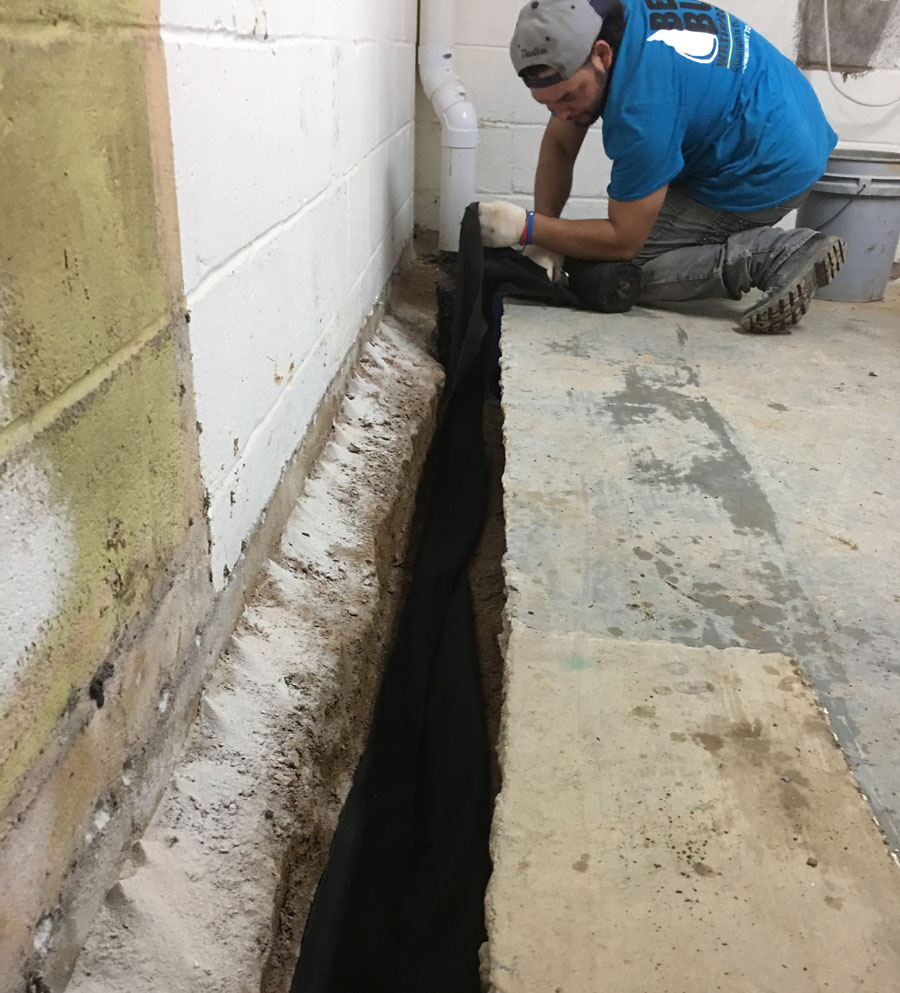
Often the two go together. Water that saturates the soil adds pressure on walls and softens the ground under footings, so leaving it alone can undo good structural work. During your inspection, we look at gutters, downspouts, grading and basement leaks, and we recommend drainage or waterproofing alongside foundation repair when it is needed.
Do I need a permit for foundation repair in Potomac?
Some structural work does need a permit. When a permit is required for your project, we handle it, so you do not have to manage the paperwork. We will let you know during the recommendation step whether your Potomac foundation repair is likely to need one.
More Services in Potomac
Foundation repair near Potomac, MD: Bethesda · Rockville · North Potomac · Gaithersburg · Great Falls · McLean
Schedule a Free Foundation Inspection
Cracks, bowing walls and sticking doors do not fix themselves. Book a free inspection for your Potomac home, and we will measure what is happening, explain the cause and walk you through what we recommend.