Welcome to The Best Buy Waterproofing

Bethesda, MD Foundation Repair

Carbon fiber straps, steel I-beam wall braces, wall rebuilds and piers that stop bowing walls and settling in Bethesda homes old and new.

Foundation Repair Contractors in Bethesda, MD

A crack in the basement wall of a Bethesda home rarely appears for no reason. The silty clay that covers this part of the Maryland Piedmont swells when it is wet, shrinks when it dries and freezes and thaws through the winter, and every cycle puts load on the foundation. Best Buy Waterproofing provides foundation repair in Bethesda for walls that are cracking, bowing or leaning and for sections of a house that have begun to settle. We start by figuring out why the foundation moved, because the right repair depends on the cause.

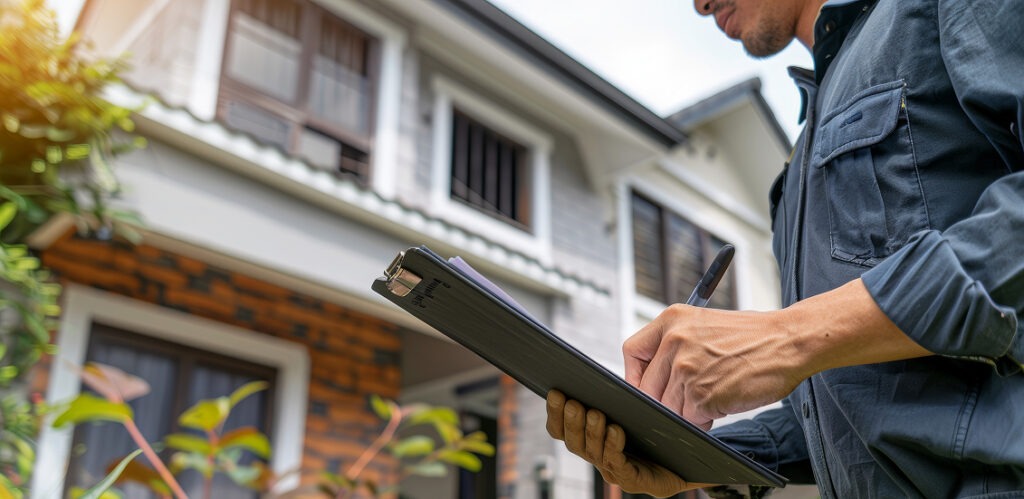
Two very different kinds of foundations show up across Bethesda. Brick colonials and Cape Cods from the 1920s through the 1950s, like many in Edgemoor and Wood Acres, often stand on block or brick walls that have been holding back wet soil for a very long time. Large new homes on older lots sit on poured walls surrounded by fresh backfill that is still finding its level. Our in-house team works on both, and after a free inspection we walk you through what we found and what we recommend.

Signs You Need Foundation Repair in Bethesda

Foundation movement usually shows up inside the house before it is obvious outside. Watch for these warning signs.

Horizontal Wall Cracks

A long crack running across a block wall, often near mid-height.

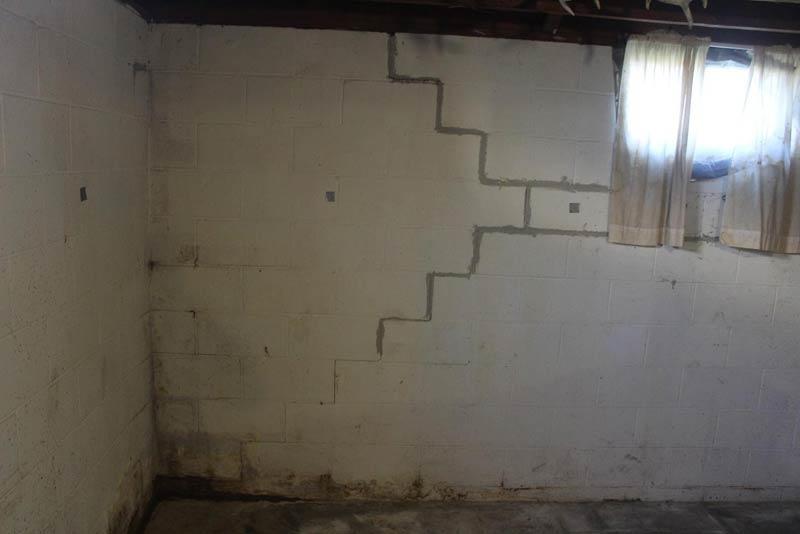
Stair-Step Mortar Cracks

Cracks zigzagging through the mortar joints of block or brick walls.

Wall Leaning Inward

A basement wall that bulges or tilts when you sight along it.

Sticking Doors and Windows

Doors that drag or windows that bind where they used to close easily.

Sloping Floors

Floors that tilt toward one corner or feel uneven underfoot.

Gaps at Trim

Separation between walls and ceilings, baseboards or exterior brick and frames.

Foundation Repair Solutions for Bethesda Homes

Carbon Fiber Straps

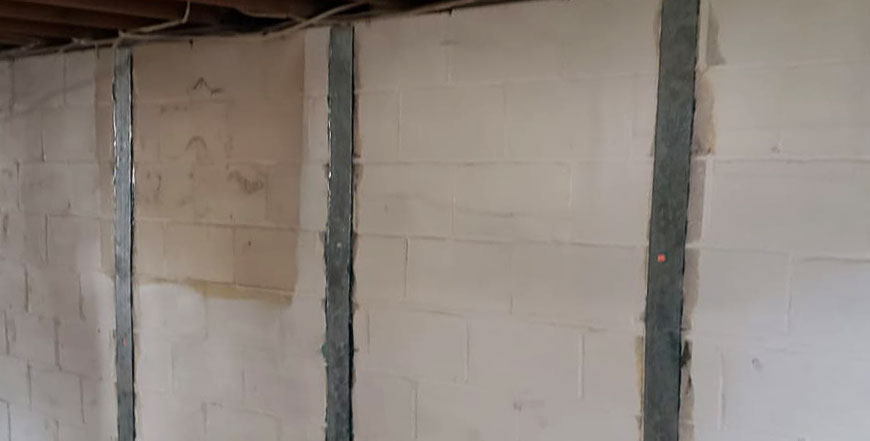
For a basement wall that has begun to bow but has not moved far, carbon fiber straps are often the most practical repair. The straps are bonded to the wall at set spacing and secured at the top and bottom so the wall cannot continue moving inward. They are thin and lie close to the surface, which is a real advantage in Bethesda homes where the lower level is finished or about to be.

Straps can be painted or covered by a new wall later, so stabilizing the foundation does not have to mean giving up usable space. We confirm during the inspection that the wall is a good candidate before recommending them.

Steel I-Beam Wall Braces

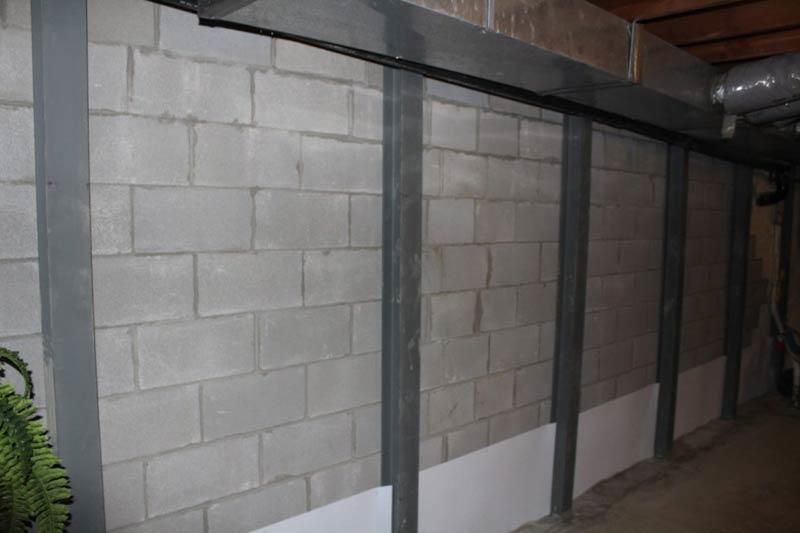
Walls with more inward movement need heavier support. Steel I-beam wall braces stand vertically against the basement wall and are secured to the floor and to the framing above. They resist the soil pressure outside and keep the wall from moving further.

Braces suit older Bethesda block walls that take steady pressure from wet clay on the uphill side of a sloped lot. They are a good fit for unfinished areas and utility rooms, and the spacing is planned around windows, stairs and anything else along the wall.

Block Wall Rebuilds

Some walls have shifted, cracked or bowed too far to stabilize where they stand. When that happens, we rebuild the damaged section. The house is supported while we remove the failed block, then a new reinforced section is built and tied into the rest of the foundation.

A rebuild is a larger project, but it replaces the weak part of the wall rather than holding it in place. For a century-old foundation with a section that has clearly given way, it is often the most lasting answer.

Push Piers for Settling Foundations

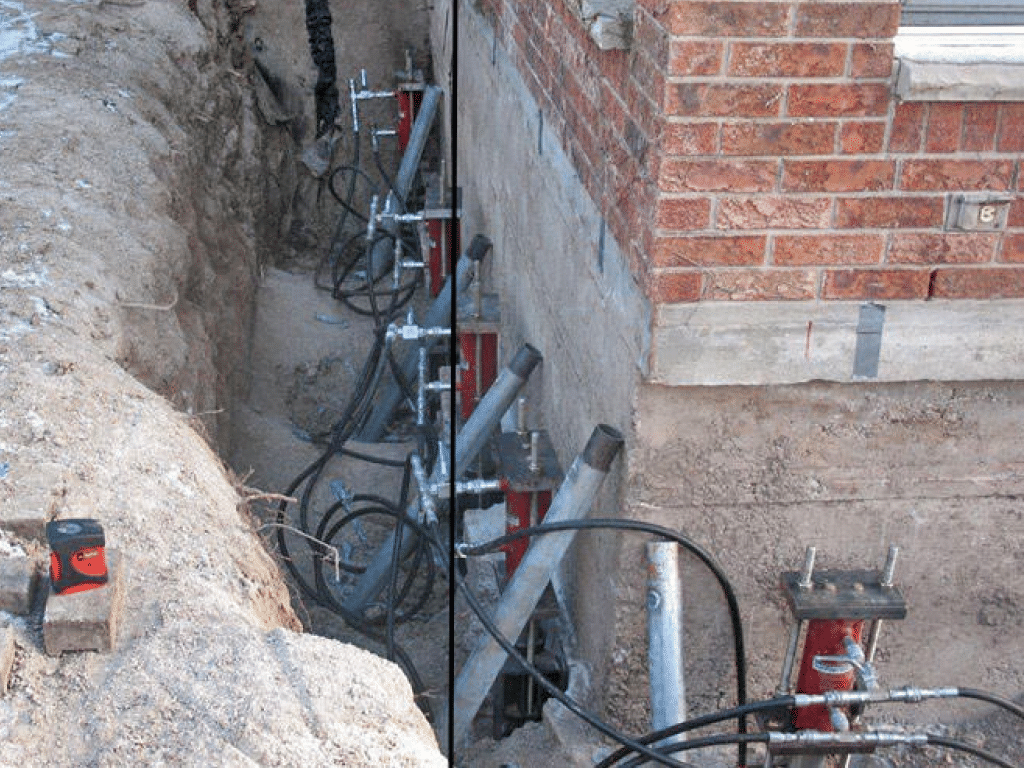
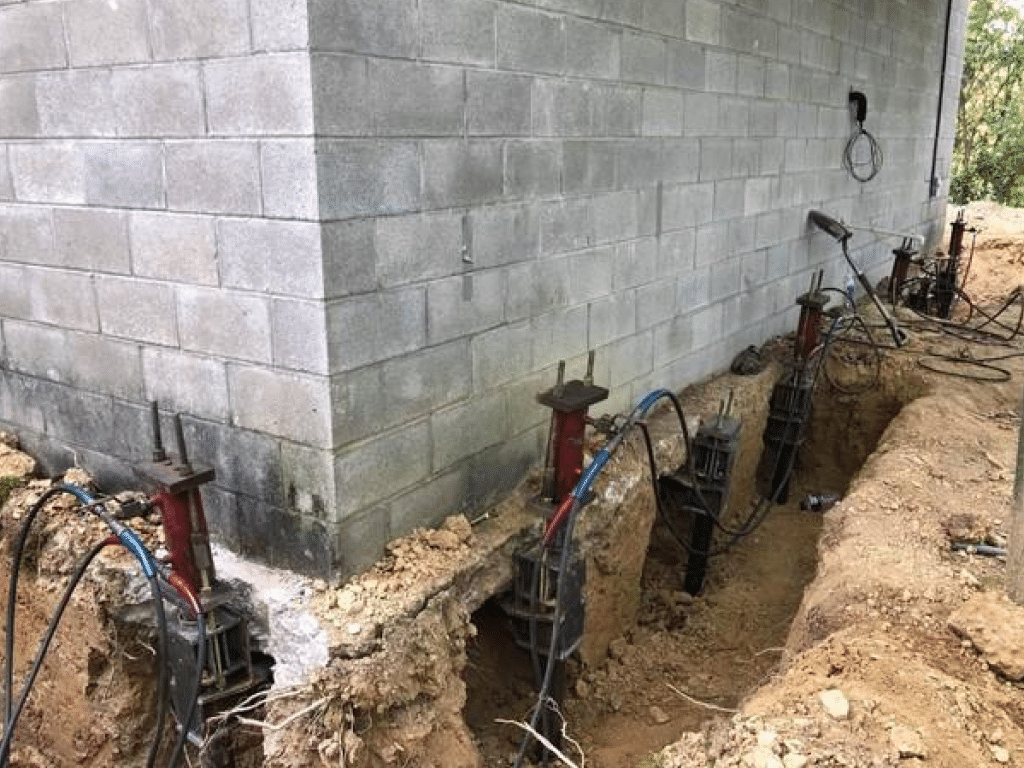
When one part of a house settles, the soil under that stretch of footing is no longer carrying its share of the load. Push piers correct that by driving steel pier sections down beneath the footing until they reach firmer soil or rock. The weight of the house moves onto the piers instead of the weaker soil near the surface.

Once the piers are set, the settled section can often be lifted back toward level. This approach fits well for heavier masonry homes where a corner has dropped and cracks are spreading from windows and doors.

Helical Piers

Helical piers are steel shafts with screw-like plates that are turned into the ground until they reach load-bearing soil. Because they do not rely on the weight of the structure above, they work well for lighter parts of a home, such as porches, additions and decks.

In Bethesda that often means a rear addition or sunroom that has pulled away from the original house, or a front porch that has dropped over the years. We match the pier type to the part of the home that is moving.

Addressing the Water Behind the Damage

Most foundation movement starts with water. Saturated clay is heavier and pushes harder, and soil that swings between wet and dry leaves footings with uneven support. A repair that ignores drainage leaves the original cause in place.

Because our in-house team also handles basement waterproofing, we can pair wall stabilization with interior drainage, a sealed sump pump or crack repair in the same project, so the foundation and the water around it are dealt with together.

Our Foundation Repair Process

1

Free Inspection

We examine cracks, measure wall movement and check floors, doors and drainage.

2

Your Recommendation

We walk you through what we found and the repair we recommend.

3

Structural Repair

Our crew installs straps, braces or piers, or rebuilds the wall, then cleans up.

4

Warranty Protection

Your foundation repair is backed by our transferable warranty.

Why Bethesda Homeowners Choose Best Buy Waterproofing

Foundation repair in Bethesda means respecting old masonry and finished living space while fixing what moved. Our in-house team explains every option before work begins.

What Affects the Cost of Foundation Repair in Bethesda?

We don’t quote foundation repair from a price list, because the cause and extent of movement differ from house to house. You get a firm price after your free inspection.

Extent of Movement

How far a wall has bowed or how much a section has settled.

Repair Method

Straps, braces, a wall rebuild or piers each involve different work.

Wall Construction

Block, brick and poured concrete foundations respond differently to repair.

Finished Areas

Drywall, flooring or built-ins that must come out to reach the wall.

Site Access

Tight side yards, steep lots or patios near the work area.

Drainage Needs

Whether waterproofing is needed to relieve the pressure on the walls.

Foundation Repair FAQs

Not always. Thin vertical cracks in poured concrete often form as the concrete cures and may never move again. Horizontal cracks, stair-step cracks in block, or any crack that is widening deserve a closer look. We measure and document what we find during the free inspection and tell you honestly whether repair is needed.

Many older homes here stand on block or brick walls that were never reinforced the way modern walls are. Wet clay pushes on those walls year after year, and freezing soil adds pressure in winter. Over time the wall can crack horizontally and lean inward. Straps or braces secure the wall before it moves further.

Yes. When a house is torn down and replaced, the soil around the new foundation is dug up and backfilled. That backfill can settle and hold water against the walls, and a footing on disturbed soil may settle unevenly. Cracks, a dropping corner or leaks can appear within the first few years.

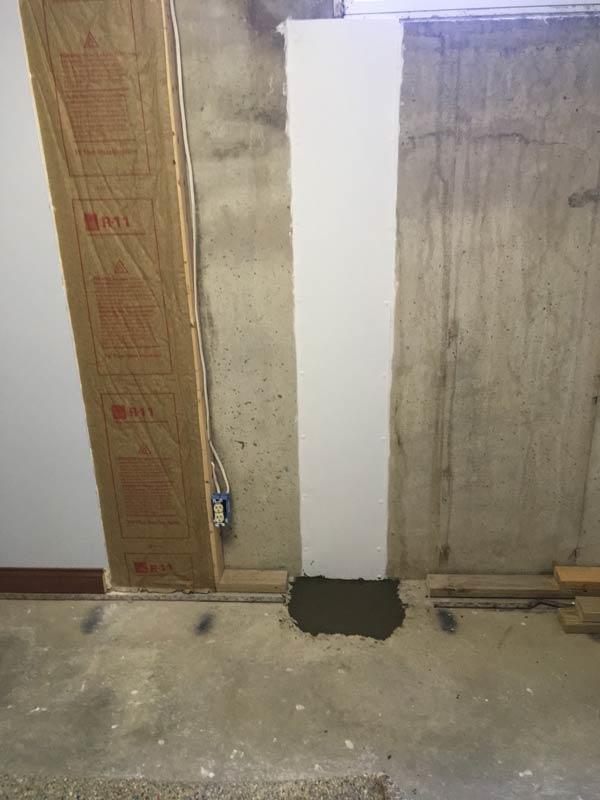
Yes. We remove only the drywall and framing needed to reach the wall, make the repair and leave the opening ready to be closed up. Carbon fiber straps lie close to the wall surface, which makes refinishing easier. We explain exactly what needs to be opened before any work starts.

Not by itself. Straps and braces stop movement, but water can still come through cracks or the wall-floor joint. If you also have seepage, we can combine foundation repair with interior drainage or crack repair so the wall is stable and the basement stays dry.

Some foundation work requires a permit and some does not, depending on the scope. When a permit is required, we handle it, so you do not have to manage the paperwork yourself. We also serve nearby Chevy Chase, Potomac, Rockville and Kensington homeowners in the same way.

More Services in Bethesda

Basement Waterproofing in Bethesda

Crawl Space Repair in Bethesda

Spray Foam Insulation in Bethesda

Foundation repair near Bethesda, MD: Chevy Chase · Potomac · Rockville · Kensington · Silver Spring · Washington, DC · McLean

Protect Your Bethesda Foundation

Cracks and bowing walls tend to get worse with each wet season. Schedule a free inspection for your Bethesda home, and we will measure what is moving, explain why and walk you through what we recommend.

Scroll to Top