Home » Service Areas » Silver Spring » Silver Spring Foundation Repair
Silver Spring, MD Foundation Repair
- Licensed & Insured
- 5-Star Rated
- Local Business
- Transferable Warranty
Foundation Repair Contractors in Silver Spring, MD
The foundations under most Silver Spring homes have been holding up brick, plaster and slate for a very long time. Colonials, Cape Cods and bungalows from the 1920s through the 1950s were often built on concrete block or early poured walls, and the clay soil around them has been swelling, shrinking and freezing against those walls every year since. Best Buy Waterproofing provides foundation repair in Silver Spring for homeowners who are seeing cracked walls, inward bowing, sloping floors or an addition pulling away from the main house.
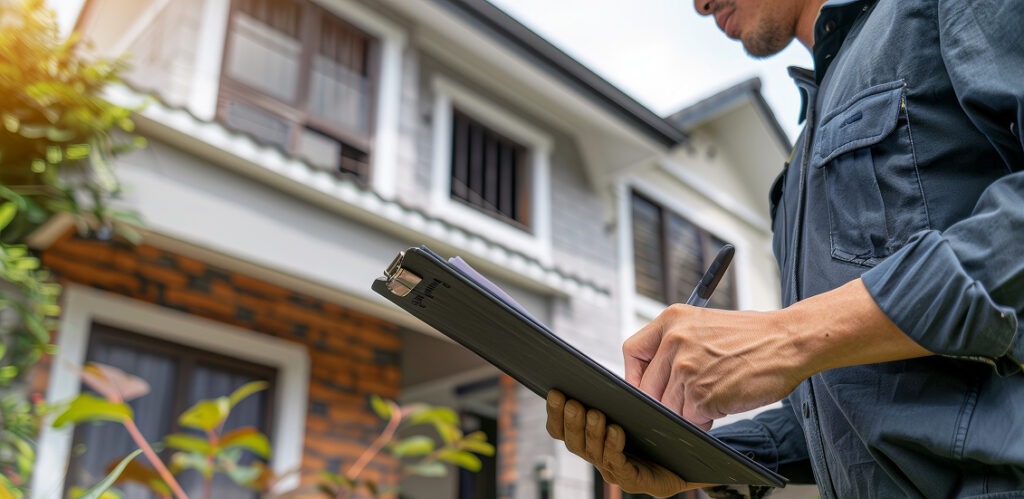
Foundation trouble here usually has two sources. The first is sideways pressure from saturated, heavy clay against basement walls, which builds after summer storms and again when the ground freezes. The second is uneven support under the footings, especially where an addition or porch was built on fill soil. Our in-house team inspects the walls, floors and lot, measures any movement, and then walks you through what we found and what we recommend. You will know why the foundation is moving before any work begins.
Signs You Need Foundation Repair in Silver Spring
Foundation movement tends to show up slowly, both in the basement and in the rooms above it.
Horizontal Wall Cracks
A long crack running sideways across a block or poured basement wall.
Stair-Step Cracks
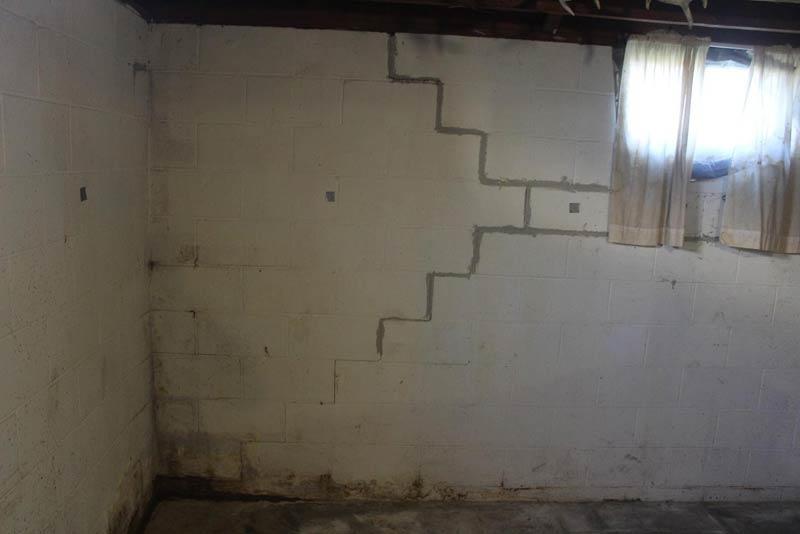
Cracks zigzagging along mortar joints in block walls or exterior brick.
Walls Leaning Inward
A basement wall that bulges or tips in near the middle or top.
Sloping Floors
Floors that dip toward one corner, wall or the back of the house.
Sticking Doors and Windows
Doors that rub or windows that bind where they used to close easily.
Gaps at Additions
A widening seam where a porch, addition or chimney meets the house.
Foundation Repair Solutions for Silver Spring Homes
Carbon Fiber Straps
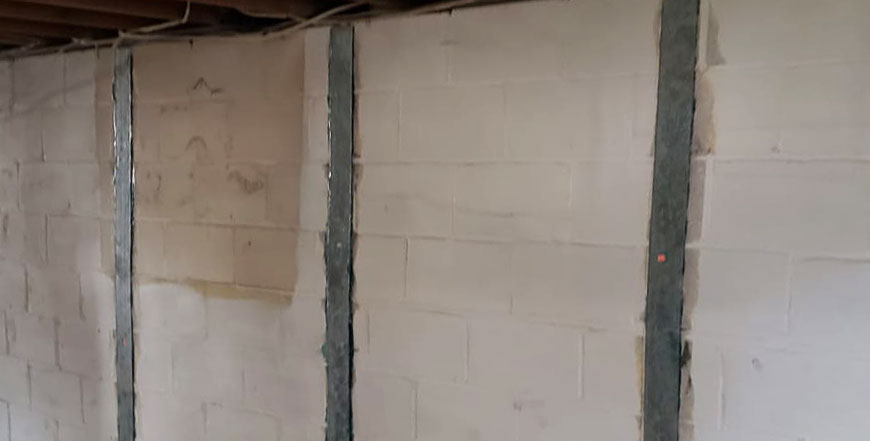
When a basement wall has started to bow but has not moved too far, carbon fiber straps are often the cleanest fix. We bond high-strength carbon fiber straps vertically to the wall with a structural epoxy and secure them at the top to the framing above. Once cured, the straps resist further inward movement from the soil. They sit nearly flat against the wall, so they take up almost no room and can be painted or covered later if you finish the basement.
Straps are a good fit for many of the poured and block walls under Silver Spring colonials, where the movement is modest and the basement space matters. We measure the wall carefully first, because straps are meant to stop movement, not to push a badly displaced wall back into place.
Steel I-Beam Wall Braces
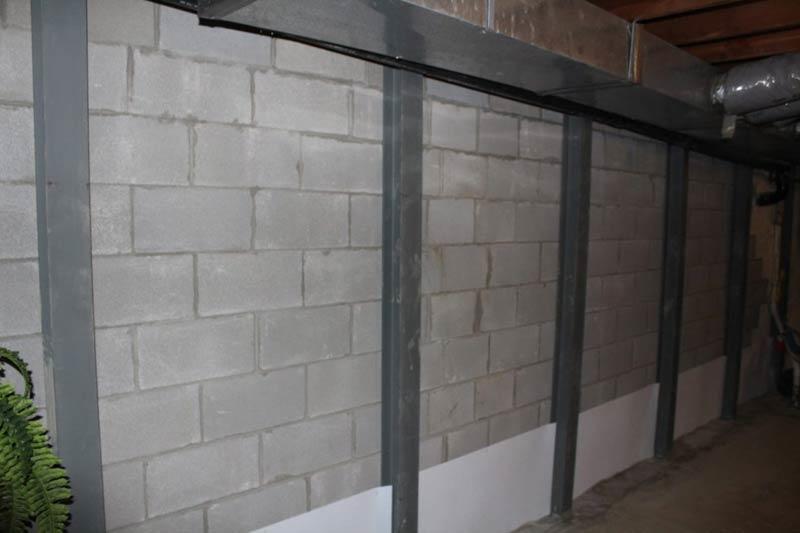
Walls with more inward movement, or older block walls that need a heavier-duty fix, can be stabilized with steel I-beam wall braces. Each brace stands against the wall, is secured to the basement floor at the bottom and to the floor framing at the top, and holds the wall in position against soil pressure. Braces can also be tightened over time where gradual correction makes sense.
Wall braces work well in unfinished basements, which are still common in older homes around Indian Spring and other established parts of Silver Spring. We space them to match the length of the wall and the amount of movement we find.
Block Wall Rebuilds
Sometimes a wall has shifted, cracked or crumbled too much to stabilize in place. Block foundations laid generations ago may have broken blocks, failed mortar or a section pushed well out of line. In that case, the most reliable answer is to rebuild the damaged section. We support the house above, remove the failed block, lay new block with reinforcement and grout, and tie it back into the rest of the foundation.
Rebuilding is a bigger project, but it gives you a sound wall instead of a patched one. We are honest about when it is needed and when a strap or brace will do the job.
Push Piers for Settling
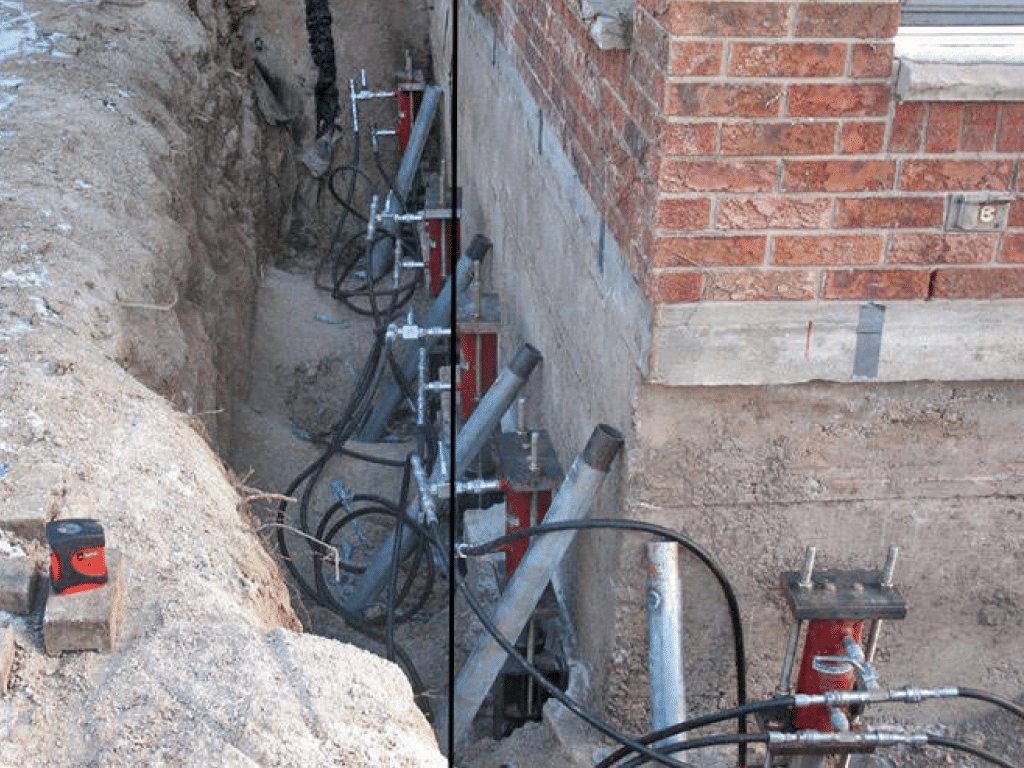
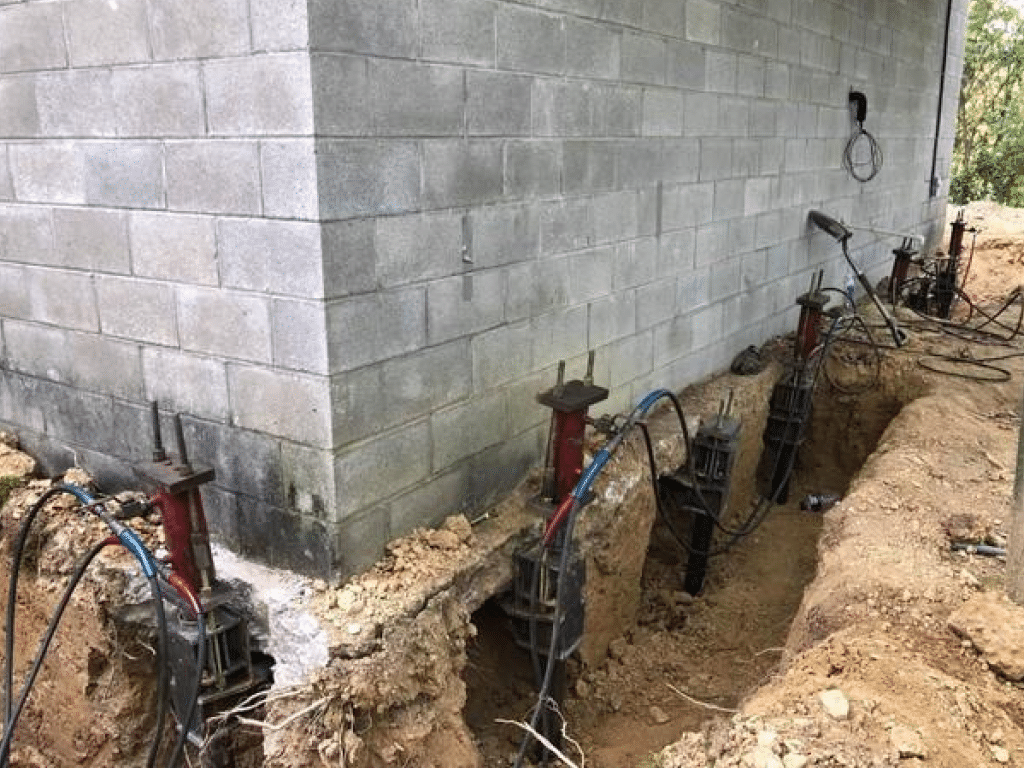
When part of a foundation sinks, the problem is under the footing, not in the wall. Push piers are steel pier sections driven down beneath the footing until they reach firmer soil or rock. The weight of the house is then transferred onto the piers, which stops further settling and can help lift the affected section back toward level.
Push piers suit houses with enough weight to drive them, which describes most brick and block homes in Silver Spring. They are installed from small excavations along the foundation, so the work stays focused on the area that is moving.
Helical Piers
Helical piers are steel shafts with screw-like plates that are turned into the ground until they reach soil strong enough to carry the load. Because they do not depend on the weight of the structure to install, they are a strong choice for lighter parts of a home, like a rear addition, a sunroom or a porch built on loose fill.
Many Silver Spring houses have additions built long after the original house, and those sections do not always settle the same way as the original house. Helical piers let us support them on their own terms.
Fixing the Water Behind the Damage
Most foundation cracks and bowing walls in this area trace back to water. Saturated clay is heavier and pushes harder, and soil that keeps getting soaked and drying out moves under footings. That is why we look at drainage, downspouts and grading during every inspection.
Our in-house team also handles basement waterproofing, so we can relieve water pressure and repair the wall as one plan instead of two separate projects.
Our Foundation Repair Process
Free Inspection
We examine walls, floors and the lot and measure any foundation movement.
Your Recommendation
We walk you through what we found and the repair we recommend.
Repair Installation
Our in-house crew installs straps, braces, rebuilt block or piers.
Warranty Protection
Your foundation repair is backed by our transferable warranty.
Why Silver Spring Homeowners Choose Best Buy Waterproofing
Foundation repair in Silver Spring calls for a team that understands older block walls and the clay soil around them. We explain the cause before recommending any fix.
- Since 2017: We have served Maryland homeowners since 2017 from our Columbia, MD office.
- Licensed and insured: Licensed in Maryland, Virginia, Washington DC, Pennsylvania, Delaware and West Virginia, and insured.
- One in-house team: Foundation repair, waterproofing and crawl space work handled by our own crew.
- Transferable warranty: Coverage that can transfer to the next owner when you sell.
- Free inspection, financing: Free inspections, flexible financing and a team available 24/7.
What Affects the Cost of Foundation Repair in Silver Spring?
We don’t quote foundation repair from a price list, because every Silver Spring foundation moves for its own reasons. You get a firm price after your free inspection.
Extent of Movement
How far a wall has bowed or how much a section has settled.
Repair Method
Straps, braces, block rebuilds and piers each involve different work.
Wall Type
Concrete block, poured concrete or older masonry behave differently.
Wall Length
Longer walls or more piers mean a larger scope of work.
Finished Space
Drywall, flooring or built-ins that must be removed for access.
Drainage Needs
Waterproofing added to relieve the pressure behind the wall.
Foundation Repair FAQs
Are all foundation cracks serious?
No. Thin vertical cracks in poured walls are common and often only need sealing to stop water. Horizontal cracks, stair-step cracks in block, cracks wider at one end, or any crack paired with an inward lean deserve a closer look. Those can mean soil pressure or settlement, and we measure them during the free inspection.
Why do so many older Silver Spring homes have bowing basement walls?
Many of these walls are concrete block built long before modern reinforcement was common. The silty clay around them swells and gets heavy when wet, and freezing soil adds more pressure each winter. Over many years, that sideways force can bow the wall inward, usually starting with a horizontal crack near mid-height.
What is the difference between carbon fiber straps and wall braces?
Both secure a bowing wall against soil pressure. Carbon fiber straps are bonded to the wall and sit nearly flat, which suits modest movement and basements you may finish. Steel I-beam wall braces stand against the wall and are secured to the floor and framing, which suits greater movement and can allow gradual correction.
My addition is pulling away from the house. Can you fix that?
Often, yes. Additions are frequently built on different footings or fill soil and can settle separately from the original house. Helical piers or push piers can support the settling section on firmer soil and help lift it back toward level. We inspect both foundations to see which part is moving and why.
Will foundation repair also stop my basement from leaking?
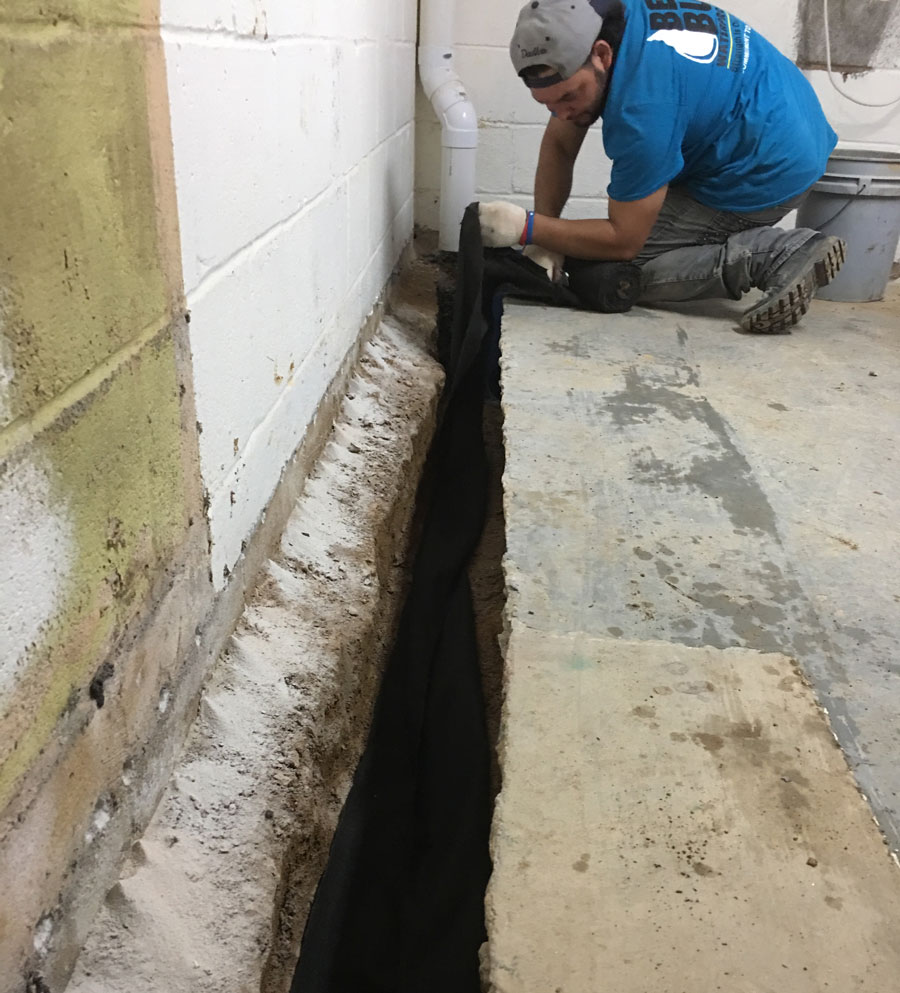
Not by itself. Stabilizing a wall stops movement, but water can still come through cracks or the floor seam. Since water pressure often caused the damage, we usually recommend pairing foundation repair with waterproofing, such as interior drainage and a sump pump, and our in-house team can handle both.
Do you need a permit for foundation repair in Silver Spring?
Some foundation work requires a permit and some does not, depending on the scope. When a permit is required, we handle it as part of the project, so you are not left managing paperwork. We serve every Silver Spring ZIP code, and every job starts with a free inspection.
More Services in Silver Spring
Foundation repair near Silver Spring, MD: Takoma Park · Wheaton · Kensington · Bethesda · Burtonsville · Aspen Hill · Washington, DC
Get a Free Foundation Inspection
A crack or a bowing wall is easier to fix before it moves further. Schedule a free inspection for your Silver Spring home, and we will measure the foundation and walk you through what we recommend.