Welcome to The Best Buy Waterproofing

Aspen Hill, MD Foundation Repair

Wall stabilization, block wall rebuilds and pier systems that steady cracked, bowing or settling foundations under Aspen Hill split-levels, ramblers and townhomes.

Foundation Repair Contractors in Aspen Hill, MD

A crack that was a hairline when you moved in and is now wide enough to fit a coin is worth paying attention to. Many homes in Aspen Hill were built in the 1960s and 1970s on concrete block or poured walls, and half a century of wet springs, dry summers and frozen winters can leave those walls cracked, leaning or out of level. Best Buy Waterproofing provides foundation repair in Aspen Hill that starts with understanding why a wall moved before choosing how to stop it.

The soil here is silty clay over weathered rock, typical of the Maryland Piedmont. Clay swells when it soaks up rain and shrinks when it dries, so the ground around a foundation pushes and pulls on it every season. Sloped lots add more water on the uphill side. Our in-house team has been in business since 2017, is licensed in Maryland, Virginia, Washington DC, Pennsylvania, Delaware and West Virginia, and is insured. Each project begins with a free inspection, and financing is available.

Signs You Need Foundation Repair in Aspen Hill

Foundation movement is usually slow, and the early clues often show up upstairs before anyone looks closely at the basement walls.

Horizontal Wall Cracks

A long crack runs across a block or poured wall partway up.

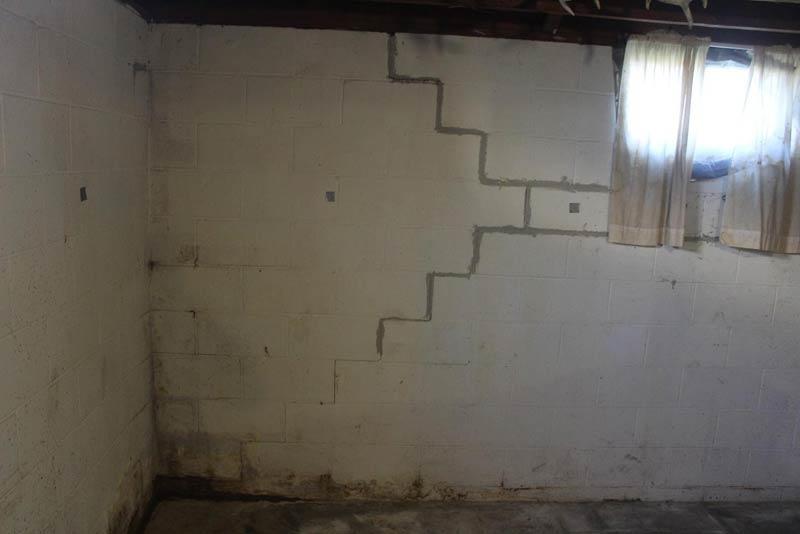
Stair-Step Cracks

Mortar joints in block walls crack in a zigzag staircase pattern.

Walls Leaning Inward

A basement wall bulges or tilts when you sight along it.

Sticking Doors and Windows

Doors rub or windows bind where they used to open easily.

Sloping Floors

A marble rolls toward one side of a room or a corner feels lower.

Widening Gaps

Gaps open at the stoop, chimney or where trim meets the ceiling.

Foundation Repair Solutions for Aspen Hill Homes

Wall Stabilization for Bowing Walls

When saturated clay presses against a basement wall and winter freezes add their own force, a block wall can start to crack and push inward. Split-levels and ramblers in Aspen Hill often have one wall cut deeper into a slope than the others, and that wall usually takes the most pressure. Wall stabilization stops the movement before it gets worse and protects the structure above.

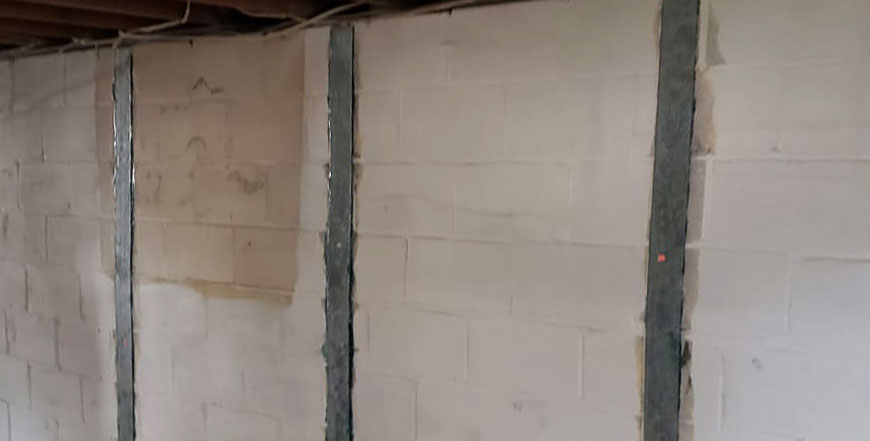
We measure how far the wall has moved and how it is cracking, then recommend the method that fits. Walls with modest movement are often good candidates for carbon fiber straps, while walls that have moved more may need steel I-beam wall braces.

Carbon Fiber Straps

Carbon fiber straps are thin, high-strength strips bonded to the inside face of a cracked or slightly bowed wall with a structural epoxy. They are secured at the top and bottom of the wall so they hold it in place and resist further inward movement. Once installed, they sit nearly flat against the wall and take up almost no floor space.

That low profile makes straps a good fit for finished or partly finished lower levels, where you want the wall stabilized without losing room. They can be painted, and they can be covered later if you finish the space.

Steel I-Beam Wall Braces

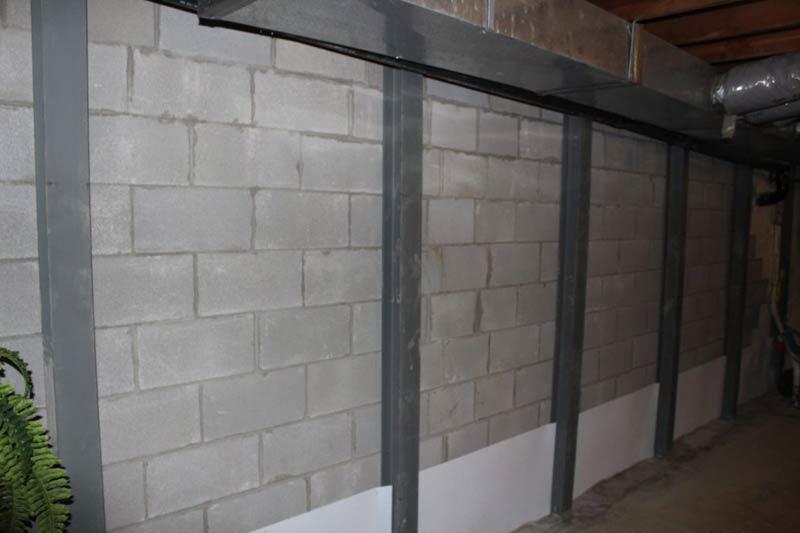
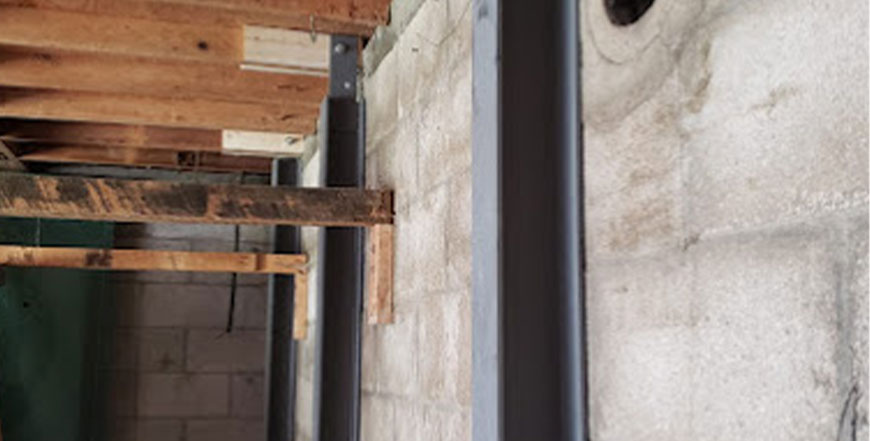
For block walls that have bowed further, steel I-beam wall braces provide heavier support. Each brace stands vertically against the wall and is secured to the basement floor and to the floor framing above, so the load from the soil is carried by a rigid steel member instead of the cracked masonry.

Braces can be adjusted over time, which gives some walls the chance to be eased back toward their original position. We explain during your inspection whether straps or braces are the better match for the movement we find.

Block Wall Rebuilds

Sometimes a section of block wall has shifted, sheared or bowed so far that it cannot be stabilized where it stands. In that case, we support the structure, excavate outside, remove the damaged blocks and rebuild that part of the wall with new masonry. It is a larger project, but it replaces the failed section rather than holding it in place.

A rebuild is also a good time to add exterior waterproofing and drainage along that wall, which reduces the water pressure that caused the problem. We tell you plainly when a rebuild is the right call and when a less invasive repair will work.

Push Piers for Settling Foundations

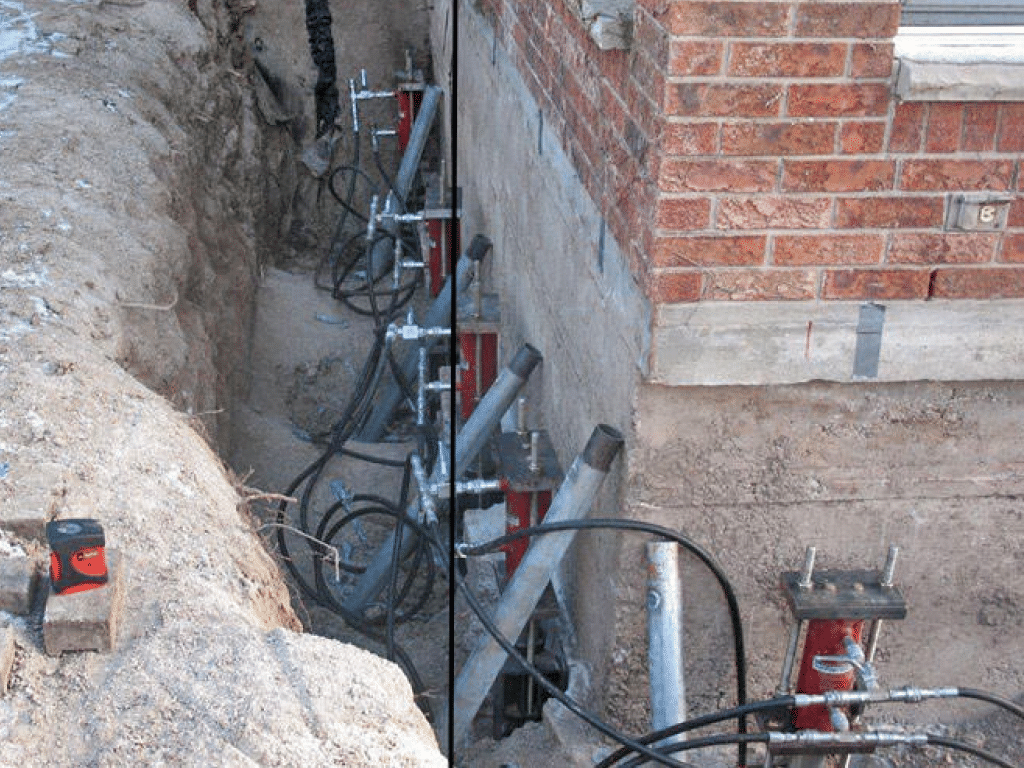
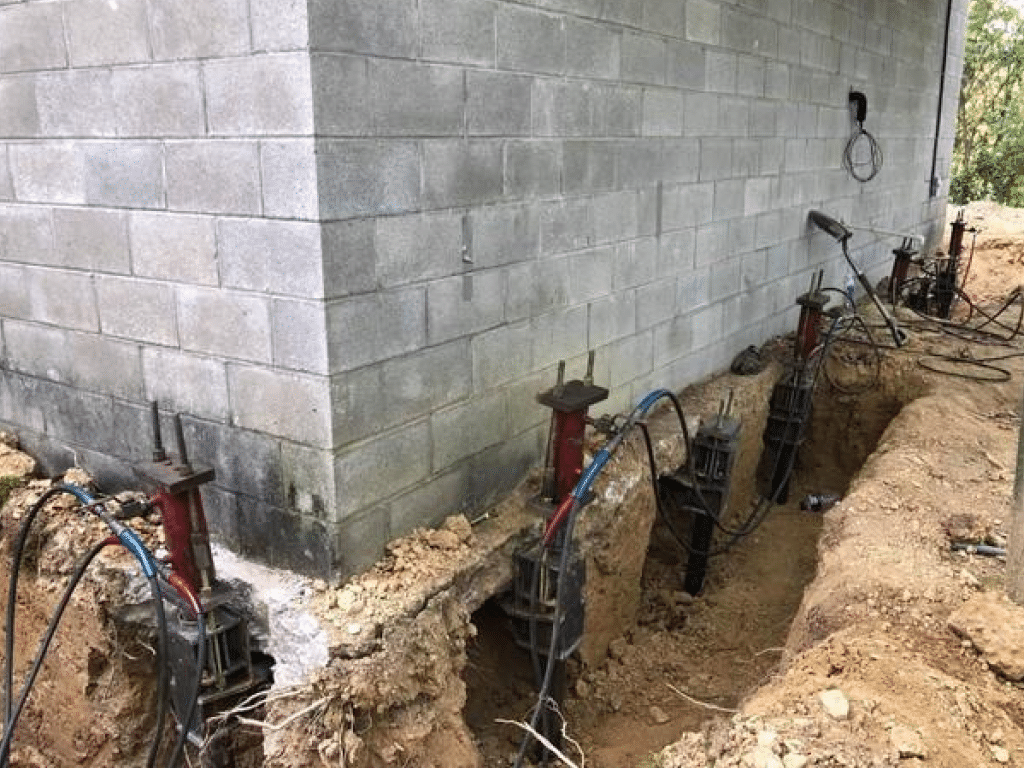
When clay under a footing dries out during a hot summer or turns soft after weeks of rain, part of a home can settle. You might see a corner of a rambler dropping, cracks angling up from window corners or a gap opening at the front stoop. Push piers are steel sections driven down beside the footing until they reach firm, load-bearing soil or rock.

The weight of the house is then transferred onto the piers through a bracket at the footing. Push piers are well suited to heavier sections of a home and can help lift a settled area back toward level.

Helical Piers

Helical piers have screw-like plates welded to a steel shaft and are turned into the ground until they reach stable soil. They work well for lighter structures such as porches, stoops, additions and townhome end units, and they can be installed where space or access is tight.

Like push piers, helical piers support a settling foundation from below and can help raise it back toward level. We choose between the two based on the weight of the structure and the soil conditions we find.

Our Foundation Repair Process

1

Free Inspection

We measure cracks, wall movement and floor levels inside and outside the home.

2

Your Recommendation

We walk you through what we found and what we recommend, with a firm price.

3

Repair Installation

Our in-house crew installs straps, braces or piers and cleans up the work area.

4

Warranty Protection

Your foundation repair is backed by our transferable warranty.

Why Aspen Hill Homeowners Choose Best Buy Waterproofing

We explain foundation repair in plain terms and recommend only what your walls actually need. Aspen Hill homeowners get one in-house team that also understands the water problems behind most foundation damage.

What Affects the Cost of Foundation Repair in Aspen Hill?

We do not quote foundation repair from a price list, because every wall moves in its own way. After your free inspection, you get a firm price for your Aspen Hill home.

Length of Wall

The amount of wall that needs stabilization drives the scope.

Amount of Movement

Slight bowing may need straps; more movement may need braces or a rebuild.

Number of Piers

Settling repairs depend on how many piers the area requires.

Block or Poured Wall

Wall type affects which repair methods fit best.

Finished Space

Drywall, built-ins or flooring may need to come out for access.

Water Problems

Drainage or waterproofing may be needed to relieve soil pressure.

Foundation Repair FAQs

Many Aspen Hill homes were built in the 1960s and 1970s with concrete block foundations sitting in silty clay. That clay swells when wet and shrinks when dry, pushing on the walls season after season, and freeze-thaw winters add more stress. Over time the mortar joints crack, often in a stair-step pattern, and some walls begin to bow inward.

No. Thin vertical cracks in poured walls are common and often only a leak concern. Horizontal cracks, stair-step cracks in block, cracks wider at one end and walls that lean inward point to movement. Those are the cracks that call for foundation repair, and our free inspection tells you which kind you have.

Carbon fiber straps are bonded to the wall and secured top and bottom, and they suit walls with modest bowing while taking up almost no space. Steel I-beam wall braces stand against the wall and are secured to the floor and framing, giving heavier support for walls that have moved more. We recommend the one that matches your wall.

Often, yes. Stoops, porches and small additions sometimes sit on shallower footings than the house and settle as the soil beneath them dries or softens. Helical piers are a good fit for these lighter structures, and they can help bring the stoop back toward level. We confirm the cause first so the repair lasts.

Some foundation projects need a permit and others do not, depending on the work involved. When a permit is required, we handle it, so you are not left sorting out paperwork. We let you know during your recommendation whether your project needs one.

Not always. Stabilizing a wall stops it from moving, but water can still enter through cracks, the cove joint or the floor. Because water pressure often contributes to wall movement, we look at drainage at the same time. Our team also handles basement waterproofing, so both problems can be solved together.

More Services in Aspen Hill

Basement Waterproofing in Aspen Hill

Crawl Space Repair in Aspen Hill

Spray Foam Insulation in Aspen Hill

Foundation repair near Aspen Hill, MD: Wheaton · Rockville · Olney · Silver Spring · Gaithersburg · Burtonsville

Steady Your Aspen Hill Foundation

If a wall has started to crack, lean or settle, the sooner it is checked, the simpler the repair tends to be. Schedule a free inspection of your Aspen Hill home, and we will walk you through what we found and what we recommend. Financing is available.

Scroll to Top