Home » Service Areas » Wheaton, MD » Wheaton Foundation Repair
Wheaton, MD Foundation Repair
- Licensed & Insured
- 5-Star Rated
- Local Business
- Transferable Warranty
Foundation Repair Contractors in Wheaton, MD
Most houses in Wheaton went up in a hurry after the Second World War, and many of them stand on hollow concrete block. Block is strong when it is loaded from above, but it is much weaker when soil pushes on it from the side, and that is exactly what wet silty clay does after a long rain or a hard freeze. Best Buy Waterproofing provides foundation repair in Wheaton for ramblers, Cape Cods and split-levels whose walls have cracked, leaned or settled, using methods matched to how the wall is actually moving.
Lot shape matters too. Plenty of Wheaton homes sit on a slope, which means one side of the foundation retains more soil than the other and the low corner can rest on softer, wetter ground. We look at all of it during a free inspection: the walls, the floors upstairs, the grading and the gutters. Then we walk you through what we found and what we recommend, including whether water is part of the cause, before anything is installed.
Signs You Need Foundation Repair in Wheaton
Foundation movement leaves a trail, inside the basement and in the living space above. Watch for these in your Wheaton home.
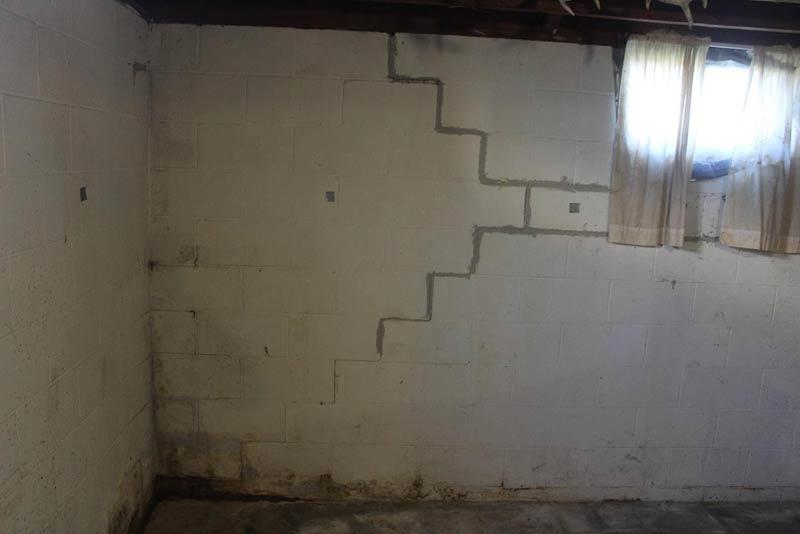
Crack Along a Mortar Course
A straight horizontal crack across a block wall, often about halfway up.
Wall Bulging Inward
The middle of a basement wall sits further into the room than the top or bottom.
Zigzag Cracks in Brick
Stepped cracking in the brick veneer near a corner or under a window.
Floors Running Downhill
A marble rolls toward the low side of the house or one room.
Sticking Doors Upstairs
Bedroom doors that swing open on their own or stop latching.
Chimney or Stoop Separating
A gap opening where a chimney, front stoop or porch meets the house.
Foundation Repair Solutions for Wheaton Homes
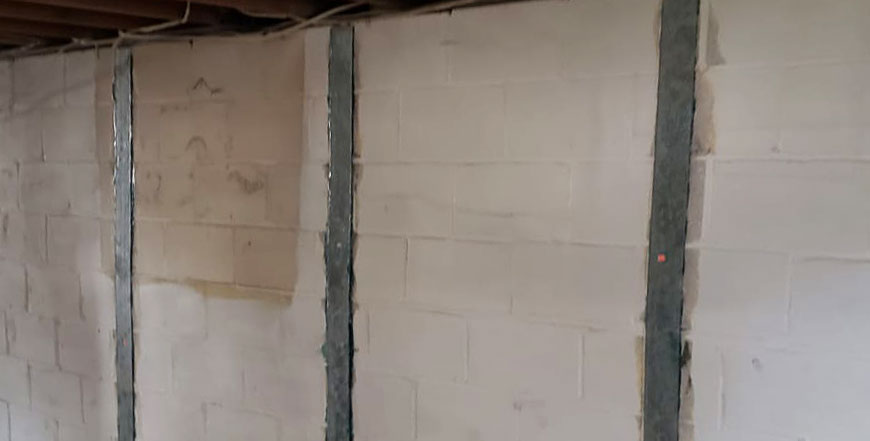
Carbon Fiber Straps
If a Wheaton basement wall has a horizontal crack and only a small inward bow, carbon fiber straps are usually our first choice. Each strap is bonded to the wall from floor to sill with structural epoxy, then secured at the top to the house framing. Carbon fiber is extremely stiff in tension, so the straps hold the wall where it is and keep soil pressure from bending it further. The wall is not moved back out; it is stopped.
The straps lie almost flush with the surface, which suits a lower level that is already finished or might be later. They can be painted, and a new stud wall can go right over them later.
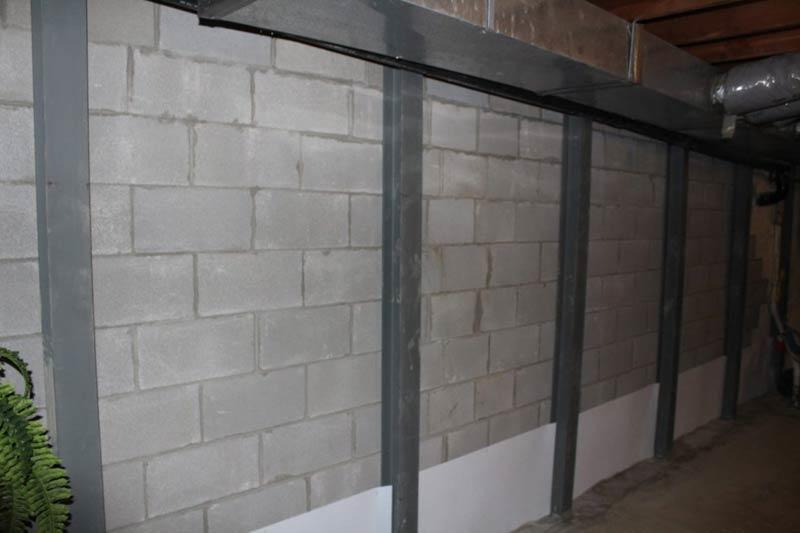
Steel I-Beam Wall Braces
When a wall has pushed in further, or when the block itself is in rough shape, we use steel I-beam wall braces. The braces stand vertically against the wall at regular spacing. Each one is secured to the concrete floor at its base and to the floor joists above, so the house framing helps resist the push from outside. On some walls, we can tighten the braces in stages to ease the wall back a little at a time.
Braces take up a few inches of floor space, so they are most common in unfinished basements and utility areas. Spacing depends on how long the wall runs and how much it has shifted.
Rebuilding Failed Block Walls
A wall that has bowed severely, sheared along a mortar line or has crumbling block is past the point where reinforcement makes sense. In that case we rebuild it. The house is temporarily supported, the soil outside the damaged section is excavated, and the old block comes out. We lay new block with steel reinforcement and grout-filled cores, tie it into the sound parts of the foundation, and waterproof the outside before backfilling.
It is a larger job, and we only recommend it when the wall truly calls for it. The result is a new section of wall rather than a repaired old one.
Push Piers for a Settling Corner
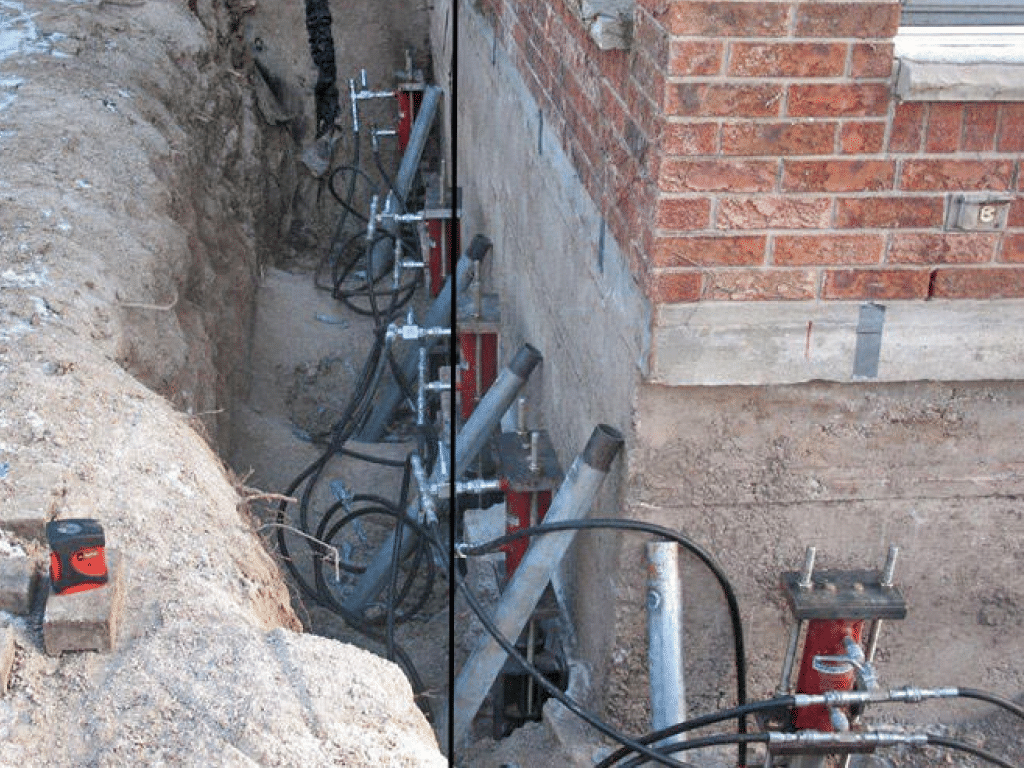
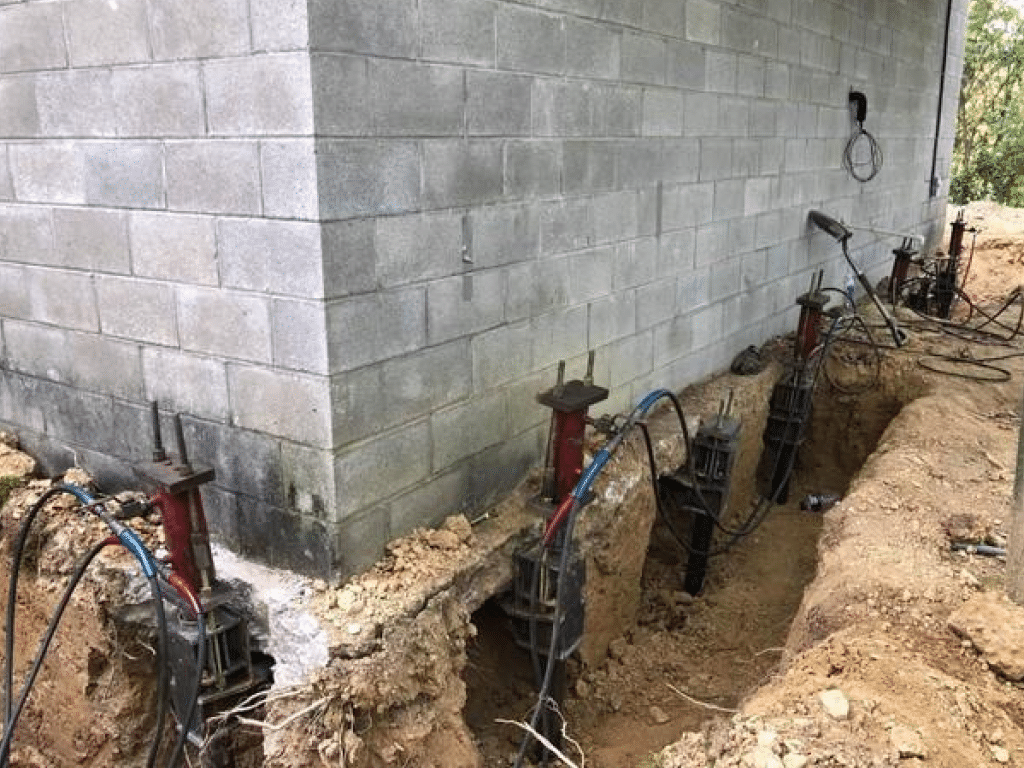
When the low corner of a sloped Wheaton lot starts to drop, the fix belongs under the footing. We hydraulically press steel pier sections into the ground below the footing, with the house itself acting as the counterweight, until they reach firm soil or rock. The load then rests on the piers instead of the soft soil, which stops the settling and may let us raise the corner back toward level.
Brick ramblers and Cape Cods are heavy enough to drive push piers effectively. The work is done from small, targeted excavations along the affected wall.
Helical Piers for Lighter Structures
Front stoops, porches, garages and later additions often carry far less weight than the main house and may sit on shallow footings or loose fill. Helical piers are a better fit there. Each pier is a steel shaft with helix plates that is rotated into the ground until it reaches soil with enough capacity, then attached to the footing with a bracket.
Since helical piers do not rely on the structure’s weight to install, they can support a light section of the house independently and help bring it back in line with the rest.
Our Foundation Repair Process
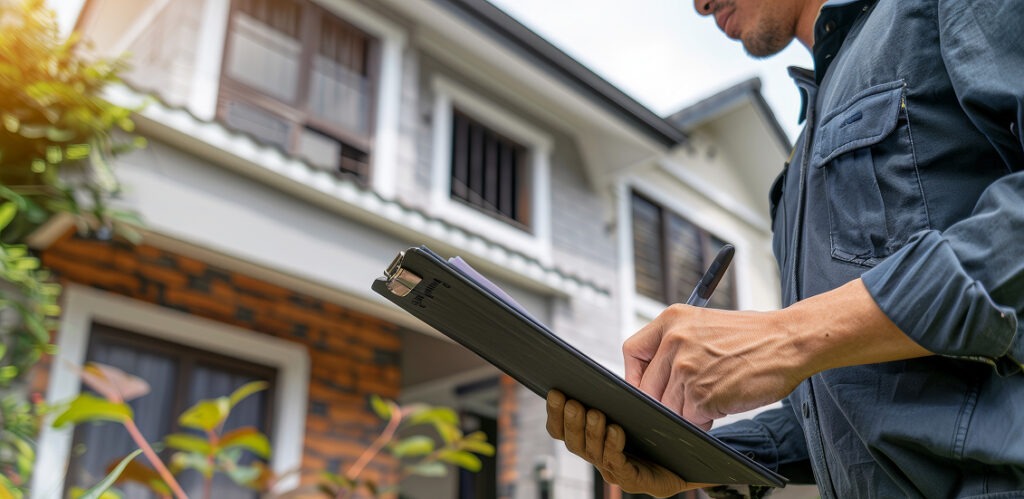
Free Inspection
Crack widths, wall lean and floor slope get measured, and the gutters and grading checked.
Your Recommendation
We walk you through what we found and what we recommend, with a firm price.
Stabilization Work
Our own technicians carry out the stabilization plan you approved.
Warranty Protection
Your foundation repair carries our transferable warranty.
Why Wheaton Homeowners Choose Best Buy Waterproofing
Good foundation repair in Wheaton starts with an honest read of how far a wall has moved and why. We explain both before we recommend anything.
- Working since 2017: Foundation, waterproofing and crawl space work from our Columbia, MD office since 2017.
- Licensed and insured: Licensed in Maryland, Virginia, Washington DC, Pennsylvania, Delaware and West Virginia, and insured.
- One team, start to finish: The people who inspect your foundation are the people who repair it.
- Transferable warranty: A repaired foundation with coverage that passes to a future buyer.
- Free inspection, financing: Free inspections, financing for larger repairs and availability 24/7.
What Affects the Cost of Foundation Repair in Wheaton?
Foundation repair in Wheaton is not priced from a chart, because no two walls have moved the same way. After your free inspection, you receive a firm price for exactly the repair your house needs.
Amount of Lean
A slight bow and a wall that has shifted inches call for different fixes.
Method Chosen
Straps, braces, a rebuilt section or piers each take different labor.
Number of Walls
One affected wall versus several, and how long each one runs.
Depth to Firm Soil
Settling repairs vary with the number of piers and the depth to bearing ground.
Access Inside
Finished walls, stairs or stored items that must be cleared first.
Water Pressure
Drainage work that may be needed to take load off the wall.
Foundation Repair FAQs
How do I know if a crack in my basement is a problem?
Direction and width tell a lot. Hairline vertical cracks in a poured wall are often just shrinkage. A horizontal crack in a block wall, stepped cracks that keep growing, or any crack with one side pushed in past the other point to soil pressure or settlement. We measure these during a free inspection in Wheaton.
What causes bowing basement walls in older Wheaton homes?
Hollow block was the standard for many mid-century houses, and it was often laid without steel reinforcement. Silty clay outside gets heavy and expands when it is wet, then freezes and expands again in winter. That repeated side pressure can push the middle of the wall inward over time.
Can you push my bowed wall back to straight?
Not with every method. Straps freeze the wall where it sits today. Steel I-beam wall braces can be adjusted gradually in some situations. Past a certain amount of movement, replacing the damaged section is the safer route. We tell you plainly which option fits your wall.
Does a sloped yard make foundation settlement more likely?
It can. On a slope, runoff collects on the low side, and that soil stays wetter and softer than soil uphill. Over many years the footing on the low side can sink while the rest of the house stays put. Push piers or helical piers move that load onto firmer ground below.
Is it smart to fix leaks during the same project?
In many Wheaton basements, it makes sense. Water is behind much of the pressure that cracks and bows walls, and a repaired wall can still leak. Our in-house team also does basement waterproofing, so we can plan drainage and stabilization together and schedule them as one project.
Will foundation work in Wheaton need a permit?
Some foundation work does and some does not, depending on what is being done. When a permit is required, we handle it, and your recommendation will say up front whether one applies. That way the paperwork never holds up your repair.
More Services in Wheaton
Foundation repair near Wheaton, MD: Silver Spring · Aspen Hill · Kensington · Rockville · Olney · Takoma Park
Have Your Foundation Checked for Free
A bowing wall or a sinking corner rarely fixes itself. Book a free inspection for your Wheaton home, and we will measure the movement, explain the cause and recommend a repair that fits.