Home » Service Areas » Woodlawn, MD » Woodlawn Foundation Repair
Woodlawn, MD Foundation Repair
- Licensed & Insured
- 5-Star Rated
- Local Business
- Transferable Warranty
Foundation Repair Contractors in Woodlawn, MD
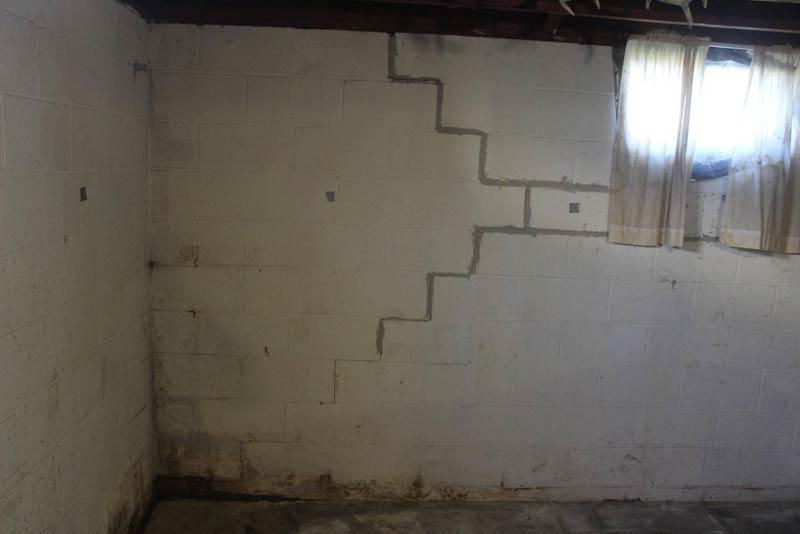
Best Buy Waterproofing provides foundation repair in Woodlawn, MD for homes that have spent half a century or more holding back the soil of western Baltimore County. Much of Woodlawn went up between the 1950s and the 1970s, and concrete block was a common foundation choice at the time. Block is strong when it is loaded from above, but the silty clay here swells when it soaks up water, shrinks as it dries and freezes in winter. Year after year, that sideways push works on mortar joints until a wall cracks in a stair-step line or starts to bow inward.
Settlement is the other half of the story. On sloped lots, runoff can soften the soil under one side of a footing, and fill placed during construction can compress over time. When one corner drops, cracks open in the walls, floors tilt and doors stop closing. Our in-house team, working out of our nearby Columbia office, stabilizes bowing walls and settling foundations with methods matched to what the inspection shows. Every project starts with a free inspection.
Signs You Need Foundation Repair in Woodlawn
Foundation cracks and other signs of movement show up slowly, inside and outside the house. Watch for these.
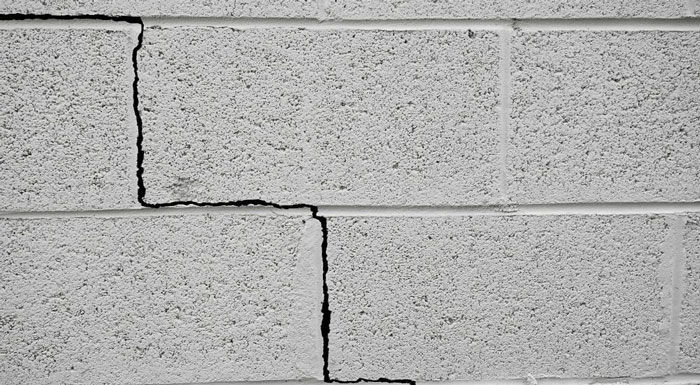
Stair-Step Cracks
Cracks that zigzag along mortar joints in block walls or exterior brick.
Horizontal Wall Cracks
A long crack across a block wall, often midway up, from soil pressure.
Bowing or Leaning Walls
A basement or lower-level wall that bulges inward or tilts at the top.
Sticking Doors and Windows
Doors that drag or will not latch and windows that bind in their frames.
Sloping Floors
Floors that tilt toward one corner or side of the house.
Gaps at Trim and Ceilings
New gaps where walls meet ceilings, floors or window and door trim.
Foundation Repair Solutions for Woodlawn Homes
Wall Stabilization for Bowing Block
Bowing basement walls are one of the most common foundation problems in homes of Woodlawn’s age. Wet clay pushes against the outside of a block wall, and once the mortar joints give, the wall begins to bend inward along a horizontal crack. In a split-level, the deeply buried wall of the lower floor is often the one that moves first, because it holds back the most soil and water.
Wall stabilization stops that movement before it gets worse. We measure how far the wall has moved, check whether it is still shifting and choose a method that fits. In most cases, the answer is carbon fiber straps or steel I-beam wall braces, secured at the top and bottom of the wall.
Carbon Fiber Straps
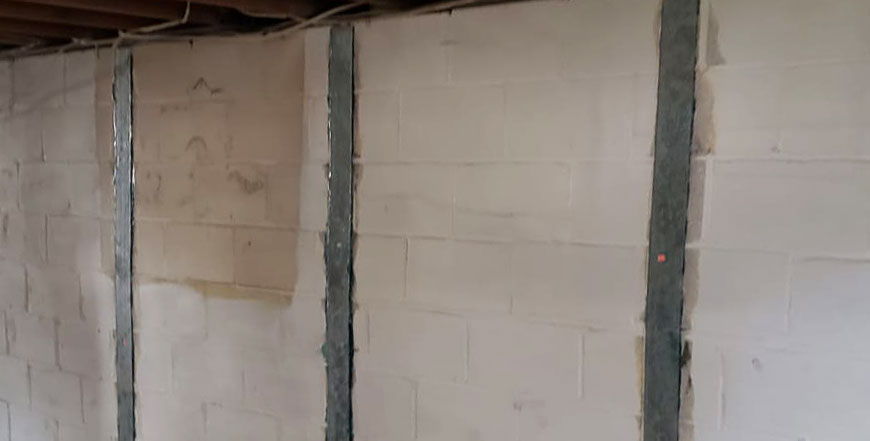
Carbon fiber straps are a low-profile way to stabilize a wall that has started to bow but has not moved far. We prepare the block, bond each strap to the inside face of the wall with a structural adhesive at set intervals, and secure the straps at the top and bottom so the reinforcement is tied in, not just glued on. Once in place, they keep the wall from bending any further.
Because the straps sit almost flat against the block, they work well in a Woodlawn lower level you use every day or plan to finish later. They can be painted or covered, and installation is clean and quick compared with heavier options.
Steel I-Beam Wall Braces
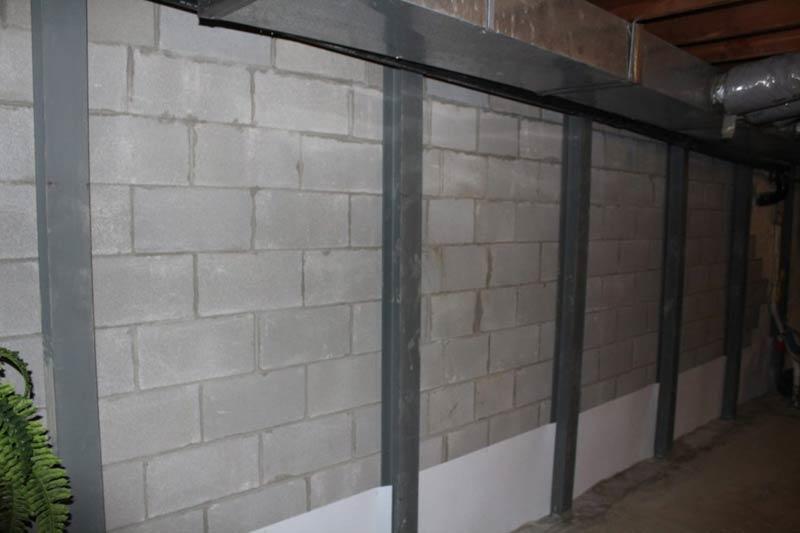
When a wall has bowed further or needs more support than straps can give, steel I-beam wall braces are the stronger option. Each brace runs from the floor to the framing above and is secured at both ends, holding the wall firmly in place against the soil outside.
Wall braces take up a little more space than straps, but they handle heavier loads. Over time, the continuous resistance they apply can help gradually straighten a bowed or leaning wall. How much correction is possible depends on the wall, and we tell you what to expect up front.
Block Wall Rebuilds
Some block walls are past the point where reinforcement alone will hold them. If a wall has bowed too far, sheared at the base or broken into loose, crumbling block and mortar, a rebuild is the reliable fix. We remove the damaged section and lay new block in its place, then address the drainage that caused the damage so the new wall is not under the same pressure.
We only recommend a rebuild when the inspection shows stabilization is not enough. If a permit is required for the work, we handle it.
Push Piers for Settling Foundations
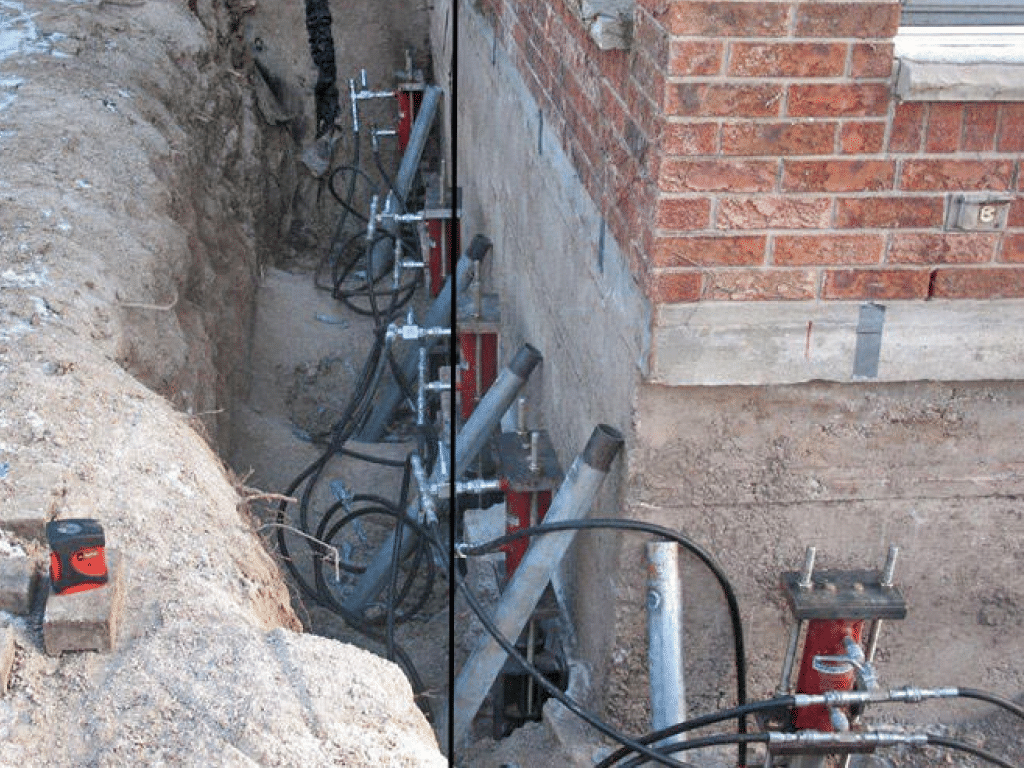
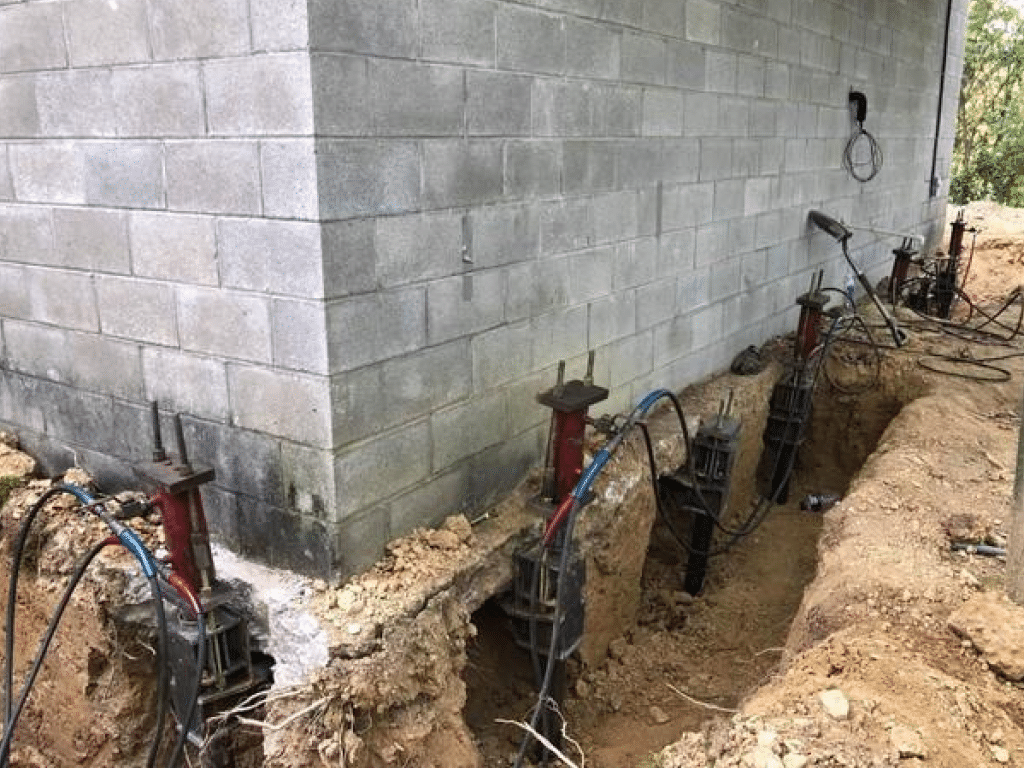
A settling foundation needs support from below, not just a patch on the crack. Push piers are steel pier sections driven down through a bracket at the footing, one after another, until they reach stable, load-bearing soil. Once the piers are set, the weight of that part of the house transfers from the weak soil near the surface to ground that can carry it.
Push piers suit the heavier masonry homes common in Woodlawn. Where the structure allows, we use controlled lifting to bring the foundation back toward level, and we explain how much lift is realistic for your home before work starts.
Helical Piers for Lighter Loads
Helical piers are steel shafts with screw-like plates that are turned into the ground until they reach soil strong enough to hold the load. They do not depend on the weight of the house to install, which makes them a good fit for lighter structures, additions, porches and stoops that have pulled away from the main house.
For a sinking addition or a settling corner on a lighter part of a Woodlawn home, helical piers are often the right tool. The inspection tells us which pier type fits.
Our Foundation Repair Process
Free Inspection
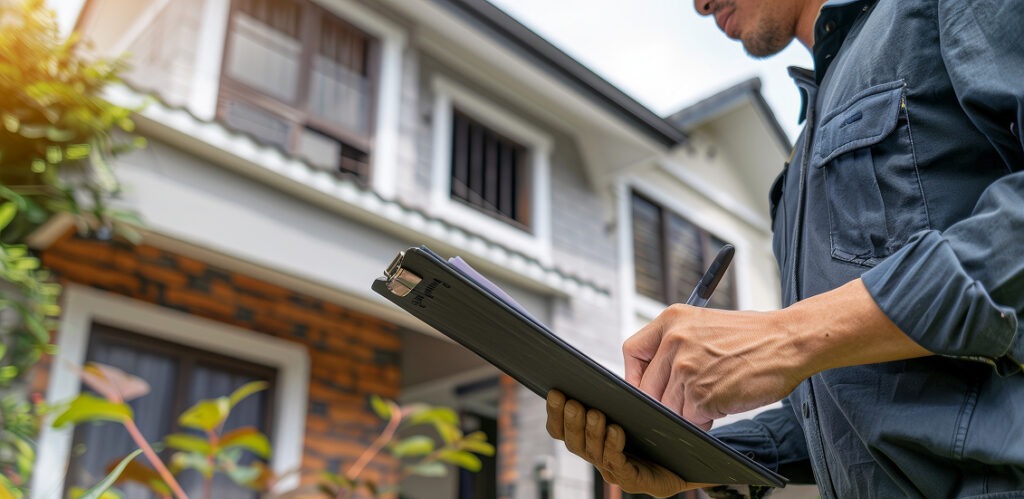
We measure cracks, wall movement and floor slope, and look at grading and drainage.
Your Recommendation
We walk you through what we found and what we recommend to stabilize your home.
Repair Installation
Our in-house crew installs straps, braces or piers and cleans up when finished.
Warranty Protection
Your foundation repair is backed by our transferable warranty.
Why Woodlawn Homeowners Choose Best Buy Waterproofing
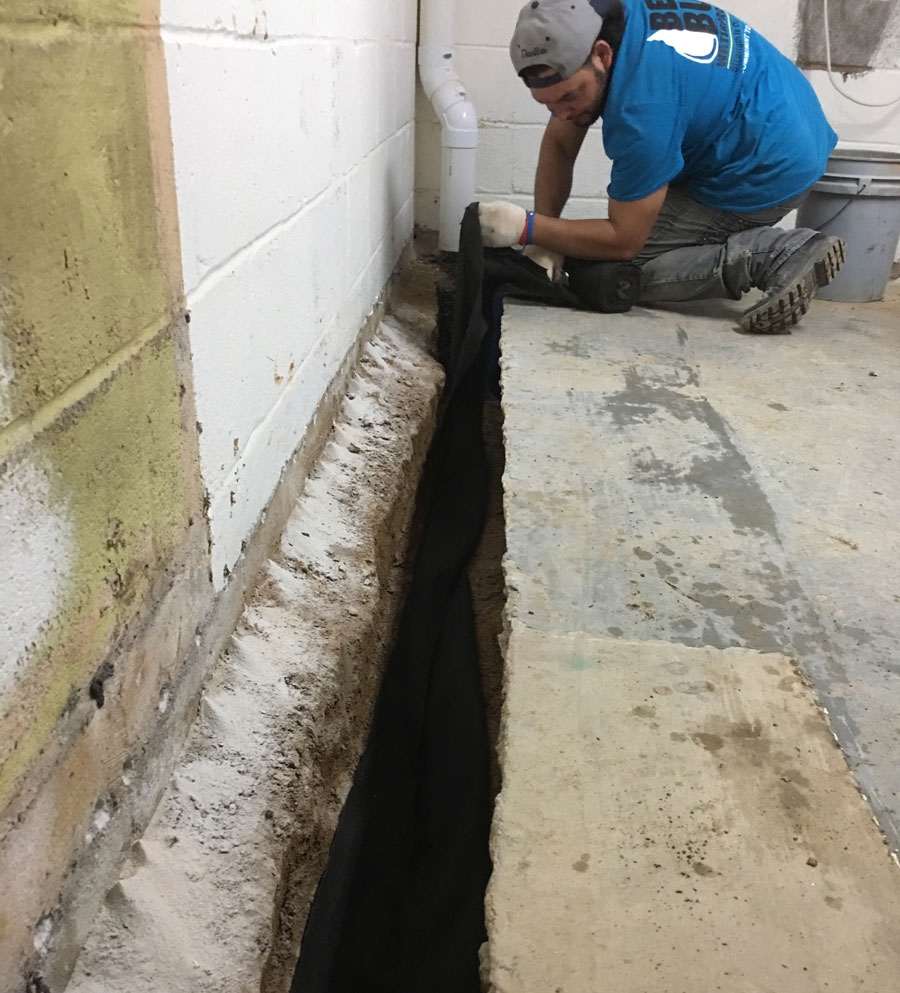
Foundation repair in Woodlawn often goes hand in hand with water problems, since wet soil is what pushes walls and softens footings. Homeowners choose us because one team can fix both the structure and the water behind it.
- Since 2017: We have served homeowners from our Columbia office in neighboring Howard County.
- Licensed and insured: Licensed in Maryland, Virginia, Washington DC, Pennsylvania, Delaware and West Virginia, and insured.
- Structure and water together: One in-house team handles foundation repair, waterproofing and crawl space repair.
- Financing available: Flexible financing helps you take care of your foundation without delay.
- Transferable warranty: Coverage that can pass to the next owner if you sell your home.
What Affects the Cost of Foundation Repair in Woodlawn?
We don’t quote foundation repair from a price list, because every Woodlawn foundation moves for its own reasons. After your free inspection, you get a firm price based on what your home needs.
Type of Movement
Bowing walls and settling footings call for different repair methods.
How Far It Moved
The amount of bowing or settlement affects which method will hold.
Length of Wall
How many feet of wall need straps, braces or a rebuild.
Number of Piers
How many piers it takes to support the settling section.
Finished Space
Drywall, paneling or built-ins that must be moved for access.
Water Problems
Drainage fixes that keep wet soil from causing the same damage again.
Woodlawn Foundation Repair FAQs
Why do so many older Woodlawn homes have bowing walls?
Many were built between the 1950s and the 1970s on concrete block foundations. The silty clay soil in this part of Baltimore County swells when wet and freezes in winter, pressing sideways on the block year after year. Eventually mortar joints give and the wall begins to bow. Stabilizing it early keeps the repair simpler.
Is a horizontal crack in my basement wall serious?
Usually, yes. A horizontal crack in a block wall often means soil pressure is pushing the wall inward. It is worth having it inspected soon, especially if the wall leans, the crack is getting wider or water comes through it. Catching movement early means more repair options and less disruption.
Can you fix a bowing wall without digging up my yard?
Yes. Carbon fiber straps and steel I-beam wall braces are both installed from inside the basement and secured at the top and bottom of the wall, so your lawn, driveway and landscaping are left alone. Block wall rebuilds are the exception that can involve more work, and we only recommend one when stabilization will not hold.
How do I know if my foundation is settling?
Look for stair-step cracks in block or brick, floors that slope toward one corner, doors that stop latching and gaps opening at trim or ceilings. One sign alone may not mean much, but several together point to settlement. A free inspection with measurements tells you whether your foundation is still moving.
Will foundation repair fix my leaking basement too?
Not always. Stabilizing a wall stops movement, but water can still come through cracks or the cove joint. Since wet soil is often what moved the wall in the first place, we usually look at drainage at the same time. Our team also handles basement waterproofing, so both can be planned together.
Can I sell my Woodlawn home after foundation repair?
Yes. A properly repaired foundation with documented work is far easier to sell than one with an open problem. Our foundation repair comes with a transferable warranty, so coverage can pass to the next owner. We give you records of the work for your files.
More Services in Woodlawn
Foundation repair near Woodlawn, MD: Catonsville · Milford Mill · Randallstown · Pikesville · Owings Mills · Baltimore · Ellicott City
Stop Foundation Movement in Woodlawn
Foundation problems get harder to fix the longer they wait. Schedule a free inspection for your Woodlawn home, and we will walk you through what we found and what we recommend. Financing is available.