Home » Service Areas » York » York Foundation Repair
York, PA Foundation Repair
- Licensed & Insured
- 5-Star Rated
- Local Business
- Transferable Warranty
Foundation Repair Contractors in York, PA
York has foundations of nearly every age and type. Downtown rowhouses from the 1800s and early 1900s rest on stone and brick, the Avenues hold larger early-1900s homes on similar walls, and the 1940s through 1960s houses toward the city’s edges were mostly built on concrete block or poured concrete. Best Buy Waterproofing provides foundation repair in York for all of them. We start by finding out what is moving and why, then match the repair to the wall, the soil and the house.
Soil drives most of the trouble here. York sits on clay over limestone, and clay swells when heavy summer storms soak it, pushing sideways on basement walls. When it dries out, it shrinks and can leave footings with less support. Cold winters add frost pressure through repeated freeze-thaw cycles. Our in-house team has worked since 2017, is licensed in Pennsylvania, Maryland, Virginia, Washington DC, Delaware and West Virginia, and is fully insured, and every visit begins with a free inspection.
Signs You Need Foundation Repair in York
Foundation movement often shows upstairs before anyone notices it in the basement. If more than one of these sounds familiar in your York home, schedule an inspection.
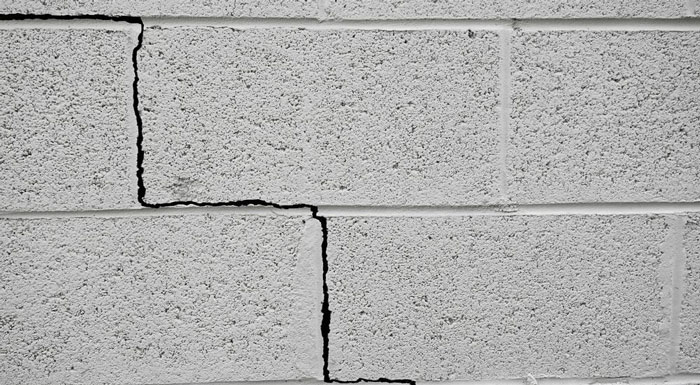
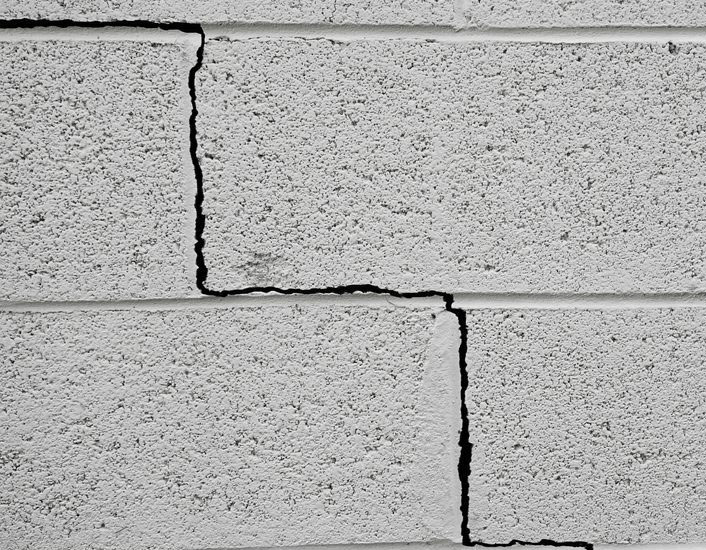
Stair-Step Mortar Cracks
Zigzag cracks through block joints mean soil is pushing on the wall.
Horizontal Wall Cracks
A long crack running across a block wall often comes before it bows.
Walls Leaning Inward
A wall that bulges into the basement is moving and needs support soon.
Sticking Doors, Windows
Frames that bind or show gaps can mean the structure has shifted.
Uneven, Sloping Floors
Floors that tilt toward a corner suggest part of the foundation has settled.
Porch Pulling Away
Gaps between the house and a porch, stoop or addition point to settling.
Foundation Repair Solutions for York Homes
Carbon Fiber Straps for Early Bowing
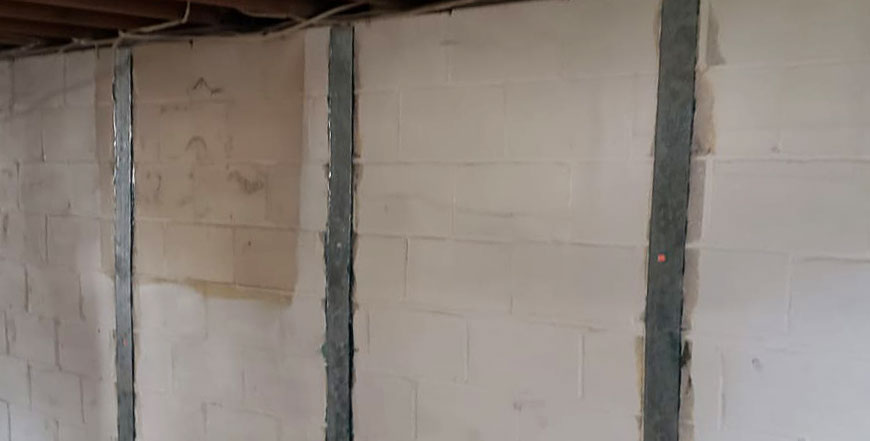
When a block or poured wall has cracked or started to bow but has not moved far, carbon fiber straps are often the cleanest fix. We bond the straps to the wall at measured intervals and secure them at the top and bottom, so the wall can no longer move inward. They sit nearly flush, take up no floor space and can be painted or hidden behind a finished wall later.
Straps are a good match for many postwar York basements where frost and wet clay have opened a horizontal crack or produced a slight bow. During the inspection we measure the wall carefully, because straps are designed to hold a wall where it is, not to push it back into place.
Steel I-Beam Wall Braces
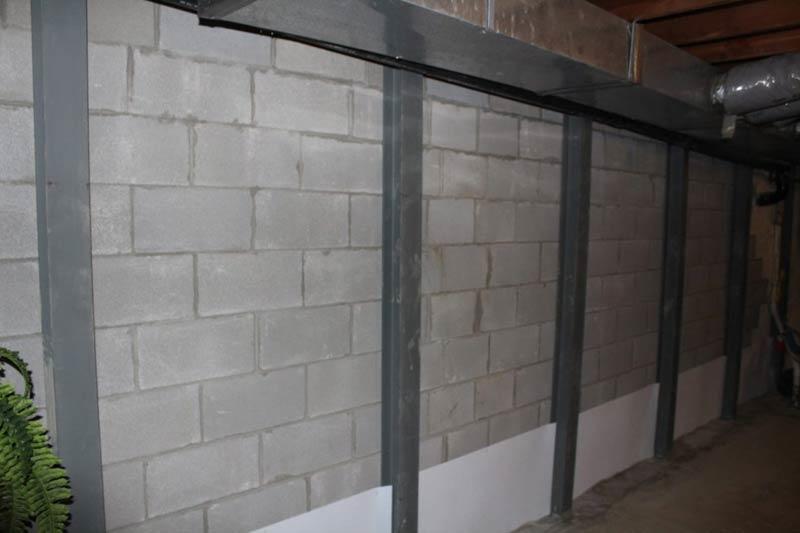
Walls with more noticeable bowing need heavier support. Steel I-beam wall braces stand upright against the wall and are secured to the basement floor and to the floor framing above, which shifts the soil pressure into the structure of the house. Once the wall is held firmly, further movement stops, and over time the braces can be tightened to help ease a leaning wall back toward straight.
Braces suit the concrete block foundations under many 1950s and 1960s York homes, where seasonal pressure has pushed walls farther than straps can handle. We show you where each brace will go before installation.
Rebuilding Failed Wall Sections
Some walls have moved or deteriorated too far to stabilize where they stand. In those cases we excavate along the damaged section, take down the failed block and rebuild the wall with new block, reinforcement and fresh mortar. With the outside of the wall open, it is a good time to add exterior waterproofing and drainage as well.
A rebuild is a larger project, so we recommend it only when straps or braces will not do the job. If stabilization can safely hold your wall, we will tell you so and explain the difference.
Push Piers for a Settling Foundation
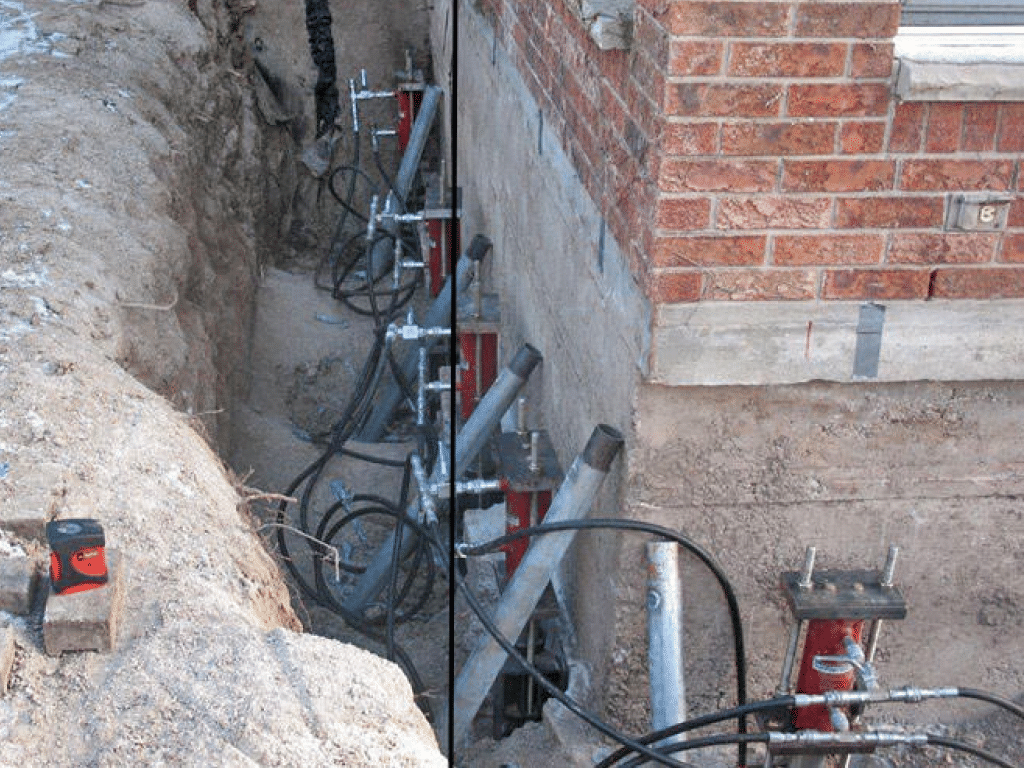
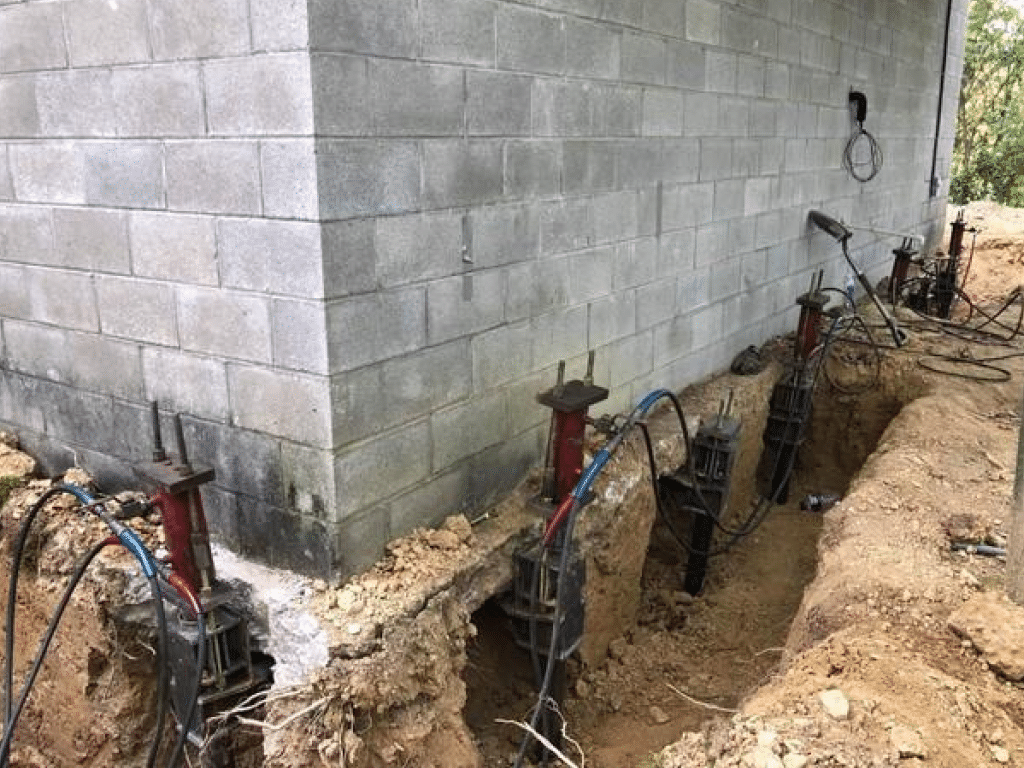
When the soil beneath a footing compresses or softens, part of the house can sink, and you see it as sloping floors, cracked plaster and doors that will not latch. Push piers are steel sections driven down beside the footing until they reach firm, load-bearing soil or rock. A bracket then transfers the weight of the house onto the piers, stopping the settling and often lifting the foundation back toward level.
Because they use the weight of the structure during installation, push piers suit heavier homes, including the brick houses common throughout York. Each pier is driven to soil that can carry the load rather than stopping in the softer clay near the surface.
Helical Piers for Porches and Additions
Helical piers are steel shafts with screw-like plates that we turn into the ground with hydraulic equipment until they reach stable soil, then connect to the foundation with brackets. They do not depend on the weight of the structure to install, so they work well for lighter loads such as front porches, rear additions, stoops and back kitchens that have begun to drop or separate from the main house.
Porches and additions on older York homes often sit on shallower footings than the original house, which is why they settle first. We explain which pier type fits each part of your home.
Sealing Foundation Cracks
Not every crack means a failing wall. Narrow vertical cracks in poured concrete are often left from curing and normal settling, but they can still let groundwater into the basement. We seal those foundation cracks by injection through the full depth of the wall, closing the path water would follow.
Cracks that run sideways, step through mortar or keep widening get a closer look, because they usually need stabilization as well as a seal.
Our Foundation Repair Process
Free Inspection
We examine walls, cracks, floors and drainage, measuring any movement we find.
Your Recommendation
We walk you through what we found and what we recommend to stabilize it.
Repair Installation
Our in-house crew installs straps, braces or piers and cleans up when finished.
Warranty Protection
Your foundation repair is backed by our transferable warranty.
Why York Homeowners Choose Best Buy Waterproofing
Foundation repair is a serious decision, and you deserve to understand the problem before anyone starts work. York homeowners get a straight assessment and one team that can also fix the water problems that so often come with foundation movement.
- Working since 2017: We have repaired foundations, basements and crawl spaces since 2017.
- Licensed and insured: Licensed in Pennsylvania, Maryland, Virginia, Washington DC, Delaware and West Virginia, and insured.
- Structure and water together: Our in-house team plans stabilization and waterproofing as one project when both are needed.
- Transferable warranty: Coverage stays with the house and reassures future buyers.
- Free inspection, financing: No-cost evaluation, financing options and availability 24/7.
What Affects the Cost of Foundation Repair in York?
We do not quote foundation repair from a price list, because the right repair depends on how and why your foundation is moving. After a free inspection, you receive a firm price for your York home.
Length of Wall
More wall needing straps or braces means more material and labor.
Amount of Movement
A slight bow may need straps, while severe movement can call for a rebuild.
Number of Piers
How much of the house has settled sets how many piers it needs.
Repair Method
Straps, braces, rebuilds and piers each involve different work and equipment.
Finished Basement
Drywall, flooring or built-ins along affected walls add removal and protection.
Site Access
Narrow lots, shared walls, decks and steep yards affect excavation and pier work.
Foundation Repair FAQs
Why do so many York block foundations bow?
Concrete block walls from the 1940s through the 1960s have been through many seasons of wet clay pressing against them and frost adding force each winter. Block is strong under vertical load but weaker against sideways pressure, so mortar joints crack and walls lean over time. Poor drainage speeds that up, which is why we check gutters and grading at every inspection.
How do you fix bowing basement walls?
We stabilize bowing basement walls from inside with carbon fiber straps or steel I-beam wall braces, both secured within the basement so your yard is left alone. Straps suit walls with modest movement, and braces handle heavier bowing. When a wall has moved too far to hold in place, we rebuild the damaged section instead.
Can you repair the foundation of an old rowhouse?
Often, yes. Most of our wall stabilization is installed from inside your own basement, which suits attached homes with shared walls and small yards. If part of a rowhouse or its rear addition has settled, we plan any pier work around neighboring properties and the limited space behind the house, and we explain the approach before starting.
What is the difference between push piers and helical piers?
Push piers are driven down using the weight of the house and suit heavier structures such as brick homes. Helical piers are turned in with hydraulic equipment and work well for lighter loads like porches, stoops and additions, or where surface soil is loose. We recommend whichever fits your settling foundation after inspecting it.
Should I fix water problems at the same time?
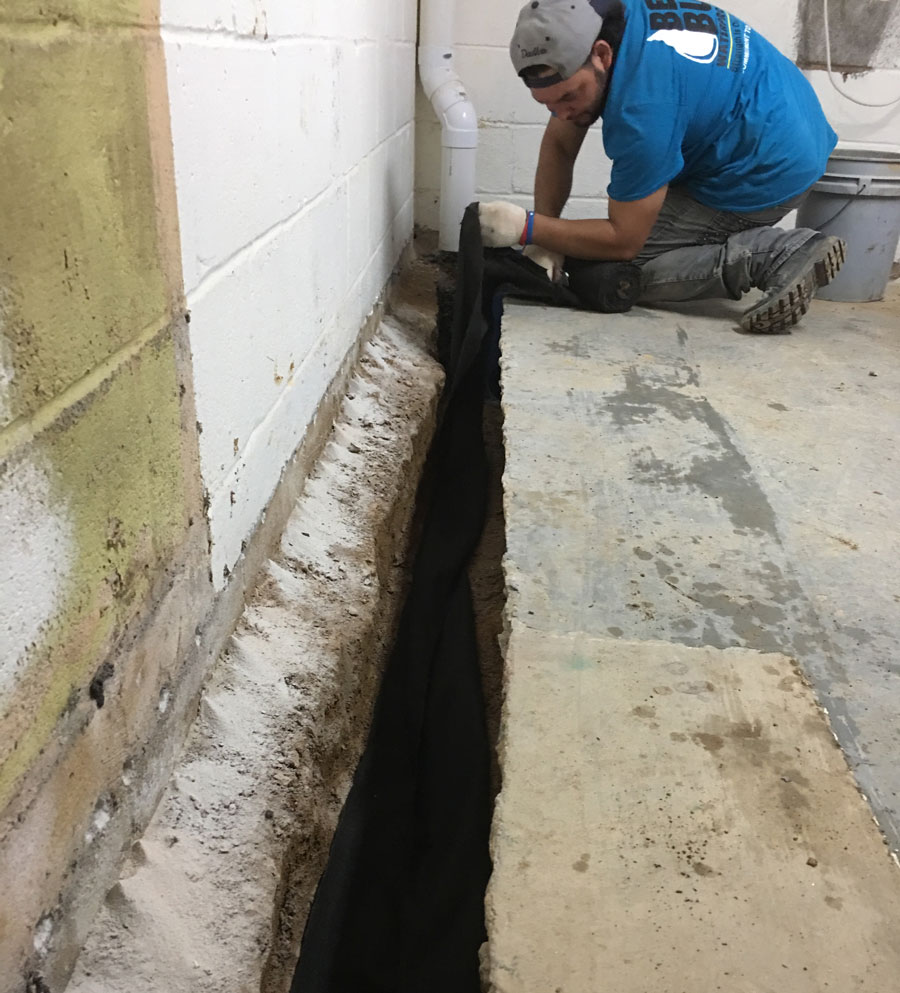
Often, yes. Saturated clay is a leading cause of pressure on foundation walls, and a cracked wall usually leaks too. Pairing foundation repair with interior drainage, a sump pump or better downspout routing addresses the cause rather than just the damage. Because one team handles both, it can be planned as a single project.
Will foundation repair help when I sell?
Buyers and their inspectors pay close attention to foundations, especially in older homes. Completed repairs backed by a transferable warranty show that the problem was handled properly and give the next owner confidence. If you plan to sell your York home, dealing with movement before listing can prevent surprises during the buyer’s inspection.
More Services in York
Foundation repair near York, PA: Springettsbury · West York · Red Lion · Dallastown · Shrewsbury · Wrightsville · Dover
Have Your York Foundation Checked
Bowing block, widening cracks and sloping floors tend to get worse with every season. Schedule a free inspection of your York home, and we will walk you through what we found and what we recommend. Financing is available.