Welcome to The Best Buy Waterproofing

Baltimore, MD Settling Foundation Repair

Push and helical piers that stop a sinking foundation and restore support to Baltimore homes, backed by a transferable warranty.

Settling Foundation Repair Contractors in Baltimore, MD

Every house settles a little, but a foundation that keeps sinking on one side is a different problem. Best Buy Waterproofing provides settling foundation repair in Baltimore and nearby Baltimore County, with one in-house team that inspects, plans and installs the fix. When part of your foundation loses support, the rest of the house starts to follow. Doors stick, cracks open in a stair-step pattern and floors begin to slope. We find out why the soil gave way and transfer your home’s weight to ground that will hold it.

Much of Baltimore sits on dense clay that swells when it is wet and shrinks when it dries out. Humid summers, heavy summer storms and freeze-thaw winters keep that cycle going year after year, and older rowhomes and detached houses with stone, brick or block foundations feel it first. Our sinking and settling repairs use push piers driven and helical piers turned down to stable soil. The goal is a permanent fix, not a patch that buys a season.

Signs You Need Settling Foundation Repair in Baltimore

Foundation settlement rarely announces itself all at once. Watch for these warning signs, especially when several show up together.

Sticking Doors and Windows

Frames turn skewed or out of level, so doors rub, swing open or will not latch.

Stair-Step Cracks

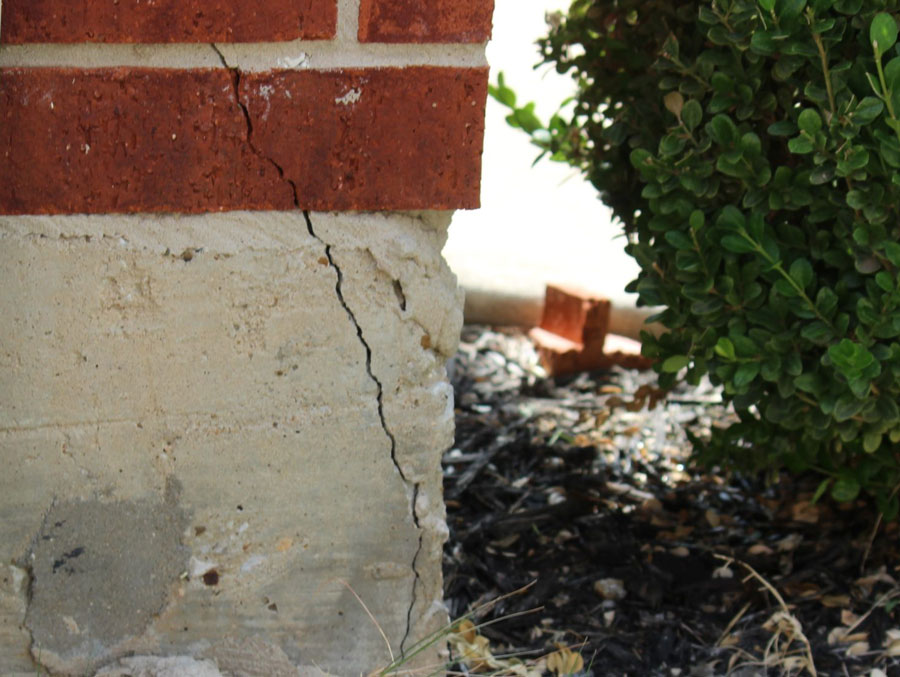
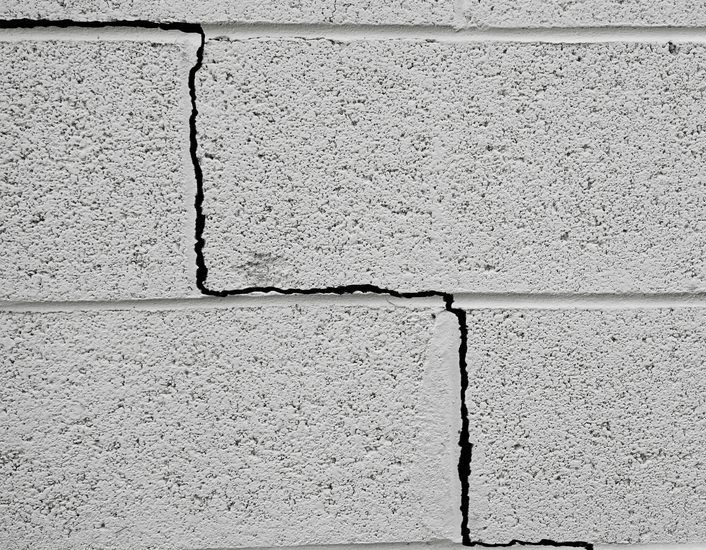
Diagonal cracks climb through mortar joints in block, brick or basement corners.

Uneven Floors

Floors slope toward one wall, or gaps open between the floor and baseboards.

Leaning Chimney

The chimney tilts or pulls away from the house as its footing sinks.

Sinking Basement Slab

Sections of the basement floor drop, crack or separate from the walls.

Gaps in Brickwork

Exterior brick shows open mortar joints or separates around windows and corners.

How Settling Foundation Repair Works for Baltimore Homes

Finding the Cause of Foundation Settlement

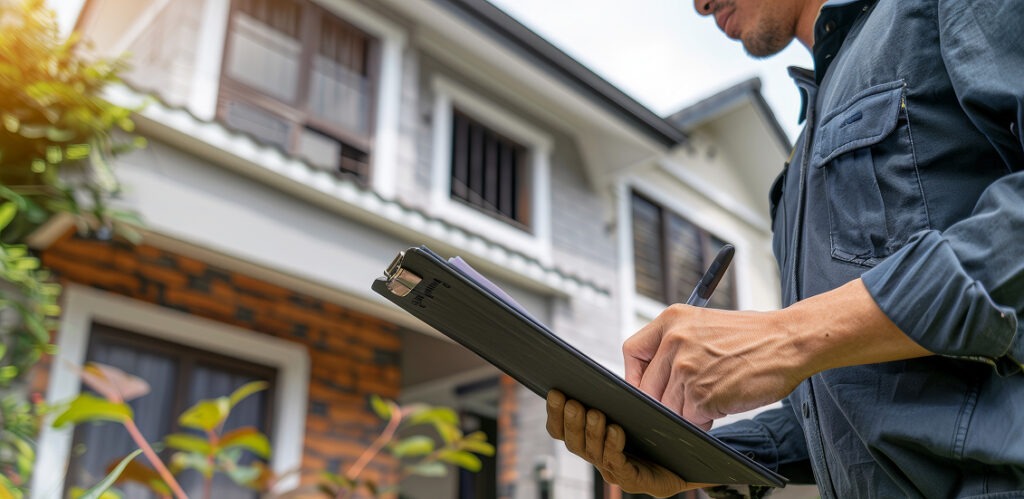
Good settling foundation repair starts with knowing where and why the house is moving. During a free inspection we check floor levels, measure cracks, look at doors and windows, and walk the outside of the foundation. We also look at grading, gutters and drainage, because water soaking the clay next to a footing is a common trigger for settlement in Baltimore.

That tells us which walls or corners are sinking, how far, and which repair fits. We walk you through what we found and what we recommend before any work is scheduled.

Push Piers for a Sinking Foundation

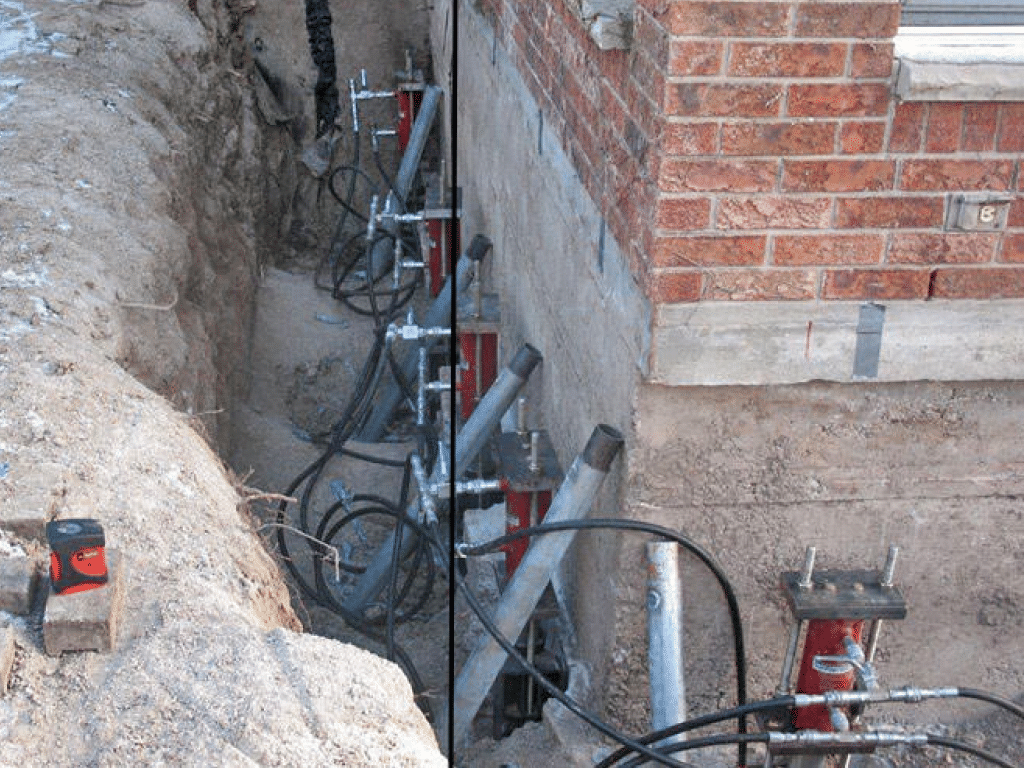
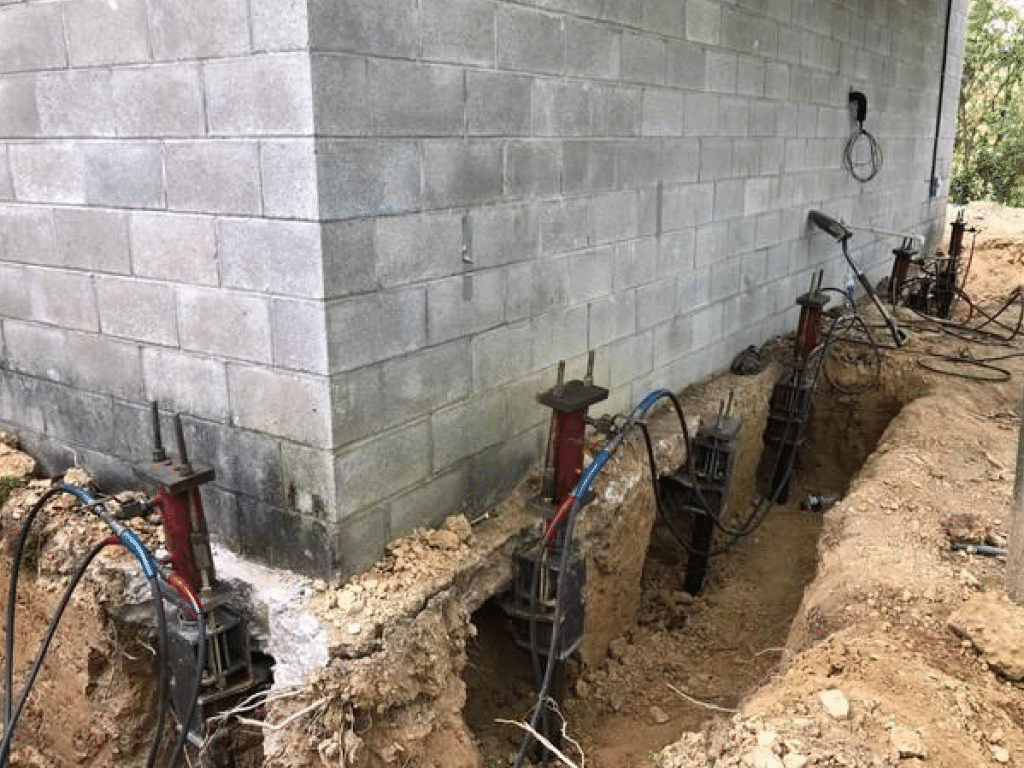
Push piers are steel pier sections driven deep into the ground beside the footing until they reach stable, load-bearing soil. A bracket attaches the pier to the foundation, so the weight of the house moves off the weak clay near the surface and onto the competent layer below. Push piers are a strong choice when the home is heavy enough to drive the pier to depth.

Once the piers are set, we can lift the sinking section in a controlled way to recover as much level as the structure safely allows.

Helical Piers for Lighter Loads

Helical piers are steel shafts with helix plates that are turned into the ground, much like a large screw, until they reach soil that can carry the load. Because they do not rely on the weight of the house to install, helical piers suit lighter structures such as porches, additions and some rowhome rear walls.

Like push piers, they are tied to the footing with a steel bracket and can be used to stabilize the foundation or lift it back toward level.

Sealing the Cracks Settlement Leaves Behind

When part of a foundation drops, it usually leaves cracks in the walls and sometimes gaps at windows and doors. Once the piers have stopped the movement, we seal leaking cracks in poured walls with injected material and address block-wall cracks with drainage, so water does not follow the same path into your Baltimore basement.

Stabilizing first and sealing second keeps the repair from cracking open again as the house moves.

Leveling Sunken Porches and Steps

Front steps and porch slabs often settle on their own, pulling away from the house and tipping water toward the foundation. For outdoor concrete that is still in good shape, we use mudjacking: a cement-based slurry pumped under the slab lifts it back toward level and fills the empty space below.

Leveling the concrete outside the house helps send rainwater away from the foundation you just stabilized.

Our Settling Foundation Repair Process

1

Free Inspection

We measure floors, cracks and drainage to map where your foundation is settling.

2

Your Recommendation

We explain what we found and the pier plan we recommend.

3

Pier Installation

Our in-house crew installs piers, brackets and beams, then stabilizes or lifts the foundation.

4

Warranty Protection

Your repair is backed by a transferable warranty that stays with the home.

Why Baltimore Homeowners Choose Best Buy Waterproofing

Settling foundation repair is structural work, and Baltimore homeowners want a contractor who will show them the problem before asking them to fix it. Here is what you get with our team.

What Affects the Cost of Settling Foundation Repair in Baltimore?

We do not quote settling foundation repair from a price list, because no two foundations settle the same way. You get a firm price after your free inspection, once we know exactly what your home needs.

Extent of Settlement

How much of the foundation is sinking and how far it has dropped.

Number of Piers

Longer affected walls need more piers.

Depth to Stable Soil

Deeper competent soil means longer pier sections for each support point.

Repair Method

Push piers, helical piers, crack sealing and concrete leveling each involve different work.

Foundation Type

Stone, brick and block foundations each call for different attachment details.

Site Access

Tight rowhome lots, shared walls and finished basements can change the plan.

Settling Foundation Repair FAQs

Yes. Most homes settle slightly in their first years. The concern is settlement that keeps going or happens unevenly, which shows up as widening cracks, sloping floors and sticking doors. If those signs are growing, a free inspection will tell you whether the foundation is still moving.

Baltimore’s dense clay soil swells when wet and shrinks when dry. Heavy storms, poor drainage and freeze-thaw cycles keep that movement going, and a footing that loses support in one area starts to drop. Older stone and block foundations are especially sensitive to that change.

Push piers are driven into the ground beside the footing until they reach stable soil. Helical piers are turned in like a screw. Both transfer the weight of the house to competent soil. We recommend one or the other based on the home’s weight, soil and access.

In many cases, yes. Once piers are in place, we can lift the settled section in a controlled way. How close we get to level depends on the structure, how long it has been settling and what it can safely handle. We will tell you what to expect before work starts.

If the floors slope because the foundation dropped, stabilizing and lifting it often improves them. A sunken porch or front step can be leveled separately by mudjacking. Some unevenness comes from framing rather than the foundation, and we will point that out during the inspection.

It depends on the number of piers, site access and whether crack sealing or porch leveling is part of the plan. Many installations are completed from the outside of the home with limited disruption. We give you a timeline along with your recommendation.

More Services in Baltimore

Foundation Repair in Baltimore

Basement Waterproofing in Baltimore

Crawl Space Repair in Baltimore

Settling foundation repair near Baltimore: Towson · Dundalk · Catonsville · Parkville · Pikesville · Essex · Glen Burnie

Stop Your Foundation From Sinking

If your floors are sloping or new cracks keep appearing, schedule a free inspection with Best Buy Waterproofing. We serve homeowners across Baltimore and Baltimore County and will explain exactly what your foundation needs.

Scroll to Top