Home » Service Areas » Harrisburg » Harrisburg, PA Foundation Repair
Harrisburg, PA Foundation Repair
- Licensed & Insured
- 5-Star Rated
- Local Business
- Transferable Warranty
Foundation Repair Contractors in Harrisburg, PA
Ask around Uptown or any of the older blocks near the river and you will hear the same story: a cellar wall that has crept inward a little more each year, a rear porch that now tilts away from the house, a hairline crack that became a gap you can fit a coin into. Houses built in the late 1800s and early 1900s have carried their loads on stone, brick and early block for a long time. Best Buy Waterproofing handles foundation repair in Harrisburg for those homes, and for newer houses on the hillier eastern side of the city.
Under nearly every case is the same ground. Clay sits over shale and limestone across Harrisburg, and clay changes size with its water content. A summer downpour swells it and it shoves against basement walls; a dry spell shrinks it and footings lose some of their bearing. Then winter freezes the wet soil and pushes again. Since 2017 our in-house crews have stabilized walls and settling footings, and we are licensed in Maryland, Virginia, Washington DC, Pennsylvania, Delaware and West Virginia, and insured.
Signs You Need Foundation Repair in Harrisburg
Older houses have quirks, and not every one of them is structural. These are the clues that tell us a Harrisburg foundation is actually moving.
Wall Leaning Into Basement
A lean at the top or a belly in the middle means soil pressure.
Crack Along Mid-Wall
A horizontal crack partway up a block wall usually marks where it is bending.
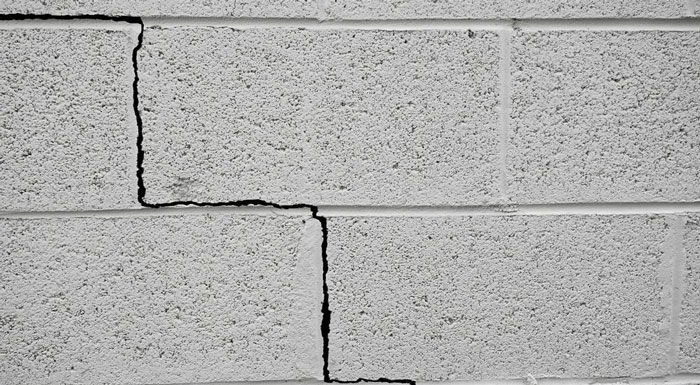
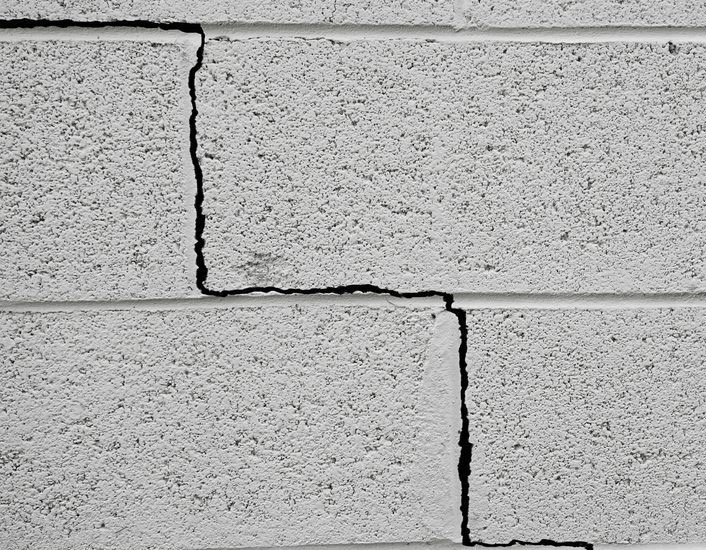
Mortar Splitting in Steps
Diagonal, staircase-shaped breaks through joints show one side of the wall shifting.
New Sticking Doors
Doors that closed fine last year and now rub at the top corner.
Marble-Rolling Floors
A floor that slopes enough to roll a marble toward one wall.
Porch Separating
A widening gap where a porch, stoop or rear addition meets the house.
Foundation Repair Solutions for Harrisburg Homes
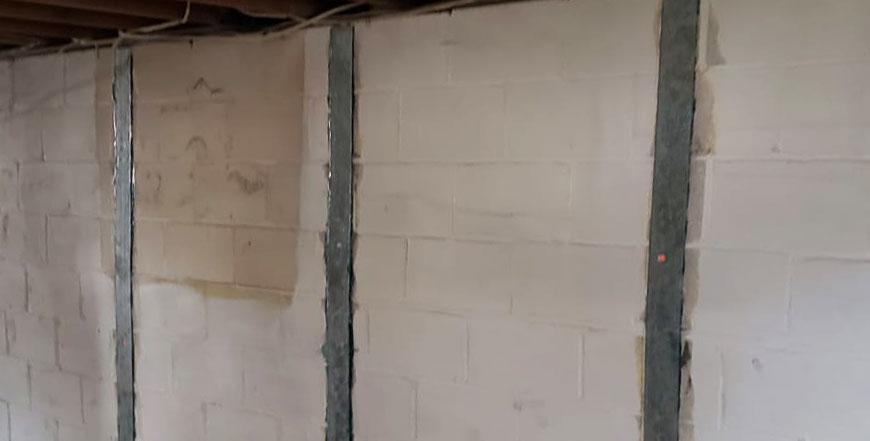
Carbon Fiber Straps for Early Bowing
If a block or poured wall has only begun to lean, the goal is to freeze it right where it is. Carbon fiber straps do that with very little disruption. Each strap is bonded to the face of the wall with a structural adhesive, and the ends are secured to the floor and the framing so the wall has nowhere to go. A row of straps spaced along the wall turns it into a much stiffer panel that resists the clay pushing from outside.
There is no digging and almost no lost floor space. Straps lie flat, can be painted, and sit behind drywall easily if you finish the room later. We confirm the amount of movement first, since straps hold a wall in place but do not straighten it.
Wall Braces for Walls That Have Moved Further
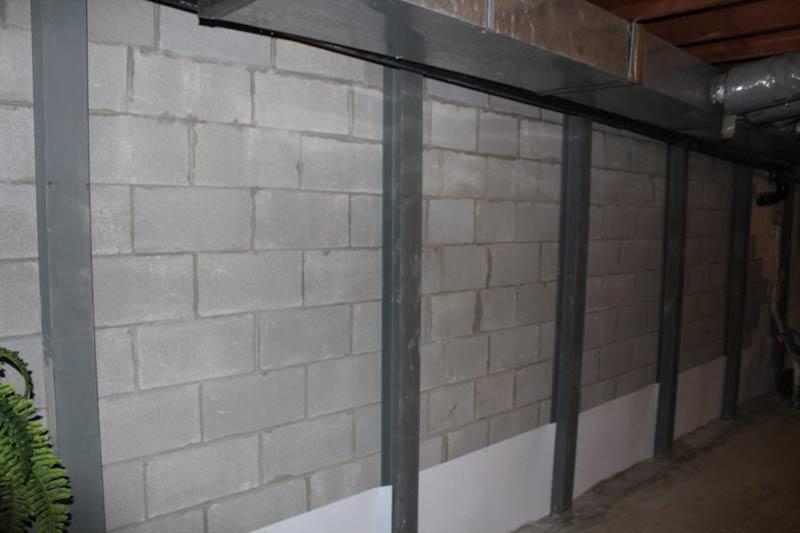
Once a wall has a noticeable lean, it needs something with more backbone. Our I-beam wall braces are vertical steel members set tight against the wall, secured at the floor and tied into the joists overhead. The inward push of the soil is carried into the house frame and the slab rather than resting on the weakened masonry. Their steady resistance can, over time, help a bowed wall gradually straighten.
In a narrow rowhouse cellar, we plan brace spacing around the washer, the stairs and your storage shelves, and we show you the layout before anything is installed.
Rebuilding a Failed Section of Wall
Sometimes a wall is past saving. Blocks have sheared, the lean is severe, or mortar has crumbled so badly that straps and braces have nothing solid to grip. Then the right answer is to dig out along that stretch, take down the damaged part and lay it back up with new block, steel reinforcement and fresh mortar. Because the outside face is exposed during the work, we can waterproof it and add footing drainage before the soil goes back in.
Excavation needs room, which can be tight on small city lots, so we plan access carefully. We suggest a rebuild only when stabilization truly will not hold.
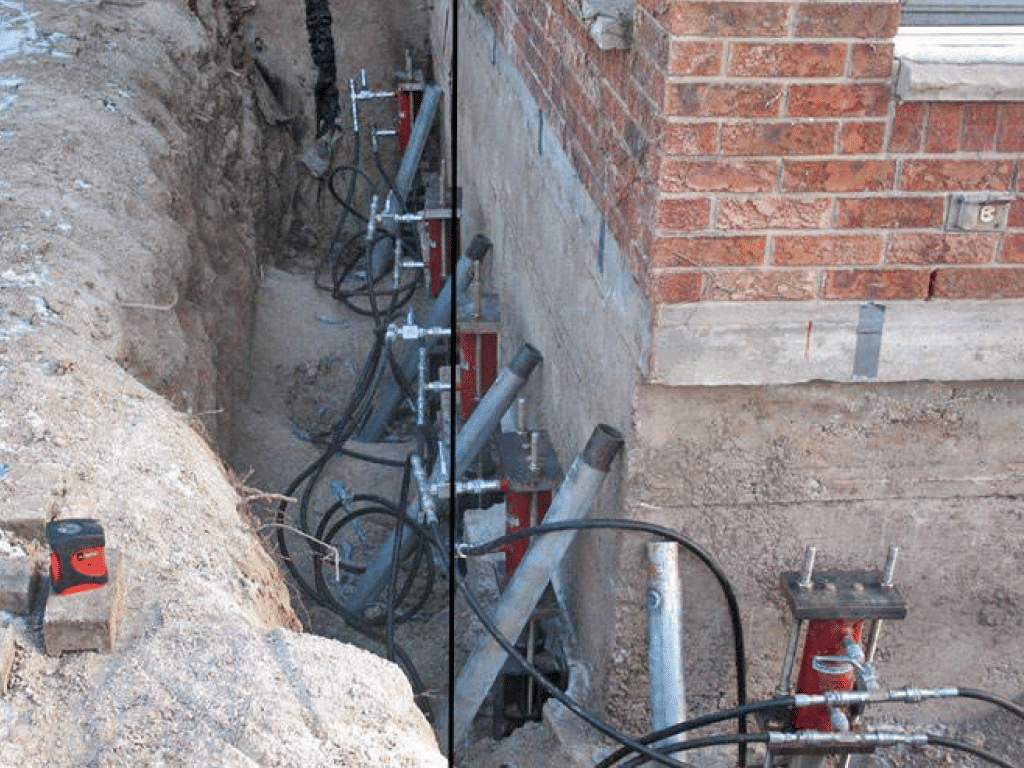
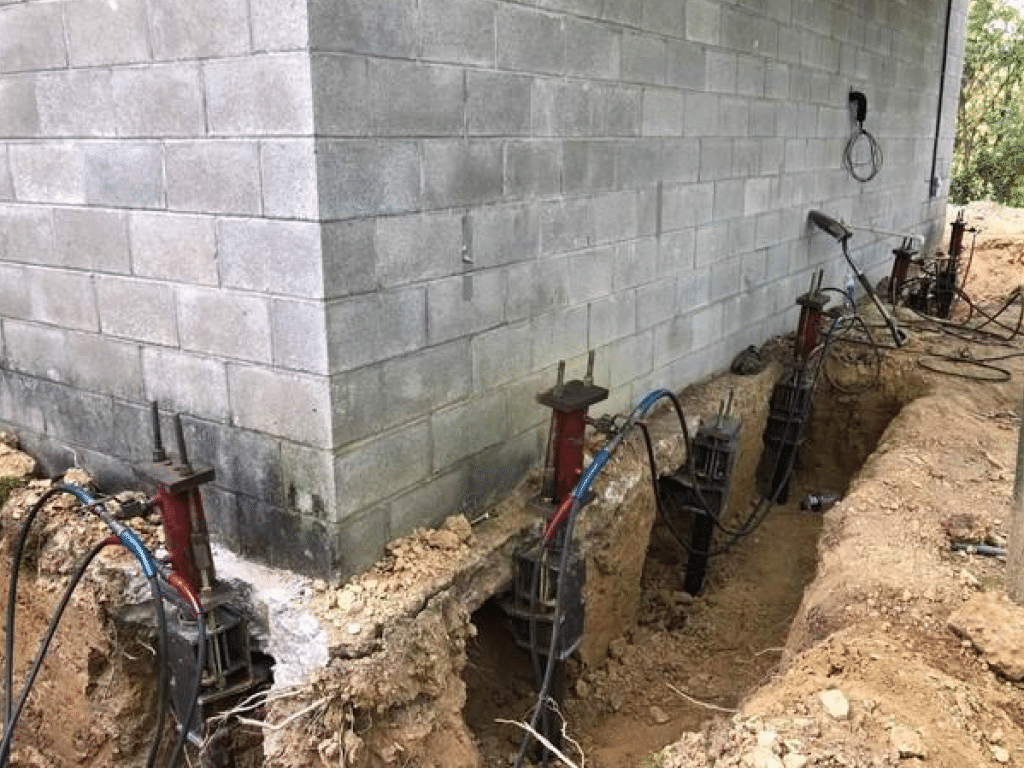
Push Piers Under Heavy Masonry Homes
Brick houses are heavy, and when the clay beneath a footing softens or shrinks, one end of the building can begin to drop. Push piers fix this by bypassing the weak upper soil entirely. We fasten a bracket to the footing, then hydraulically drive steel tubes down, section by section, using the weight of the house as resistance, until they bear on firm soil or rock. The load then transfers to the piers.
That same weight makes push piers a natural match for solid masonry homes. With the piers in place, settling stops, and the foundation can often be raised partway back toward its original level.
Helical Piers for Porches and Sloped Lots
Not every sinking structure is heavy enough to drive a push pier against. Porches, stoops, decks and lightweight rear additions are common examples around Harrisburg. Helical piers solve that problem because they are screwed into the ground rather than pushed. Steel shafts fitted with helix plates are turned down into the ground until they reach stable soil, then brackets join them to the footing.
They are also useful on the slopes in the eastern part of the city, where fill dirt near the surface may be loose. We map out which pier suits each corner of the house.
Sealing Non-Structural Foundation Cracks
Some foundation cracks are cosmetic in structural terms but still a nuisance, because they leak. A thin vertical crack in a poured wall is the usual example. We inject it from inside so the material travels through to the outer face and fills the opening completely, shutting off the water path.
If the crack runs sideways, steps through mortar or keeps getting wider, sealing it is not enough on its own, and we look at stabilizing the wall.
Our Foundation Repair Process
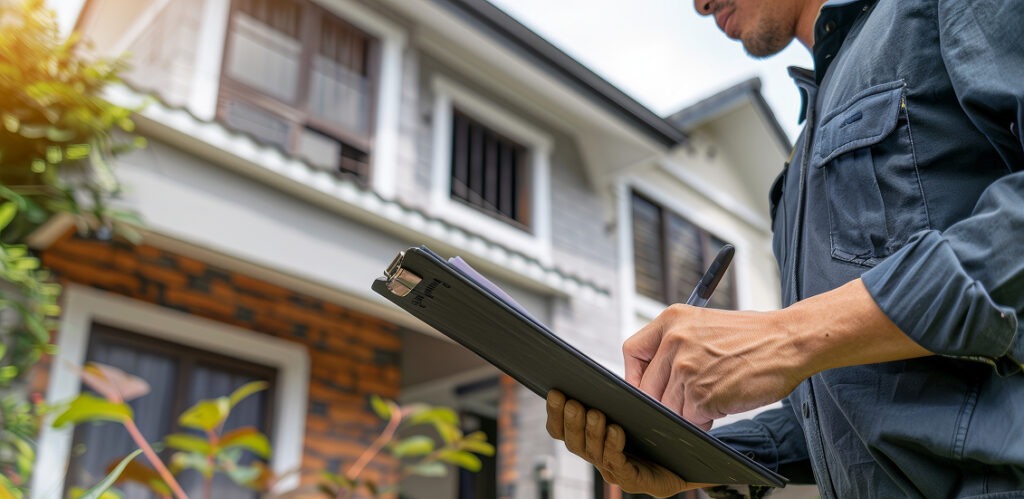
Free Inspection
We check level, plumb and cracks inside and out, plus gutters and grading around the house.
Your Recommendation
We walk you through what we found and what we recommend, and why.
Stabilization Work
Our own crew installs the straps, braces or piers and tidies the work area.
Warranty Protection
Completed foundation repair carries our transferable warranty.
Why Harrisburg Homeowners Choose Best Buy Waterproofing
A sound foundation repair starts with an accurate diagnosis, not a sales pitch. Harrisburg homeowners hear plainly what is moving, why, and which fix fits, from a team that also handles the water behind the problem.
- On the job since 2017: Foundation, waterproofing and crawl space work has been our focus from day one.
- Licensed and insured: Licensed in Maryland, Virginia, Washington DC, Pennsylvania, Delaware and West Virginia, and insured.
- Walls and water, one crew: If soil moisture caused the damage, the same in-house team can fix both.
- Warranty that transfers: The coverage passes to the next owner if you ever sell.
- No-cost inspection: Free evaluations, financing for larger repairs and help available 24/7.
What Affects the Cost of Foundation Repair in Harrisburg?
There is no menu price for stabilizing a foundation, because two walls with the same crack can need very different fixes. Once we have inspected your Harrisburg home, we give you a firm price for the work.
Feet of Wall Involved
One short bowed section costs less to stabilize than an entire wall.
Degree of Movement
A slight lean suits straps; a severe lean may call for braces or rebuilding.
Pier Count and Depth
More settled footing and deeper firm soil mean more pier sections.
Wall Material
Stone, brick, block and poured concrete each need different preparation.
What Covers the Wall
Paneling, shelving or finished rooms must come down and go back.
Getting Equipment In
Narrow side yards, steep lots and tight cellar stairs shape the labor.
Foundation Repair FAQs
Is a leaning cellar wall an emergency?
Usually not overnight, but it should not wait for years either. Bowing basement walls tend to move a little with each wet season and each freeze. The earlier we stabilize them, the more likely a simple strap system will do, and the less chance the wall reaches the point where it has to be rebuilt.
My attached neighbor had foundation work. Does my rowhouse need it too?
Not necessarily. Each unit has its own front and rear walls, its own drainage and its own history. That said, shared soil conditions mean it is worth having yours looked at. A free inspection tells you whether your walls are moving or simply showing their age.
How can I tell a settling foundation from normal old-house character?
Old floors that have always sloped a bit are common in Harrisburg. What matters is change. Cracks that are new or widening, doors that recently began to stick and gaps opening at a porch are signs of active movement. We measure and document what we find so you can tell the difference.
Will you need to dig up my yard?
Often not. Carbon fiber straps and wall braces are installed entirely from inside the basement. Piers need small excavations at the footing, and only a wall rebuild calls for digging along the outside of the foundation. We explain the access needs before you agree to anything.
Can braces go in a basement I use every day?
Yes. Wall braces take up only a few inches, and we position them around stairs, laundry and storage. Straps take up even less room. Most Harrisburg homeowners keep using the basement as before once the work is done.
Do I need a permit for foundation repair?
Some foundation projects require one and others do not, depending on the work involved. When a permit is required, we handle it, so you do not have to manage the application yourself.
More Services in Harrisburg
Foundation repair near Harrisburg, PA: Camp Hill · Hershey · Mechanicsburg · Carlisle · Lemoyne · New Cumberland · Hummelstown
Stop the Movement Before It Spreads
A leaning wall or a sinking porch is easier to fix early. Book a free inspection of your Harrisburg home and we will walk you through what we found and what we recommend. Financing is available.