Home » Service Areas » Severna Park, MD » Severna Park Foundation Repair
Severna Park, MD Foundation Repair
- Licensed & Insured
- 5-Star Rated
- Local Business
- Transferable Warranty
Foundation Repair Contractors in Severna Park, MD
Many Severna Park homes were built between the 1960s and 1980s, which means their foundations have been through a long run of wet springs, dry summers and freeze-thaw winters. That history tends to show up slowly. A hairline crack gets longer, a block wall develops a slight bulge, or a bedroom door upstairs starts to stick. Best Buy Waterproofing provides foundation repair in Severna Park for exactly these problems. We work out why the foundation is moving, show you what we see and recommend a repair that addresses the cause.
The ground on this peninsula between the Severn and Magothy rivers is part of the Atlantic Coastal Plain, with layers of sand and clay. Clay holds water and swells, pressing sideways on basement walls, then shrinks as it dries. On wooded lots, big trees pull moisture from the soil in summer, while shade and clogged gutters keep other spots wet. Near-water lots can stay saturated well after a storm. As foundation repair contractors, we look at all of it before recommending anything.
Signs You Need Foundation Repair in Severna Park
Foundation movement rarely shows up in just one spot. If you see a few of these around your Severna Park home, schedule a closer look.
Sideways Wall Cracks
A horizontal crack running along a basement wall, often around mid-height.
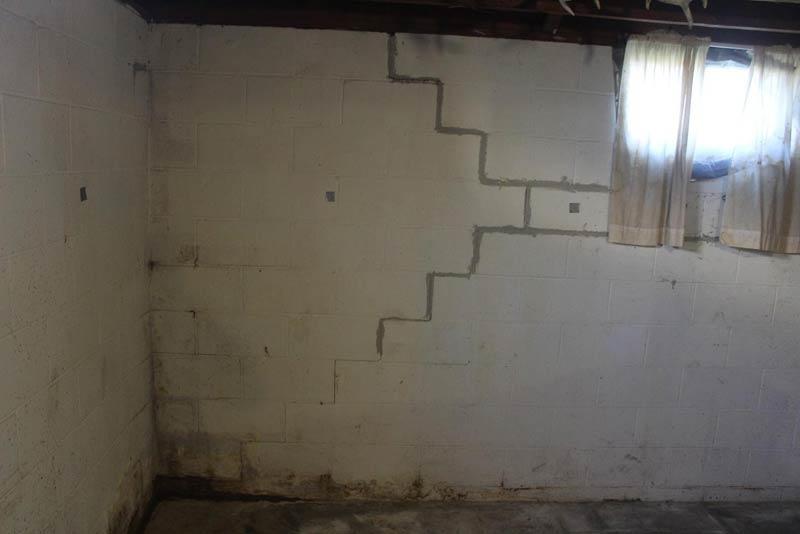
Stair-Step Mortar Cracks
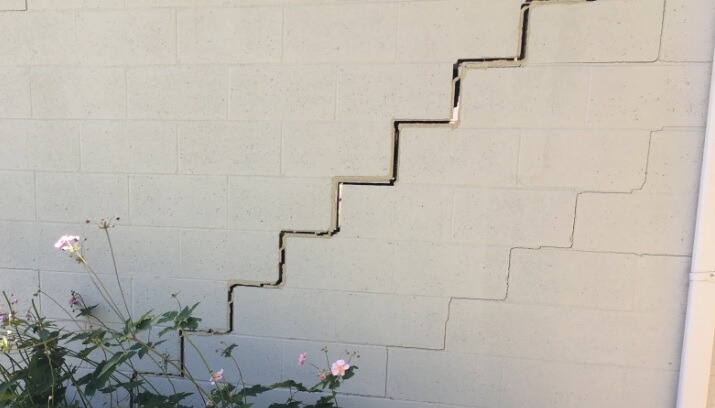
Diagonal cracks following the mortar joints in block walls or brick.
Inward Bulging Walls
A basement wall that bows in at the center or tilts in at the top.
Sticking Doors, Windows
Doors that rub or drift open and windows that bind in their frames.
Floors That Slope
Floors that lean toward one corner or feel uneven underfoot.
New Gaps at Trim
Openings between walls and ceilings, around trim or beside a chimney.
Foundation Repair Solutions for Severna Park Homes
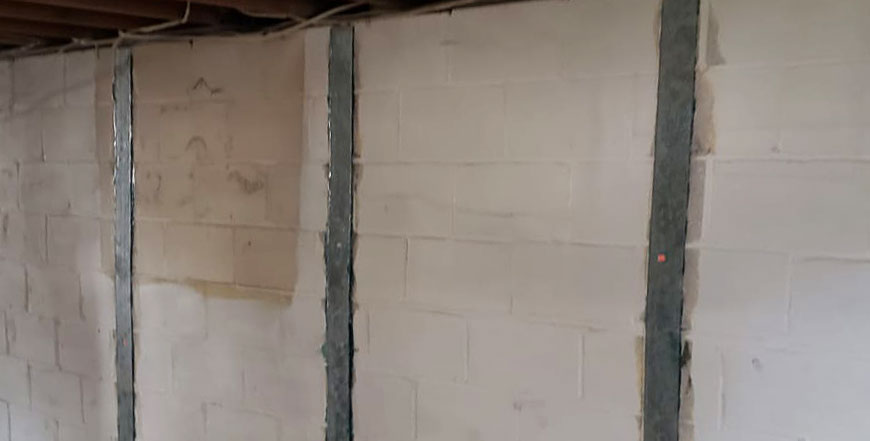
Carbon Fiber Straps for Bowing Walls
Bowing basement walls start with soil pressure. When clay behind the wall soaks up water, it expands and pushes inward, and season after season that push can open a horizontal crack and bend the wall. If the movement is still modest, carbon fiber straps are often the most efficient fix. We bond each strap to the wall with structural epoxy at set intervals and secure it at the top, so the wall can no longer flex inward under the load.
Carbon fiber sits almost flat against the wall surface. It can be painted or framed over later, which makes it a good fit for a basement you plan to finish, and installation is quick and tidy.
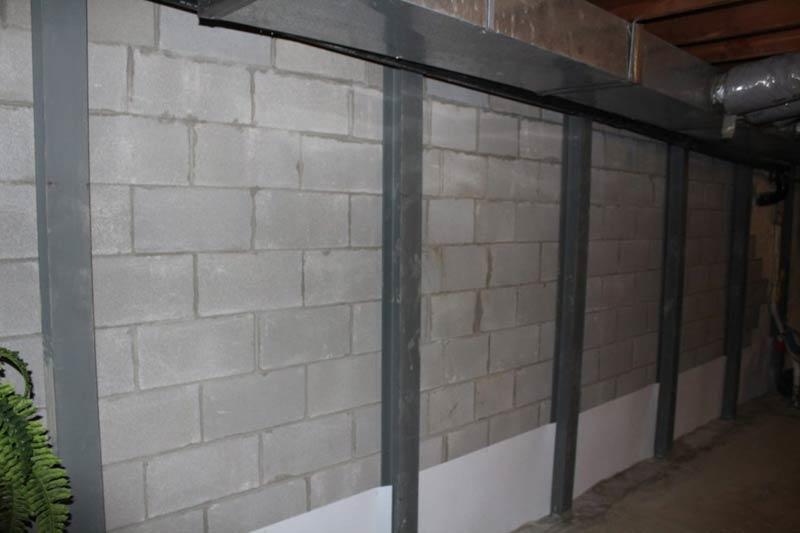
Steel I-Beam Wall Braces
When a wall has moved further, or leans in at the top, it usually needs steel. Steel I-beam wall braces stand vertically against the wall, secured at the basement floor and tied into the floor framing above. They give the wall continuous support against the soil and keep the top from tipping farther in.
Braces can be tightened over time, which may help ease a moderately bowed wall back toward plumb as conditions allow. We measure the wall first, then explain whether braces, straps or a rebuild makes the most sense.
Rebuilding Failed Block Walls
Block walls from the 1960s and 1970s can reach a point where reinforcing is no longer the right answer. If the wall has shifted too far, sheared along a mortar joint or broken into loose sections, we rebuild that portion. The crew supports the structure, removes the failed block and builds a new, properly reinforced wall section in its place.
Because a rebuild is a bigger project, we only recommend it when the wall truly calls for it. If water pressure contributed to the failure, we also explain how to manage drainage so the new wall stays protected.
Piers for a Settling Foundation
A settling foundation is almost always about the soil beneath the footing. Clay that shrinks during a dry summer, especially near large trees that draw water from the ground, can leave part of the footing without firm support. Soil that stays soft and wet at a low corner of the lot can do the same. The result is uneven movement: stair-step cracks at one corner, sloping floors, or a chimney leaning away from the house.
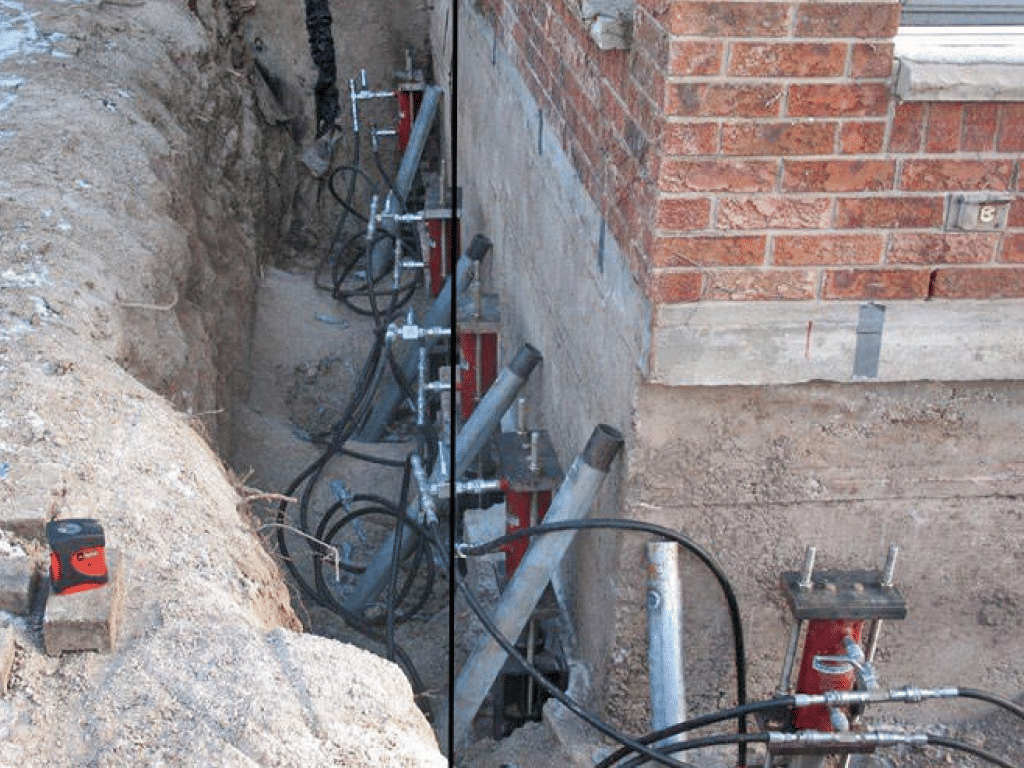
We stabilize settlement with steel piers that carry the weight of the home down to firmer, load-bearing soil. Push piers are driven using the weight of the structure itself, while helical piers are turned into the ground with screw-shaped plates. Either type can also help lift a settled section back toward level.
Foundation Crack Repair
A crack is not automatically a structural problem. Narrow vertical cracks in poured concrete often come from normal curing and may only need sealing to keep water out. Horizontal cracks, stair-step cracks and cracks that are wider at one end or keep growing are different, and they need a structural repair before any cosmetic one.
For poured walls, we inject epoxy or polyurethane to seal the crack. When the crack comes from ongoing movement, we pair that foundation crack repair with carbon fiber or wall braces so it does not simply reopen somewhere nearby.
Shoring Up Sagging Floors
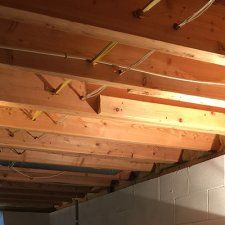
Some Severna Park homes and additions rest on a crawl space rather than a full basement. Over time, damp air and wet soil can weaken joists and beams, and old supports can sink. Floors above begin to bounce, creak or dip.
We reinforce damaged framing and add support where it has failed, then address the moisture behind the damage. Our crew also handles crawl space repair, so both can be planned as one project.
Our Foundation Repair Process
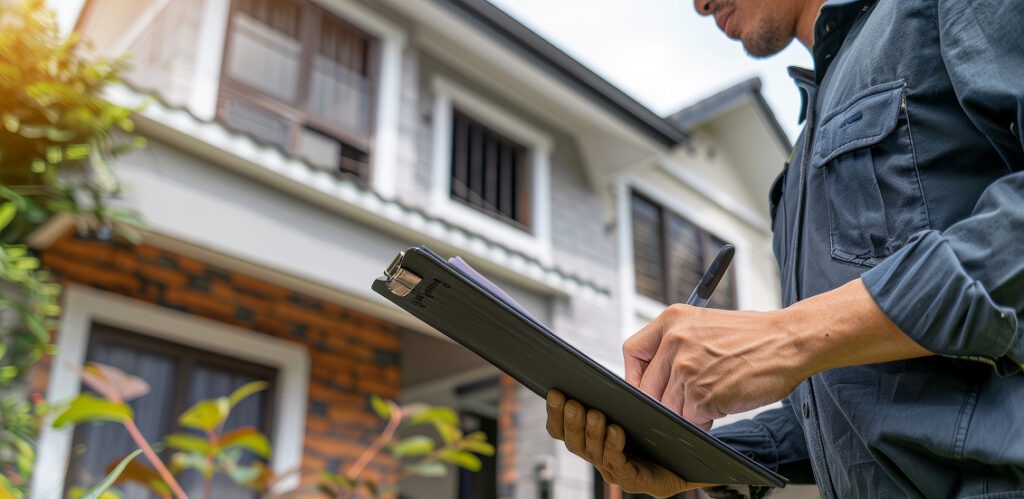
Free Inspection
We measure walls and floors, check for water and trace the cause of movement.
Your Recommendation
We walk you through what we found and what we recommend for your foundation.
Structural Repair
Our in-house crew installs straps, braces or piers and leaves the area clean.
Warranty Protection
Qualifying repairs carry a transferable warranty that stays with the home.
Why Severna Park Homeowners Choose Best Buy Waterproofing
Foundation repair is a big decision, and Severna Park homeowners want a straight answer about what is happening and why. We give you that answer, then stand behind the repair.
- Nearby since 2017: Our Columbia office is close by, and we have served Maryland homeowners since 2017.
- Licensed and insured: Licensed in Maryland, Virginia, Washington DC, Pennsylvania, Delaware and West Virginia, and insured.
- In-house structural crew: Foundation, waterproofing and crawl space work by our own team, not subcontractors.
- Free inspection: We inspect, explain and recommend at no cost, with financing available if needed.
- Transferable warranty: Coverage that can pass to a buyer, and a team available 24/7.
What Affects the Cost of Foundation Repair in Severna Park?
We don’t quote foundation repair from a price list, because every foundation moves for its own reasons. After your free inspection, you get a firm price based on what your Severna Park home needs.
Kind of Movement
Bowing, leaning, cracking and settling each require a different repair.
Amount of Movement
How far a wall has bowed or a corner has dropped shapes the scope.
Repair Method
Straps, braces, rebuilds and piers differ in materials and labor.
Soil Conditions
Sand and clay layers affect pier type and installation depth.
Access Around the Home
Trees, decks, finished rooms and tight spaces change how we reach the wall.
Water Problems
If water drove the damage, waterproofing may be needed to protect the repair.
Foundation Repair FAQs
Why do foundations in Severna Park crack and bow?
The soil here mixes sand and clay. Clay swells when wet and pushes on basement walls, then shrinks when dry and can leave footings with less support. Freeze-thaw winters add strain, and on wooded or near-water lots, moisture levels swing unevenly around the house. Over many years, that pressure adds up.
Can trees near my house affect the foundation?
They can. Large trees draw a lot of water from the soil in dry months, which can shrink clay beneath part of a footing and lead to uneven settling. Leaves also clog gutters, so roof water pours beside the foundation. We look at nearby trees, gutters and grading during the free inspection.
Should I worry about a crack in my basement wall?
It depends on the crack. Thin vertical cracks in poured concrete are common and may only need sealing. Horizontal cracks, stair-step cracks in block and cracks that keep widening suggest soil pressure or settling. If you also have sticking doors or sloping floors, a free inspection will explain the cause.
Carbon fiber or steel braces: which do I need?
Each fits a different situation. Carbon fiber straps suit walls with modest movement and sit almost flush, which works well in finished spaces. Steel I-beam braces handle walls that have moved further or lean at the top, and they can be adjusted over time. We decide after measuring your wall.
What is the difference between push piers and helical piers?
Both are steel piers that carry your home’s weight to firmer soil. Push piers are driven down using the weight of the structure. Helical piers have screw-like plates and are turned into the ground, which can suit lighter loads or certain soils. Your soil and the amount of settlement guide the choice.
Will a foundation repair help when I sell?
A documented repair usually reassures buyers far more than an unexplained crack or bowed wall. Our transferable warranty can pass to the next owner. If you plan to sell your Severna Park home, an early inspection gives you time to make repairs on your own schedule.
More Services in Severna Park
Foundation repair near Severna Park: Arnold · Pasadena · Millersville · Glen Burnie · Annapolis · Crownsville
Get Your Severna Park Foundation Checked
Bowing walls and settling corners do not fix themselves. Request a free inspection in Severna Park, and we will explain what is happening and walk you through what we recommend.