Home » Service Areas » Dundalk, MD » Dundalk Foundation Repair
Dundalk, MD Foundation Repair
- Licensed & Insured
- 5-Star Rated
- Local Business
- Transferable Warranty
Foundation Repair Contractors in Dundalk, MD
Walk into the basement of a mid-century Dundalk home and you will usually find a concrete block foundation wall, laid when the town was growing up around the Sparrows Point steel mill. Block is strong under the weight of a house, but it has a weakness: it does not handle sideways pressure well. Years of wet clay pushing against the outside, and frozen soil adding to the load each winter, can leave those walls cracked, leaning or bulging inward, sometimes slowly enough that the change goes unnoticed for a long time.
Best Buy Waterproofing provides foundation repair in Dundalk, MD for bowing walls, cracked block, settling corners and the floor problems that come with them. Our in-house crew stabilizes walls with carbon fiber straps or steel I-beam wall braces, rebuilds block sections that have failed and installs push piers or helical piers under settling foundations. Because we also do waterproofing, we can deal with the water pressure that often caused the damage, so the repair holds up.
Signs You Need Foundation Repair in Dundalk
Foundation movement is gradual, so small changes matter. These are the signs worth a closer look in older Dundalk homes.
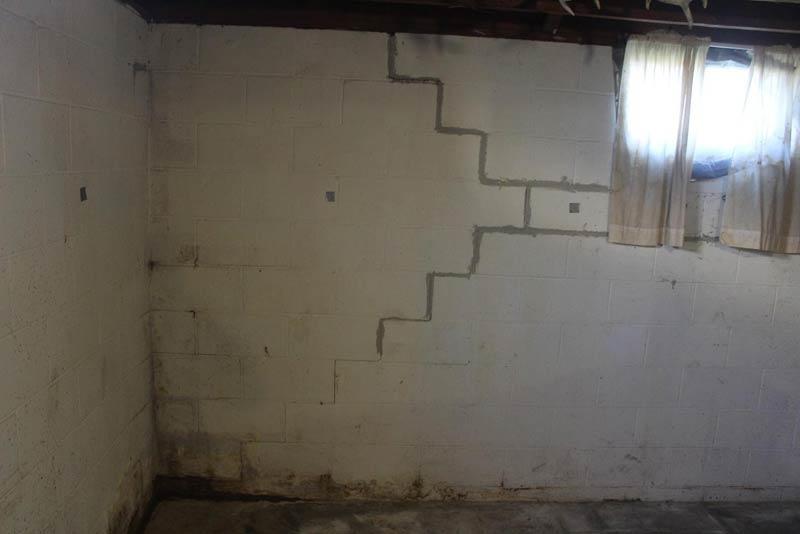
Stair-Step Mortar Cracks
Cracks that zigzag up through the mortar joints of a block wall.
Horizontal Wall Cracks
A long crack running sideways, often partway up the wall.
Wall Bowing Inward
A basement wall that bulges or leans toward the center of the room.
Sloping or Uneven Floors
Floors that dip toward one corner or one side of the house.
Sticking Doors and Windows
Doors that rub, will not latch or show uneven gaps at the frame.
Cracks in Brick Outside
Stair-step cracks in exterior brick or gaps opening at window corners.
Foundation Repair Solutions for Dundalk Homes
Stabilizing Bowing Basement Walls
Bowing basement walls are one of the most common structural problems in older block foundations. On the low ground around Dundalk, the soil against a foundation can stay wet for long stretches, and wet clay swells and pushes inward. Freeze-thaw cycles add more pressure every winter. Block walls tend to respond with a horizontal crack partway up, stair-step cracks near the corners or a visible bulge, and the movement usually continues if nothing is done.
Wall stabilization holds the wall in its current position so it cannot keep moving. We measure how far the wall has shifted and recommend the method that fits, from carbon fiber straps for early movement to steel braces for walls that need more support.
Carbon Fiber Straps for Early Movement
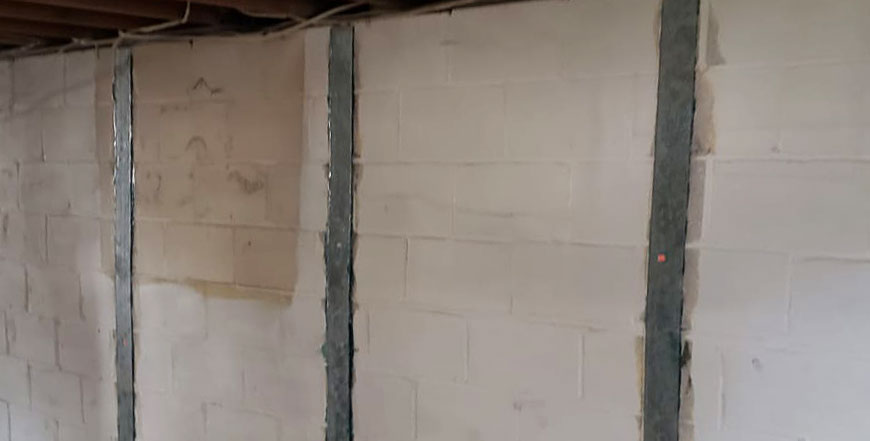
When a wall is cracked or has bowed only slightly, carbon fiber straps are often the right fit. The straps are bonded to the inside face of the wall with a high-strength epoxy and secured at the top and bottom. Carbon fiber is very strong for its weight, so the straps resist further inward movement while staying thin and close to the wall.
That low profile suits narrow rowhouse basements. Straps can be painted, and they leave the wall ready to finish later. No digging outside is required.
Steel I-Beam Wall Braces
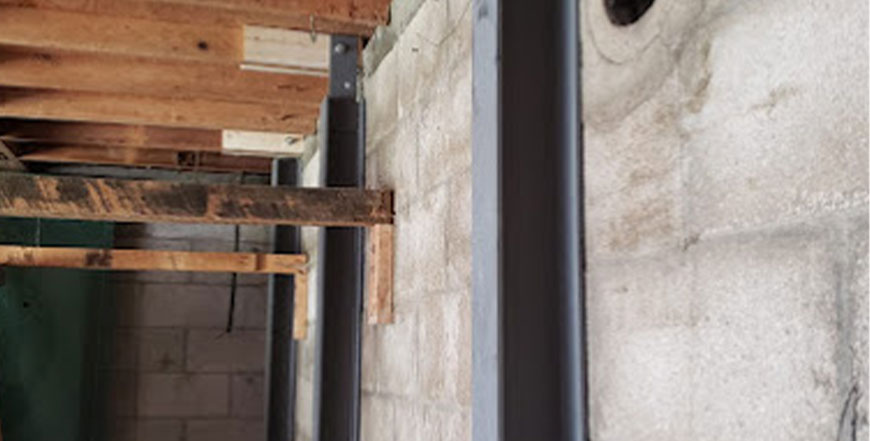
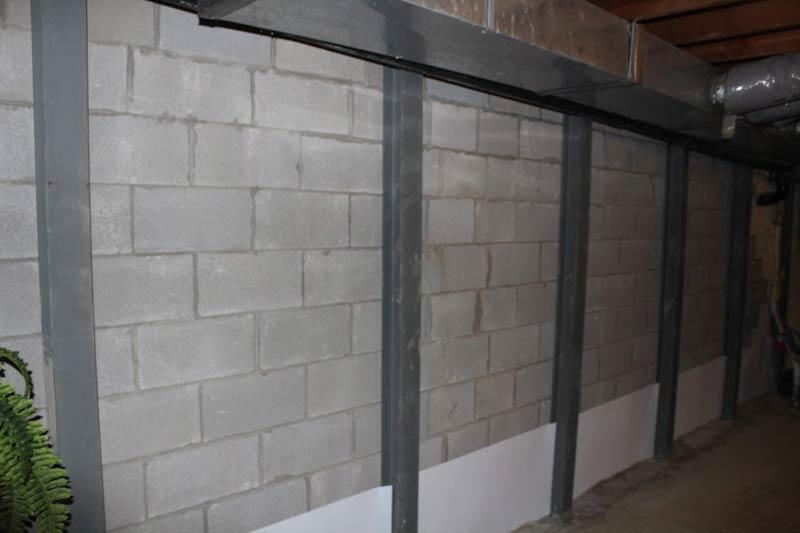
Walls with more noticeable bowing need more support than straps can give. Steel I-beam wall braces run vertically from the basement floor to the floor framing above and are secured at both ends. They brace the wall against the soil pushing on it and keep it from moving further inward.
Wall braces are installed entirely from inside the basement, so they work well for Dundalk rowhouses and duplexes where there is no room to dig along the outside wall. We space them based on the length of the wall and how far it has moved.
Rebuilding Failed Block Walls
Some walls have moved too far to be held in place. If a block wall has sheared at the base, leaned badly or broken into loose, crumbling block and mortar, stabilization alone may not be reliable. In that case, we temporarily support the house, remove the damaged section down to sound material and lay new block back up to the framing, tied into the existing wall.
We only recommend a rebuild when the inspection shows the wall cannot be stabilized. Because water pressure is usually behind the failure, we also look at drainage so the new wall does not face the same conditions.
Push Piers for a Settling Foundation
A settling foundation looks different from a bowing wall. Instead of pushing inward, part of the house sinks, often at a corner where downspouts dump water or where soil has softened or washed out from under the footing. The signs include cracks that are wider at the top, sloping floors and doors that no longer close cleanly.
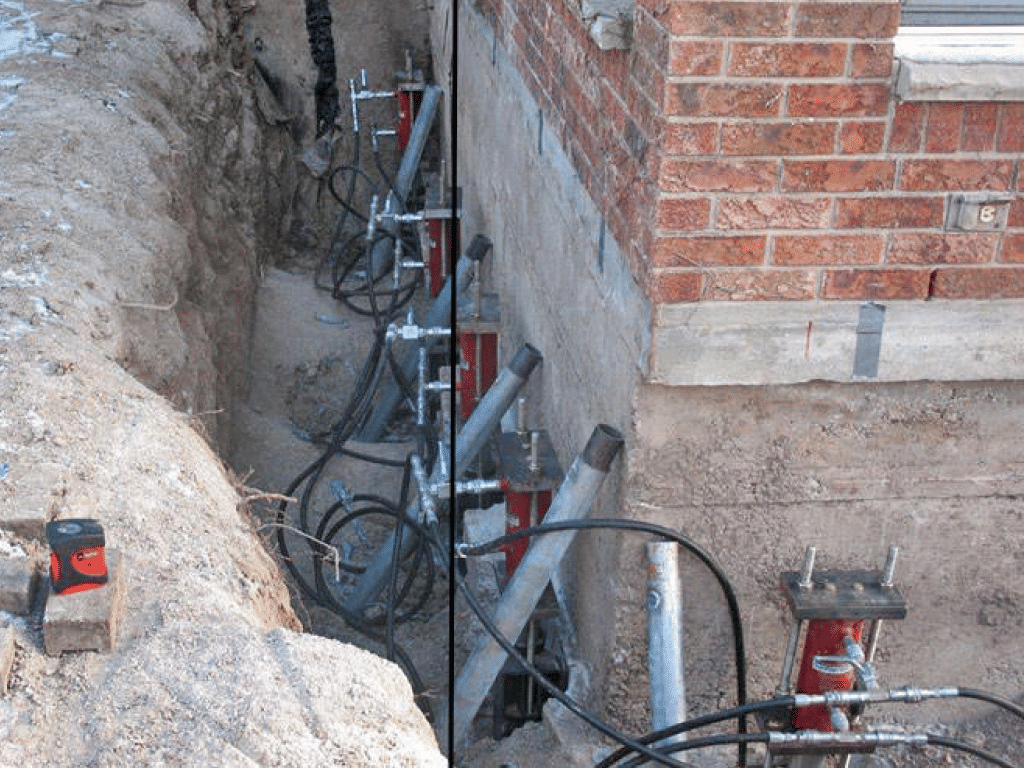
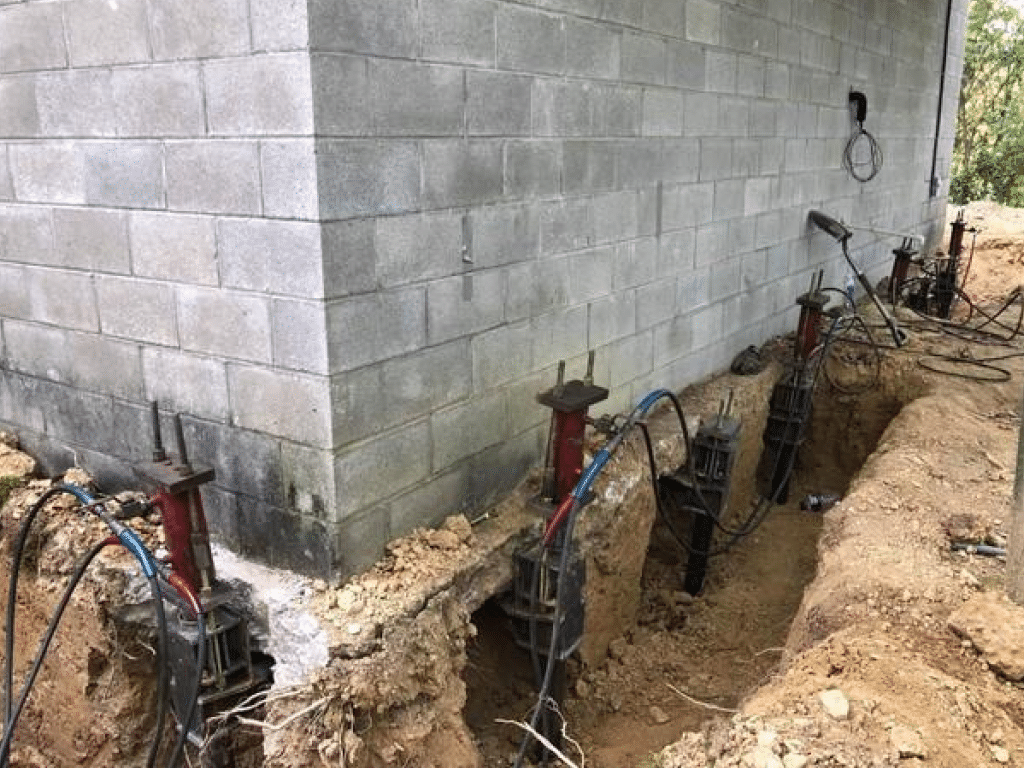
Push piers are steel pipe sections driven down beneath the footing until they reach firm, load-bearing soil. The weight of the house is then transferred onto the piers, which helps stop further sinking and can sometimes lift the section back toward its original position.
Helical Piers for Lighter Loads
Helical piers are steel shafts with screw-like plates that are turned into the ground until they reach soil that can carry the load. They work well for lighter structures and for spots where push piers are not the best fit, such as porches, additions and some smaller homes. On layered Coastal Plain soils, finding firm bearing below the soft upper layers is what makes either pier type effective.
We recommend push piers or helical piers based on the weight of the structure, the soil and access around the foundation.
Our Foundation Repair Process
Free Inspection
We measure walls, map cracks and check floors, drainage and the soil around your home.
Your Recommendation
We walk you through what we found and what we recommend, in plain terms.
Repair Installation
Our in-house crew installs straps, braces, piers or new block and cleans up.
Warranty Protection
Your foundation repair is backed by a transferable warranty that stays with the house.
Why Dundalk Homeowners Choose Best Buy Waterproofing
Foundation repair is a big decision, and Dundalk homeowners want a straight answer about what their walls actually need. We give you that answer, and we treat the water problem behind the damage too.
- Structure and water: One in-house team handles foundation repair and waterproofing in the right order.
- Licensed and insured: Licensed in Maryland, Virginia, Washington DC, Pennsylvania, Delaware and West Virginia, and fully insured.
- Since 2017: Years of focused work on basements, foundations and crawl spaces in the region.
- Honest assessments: A free inspection, and a rebuild only when stabilizing will not work.
- Warranty and financing: A transferable warranty, flexible financing and availability 24/7.
What Affects the Cost of Foundation Repair in Dundalk?
We don’t quote foundation repair from a price list, because no two Dundalk foundations have moved the same way. After a free inspection, you receive a firm price for the repair your home actually needs.
Amount of Movement
How far a wall has bowed or how much a section has settled.
Repair Method
Carbon fiber straps, steel braces, piers or a block wall rebuild.
Wall Length Affected
How many straps, braces or piers the affected walls require.
Access and Clearance
Tight basements, finished walls and stored items affect preparation time.
Soil Conditions
How deep firm, load-bearing soil sits below the footing.
Water Management
Drainage or waterproofing needed to relieve pressure on the walls.
Foundation Repair FAQs
Is a horizontal crack in my block wall serious?
Usually, yes. A horizontal crack in a block wall typically means soil pressure is pushing the wall inward, and the movement tends to continue. It is one of the most common warning signs we see in older Dundalk basements. A free inspection measures the wall and tells you whether straps, braces or a rebuild is the right fix.
Can foundation repair be done in a rowhouse basement?
Yes. Carbon fiber straps and steel I-beam wall braces are both installed from inside the basement, so no digging is needed along the outside of the wall. That makes them practical for rowhouses and duplexes with little yard space. We plan the layout around your stairs, utilities and the room you have to work with.
Can a bowing wall be pushed back to straight?
The goal of wall stabilization is to hold the wall where it is and stop further movement, which protects the house above. A wall that has moved too far, or whose block is breaking apart, may need a section rebuilt instead. During the inspection, we measure the bow and tell you what is realistic for your wall.
What is the difference between push piers and helical piers?
Both carry a settling foundation down to firm, load-bearing soil. Push piers are driven beneath the footing using the weight of the house and suit most heavier structures. Helical piers are screwed into the ground and work well for lighter loads like porches and additions. We recommend the type that fits your home and soil.
Why did my foundation start moving after so many years?
Foundation problems build slowly. Years of wet soil, freeze-thaw cycles and changes like a clogged gutter or a new patio that sends water toward the house can tip a wall from stable to moving. On low ground, where soil stays saturated after storms, that pressure is hard on older block walls.
Should I fix the water problem before the foundation?
Often both should be planned together. Water pressure is usually what makes walls bow, so stabilizing a wall without addressing drainage leaves the cause in place. Our team does both foundation repair and basement waterproofing in Dundalk, so we can sequence the work and avoid redoing anything later.
More Services in Dundalk
Foundation repair near Dundalk, MD: Essex · Rosedale · Edgemere · Middle River · Baltimore · Parkville · Glen Burnie
Stop Your Foundation From Moving
Cracks and bowing walls rarely get better on their own. Schedule a free inspection in Dundalk, and we will measure what is happening and walk you through what we recommend. Financing is available.